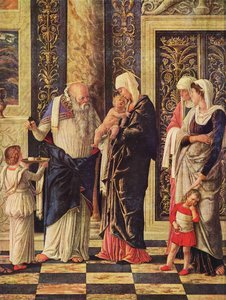
Aperçu en situation
 Envoyer
 Partager
 Détails de l'œuvre
 Guide
Guide

 Télécharger l'image
 Articles similaires
 Radiographie
 Diaporama
 Statistiques
La réunion


 Lire la suite
Giclées et impressions d'art
Impressions giclées ou sur toile de qualité musée, avec une production rapide et des finitions au choix. ( Commander la reproduction peinte à la main Passer au format numérique)




P118B €10

P118H €10

P118W €10

P438Z €10

P508JH €12

P508YH €12

P805H €10

P805Z €10

P919BZ €10

P919G €10

P919XJ €10

P959ZH €10

P968JZ €12

W106C €8

W218G €10

W218JH €8

W218Y €10

W307PJ €10

W316G €10

W316PJ €8

W316Y €10

W398PJ €8

W4111J €10

W500HY €15

W500JH €15

W692G €12

W849H €8

W940BG €15

W953PJ €8




Choisissez parmi nos formats prédéfinis qui respectent les proportions originales de l’œuvre.

Saisissez la largeur et la hauteur souhaitées pour qu'elles s'adaptent à votre cadre ou à votre mur. Une impression peut être recadrée, mais jamais agrandie au-delà de l'image originale ; ainsi, un format de forme différente entraînera la perte d'une partie de l'image. Nous vous envoyons une maquette numérique pour approbation avant toute impression. L'image présentée sur cette page ne montre pas le recadrage réel — seule la maquette le permet.
Livraison dans le monde entier () en 2 semaines au lieu des 4/5 semaines habituelles. (28 octobre)

Livraison express gratuite dans le monde entier

Toile de lin de qualité supérieure

Assurance transport complète

Garantie de remboursement des droits de douane

Garantie de fidélité des couleurs

Politique de retour de 100 jours (uniquement en cas de défaut)

Garantie de remboursement à 100%

Offre de tarifs dégressifs
 L'option verre n'est disponible que pour les dimensions inférieures à 110 cm.

La réunion
Giclées et impressions d'art
Format de la reproduction
-


Prix total
€ 70
A Window into Medieval Life: Examining Andrea Mantegna’s “The Meeting”
Andrea Mantegna's "The Meeting," painted around 1465, transcends mere depiction; it embodies a profound ambition to recapture the spirit of antiquity within the burgeoning Renaissance. More than just a visual record of a scene—the delivery of a letter preceding a larger narrative on the north wall—this artwork represents a cornerstone in Mantegna’s artistic philosophy: an unwavering commitment to meticulous observation and sculptural representation, mirroring the reverence for Roman ruins that profoundly shaped his formative years under Francesco Squarcione. Squarcione's workshop wasn’t simply a place of artistic production; it functioned as an intellectual crucible where students wrestled with the legacy of Rome—fragments of colossal statues, weathered inscriptions, and crumbling temples—inspiring a stylistic approach unlike many of Mantegna’s contemporaries. This dedication to archaeological accuracy isn’t merely decorative; it's fundamental to understanding Mantegna’s vision – one that prioritizes illusionistic depth and monumental form, techniques honed through painstaking study of classical precedents.- Style: Renaissance
- Technique: Fresco Painting
- Material: Pigments mixed with lime plaster
Questions et réponses
Quelle est l'intensité des couleurs dans «La réunion» de Andrea Mantegna ?
L'intensité des couleurs de « La réunion » est Équilibré. L'intensité décrit la force avec laquelle les couleurs apparaissent.
Quelle est l'émotion qui se dégage de «La réunion» de Andrea Mantegna ?
«La réunion» est empreint d'un sentiment Réflexif. La tonalité émotionnelle décrit l'impression qui se dégage de l'œuvre.
Quelle est la notoriété de « La réunion » par Andrea Mantegna ?
Le niveau de popularité enregistré pour «La réunion» de Andrea Mantegna est Reconnue.
Biographie de l'artiste
jeune vie et carrière
Andrea Mantegna, peintre italien innovant et érudit d'archéologie romaine, est né en Italie en 1431. Sa vie est marquée par une rupture significative avec les formes douces de son époque, favorisant un traitement audacieux et volumétrique de l'espace et de la forme.contribution à la perspective
L’œuvre de Mantegna a été essentielle pour explorer la perspective, utilisant des techniques telles que le réglage de la ligne d'horizon afin d'impartir une échelle plus grande et une gravité à ses œuvres. Cette approche a marqué un tournant significatif par rapport aux formes douces de son époque, mettant en valeur son style unique.œuvres notables et associations
* Les peintures de Mantegna sont reconnues pour leur qualité robuste et sculpturale, présentant des paysages et des figures durs et réfléchis qui témoignent de sa sensibilité sculpteur à la forme et à la texture. * Son association avec la famille Bellini par le biais du mariage est notable, reflétant l'interconnexion des familles artistiques pendant la Renaissance.héritage dans l’histoire de l’art
L’influence de Mantegna sur le développement de l’art en Italie et au-delà est indéniable. Son approche audacieuse de la perspective et de la forme a inspiré des générations d'artistes. Comme on peut le voir dans sa collection sur OriginalUniqueArt, ses œuvres continuent de captiver les publics par leur grandeur et leur style innovant.- principaux mouvements artistiques : Renaissance, perspective précoce.
- œuvres notables : comprennent "Le Lamentation sur le Christ mort" et "Saint Georges".
- musées présentant son œuvre : la National Gallery de Londres et la Pinacoteca Brera de Milan, entre autres.
lecture supplémentaire et exploration
* Pour en savoir plus sur la vie et les œuvres de Mantegna, consultez la collection Palumbo-Fossati (Venise, Italie), qui présente un aperçu succinct de la collection et de ses pièces notables. * Explorez l'histoire de l’art en Italie avec la culture de l’Italie sur Wikipédia.
Andrea Mantegna
1431 - 1506 , Italie
L'essentiel de l'artiste
- Artistes Influents:
- Donatello
- Jacopo Bellini
- Date De Décès: 1506
- Date De Naissance: 1431
- Influence Sur Les Artistes:
- Raphaël
- Michel-Ange
- Lieu De Naissance: Carturu, Italie
- Mouvement Artistique: Renaissance, Perspective précoce
- Nationalité: Italienne
- Nom Complet: Andrea Mantegna
- Oeuvres Notables:
- Le Lamentation sur le Christ
- Saint Georges
- Fresques de la Camera degli Sposi
- Triomphes de César
Articles connexes
Illuminating Faith & Power: A Journey Through Medieval Art (c. 500 – c. 1500)
Explore the rich history of Medieval Art (c. 500 – c. 1500) with OriginalUniqueArt. Discover Byzantine mosaics, Gothic cathedrals & Renaissance masterpieces. Expert insights & museum-quality reproductions.
Les 10 Chefs-d'œuvre de l'Art Médiéval : Décoration et Histoire
Plongez au cœur de l'art médiéval ! Découvrez les 10 chefs-d’œuvre incontournables, des vitraux gothiques aux enluminures. Histoire, artistes & inspiration déco sur OriginalUniqueArt.com.

Bartolomeo Pinelli: Neoclassical Linearity & Roman Topography of Memory
Explore the captivating world of Bartolomeo Pinelli, a master Italian engraver renowned for his evocative Roman scenes & historical narratives. Discover his art and legacy with OriginalUniqueArt.
Les 10 Chefs-d'œuvre Incontournables de l'Art Médiéval Tardif | OriginalUniqueArt
Plongez au cœur de l'art médiéval tardif avec OriginalUniqueArt. Découvrez 10 chefs-d'œuvre emblématiques de Giotto à Jan van Eyck, leurs histoires et techniques uniques. Trouvez l'inspiration déco et achetez des reproductions de qualité muséale sur OriginalUniqueArt.com

Divine Light & Golden Splendor: A Journey Through the Sacred Grandeur of High Medieval Art
Embark on a soulful journey through High Medieval art. Explore the divine light of Gothic cathedrals, Byzantine splendor, and sacred masterpieces that shaped Western history with our expert-led cultural reflections.