

 Aperçu en situation
 Envoyer
 Partager
 Détails de l'œuvre
 Guide
Guide

 Télécharger l'image
 Articles similaires
 Radiographie
 Diaporama
 Statistiques
A Sleeping Girl
 Oil On Canvas
- WallArt
- Pre-Raphaelite
 1875
1875 22.0 x 30.0 cm
 Tate Britain
 Lire la suite
Giclées et impressions d'art
Impressions giclées ou sur toile de qualité musée, avec une production rapide et des finitions au choix. ( Commander la reproduction peinte à la main Passer au format numérique)




P118B €10

P118H €10

P118W €10

P438Z €10

P508JH €12

P508YH €12

P805H €10

P805Z €10

P919BZ €10

P919G €10

P919XJ €10

P959ZH €10

P968JZ €12

W106C €8

W218G €10

W218JH €8

W218Y €10

W307PJ €10

W316G €10

W316PJ €8

W316Y €10

W398PJ €8

W4111J €10

W500HY €15

W500JH €15

W692G €12

W849H €8

W940BG €15

W953PJ €8




Choisissez parmi nos formats prédéfinis qui respectent les proportions originales de l’œuvre.

Saisissez la largeur et la hauteur souhaitées pour qu'elles s'adaptent à votre cadre ou à votre mur. Une impression peut être recadrée, mais jamais agrandie au-delà de l'image originale ; ainsi, un format de forme différente entraînera la perte d'une partie de l'image. Nous vous envoyons une maquette numérique pour approbation avant toute impression. L'image présentée sur cette page ne montre pas le recadrage réel — seule la maquette le permet.
Livraison dans le monde entier () en 2 semaines au lieu des 4/5 semaines habituelles. (27 octobre)

Livraison express gratuite dans le monde entier

Toile de lin de qualité supérieure

Assurance transport complète

Garantie de remboursement des droits de douane

Garantie de fidélité des couleurs

Politique de retour de 100 jours (uniquement en cas de défaut)

Garantie de remboursement à 100%

Offre de tarifs dégressifs
 L'option verre n'est disponible que pour les dimensions inférieures à 110 cm.

A Sleeping Girl
Giclées et impressions d'art
Format de la reproduction
-


Prix total
€ 70
A Portrait of Quietude: Exploring Albert Moore’s “Sleeping Girl”
Albert Joseph Moore's "Sleeping Girl," completed around 1875, stands as a quintessential example of Pre-Raphaelite painting—a movement dedicated to reviving artistic ideals considered superior to those prevalent in the academic tradition. More than just a depiction of repose, this oil on canvas delves into themes of vulnerability, beauty, and contemplation, capturing a moment frozen in time with remarkable sensitivity. Tate Gallery houses the original artwork, offering visitors an opportunity to experience its ethereal luminescence firsthand.- Subject Matter: The painting portrays a young woman reclining gracefully on a chaise lounge, enveloped in soft drapery and surrounded by delicate floral arrangements—a deliberate choice reflecting the Pre-Raphaelite fascination with idealized landscapes and mythological narratives rooted in medieval literature.
- Style & Technique: Moore’s meticulous approach to composition and execution aligns perfectly with the stylistic principles of his era. He employed a layered brushstroke technique, building up color and form gradually—a hallmark of Academic painting—to achieve an unparalleled level of luminosity and textural detail. The artist's careful attention to light and shadow contributes significantly to the artwork’s serene atmosphere.
- Historical Context: Emerging in Britain during the Victorian period, Pre-Raphaelite art reacted against the perceived artificiality of academic conventions, championing instead a return to artistic sincerity and emotional expression inspired by early Renaissance masters—specifically those preceding Raphael. This movement sought to recapture the spirit of medieval art, prioritizing beauty and moral contemplation over mere technical virtuosity.
- Symbolism: The inclusion of roses—a recurring motif in Pre-Raphaelite imagery—amplifies the painting’s symbolic resonance. Roses traditionally represent love, passion, and purity—themes interwoven throughout Moore's composition to convey a profound sense of innocence and tranquility. The woman’s closed eyes symbolize sleep, representing not merely physical rest but also spiritual contemplation and detachment from worldly concerns.
- Emotional Impact: “Sleeping Girl” succeeds in evoking a powerful emotional response in the viewer—a feeling of quiet serenity and melancholic beauty. Moore's masterful use of color palettes—muted earth tones combined with soft whites—creates an immersive experience that invites reflection on themes of vulnerability, grace, and fleeting moments of sublime perfection.
Detailed Examination of Composition & Color Palette
Moore’s compositional choices are deliberate and contribute significantly to the artwork's overall impact. The central figure dominates the canvas, positioned at the heart of a carefully arranged space defined by supporting elements—floral cushions and vases—that serve as visual anchors. Lines are predominantly smooth and flowing, particularly in the drapery and the woman’s hair, creating an impression of softness and movement. Perspective is shallow, fostering a sense of intimacy between the viewer and the subject matter. Depth is achieved through subtle tonal variations and layering techniques—a testament to Moore's technical prowess. The color palette leans towards muted earth tones—primarily ochre and ivory—underscored by delicate shades of pink and white—creating an ethereal luminescence that enhances the painting’s dreamlike quality.Materials & Artistic Process
“Sleeping Girl” is executed in oil paints on canvas—a medium favored by Academic artists for its ability to capture nuanced tonal gradations and achieve exceptional textural richness. Moore undertook extensive preparatory studies, meticulously sketching the figure and drapery separately before embarking on the final painting process. He employed a technique known as glazing—applying thin layers of translucent color over underlying pigments—to build up depth and luminosity gradually—a hallmark of Pre-Raphaelite artistry. This painstaking approach ensured that every detail was rendered with meticulous precision, resulting in an artwork of breathtaking beauty and artistic integrity.Questions et réponses
Peut-on visionner un diaporama de «A Sleeping Girl» de Albert Joseph Moore ?
Vous pouvez visionner «A Sleeping Girl» de Albert Joseph Moore sous forme de diaporama sur la page Diaporama de l'œuvre.
Quelle est la technique utilisée pour «A Sleeping Girl» de Albert Joseph Moore ?
« A Sleeping Girl » est réalisé en Oil On Canvas.
Quelle est l'émotion qui se dégage de «A Sleeping Girl» de Albert Joseph Moore ?
«A Sleeping Girl» de Albert Joseph Moore dégage une tonalité émotionnelle Calm.
Biographie de l'artiste
Premières années et éducation
Albert Joseph Moore, peintre anglais renommé, est né le 4 septembre 1841 à York, au Royaume-Uni. Il était le treizième fils et la quatorzième enfant de William Moore, un portraitiste bien connu, et de sa seconde épouse, Sarah Collingham. Plusieurs de ses nombreux frères ont été formés aux arts, dont Henry Moore, R.A., un peintre de marines notable. Albert Moore a reçu son éducation à l'école d'Archbishop Holgate et à St Peter's School à York, où il a également reçu des instructions en dessin et en peinture de la part de son père.Carrière artistique
Les premières œuvres de Moore témoignent de l’influence de Ruskin, et dès 1857, il avait déjà exposé au Royal Academy, présentant un canari et une bécasse. Son style artistique a évolué au fil du temps, avec l'émergence d'un caractère néoclassique marqué dans les années 1860. Durant cette période, Moore a conçu des carreaux, du papier peint et des vitraux pour Morris, Marshall, Faulkner and Co., tout en travaillant comme peintre de fresques ecclésiastiques et domestiques.Œuvres notables et style
Les tableaux de Moore présentent généralement une seule figure féminine aux proportions formalisées, un drapé néoclassique et des accessoires floraux, établissant ainsi un courant majeur du mouvement esthétique. Parmi ses œuvres les plus notables, on peut citer :- The Marble Seat (1865), une longue série de peintures purement décoratives
- Elijah's Sacrifice (1863), qui témoigne de l’influence de Ford Madox Brown et d’Edward Armitage
- The Loves of the Seasons and the Winds, l’une de ses œuvres les plus élaborées et les plus minutieuses, peinte pour M. McCulloch
Collections et héritage
Les œuvres de Moore peuvent être admirées dans divers musées, notamment :- York Museums Trust (York, Royaume-Uni), présentant des peintures telles que Kingcups
- Le Royal Academy (Londres, Royaume-Uni), où Moore a fréquemment exposé

Albert Joseph Moore
1841 - 1893 , Royaume-Uni
L'essentiel de l'artiste
- Artistic Movement Or Style: Aestheticisme, Néo-classicisme
- Artists Or Movements Influenced By This Artist: ['Aesthetic Movement']
- Artists Who Influenced This Artist:
- Ruskin
- Ford Madox Brown
- Edward Armitage
- Date Of Birth: 4 septembre 1841
- Date Of Death: 25 septembre 1893
- Full Name: Albert Joseph Moore
- Nationality: Britannique
- Notable Artworks:
- The Marble Seat
- Elijah's Sacrifice
- Les amours des saisons et des vents
- Place Of Birth (City And Country): York, Royaume-Uni
Articles connexes

The Pre-Raphaelite Brotherhood: Rediscovering Beauty, Romance, and Medieval Magic in Victorian Art
Embark on a journey through the Pre-Raphaelite Brotherhood. Discover the romantic symbolism, medieval magic, and radical beauty of Rossetti and Burne-Jones in this expert exploration of Victorian art history.

Pre-Raphaelite Romanticism: A Guide to Vivid Detail and Medieval Beauty in Victorian Art
Explore the vivid detail and medieval beauty of Pre-Raphaelite Romanticism. Discover the history of masters like Rossetti and Millais through our expert guide to Victorian art, perfect for collectors and professionals seeking authentic, museum-quality reproductions.

Sir John Everett Millais: Pre-Raphaelite Rebellion & Victorian Narrative Detail
Explore the revolutionary art of Sir John Everett Millais & the Pre-Raphaelite Brotherhood. Discover their radical realism, symbolic narratives, and lasting impact on Victorian aesthetics. A deep dive into 19th-century masterpieces.

Dante Gabriel Rossetti : Les 25 Œuvres Maîtresses du Préraphaélisme à Redécouvrir
Plongez dans l'univers fascinant de Dante Gabriel Rossetti ! Découvrez les 25 œuvres majeures du préraphaélisme : symbolisme, poésie et beauté victorienne. Reproductions d'art exceptionnelles sur OriginalUniqueArt.com.
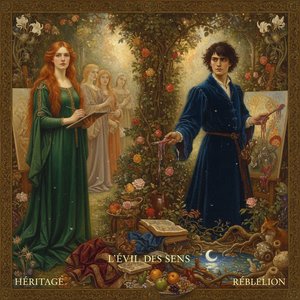
The Pre-Raphaelite Brotherhood: Reclaiming Beauty, Nature, and Truth in Victorian Art History
Explore the revolutionary Pre-Raphaelite Brotherhood. Discover how these visionary artists rejected academic tradition to reclaim beauty, nature, and truth through luminous detail and literary depth in Victorian art history.