
 Aperçu en situation
 Envoyer
 Partager
 Détails de l'œuvre

 Télécharger
 Articles similaires
 Radiographie
 Diaporama
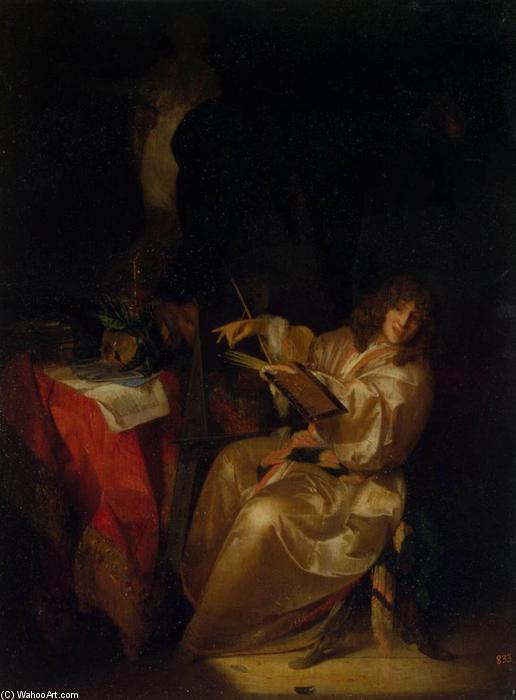
Self-Portrait
 Acrylic On Canvas
- WallArt
- Dutch Baroque
 1696
1696 39.0 x 29.0 cm
 Musée de l'Ermitage
 Lire la suite
Giclées et impressions d'art
Impressions giclées ou sur toile de qualité musée, avec une production rapide et des finitions au choix. ( Passer à la peinture faite à la main Passer à l'image)




P118B $10

P118H $10

P118W $10

P438Z $10

P508JH $12

P508YH $12

P805H $10

P805Z $10

P919BZ $10

P919G $10

P919XJ $10

P959ZH $10

P968JZ $12

W106C $8

W218G $10

W218JH $8

W218Y $10

W307PJ $10

W316G $10

W316PJ $8

W316Y $10

W398PJ $8

W4111J $10

W500HY $15

W500JH $15

W692G $12

W849H $8

W940BG $15

W953PJ $8




Choisissez parmi nos formats prédéfinis qui respectent les proportions originales de l’œuvre.

Vous pouvez saisir vos propres dimensions pour vous adapter à un cadre ou à un espace spécifique. Si la taille sélectionnée ne correspond pas aux proportions de l'image originale, nous recadrerons l'œuvre ou étendrons l'image avec une bordure en miroir ou une couleur unie. Une maquette numérique vous sera envoyée pour approbation avant le début de la production.
Veuillez noter que l'aperçu à l'écran ne reflète pas le recadrage ou l'extension réelle. Seule la maquette montrera avec précision la composition finale.
Bien que des tailles personnalisées soient disponibles, nous vous recommandons de choisir une dimension dans la liste prédéfinie afin de préserver les proportions originales.
Livraison dans le monde entier () en 2 semaines au lieu des 4/5 semaines habituelles. (6 août)

Livraison express gratuite dans le monde entier

Toile de lin de qualité supérieure

Assurance transport complète

Garantie de remboursement des droits de douane

Garantie de fidélité des couleurs

Politique de retour de 60 jours (uniquement en cas de défaut)

Garantie de remboursement à 100%

Offre de tarifs dégressifs
 L'option verre n'est disponible que pour les dimensions inférieures à 110 cm.

Self-Portrait
Giclées et impressions d'art
Format de la reproduction
-


Prix total
$ 80
Description de la pièce
A Window Into Baroque Soul: Exploring Adriaen van der Werff’s Self-Portrait
Adriaen van der Werff's Self-Portrait stands as an emblem of Dutch Golden Age artistry—a testament to meticulous observation and profound psychological insight. Completed in 1696, this oil on panel painting resides within the hallowed halls of The Hermitage Museum in St. Petersburg, Russia, ensuring its legacy continues to inspire admiration centuries later. More than just a depiction of an individual, it’s a masterful distillation of Baroque principles, inviting viewers into a contemplative dialogue about identity and artistic ambition.Style and Technique: Mastering Light and Shadow
The painting embodies the stylistic hallmarks of its era—a deliberate rejection of idealized beauty in favor of realism imbued with dramatic emotion. Van der Werff's technique is characterized by an unparalleled command of chiaroscuro, skillfully manipulating light and shadow to sculpt form and convey mood. Layers upon layers of pigment were painstakingly applied, allowing for gradual drying times that maximized control over texture and luminosity. The artist’s gaze directly confronts the viewer, establishing a palpable intimacy—a hallmark of Baroque portraiture intended to capture not merely appearance but also inner character. Notice how the subtle illumination highlights the contours of his face and clothing, creating an illusion of depth and dimensionality that transcends mere representation.Historical Context: Reflecting Enlightenment Ideals
Painted during the height of Dutch intellectual fervor – a period marked by burgeoning scientific inquiry and philosophical debate – Van der Werff’s Self-Portrait speaks to the broader cultural currents of its time. The Baroque aesthetic, originating in Italy, prioritized grandeur and theatricality alongside emotional intensity; this painting exemplifies these ideals through its formal composition and dramatic use of light. Furthermore, it aligns with the emerging fascination for psychological portraiture, reflecting a desire to delve beneath surface appearances and explore the complexities of human consciousness—a trend foreshadowed by thinkers like Descartes and Leibniz. The inclusion of a book symbolizes erudition and intellectual contemplation, mirroring the values championed during the Enlightenment.Symbolism: Beyond Appearance – An Examination of Inner Reflection
The posture of Van der Werff—seated calmly with his gaze fixed outward—suggests introspection and self-awareness. This deliberate positioning underscores the painting’s symbolic significance, inviting viewers to contemplate themes of contemplation, dignity, and artistic vocation. The robe he wears is a common motif in portraits of wealthy patrons, signifying status and authority but also hinting at moral virtue – an important consideration within the Baroque worldview. The book itself serves as a potent emblem of knowledge and intellectual pursuit, reinforcing the artist’s commitment to both craftmanship and philosophical inquiry.Emotional Impact: Capturing the Essence of Human Experience
Ultimately, Van der Werff's Self-Portrait transcends mere visual representation; it succeeds in conveying a profound sense of human emotion—a quiet confidence mingled with thoughtful contemplation. The painting’s enduring appeal lies in its ability to resonate with viewers across time and culture, prompting reflection on questions of identity, ambition, and the pursuit of wisdom. It remains a captivating example of Baroque artistry – a beautifully rendered image that speaks volumes about the artist's inner life and his masterful grasp of artistic technique.Biographie de l'artiste
Adriaen van der Werff: A Titan of Dutch Baroque
Adriaen van der Werff (1659-1722) stands as one of the most celebrated figures in Dutch Baroque painting, a master whose meticulous technique and profound understanding of human emotion cemented his place among the giants of his era. Born in The Hague, he emerged from a family steeped in artistic tradition—his father was also a painter—and quickly demonstrated prodigious talent, embarking on formal training at a young age under the tutelage of Eglon van der Neer, a renowned specialist in drapery and costume design. This formative influence would shape his distinctive style, characterized by an unparalleled attention to detail and a masterful command of chiaroscuro. His brother, Pieter van der Werff (1661–1722), served as his loyal pupil and collaborator, fostering a creative partnership that produced some of the finest portraits of their time. Together they established a studio in Rotterdam where Van der Werff ascended to leadership of the Saint Luke Guild, a position he held with distinction for decades. This association provided him with invaluable access to influential patrons and fostered an environment conducive to artistic innovation. Van der Werff’s artistic journey began modestly, honing his skills through diligent observation and experimentation. However, it swiftly gained momentum as he captivated audiences with his depictions of biblical narratives and mythological scenes—subjects that demanded both intellectual depth and visual splendor. His ability to convey psychological complexity within exquisitely rendered compositions quickly garnered him recognition throughout Europe. Notably, commissions from Johann Wilhelm, elector palatine and Anna Maria Luisa de' Medici brought him into contact with the Florentine court, resulting in two monumental paintings destined for Cosimo III—a testament to his ambition and artistic prowess. Throughout his prolific career, Van der Werff traveled extensively between Düsseldorf and Rotterdam, absorbing influences from German Baroque art while maintaining a steadfast commitment to Dutch artistic standards. He was appointed official court painter under Johann Wilhelm’s reign, receiving the honorific knighthood and securing substantial patronage—a privilege that allowed him to dedicate himself fully to his craft. His output included numerous portraits of nobility and dignitaries, as well as grand mythological canvases that showcased his mastery of color and form. The elector's unwavering support fueled his artistic endeavors, resulting in breathtaking works like “Nymphes dansant” and “The Judgement of Paris,” which continue to inspire admiration today. Despite criticisms leveled against him in the 19th century—accusations of abandoning Dutch naturalism for stylistic excess—Van der Werff’s legacy endured. Arnold Houbraken, a prominent art historian of his time, hailed him as "the greatest of the Dutch painters," an opinion that resonated throughout the eighteenth century and largely prevailed into the Victorian era. However, much of Van der Werff's oeuvre languished in obscurity until rediscovered in the Alte Pinakothek, where it now commands considerable attention from scholars and connoisseurs alike. He remains a cornerstone of Dutch Baroque art, embodying the ideals of elegance, intellect, and artistic virtuosity—a true testament to the enduring power of talent and dedication.- Early Life & Training: Adriaen van der Werff was born in The Hague in 1659, into a family with a strong artistic heritage. His father practiced painting, providing him with an early exposure to the visual arts. Recognizing his exceptional aptitude, he enrolled at a young age under the guidance of Eglon van der Neer, mastering the intricacies of drapery and costume design—skills that would profoundly influence his future style.
- Collaboration with Pieter van der Werff: His brother, Pieter van der Werff (1661–1722), became his devoted pupil and collaborator. Together they established a studio in Rotterdam where Van der Werff assumed leadership of the Saint Luke Guild, securing invaluable connections with influential patrons and fostering an environment ripe for artistic innovation.
- Notable Commissions & Patronage: Johann Wilhelm’s patronage propelled Van der Werff's career forward, bringing him into contact with the Florentine court. This resulted in monumental paintings destined for Cosimo III—a remarkable achievement reflecting his ambition and artistic brilliance.
- Style & Technique: Van der Werff’s distinctive style was characterized by meticulous attention to detail and a masterful command of chiaroscuro, techniques perfected through diligent observation and experimentation. His ability to portray psychological depth within exquisitely rendered compositions earned him widespread acclaim throughout Europe.
- Legacy & Rediscovery: Despite reservations expressed in the 19th century regarding stylistic excess, Van der Werff’s enduring influence is undeniable. Arnold Houbraken recognized him as “the greatest of the Dutch painters,” a judgment that solidified his position within art history and continues to inspire admiration today.

Adriaen Van Der Werff
1659 - 1722 , Pays-Bas
L'essentiel de l'artiste
- Artistic Movement Or Style: Baroque
- Artists Or Movements Influenced By This Artist: ['Dutch Masters']
- Artists Who Influenced This Artist: ['Eglon van der Neer']
- Date Of Birth: The Hague, Netherlands (1659)
- Date Of Death: 1722
- Full Name: Adriaen van der Werff
- Nationality: Dutch
- Notable Artworks:
- SAINTE MADELEINE MEDITANT DANS LA SOLITUDE
- ADAM ET EVE
- SARAH PRESENTE AGAR A ABRAHAM
- Place Of Birth: The Hague
Articles connexes

Rembrandt van Rijn : Les 25 Œuvres Maîtresses à Redécouvrir | OriginalUniqueArt
Plongez dans l'univers de Rembrandt van Rijn avec les 25 œuvres incontournables du maître baroque. Découvrez l'histoire, la technique et l'émotion derrière ses portraits célèbres et 'La Ronde de Nuit'. Reproductions tableaux haute qualité sur OriginalUniqueArt.com
Les 25 Chefs-d'œuvre du Metropolitan Museum of Art : Voyage Artistique et Décor d'Exception
Plongez au cœur du Metropolitan Museum of Art avec notre sélection des 25 œuvres les plus emblématiques. Découvrez l'histoire de Van Gogh, Monet et d'autres maîtres, et trouvez l'inspiration pour une décoration intérieure raffinée. Reproductions de qualité muséale sur OriginalUniqueArt.com.

James Abbott McNeill Whistler : Les 25 Œuvres Maîtresses d'un Précurseur de l'Art Moderne
Plongez dans l'univers de James Abbott McNeill Whistler : découvrez ses 25 œuvres les plus emblématiques, des nocturnes aux portraits saisissants. Explorez son esthétisme unique et trouvez l'inspiration déco avec OriginalUniqueArt.com.

Les 10 Chefs-d'œuvre du Baroque Néerlandais : Artistes et Décor Intemporels
Plongez au cœur du Baroque néerlandais avec les 10 œuvres incontournables de Rembrandt, Vermeer et autres maîtres hollandais. Découvrez l'histoire, la lumière et les couleurs qui ont façonné ce mouvement artistique. Reproductions d'art de qualité muséale sur OriginalUniqueArt.com
Les 25 Chefs-d'œuvre Incontournables de la National Gallery of Art : Peintures et Décor d'Exception
Plongez au cœur des 25 chefs-d'œuvre de la National Gallery of Art, Washington ! Découvrez l'histoire fascinante de Cézanne, Matisse, Picasso et bien d'autres. Trouvez l'inspiration déco et admirez les reproductions tableaux exceptionnelles sur OriginalUniqueArt.com.



