

 Aperçu en situation
 Partager
 Partager
 Détails
 Guide imprimable

 Télécharger
 Articles similaires
 Radiographie
 Voir le diaporama
 Statistiques
Self-Portrait
 Huile sur toile
- Art mural
- Baroque Painting
 1699
1699- Contemporain
 81.0 x 66.0 cm
 Rijksmuseum
 Afficher la suite
Reproduction à l'huile faite à la main
Huile sur toile peinte à la main, avec cadre et dimensions personnalisés, réalisée sur commande par nos artistes. ( Passer au format impression Passer au format image numérique)




P118B €10

P118H €10

P118W €10

P438Z €10

P508JH €12

P508YH €12

P805H €10

P805Z €10

P919BZ €10

P919G €10

P919XJ €10

P959ZH €10

P968JZ €12

W106C €8

W218G €10

W218JH €8

W218Y €10

W307PJ €10

W316G €10

W316PJ €8

W316Y €10

W398PJ €8

W4111J €10

W500HY €15

W500JH €15

W692G €12

W849H €8

W940BG €15

W953PJ €8




Choisissez parmi nos formats prédéfinis qui respectent les proportions originales de l’œuvre.

Saisissez la largeur et la hauteur souhaitées, pour s'adapter à votre cadre ou à votre mur. Cette œuvre est peinte à la main ; ainsi, pour un format de forme différente, l'artiste peut peindre un peu plus autour du tableau ou réduire légèrement les bords — c'est vous qui choisissez. Nous vous envoyons une maquette numérique pour approbation avant que la peinture ne commence. L'image présentée sur cette page ne reflète pas le résultat réel — seule la maquette le fait.
Après la commande, l’équipe OriginalUniqueArt.com contactera le client par e-mail pour recueillir ses instructions et lui fournira une maquette d’aperçu
Livraison dans le monde entier () en 3 à 4 semaines au lieu des 5 semaines habituelles. (23 octobre). Aucun compromis sur la qualité.

Livraison express gratuite dans le monde entier

Toile de lin de haute qualité

Assurance transport complète

Garantie de remboursement des droits de douane

Garantie de fidélité des couleurs

Garantie de retour de 100 jours (uniquement en cas de défaut)

Garantie de remboursement à 100%

Tarifs dégressifs sur quantité
 L'option verre n'est disponible que pour les dimensions inférieures à 110 cm.

Self-Portrait
Technique de reproduction
Format de la reproduction
-


Prix total final
€ 264
A Window into the Baroque Soul: Adriaen van der Werff’s Self-Portrait
Adriaen van der Werff's 1699 Self-Portrait is more than just a likeness; it’s a meticulously crafted window into the mind of a prominent Dutch artist during a pivotal era. Housed within the hallowed halls of the Rijksmuseum in Amsterdam, this oil on canvas painting transcends mere portraiture, offering a profound glimpse into the values, ambitions, and artistic sensibilities of 17th-century Europe. The work immediately commands attention with its dramatic use of chiaroscuro – the masterful interplay of light and shadow – which sculpts Van der Werff’s features and imbues the scene with an almost theatrical intensity. The artist doesn't simply present himself; he actively engages the viewer, inviting us into his world of artistic creation.
Van der Werff’s skill isn’t merely technical; it’s deeply rooted in a Baroque aesthetic that prized drama, emotion, and a heightened sense of realism. The composition itself is carefully orchestrated: the artist stands before a table laden with his tools – brushes, palettes, and a partially completed portrait of his wife and daughter – each element contributing to a narrative of dedication and artistic pride. The inclusion of this family portrait isn’t merely decorative; it speaks volumes about Van der Werff's life and priorities, suggesting a desire for domestic harmony alongside his professional pursuits. The gilt-framed miniature further emphasizes this familial connection, elevating the importance of his loved ones within his artistic world.
Decoding Baroque Techniques: Light, Shadow, and Detail
A closer examination reveals the intricate techniques that define Van der Werff’s style. The strong contrasts between light and dark – a hallmark of Baroque painting – aren't simply employed for visual effect; they serve to draw our attention to key focal points, particularly the artist himself. His face is rendered with an almost photographic precision, capturing every nuance of expression—a subtle hint of self-awareness mingled with quiet confidence. The meticulous detail extends beyond his features to encompass the textures of his clothing, the sheen of the gold trim, and even the delicate brushstrokes that define the miniature portrait.
Van der Werff’s mastery of color is equally noteworthy. He utilizes a rich palette of reds, browns, and golds, creating a sense of warmth and opulence. The dark background serves as a dramatic foil to these vibrant hues, further enhancing the impact of the figure in the foreground. The artist's use of sfumato – a subtle blurring technique – softens the edges of forms, lending an air of mystery and sophistication to the overall composition. This careful attention to detail and masterful manipulation of light and color are hallmarks of his distinctive style, setting him apart from many of his contemporaries.
A Reflection of its Time: Context and Symbolism
To fully appreciate Van der Werff’s Self-Portrait, it's essential to understand the historical context in which it was created. The Baroque period (roughly 1600-1750) witnessed a dramatic shift in artistic sensibilities, moving away from the restrained elegance of the Renaissance and embracing a more dynamic, emotional, and often theatrical style. The Catholic Church remained a significant patron of the arts during this time, commissioning works that celebrated religious themes and reinforced spiritual values. However, secular commissions also flourished, reflecting the growing wealth and influence of merchants and nobility.
Within the portrait itself, several symbolic elements contribute to its layered meaning. The artist’s pose—standing before his work—suggests a deliberate act of self-promotion and an assertion of artistic authority. The inclusion of his family underscores the importance of domesticity and legacy in 17th-century Dutch society. And the miniature portrait, depicting his wife and daughter, serves as a poignant reminder of the personal relationships that shaped his life and work. The overall impression is one of a man deeply connected to both his craft and his family—a testament to the values of his time.
Bringing Van der Werff’s Vision Home: A Reproduction for Today
OriginalUniqueArt offers meticulously crafted, hand-painted reproductions of Adriaen van der Werff's Self-Portrait, allowing you to experience this masterpiece in stunning detail. Our skilled artisans replicate the artist’s techniques with unparalleled accuracy, capturing the chiaroscuro, color palette, and nuanced expressions that define this iconic work. Whether displayed in a grand salon or a cozy study, our reproduction will serve as a beautiful reminder of the artistic brilliance of the Baroque era—a timeless piece of art that continues to inspire and captivate audiences today.
To explore more works by Adriaen van der Werff and delve deeper into his life and legacy, we invite you to visit our online gallery. For further insights into the Rijksmuseum’s collection, please see this resource.
Questions et réponses
Comment puis-je visionner «Self-Portrait» de Adriaen Van Der Werff sous forme de diaporama ?
Vous pouvez visionner «Self-Portrait» de Adriaen Van Der Werff sous forme de diaporama sur la page Diaporama de l'œuvre.
Est-ce que «Self-Portrait» de Adriaen Van Der Werff est dans le domaine public ?
Concernant les droits d'auteur, « Self-Portrait » est dans le dans le domaine public - ses droits d'auteur ont expiré.
En quelle année et dans quel mouvement "Self-Portrait" a-t-elle été réalisée ?
«Self-Portrait» de Adriaen Van Der Werff date de 1699 et appartient au mouvement Baroque Painting.
Biographie de l'artiste
Le Maître de la Grâce Méticuleuse : La Vie d'Adriaen van der Werff
Dans la grande tapisserie de l'Âge d'Or néerlandais, peu de fils brillent avec autant d'éclat poli que l'œuvre d'Adriaen van der Werff. Né à La Haye en 1659, Van der Werff est issu d'une lignée de talents artistiques ; fils de peintre, il a bénéficié d'une introduction précoce et intime aux nuances de la lumière et de la forme. Ses années de formation furent façonnées par le tutorat rigoureux d'Eglon van der Neer, un maître du costume et des draperies dont l'influence est encore visible dans les textures de soie exquises qui définissent les compositions ultérieures de Van der Werff. Ce premier apprentissage a instillé en lui un dévouement à la précision, transformant son pinceau en un instrument capable de capturer les transitions les plus délicates de la peau et du tissu.
Au fil de sa carrière, Van der Werff a dépassé la simple maîtrise technique pour atteindre une profondeur psychologique qui a captivé l'aristocratie européenne. Aux côtés de son frère et élève, Pieter van der Werff, il a établi un studio formidable à Rotterdam. Son ascension au sein de la communauté artistique fut marquée par sa direction de la Guilde de Saint-Luc, un poste d'immense prestige qui lui permit de capter l'attention des protecteurs les plus influents de l'époque. Son travail est devenu un pont entre le réalisme brut des maîtres néerlandais précédents et les sensibilités raffinées et élégantes du mouvement rococo naissant.
Une Symphonie de Lumière et de Mythe
La véritable magie de l'œuvre de Van der Werff réside dans sa capacité à insuffler la vie aux récits mythologiques et bibliques de l'Antiquité. Il ne se contentait pas d'illustrer des histoires ; il les mettait en scène avec une intensité dramatique utilisant le clair-obscur pour évoquer une émotion profonde. Dans des œuvres telles que 'Lot et ses filles', on peut témoigner du jeu magistral entre l'ombre et la lumière, où chaque vacillement de la bougie sert à accentuer la tension et le poids symbolique de la scène. Ses toiles servent souvent de fenêtres sur un monde d'élégance classique, où la forme humaine est rendue avec une perfection de porcelaine qui semble à la fois éthérée et tangible.
Son répertoire technique était remarquablement diversifié, lui permettant de naviguer entre différents modes de portrait et de peinture narrative :
- Grandeur Mythologique : Ses représentations de dieux et de héros utilisaient souvent des compositions monumentales pour transmettre la puissance et la grâce.
- Portrait Intime : Dans des œuvres comme son 'Autoportrait', il a fait preuve d'une honnêteté sans faille, capturant la confiance et le caractère du sujet à travers un détail méticuleux.
- Genre et Groupements : Des pièces telles que 'Enfants jouant devant un groupe d'Hercule' illustrent sa capacité à mêler la tendresse domestique à la présence imposante de la sculpture classique, créant un récit complexe où l'innocence rencontre l'antiquité.
Héritage et Importance Historique
La portée d'Adriaen van der Werff s'est étendue bien au-delà des frontières des Pays-Bas. Sa réputation de « peintre fin » lui a valu le patronage des plus hauts échelons de la royauté européenne, notamment Johann Wilhelm, l'Électeur Palatin, et l'illustre Anna Maria Luisa de' Medici. La commande d'œuvres monumentales pour la cour florentine témoigne de son statut de figure internationale de l'ère baroque. Sa capacité à satisfaire les goûts sophistiqués de la famille Médicis a consolidé son héritage en tant qu'artiste capable d'allier la précision du Nord à l'élégance du Sud.
En fin de compte, la signification de Van der Werff réside dans son rôle de figure de transition. Il a pris les éléments fondamentaux du réalisme néerlandais — l'obsession pour la texture, la lumière et la vérité — et les a élevés vers un langage de cour raffiné qui allait influencer la trajectoire de l'art du XVIIIe siècle. Bien que l'ère des grands Maîtres néerlandais ait fini par céder la place à de nouveaux mouvements, le monde lumineux et poli créé par Van der Werff demeure un monument durable aux sommets de l'art baroque.

Adriaen Van Der Werff
1659 - 1722 , Pays-Bas
En bref
- Artistic Movement Or Style: Baroque
- Artists Or Movements Influenced By This Artist: ['Dutch Masters']
- Artists Who Influenced This Artist: ['Eglon van der Neer']
- Date Of Birth: The Hague, Netherlands (1659)
- Date Of Death: 1722
- Full Name: Adriaen van der Werff
- Nationality: Dutch
- Notable Artworks:
- SAINTE MADELEINE MEDITANT DANS LA SOLITUDE
- ADAM ET EVE
- SARAH PRESENTE AGAR A ABRAHAM
- Place Of Birth: The Hague
Articles connexes
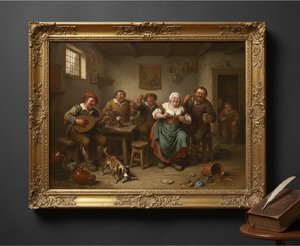
Adriaen van Ostade: A Master of Dutch Genre Painting & Social Commentary
Explore the life & work of Adriaen van Ostade, a leading Dutch Golden Age painter. Discover his realistic genre scenes, social commentary, and lasting influence on art history. Learn more at OriginalUniqueArt.
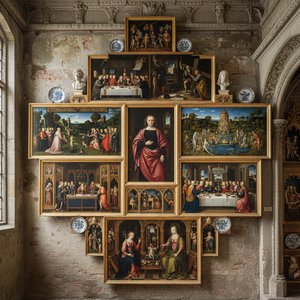
Renaissance Néerlandaise : 10 Chefs-d'œuvre Incontournables pour Décorer avec Art et Histoire
Plongez au cœur de la Renaissance néerlandaise avec 10 chefs-d'œuvre incontournables ! Découvrez Jan van Eyck, Robert Campin et les secrets de la peinture flamande. Trouvez l'inspiration déco et achetez des reproductions d'art de qualité muséale sur OriginalUniqueArt.com.

Hugo van der Goes: Devotion, Innovation & the Psychological Depth of Early Netherlandish Painting
Explore the revolutionary art of Hugo van der Goes – a master of Early Netherlandish painting renowned for his dramatic realism, psychological depth & profound influence on Renaissance artists. Discover his iconic works and lasting legacy.

Les 10 Chefs-d'œuvre du Baroque Néerlandais : Artistes et Décor Intemporels
Plongez au cœur du Baroque néerlandais avec les 10 œuvres incontournables de Rembrandt, Vermeer et autres maîtres hollandais. Découvrez l'histoire, la lumière et les couleurs qui ont façonné ce mouvement artistique. Reproductions d'art de qualité muséale sur OriginalUniqueArt.com

Rembrandt van Rijn : Les 25 Œuvres Maîtresses à Redécouvrir | OriginalUniqueArt
Plongez dans l'univers de Rembrandt van Rijn avec les 25 œuvres incontournables du maître baroque. Découvrez l'histoire, la technique et l'émotion derrière ses portraits célèbres et 'La Ronde de Nuit'. Reproductions tableaux haute qualité sur OriginalUniqueArt.com


