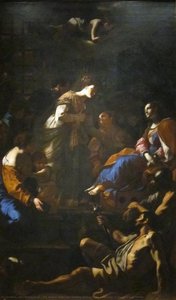
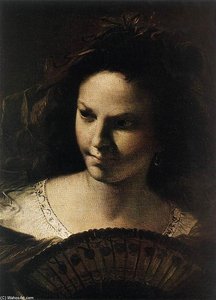
Mattia Preti muotokuva

98 tunnetuinta Mattia Preti -maalausta, jokainen ainutlaatuinen

Päivitetty marraskuu 2026 · järjestetty suosituimmuuspisteiden mukaan (jokaisen teoksen haut, vierailut ja tilaukset) · 99 teosta taiteilijalta Mattia Preti luettelossamme

Lyhyesti

The Marriage at Cana (1655) on se Mattia Preti -maalaus, joka herättää eniten huomiota; alkuperäisteos kuuluu museolle National Gallery, Lontoo. Sen jälkeen katse siirtyy kohteisiin Tribute Money (1640) ja St. John the Baptist Preaching. Mattia Pretiin 99 teoksemme joukosta nämä 98 ovat kuuluisimpia; jokainen on ainutlaatuinen alkuperäisteos, joka on esitelty vuosiluvun, museon ja sen syyn kera, miksi teos on säilyttänyt suosionsa.

1613 – 1699, Taverna Baroque dramatic lighting Eniten teoksia: Bavarian State Painting Collections

Mattia Preti -taiteilijan 10 parasta maalausta gallerian silmin

1
The Marriage at Cana (1655) tekijä Mattia Preti

The Marriage at Cana

1655 · Oil On Canvas · National Gallery, Lontoo

The air in the room feels heavy, thick with the scent of spilled wine and the heat of a crowded celebration. At the center of this bustling gathering, a miracle unfolds in silence. A long banquet table, draped in a stark white cloth, cuts through the darkness, acting as a stage for a divine transformation. Figures press against one another, their bodies overlapping in a dense, rhythmic movement that pulls…

2
Tribute Money (1640) tekijä Mattia Preti

Tribute Money

1640 · Oil On Canvas · Pinacoteca di Brera, Milano

To stand before Mattia Preti's Tribute Money is to step directly into the charged atmosphere of 17th-century Italian devotion. This magnificent oil on canvas, executed in 1640, pulses with the dramatic energy characteristic of the Baroque period. It is not merely a depiction of an event; it is an immersive experience, masterfully orchestrated by Preti’s hand. The scene gathers a group of men around a central table, their gestures and…

3
St. John the Baptist Preaching tekijä Mattia Preti

St. John the Baptist Preaching

Oil On Canvas · Legion of Honor, San Francisco

To stand before this depiction of St. John the Baptist is to be enveloped by the very breath of divine revelation. The scene pulses with an almost palpable energy, capturing that electrifying moment when sacred truth breaks through the mundane. At the heart of the composition stands St. John, a figure radiating both ascetic power and profound spiritual authority. He commands attention not merely through his central placement, but through…

4
Christ in Glory (1660) tekijä Mattia Preti

Christ in Glory

1660 · Oil On Canvas · Museo del Prado, Madrid

A Triumph of Baroque Faith: Exploring Mattia Preti’s ‘Christ in Glory’ Mattia Preti, a Calabrian Knight of the Baroque, stands as an emblem of artistic dynamism and fervent devotion during his era. Born in Taverna, Calabria, on February 24, 1613, his journey was marked by absorbing diverse influences—primarily from Caravaggio—resulting in a uniquely expressive style characterized by dramatic chiaroscuro and meticulous realism that would define his oeuvre. Before 1630, he…

5
Clorinda Rescuing Sofronia and Olindo (1660) tekijä Mattia Preti

Clorinda Rescuing Sofronia and Olindo

1660 · Oil On Canvas · J. Paul Getty Museum, Los Angeles

The air in the painting feels heavy, thick with the scent of iron and dust. A single, theatrical light cuts through the murky atmosphere, striking the pale skin of a woman seated on the right. She is the center of a storm, a figure of vulnerability amidst a crowded, muscular arrangement of limbs and steel. Around her, the composition erupts in a series of sweeping diagonals. Weapons and reaching arms…

6
Ecce Homo (1661) tekijä Mattia Preti

Ecce Homo

1661 · Oil On Canvas · Condé-museo, Chantilly

In this treatment of Ecce Homo, Mattia Preti employs a highly theatrical arrangement to command the viewer's attention. The composition is built upon a balcony placed transversely, a clever spatial device that pushes the figure of Christ into the immediate foreground. This positioning creates an intimate, almost confrontational proximity between the subject and the observer. The artist’s style here is both dramatic and heroic, moving beyond simple naturalism to imbue…

7
Saint Paul the Hermit (1650) tekijä Mattia Preti

Saint Paul the Hermit

1650 · Oil On Canvas · Museu Nacional d'Art de Catalunya, Barcelona

The shadows press in from every corner, leaving only a sliver of light to illuminate the weathered face of Saint Paul the Hermit. He sits in a profound, heavy silence, his body a map of ascetic devotion. Every line etched into his skin tells a story of years spent in the desert, away from the clamor of the world. His eyes are turned upward, searching the darkness for a light…

8
Wedding at Cana (1655) tekijä Mattia Preti

Wedding at Cana

1655 · Oil On Canvas · National Gallery, Lontoo

Mattia Preti’s Wedding at Cana captures the first miracle of Christ during a wedding feast in Galilee. The scene brings together Christ, his mother, and the disciples within a crowded, festive setting. A long banquet table, draped in a white cloth, serves as the central stage for the unfolding event. Amidst the gathering, Mary directs the servants, while the steward observes the transformation of the liquid with astonishment.

9
Doubting Thomas (1660) tekijä Mattia Preti

Doubting Thomas

1660 · Oil On Canvas · Kunsthistorisches Museum, Wien

In this oil on canvas, we find ourselves pulled into an intimate, almost uncomfortable proximity to a profound biblical encounter. The scene captures the precise second when the apostle Thomas seeks physical verification of the resurrection, reaching out to touch the wound in Christ's side. There is a heavy, palpable tension in the way the figures are arranged along a diagonal axis, guiding our gaze directly toward that central point…

10
The crucifixion of St Andrew (1651) tekijä Mattia Preti

The crucifixion of St Andrew

1651 · Oil On Canvas · Art Gallery of South Australia, Adelaide

The crucifixion of St Andrew is an oil on canvas work by Mattia Preti. Created about 1651, this piece belongs to the Baroque movement of seventeenth-century Italy. The scene captures a moment of profound religious significance, focusing on the martyrdom of the saint. It is a heavy, physical depiction of faith under the weight of wood and shadow.

Mattia Pretin kuuluisia maalauksia, numerot 11–98

11St John the Baptist before Herod (1665) tekijä Mattia PretiSt John the Baptist before Herod1665 12Saint Veronica with the Veil (1657) tekijä Mattia PretiSaint Veronica with the Veil1657 · Los Angelesin maakunnallinen taidemuseo 13Portrait of a Grand Master of the Knights of Malta, Martin de Redin (1660) tekijä Mattia PretiPortrait of a Grand Master of the Knights of Malta, Martin de Redin1660 · Art Institute of Chicago 14Belisarius Receiving Alms (1660) tekijä Mattia PretiBelisarius Receiving Alms1660 · Museum Boijmans Van Beuningen 15The Game of Draughts (1630) tekijä Mattia PretiThe Game of Draughts1630 · Ashmolean Museum 16Ecce homo tekijä Mattia PretiEcce homo 17Dice Players (1635) tekijä Mattia PretiDice Players1635 · Krakovan kansallismuseo 18The Beheading of Saint John the Baptist (1640) tekijä Mattia PretiThe Beheading of Saint John the Baptist1640 · National Gallery of Ireland 19The Pardon of St. John Chrysostom (1640) tekijä Mattia PretiThe Pardon of St. John Chrysostom1640 · Cincinnati Art Museum 20Clorinda rescues Olindo and Sophronia (1646) tekijä Mattia PretiClorinda rescues Olindo and Sophronia1646 · Musei di Strada Nuova 21Vocation of the Apostle Matthew (1637) tekijä Mattia PretiVocation of the Apostle Matthew1637 · Kunsthistorisches Museum 22The Adoration of the Shepherds (1645) tekijä Mattia PretiThe Adoration of the Shepherds1645 · National Museum in Warsaw 23the head of St. John presented to the king (1638) tekijä Mattia Pretithe head of St. John presented to the king1638 24Bearded Old Man's Head (1656) tekijä Mattia PretiBearded Old Man's Head1656 · Bavarian State Painting Collections 25Return of the Prodigal Son (1656) tekijä Mattia PretiReturn of the Prodigal Son1656 · Bavarian State Painting Collections 26Mary Magdalene (1656) tekijä Mattia PretiMary Magdalene1656 · Bavarian State Painting Collections 27Tobias and the Angel (1656) tekijä Mattia PretiTobias and the Angel1656 · Bavarian State Painting Collections 28Saint Andrew (1656) tekijä Mattia PretiSaint Andrew1656 · Bavarian State Painting Collections 29The Feast of Absalom (1658) tekijä Mattia PretiThe Feast of Absalom1658 · National Gallery of Canada 30Salomé with the Head of St. John before Herod (1658) tekijä Mattia PretiSalomé with the Head of St. John before Herod1658 · Gemäldegalerie Alte Meister im Schloss Wilhelmshöhe 31An Angel shows Hagar the Way (1656) tekijä Mattia PretiAn Angel shows Hagar the Way1656 · Bavarian State Painting Collections 32Paul of Thebes (1675) tekijä Mattia PretiPaul of Thebes1675 · National Museum of Ancient Art 33Self-portrait (1695) tekijä Mattia PretiSelf-portrait1695 34The Vision of Saint Paul (1700) tekijä Mattia PretiThe Vision of Saint Paul1700 35The Martyrdom of Saint Catherine (1700) tekijä Mattia PretiThe Martyrdom of Saint Catherine1700 · MUŻA 36The Denial of Saint Peter (1700) tekijä Mattia PretiThe Denial of Saint Peter1700 · Musée des Beaux-Arts 37The Raising of Lazarus (1650) tekijä Mattia PretiThe Raising of Lazarus1650 · Galleria Nazionale d'Arte Antica 38The Concert (1630) tekijä Mattia PretiThe Concert1630 · Thyssen-Bornemisza Museum 39A Man Cutting Tobacco (1660) tekijä Mattia PretiA Man Cutting Tobacco1660 40Herodin juhla (1661) tekijä Mattia PretiHerodin juhla1661 · Toledo Museum of Art 41Apelle painting Campaspe (1600) tekijä Mattia PretiApelle painting Campaspe1600 · Pinacoteca Stuard 42The Baptism of Christ (1661) tekijä Mattia PretiThe Baptism of Christ1661 · Pyhän Johanneksen konventtikirkko 43The Roman Empress Faustina Visiting Saint Catherine of Alexandria in Prison (1643) tekijä Mattia PretiThe Roman Empress Faustina Visiting Saint Catherine of Alexandria in Prison1643 · The Dayton Art Institute 44Queen Tomyris Receiving the Head of Cyrus, King of Persia (1670) tekijä Mattia PretiQueen Tomyris Receiving the Head of Cyrus, King of Persia1670 45St. George Victorious over the Dragon (1678) tekijä Mattia PretiSt. George Victorious over the Dragon1678 · Collegiate Basilica of St. George 46St John Reproaching Herod (1662) tekijä Mattia PretiSt John Reproaching Herod1662 · Museo de Bellas Artes de Sevilla 47Christ and the Money Changers (1600) tekijä Mattia PretiChrist and the Money Changers1600 · Museo di Capodimonte 48Concert (detail) (1630) tekijä Mattia PretiConcert (detail)1630 · Hermitage-museo 49Lennokkivaanki (1630) tekijä Mattia PretiLennokkivaanki1630 · Kunstpalast 50The Adoration of the Shepherds (1699) tekijä Mattia PretiThe Adoration of the Shepherds1699 · Walker Art Gallery 51Christ and the Woman Taken in Adultery tekijä Mattia PretiChrist and the Woman Taken in AdulterySaint Louis Art Museum 52The Martyrdom of Saint Paul tekijä Mattia PretiThe Martyrdom of Saint PaulMuseum of Fine Arts 53Tobias Healing His Father's Blindness tekijä Mattia PretiTobias Healing His Father's BlindnessMuseum of Fine Arts 54Martyrdom of Saint Erasmus tekijä Mattia PretiMartyrdom of Saint ErasmusBavarian State Painting Collections 55Martyrdom of Saint Andrew tekijä Mattia PretiMartyrdom of Saint Andrew 56St. Paul the Hermit tekijä Mattia PretiSt. Paul the HermitClevelandin taidemuseo 57Concert in the family tekijä Mattia PretiConcert in the family 58Zachary on his knees, and studies of his head tekijä Mattia PretiZachary on his knees, and studies of his head 59Old man sitting, holding a book, speaking to a young man tekijä Mattia PretiOld man sitting, holding a book, speaking to a young man 60Musical angels, studies for a ceiling compartment tekijä Mattia PretiMusical angels, studies for a ceiling compartment 61A Group of Saints and Angels tekijä Mattia PretiA Group of Saints and Angels 62God the Father surrounded by angels tekijä Mattia PretiGod the Father surrounded by angels 63The Release of St Peter from Prison tekijä Mattia PretiThe Release of St Peter from PrisonAcademy of Fine Arts Vienna 64Käynti (The Visitation) (1649) tekijä Mattia PretiKäynti (The Visitation)1649 · Virginia Museum of Fine Arts 65Pilate Washing his Hands (1663) tekijä Mattia PretiPilate Washing his Hands1663 · Metropolitan Museum of Art 66The Martyrdom of Saint Gennaro (1685) tekijä Mattia PretiThe Martyrdom of Saint Gennaro1685 · National Gallery of Art 67The Martyrdom of St. Bartholomew tekijä Mattia PretiThe Martyrdom of St. BartholomewPokrajinski muzej Ptuj- Ormož 68Saint John the Baptist Preaching (1650) tekijä Mattia PretiSaint John the Baptist Preaching1650 · Metropolitan Museum of Art 69St John Cast into Prison (1661) tekijä Mattia PretiSt John Cast into Prison1661 · Pyhän Johanneksen konventtikirkko 70Seated Bishop with Arms Extended and Three Attendant Figures tekijä Mattia PretiSeated Bishop with Arms Extended and Three Attendant Figures 71Salomeen päässä Johannes Apostoli tekijä Mattia PretiSalomeen päässä Johannes ApostoliRinglingin taidemuseo 72Design for the Decoration of a Cupola with a Prophet, King David and Two Putti tekijä Mattia PretiDesign for the Decoration of a Cupola with a Prophet, King David and Two Putti 73A Mother Entrusting Her Sons to Christ tekijä Mattia PretiA Mother Entrusting Her Sons to ChristPinacoteca di Brera 74Beheading of St. Catherine tekijä Mattia PretiBeheading of St. CatherineNational Museum of Fine Arts 75Holy martyr (Saint Stephan?) tekijä Mattia PretiHoly martyr (Saint Stephan?)Civic Museums of Reggio Emilia 76Flying Angel (1699) tekijä Mattia PretiFlying Angel1699 · Kunstpalast 77St Sebastian (1660) tekijä Mattia PretiSt Sebastian1660 · Museo di Capodimonte 78Sophonisba vastaanottaa maljan (1670) tekijä Mattia PretiSophonisba vastaanottaa maljan1670 · Musée des Beaux-Arts de Lyon 79St. Nicholas of Bari (1653) tekijä Mattia PretiSt. Nicholas of Bari1653 · Museo di Capodimonte 80Aeneas, Anchises and Ascanius Fleeing Troy (1630) tekijä Mattia PretiAeneas, Anchises and Ascanius Fleeing Troy1630 · Galleria Nazionale d'Arte Antica 81Saint John the Baptist tekijä Mattia PretiSaint John the BaptistMuseo di Capodimonte 82Judith and Holofernes tekijä Mattia PretiJudith and HolofernesMuseo di Capodimonte 83The Return of the Prodigal Son tekijä Mattia PretiThe Return of the Prodigal Son 84The Martyrdom of Saint Peter (1630) tekijä Mattia PretiThe Martyrdom of Saint Peter1630 · Musée de Grenoble 85Saint Anthony Abbot (1628) tekijä Mattia PretiSaint Anthony Abbot1628 86Vanitas (1650) tekijä Mattia PretiVanitas1650 87The Return of the Prodigal Son (1658) tekijä Mattia PretiThe Return of the Prodigal Son1658 · Royal Palace of Naples 88The Four Evangelists (1650) tekijä Mattia PretiThe Four Evangelists1650 · Galleria Regionale di Palazzo Abatellis 89Concert (1630) tekijä Mattia PretiConcert1630 · Hermitage-museo 90The Banquet Of Baldassare tekijä Mattia PretiThe Banquet Of Baldassare 91Absalom's Feast (1653) tekijä Mattia PretiAbsalom's Feast1653 · Museo di Capodimonte 92The Madonna of Costantinople (1656) tekijä Mattia PretiThe Madonna of Costantinople1656 · Museo di Capodimonte 93Christ and the Woman Taken in Adultery tekijä Mattia PretiChrist and the Woman Taken in AdulteryGalleria Regionale di Palazzo Abatellis 94St. George on Horseback (1658) tekijä Mattia PretiSt. George on Horseback1658 · Pyhän Johanneksen konventtikirkko 95Saint John the Baptist Wearing the Red Tabard of the Order of Saint John (1671) tekijä Mattia PretiSaint John the Baptist Wearing the Red Tabard of the Order of Saint John1671 · MUŻA 96The Banquet of the Rich Glutton (1685) tekijä Mattia PretiThe Banquet of the Rich Glutton1685 · Galleria Nazionale d'Arte Antica 97Tomyris Plunges the Head of the Dead Cyrus Into a Vessel of Blood (1685) tekijä Mattia PretiTomyris Plunges the Head of the Dead Cyrus Into a Vessel of Blood1685 98Plato and Diogenes (1690) tekijä Mattia PretiPlato and Diogenes1690 · Capitoline Museums

Mattia Pretin kuuluisat maalaukset aikakausittain

Aiheet, jotka vangitsivat Mattia Pretiin katseen

Nämä neljä aihetta toistuvat näissä alkuperäisteoksissa useimmin, jokaisesta löytyy hienoin esimerkki.

Museot, joissa Mattia Preti'n alkuperäisteokset sijaitsevat

Tämän sivun teoksista eniten sisältävät 8 museota.

Museo Kaupunki Mattia Preti teokset Tämän listan maalaukset
Bavarian State Painting Collections, MünchenBavarian State Painting Collections München 7 Bearded Old Man's Head, Return of the Prodigal Son, Mary Magdalene
Museo di Capodimonte, NapoliMuseo di Capodimonte Napoli 7 Christ and the Money Changers, St Sebastian, St. Nicholas of Bari
Pyhän Johanneksen konventtikirkko, VallettaPyhän Johanneksen konventtikirkko Valletta 3 The Baptism of Christ, St John Cast into Prison, St. George on Horseback
National Gallery, LontooNational Gallery Lontoo 2 The Marriage at Cana, Wedding at Cana
Pinacoteca di Brera, MilanoPinacoteca di Brera Milano 2 Tribute Money, A Mother Entrusting Her Sons to Christ
Kunsthistorisches Museum, WienKunsthistorisches Museum Wien 2 Doubting Thomas, Vocation of the Apostle Matthew
MUŻA, VallettaMUŻA Valletta 2 The Martyrdom of Saint Catherine, Saint John the Baptist Wearing the Red Tabard of the Order of Saint John
Galleria Nazionale d'Arte Antica, RoomaGalleria Nazionale d'Arte Antica Rooma 2 The Raising of Lazarus, Aeneas, Anchises and Ascanius Fleeing Troy

Mattia Preti vuosikymmenten varrelta: jokaisesta yksi ainutlaatuinen alkuperäisteos

Teokset vuosikymmenittäin

Valitse vuosikymmen nähdäksesi sen määrittäneen alkuperäisteoksen.

Mattia Pretin maalaukset: kysymyksiä gallerialle

Mikä on Mattia Preti tunnetuin teos?Paljasta vastaus

The Marriage at Cana (1655), National Gallery, Lontoo. Seuraavina ovat Tribute Money (1640) ja St. John the Baptist Preaching.

Missä iässä Mattia Preti loi teoksen The Marriage at Cana?Paljasta vastaus

42 vuotta vanha: The Marriage at Cana on peräisin vuodelta 1655, ja Mattia Preti on syntynyt vuonna 1613.

Mitkä ovat Mattia Preti kymmenen kuuluisinta maalausta?Paljasta vastaus

The Marriage at Cana, Tribute Money, St. John the Baptist Preaching, Christ in Glory, Clorinda Rescuing Sofronia and Olindo, Ecce Homo, Saint Paul the Hermit, Wedding at Cana, Doubting Thomas ja The crucifixion of St Andrew. Yllä oleva sijoitus kertoo kunkin teoksen vuosiluvun ja museon.

Kuinka monta Mattia Preti -teosta tunnetaan?Paljasta vastaus

Katalogissamme on 99 teosta taiteilijalta Mattia Preti, aikaväliltä 1628–1699.

Missä voi nähdä tunnetuimmat Mattia Preti -alkuperäisteokset?Paljasta vastaus

Pääasiassa Bavarian State Painting Collections (München), Museo di Capodimonte (Napoli) ja Pyhän Johanneksen konventtikirkko (Valletta). Yllä oleva museotaulukko listaa ne kaikki.

Mihin ajanjaksoon Mattia Preti tunnituimmat maalauksensa sijoittuvat?Paljasta vastaus

Aikakaudella 1650s: 22 sivun 98 teoksista on tehty silloin, joista The Marriage at Cana.

Mikä on Mattia Preti kuuluisimmista maalauksista varhaisin ja mikä uusin?Paljasta vastaus

Tällä sivulla vanhin on Saint Anthony Abbot (1628) ja uusin The Adoration of the Shepherds (1699).

Mitä aiheita Mattia Preti suosi?Paljasta vastaus

Man (31), Woman (15) ja Drapery (14), yhteensä 98 teosta tällä sivulla.

Mitä materiaaleja Mattia Preti käytti eniten?Paljasta vastaus

Oil On Canvas, 53 teoksesta sivun 98 teoksesta.

Mihin taidesuuntaukseen Mattia Preti kuuluu?Paljasta vastaus

Baroque dramatic lighting, tämän sivun alkuperäisteosten perusteella.

Mitä Mattia Preti alkuperäisteoksia voin nähdä museossa Bavarian State Painting Collections?Paljasta vastaus

Bearded Old Man's Head, Return of the Prodigal Son ja Mary Magdalene: Bavarian State Painting Collections, München -ssä on 7 tämän sivun teoksista.

Mattia Preti: taiteilijan muotokuva

Mattia Preti (1613 – 1699): The Calabrian Knight of the Baroque

Mattia Preti, known as *Il Cavalier Calabrese* – the Calabrian Knight – stands as a monumental figure in 17th-century Italian Baroque painting. Born in Taverna, Calabria, on February 24, 1613, his artistic journey was one of remarkable transformation and evolution, absorbing diverse influences and culminating in a uniquely expressive style that profoundly impacted the art world, particularly in Malta where he spent much of his later life. Preti’s early training began under Giovanni Battista Caracciolo, a painter deeply rooted in the Caravaggist movement – a lineage that would forever shape his artistic vision. This foundational exposure instilled within him an acute understanding of dramatic *chiaroscuro* – the intense interplay of light and shadow – and a commitment to realistic depiction that remained central to his work throughout his career.

Before 1630, he joined his brother Gregorio in Rome, immersing himself completely in the vibrant artistic atmosphere of the city. Here, he studied under the masters who defined the era: Caravaggio, Guercino, Rubens, Guido Reni, and Giovanni Lanfranco. This period wasn’t merely about imitation; it was a crucial process of synthesis, where Preti absorbed the techniques and philosophies of these giants, gradually forging his own distinctive voice.

Forging a Dynamic Style: Beyond Caravaggism

Preti's artistic development wasn't simply a mimicry of his predecessors; it was a masterful integration of diverse influences into a style uniquely his own. While initially deeply influenced by Caravaggism, he skillfully moved beyond its strict confines, embracing the dynamism and emotional intensity that characterized the High Baroque. His time in Naples further refined this evolution, exposing him to the vibrant work of Luca Giordano – a painter known for his exuberant color palettes and dramatic compositions.

This period saw Preti’s canvases swell with energetic movement, complex compositions, and a heightened sense of drama. He masterfully employed dramatic contrasts of light and shadow, inherited from Caravaggio, not simply as a technical device but as a means of intensifying emotional impact and guiding the viewer's eye. His figures are imbued with palpable emotion – piety, anguish, ecstasy – conveyed through expressive faces and dynamic body language. This ability to evoke powerful feelings became a defining characteristic of his oeuvre. He wasn’t content merely to depict scenes; he sought to *animate* them, breathing life into biblical narratives and religious iconography.

Major Commissions and Artistic Achievements

Mattia Preti's exceptional talent quickly garnered recognition, leading to a series of significant commissions throughout Italy. Early in his career, he created impressive fresco cycles for Roman churches like Sant’Andrea della Valle and San Carlo ai Catinari, demonstrating an aptitude for large-scale decorative painting. His work at the church of San Biagio in Modena showcased his ability to adapt his style to different architectural settings.

However, some of his most ambitious – though sadly lost – works were the frescoes he painted on seven city gates in Naples depicting the Virgin or saints delivering people from the plague. Though only sketches remain today, they testify to the scale and impact of these monumental creations. These commissions weren’t simply about fulfilling a patron's request; they were opportunities for Preti to engage with the religious and cultural life of the communities he served, imbuing his art with meaning and purpose.

The Maltese Zenith: St. John’s Co-Cathedral

It was in Malta, however, that Mattia Preti reached the pinnacle of his artistic achievement. Appointed a Knight of the Order of Saint John in 1660, he embarked on a transformative project: the complete redecoration of the interior of St. John’s Co-Cathedral in Valletta. This undertaking – arguably his most significant legacy – involved an astonishing series of paintings depicting the life and martyrdom of Saint John the Baptist.

The sheer scale of the project is breathtaking; Preti essentially created a visual narrative that enveloped the viewer, immersing them in the story of the saint. The opulent Baroque setting provided the perfect canvas for his dramatic style, and the resulting artwork cemented his reputation as one of Europe’s leading painters. His work at St. John's wasn’t merely decorative; it was an act of devotion, a testament to his faith, and a powerful expression of the Order’s religious identity.

A Lasting Legacy

Mattia Preti continued to receive commissions from across Europe following his success in Malta, solidifying his position as a leading figure in Italian Baroque art. He died in 1699, leaving behind a rich artistic legacy that continues to inspire and captivate audiences today. His masterful use of light and shadow, dynamic compositions, and ability to convey intense emotion remain hallmarks of his style. His contributions are preserved in museums such as the Capodimonte Museum in Naples, and through reproductions made available by platforms like OriginalUniqueArt.com, ensuring that his art continues to reach new generations. The enduring impact of Preti’s work is perhaps most vividly felt within the walls of St. John's Co-Cathedral, a breathtaking testament to his artistic genius and unwavering dedication to the Baroque aesthetic.