
 Esikatselu
 Jaa
Jaa Jaa
Jaa
 Tarkemmat tiedot

 Lataa
Lataa
 Samanlaisia
 Röntgenkuva
 Diaesitys
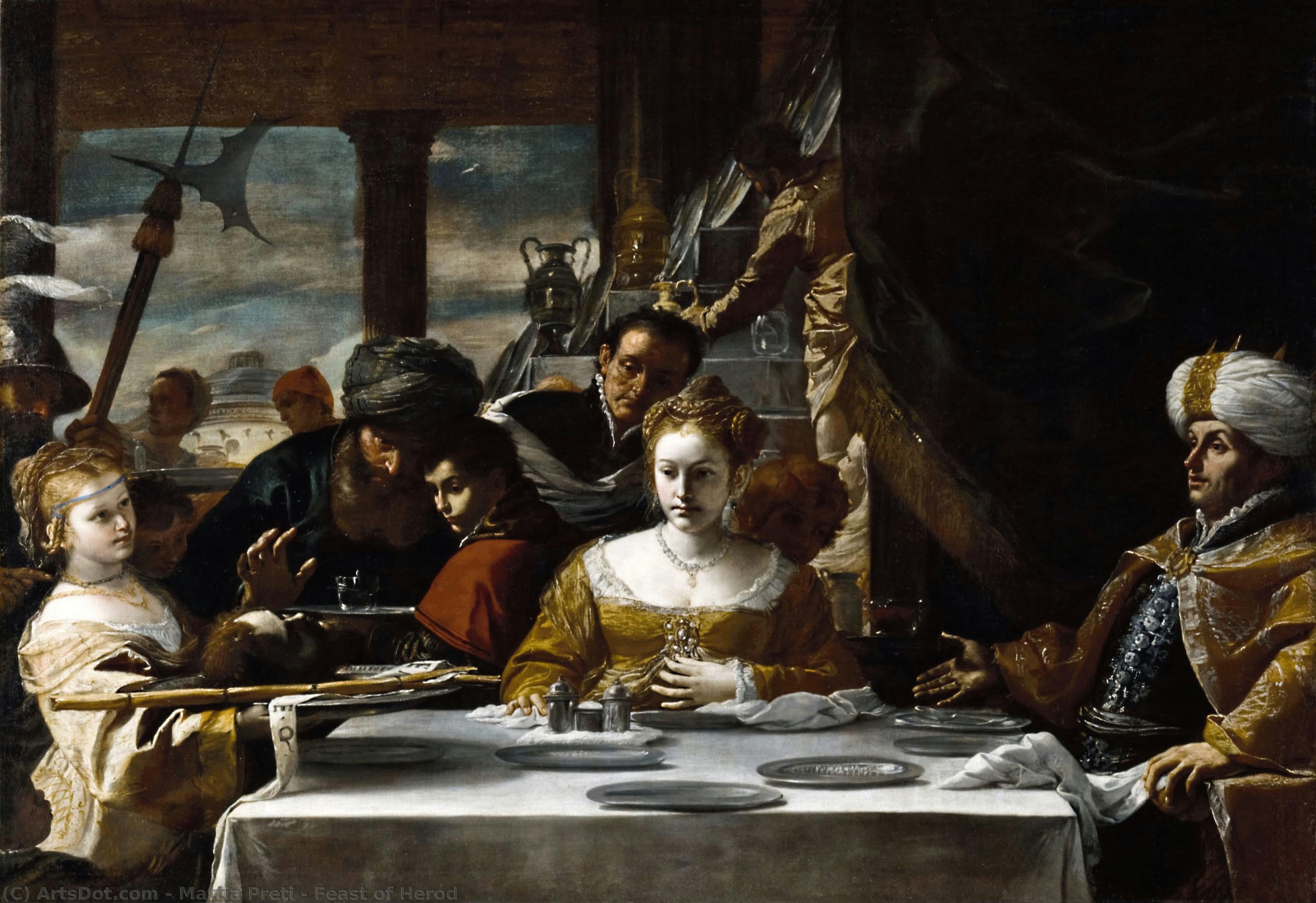
Herodin juhla
 Öljyväri kankaalle
- Seinätaide
- Baroque Dramatic Lighting
 1661
1661 2521.0 x 1778.0 cm
 Toledon taidemuseo
 Näytä lisää
Käsinmaalattu öljykopio
Käsinmaalattu öljyväri kankaalle haluamassasi koossa ja kehyksissä, taiteilijoidemme valmistamana tilauksesta. ( Osta printti Osta kuva)




P118B $10

P118H $10

P118W $10

P438Z $10

P508JH $12

P508YH $12

P805H $10

P805Z $10

P919BZ $10

P919G $10

P919XJ $10

P959ZH $10

P968JZ $12

W106C $8

W218G $10

W218JH $8

W218Y $10

W307PJ $10

W316G $10

W316PJ $8

W316Y $10

W398PJ $8

W4111J $10

W500HY $15

W500JH $15

W692G $12

W849H $8

W940BG $15

W953PJ $8




Valitse valmiista mitoistamme sellaiset, jotka vastaavat teoksen alkuperäisiä mittasuhteita.

Voit syöttää omat mitat sopimaan tiettyyn kehykseen tai tilaan. Jos valitsemasi koko ei vastaa alkuperäisen kuvan mittasuhteita, rajaamme taideteoksen tai jatkamme maalausta käsin maalatuilla elementeillä. Digitaalinen esikatselu lähetetään hyväksyttäväksi ennen tuotannon aloittamista.
Huomioithan, että näytöllä oleva esikatselu ei vastaa todellista rajausta tai jatkamista. Vain digitaalinen mallikuva näyttää lopullisen sommittelun tarkasti.
Vaikka mittatilaustyöt ovat mahdollisia, suosittelemme valitsemaan mitan ennalta määritetystä listasta alkuperäisten mittasuhteiden säilyttämiseksi.
Tilauksen jälkeen OriginalUniqueArt.com -tiimi lähettää asiakkaalle ohjeet ja esikatselukuvan.
Maailmanlaajuinen toimitus () 3–4 viikossa tavallisen 5 viikon sijaan. (18 elokuu). Laadusta ei tingitä.

Ilmainen pikatoimitus ympäri maailman

Korkealaatuinen pellavakangas

Kattava kuljetusvakuutus

Tulliveron palautustakuu

Täydellinen värien vastaavuustakuu

60 päivän palautusoikeus (vain valmistusvirheet)

100% rahat takaisin -takuu

Määräalennus tarjous
 Lasivaihtoehto on saatavilla vain alle 110 cm kokoisina teoksina

Herodin juhla
Reproduktiotekniikka
Replikaatin koko
-


Kokonaishinta
$ 475
Teoksen kuvaus
A Moment Frozen in Time – The Dramatic Narrative of “Feast of Herod”
Mattia Preti’s “Feast of Herod,” completed in 1661, isn't merely a depiction of an opulent banquet; it’s a meticulously crafted theatrical tableau that encapsulates the anxieties and ambitions of its era. Executed during the height of Baroque artistic fervor in Malta—where Preti spent much of his prolific career—the painting transcends mere visual representation to deliver a profound psychological portrait of power, betrayal, and divine retribution.
- Subject Matter: The scene portrays Herod Antipas’s birthday celebration, orchestrated by his daughter Salome, following the assassination attempt on John the Baptist. It's a calculated drama designed to solidify Herod’s authority and appease his wife Mariamne—a narrative steeped in biblical allusion and political intrigue.
- Style: Preti adheres rigorously to the Baroque aesthetic, prioritizing dramatic chiaroscuro – the masterful manipulation of light and shadow – to heighten emotional intensity and create a palpable sense of depth. This technique isn’t simply decorative; it serves as a conduit for conveying psychological states and amplifying the narrative's impact.
Technical Brilliance: Layered Brushstrokes and Textured Surfaces
The artist’s meticulous attention to detail is evident in every aspect of “Feast of Herod.” Preti employs layering brushstrokes—a hallmark of Baroque painting—to build up texture on the canvas, particularly in fabrics like Salome’s gown and the opulent drapery adorning the banquet hall. These textured surfaces contribute significantly to the overall illusionistic effect, immersing viewers within a richly realized environment.
- Medium: Oil paint on canvas provides exceptional luminosity and allows for nuanced tonal gradations—crucial for achieving Preti’s dramatic lighting scheme.
- Perspective & Composition: The flattened perspective creates a sense of depth through overlapping figures and architectural elements, guiding the eye across the scene and emphasizing key characters. Diagonal lines further enhance dynamism, mirroring the turbulent emotions at play.
Symbolism Beyond Surface Decoration
“Feast of Herod” is laden with symbolic significance that extends far beyond its visual splendor. The stark contrast between illuminated areas and darkened recesses underscores the moral ambiguity inherent in the narrative—representing both earthly ambition and divine judgment. Furthermore, the expressions on the faces of Herod, Salome, Mariamne, and the attendants convey a spectrum of emotions: regal composure juxtaposed with simmering resentment, calculated seduction, desperate longing, and chilling indifference.
- Color Palette: Dominant warm tones—reds, golds, browns—evoke an atmosphere of luxury and indulgence, mirroring Herod’s extravagant lifestyle.
- Gesture & Expression: The artist's masterful depiction of gesture and facial expression is paramount in conveying the psychological drama unfolding before the viewer’s eyes.
Emotional Resonance: Capturing the Horror of Betrayal
Despite its opulent setting, “Feast of Herod” possesses a haunting stillness that underscores the horrific consequences of Herod’s actions—the gruesome assassination of John the Baptist and Salome's subsequent demand for his severed head. Preti skillfully captures this moment of profound unease through subtle compositional choices and restrained coloration, prompting contemplation on themes of honor, revenge, and the fragility of human ambition. The painting remains a testament to Preti’s ability to transform historical narrative into emotionally resonant visual experience.
Taiteilijan elämäkerta
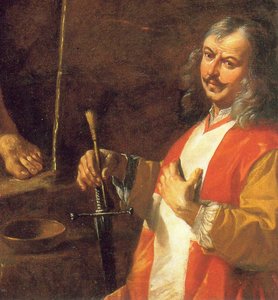
Mattia Preti (1613 – 1699): The Calabrian Knight of the Baroque
Mattia Preti, known as *Il Cavalier Calabrese* – the Calabrian Knight – stands as a monumental figure in 17th-century Italian Baroque painting. Born in Taverna, Calabria, on February 24, 1613, his artistic journey was one of remarkable transformation and evolution, absorbing diverse influences and culminating in a uniquely expressive style that profoundly impacted the art world, particularly in Malta where he spent much of his later life. Preti’s early training began under Giovanni Battista Caracciolo, a painter deeply rooted in the Caravaggist movement – a lineage that would forever shape his artistic vision. This foundational exposure instilled within him an acute understanding of dramatic *chiaroscuro* – the intense interplay of light and shadow – and a commitment to realistic depiction that remained central to his work throughout his career.
Before 1630, he joined his brother Gregorio in Rome, immersing himself completely in the vibrant artistic atmosphere of the city. Here, he studied under the masters who defined the era: Caravaggio, Guercino, Rubens, Guido Reni, and Giovanni Lanfranco. This period wasn’t merely about imitation; it was a crucial process of synthesis, where Preti absorbed the techniques and philosophies of these giants, gradually forging his own distinctive voice.
Forging a Dynamic Style: Beyond Caravaggism
Preti's artistic development wasn't simply a mimicry of his predecessors; it was a masterful integration of diverse influences into a style uniquely his own. While initially deeply influenced by Caravaggism, he skillfully moved beyond its strict confines, embracing the dynamism and emotional intensity that characterized the High Baroque. His time in Naples further refined this evolution, exposing him to the vibrant work of Luca Giordano – a painter known for his exuberant color palettes and dramatic compositions.
This period saw Preti’s canvases swell with energetic movement, complex compositions, and a heightened sense of drama. He masterfully employed dramatic contrasts of light and shadow, inherited from Caravaggio, not simply as a technical device but as a means of intensifying emotional impact and guiding the viewer's eye. His figures are imbued with palpable emotion – piety, anguish, ecstasy – conveyed through expressive faces and dynamic body language. This ability to evoke powerful feelings became a defining characteristic of his oeuvre. He wasn’t content merely to depict scenes; he sought to *animate* them, breathing life into biblical narratives and religious iconography.
Major Commissions and Artistic Achievements
Mattia Preti's exceptional talent quickly garnered recognition, leading to a series of significant commissions throughout Italy. Early in his career, he created impressive fresco cycles for Roman churches like Sant’Andrea della Valle and San Carlo ai Catinari, demonstrating an aptitude for large-scale decorative painting. His work at the church of San Biagio in Modena showcased his ability to adapt his style to different architectural settings.
However, some of his most ambitious – though sadly lost – works were the frescoes he painted on seven city gates in Naples depicting the Virgin or saints delivering people from the plague. Though only sketches remain today, they testify to the scale and impact of these monumental creations. These commissions weren’t simply about fulfilling a patron's request; they were opportunities for Preti to engage with the religious and cultural life of the communities he served, imbuing his art with meaning and purpose.
The Maltese Zenith: St. John’s Co-Cathedral
It was in Malta, however, that Mattia Preti reached the pinnacle of his artistic achievement. Appointed a Knight of the Order of Saint John in 1660, he embarked on a transformative project: the complete redecoration of the interior of St. John’s Co-Cathedral in Valletta. This undertaking – arguably his most significant legacy – involved an astonishing series of paintings depicting the life and martyrdom of Saint John the Baptist.
The sheer scale of the project is breathtaking; Preti essentially created a visual narrative that enveloped the viewer, immersing them in the story of the saint. The opulent Baroque setting provided the perfect canvas for his dramatic style, and the resulting artwork cemented his reputation as one of Europe’s leading painters. His work at St. John's wasn’t merely decorative; it was an act of devotion, a testament to his faith, and a powerful expression of the Order’s religious identity.
A Lasting Legacy
Mattia Preti continued to receive commissions from across Europe following his success in Malta, solidifying his position as a leading figure in Italian Baroque art. He died in 1699, leaving behind a rich artistic legacy that continues to inspire and captivate audiences today. His masterful use of light and shadow, dynamic compositions, and ability to convey intense emotion remain hallmarks of his style. His contributions are preserved in museums such as the Capodimonte Museum in Naples, and through reproductions made available by platforms like OriginalUniqueArt.com, ensuring that his art continues to reach new generations. The enduring impact of Preti’s work is perhaps most vividly felt within the walls of St. John's Co-Cathedral, a breathtaking testament to his artistic genius and unwavering dedication to the Baroque aesthetic.
Mattia Preti
1613 - 1699 , Italia
Pikatiedot
- Artistic Movement Or Style: Barokki
- Artists Or Movements Influenced By This Artist: ['Stringa']
- Artists Who Influenced This Artist:
- Caravaggio
- Guercino
- Date Of Birth: 24 feb 1613
- Date Of Death: 3 jan 1699
- Full Name: Mattia Preti
- Nationality: Italian
- Notable Artworks:
- Absalomin juhla
- Jael tappaa Sisara
- Place Of Birth: Taverna, Italia
Liittyvät artikkelit

Barokin loisto: Kuinka tuoda ylellisyyttä ja tunnetta nykyaikaiseen sisustukseen
Tutustu barokki sisustuksen loistoon! Opi luomaan ylellistä ja tunnelmallista kotia historiallisen tyylin inspiroimana. Vinkkejä, esimerkkejä ja in apua.

Italian Baroque Unlocked: High-Drama Art That Hits Hard
Dive into the high-drama world of Italian Baroque art. Discover how chiaroscuro, intense emotion, and theatrical lighting redefined aesthetics. Explore the visceral power of the Counter-Reformation through a modern lens with expert insights from OriginalUniqueArt.com.

Barokin mestariteokset: Taidetta ja loistoa kotiisi – OriginalUniqueArt.com
Uppoudu barokin loistokkuuteen! Tutustu Caravaggion, Rembrandtin ja Vermeerin kaltaisten mestareiden tunnetuimpiin teoksiin. Taidehistoriaa kotiisi – löydä upeat taidetulosteet ja canvas-taulut OriginalUniqueArt.comista.

The Dramatic Flourish: Exploring the Baroque Movement's Enduring Legacy in Art History
Explore the dramatic world of Baroque art! Discover iconic artists like Caravaggio & Rubens, defining techniques, and its lasting impact on art history. Expert insights for collectors & enthusiasts at OriginalUniqueArt.

The Visceral Stage: Exploring Dramatic Narratives & Emotional Intensity in Baroque Art
Explore the dramatic world of Baroque art! Discover iconic masters like Caravaggio & Rembrandt, their techniques, and the movement's lasting impact. Expert insights for collectors & enthusiasts at OriginalUniqueArt.



