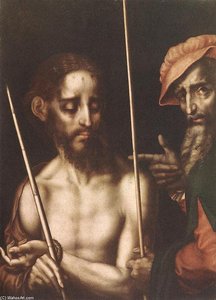
Luis De Morales muotokuva

50 tunnetuinta Luis De Morales -maalausta, jokainen ainutlaatuinen

Päivitetty marraskuu 2026 · järjestetty suosituimmuuspisteiden mukaan (jokaisen teoksen haut, vierailut ja tilaukset) · 51 teosta taiteilijalta Luis De Morales luettelossamme

Lyhyesti

Virgin and Child with the Infant St John the Baptist (1550) on se Luis De Morales -maalaus, joka herättää eniten huomiota; alkuperäisteos kuuluu museolle Museo del Prado, Madrid. Sen jälkeen katse siirtyy kohteisiin The Crucifixion (1566) ja The Annuncation (1565). Luis De Moralesin 51 teoksemme joukosta nämä 50 ovat kuuluisimpia; jokainen on ainutlaatuinen alkuperäisteos, joka on esitelty vuosiluvun, museon ja sen syyn kera, miksi teos on säilyttänyt suosionsa.

1509 – 1586, Badajoz Spanish renaissance Eniten teoksia: Museo del Prado

Luis De Morales -taiteilijan 10 parasta maalausta gallerian silmin

1
Virgin and Child with the Infant St John the Baptist (1550) tekijä: Vincent van Gogh Luis De Morales

Virgin and Child with the Infant St John the Baptist

1550 · Oil On Canvas · Museo del Prado, Madrid

In this 1550 portrait, the Virgin Mary holds the infant Jesus in a close, physical embrace. The child is depicted nursing, a detail that grounds the religious scene in a moment of biological necessity and maternal intimacy. To the left and right of the central figures, two winged beings—angels or saints—occupy the periphery of the frame. These figures are positioned against a backdrop of dense trees, which provides a sense…

2
The Crucifixion (1566) tekijä: Vincent van Gogh Luis De Morales

The Crucifixion

1566 · Oil On Panel · Museo del Prado, Madrid

The heavy silence of the scene is held within The Crucifixion, a profound work of religious art created by the Spanish painter Luis de Morales. Dating to 1566, this piece captures a moment of intense spiritual weight. The central focus remains fixed upon the Crucifixion of Jesus Christ, a subject that demands the viewer's immediate and solemn attention.

3
The Annuncation (1565) tekijä: Vincent van Gogh Luis De Morales

The Annuncation

1565 · Oil On Panel · Museo del Prado, Madrid

The Annunciation by Luis de Morales captures a moment of divine stillness. Painted about 1565, the work presents a quiet encounter between the celestial and the earthly. The Archangel Gabriel and the Virgin Mary occupy a shared, intimate space, separated by a single white lily in a slender vase. A white dove descends through soft light, marking the presence of the Holy Spirit above the figures.

4
The Resurrection of Christ (1566) tekijä: Vincent van Gogh Luis De Morales

The Resurrection of Christ

1566 · Oil · Museo del Prado, Madrid

A sudden, vertical force breaks the stillness of the tomb. Christ rises from the heavy stone sarcophagus, his body caught in a moment of divine momentum. The light is not merely a glow; it is a weightless, golden flood that carves the musculature of his torso out of the surrounding shadows. Behind him, a shroud of reddish-pink fabric billows like a sudden flame, tracing the path of his upward movement.…

5
The Birth of the Virgin (1562) tekijä: Vincent van Gogh Luis De Morales

The Birth of the Virgin

1562 · Oil · Museo del Prado, Madrid

The air in the room feels heavy, thick with the quiet gravity of a life beginning. Within this shallow, intimate space, four women gather, their forms tightly grouped as if to shield the profound miracle unfolding before them. A woman reclines in the bed, her presence marked by the soft contours of her face and the weight of the linens surrounding her. Nearby, another figure holds a newborn infant, the…

6
The Virgin and Child with a Spindle (1566) tekijä: Vincent van Gogh Luis De Morales

The Virgin and Child with a Spindle

1566 · Oil · Museo del Prado, Madrid

The composition is a vertical portrait set against a dark, undifferentiated background. In the center, the Virgin Mary holds the Christ Child. She wears a red gown beneath a heavy blue mantle, while a translucent veil rests upon her head. The skin of both figures appears pale and luminous against the deep shadows. The child holds a wooden spindle, its straight, thin lines cutting through the soft folds of the…

7
Saint John the Baptist (1566) tekijä: Vincent van Gogh Luis De Morales

Saint John the Baptist

1566 · Oil On Panel · Museo del Prado, Madrid

The portrait presents a close-up, bust-length view of Saint John the Baptist, positioned slightly off-center. He gazes toward the left with an expression defined by weariness and contemplation. The composition utilizes a chiaroscuro technique, where a strong directional light source illuminates one side of the face, carving out the hollows of the eyes and the texture of the beard against deep, shadowy recesses. This interplay of light and dark creates…

8
Virgin and Child-Morales (1586) tekijä: Vincent van Gogh Luis De Morales

Virgin and Child-Morales

1586 · Oil On Canvas · Machado de Castro National Museum, Coimbra

The Virgin gently cradles her son within a space defined by shadow and soft light. A newborn hand tucks through the folds of a red gown, searching for milk. This small gesture anchors the composition, pulling the viewer into a quiet, domestic moment of care. The faces of mother and child lean toward one another, their gazes interlocking with a tender, silent weight. Behind them, a pitch-dark background swallows the…

9
Ecce Homo (1565) tekijä: Vincent van Gogh Luis De Morales

Ecce Homo

1565 · Oil On Canvas · Museo del Prado, Madrid

The shadows press closely against the figure, creating a void that seems to swallow everything but the man himself. In this vertical portrait, the upper torso and head of Jesus Christ emerge from a near-black background, caught in a heavy, dramatic chiaroscuro. A soft light descends from the upper left, catching the smooth, porcelain-like texture of his skin and casting gentle shadows across the musculature of his chest and arms.…

10
Pietà tekijä: Vincent van Gogh Luis De Morales

Pietà

Oil On Panel · Louvre, Pariisi

In the quiet, somber depths of Luis de Morales’s Pietà, one encounters more than just a religious scene; one enters a profound meditation on human suffering and divine grace. Executed between 1565 and 1570, this masterpiece serves as a cornerstone of the Spanish Renaissance, capturing the exact moment when the weight of mortality meets the infinite strength of maternal love. The painting depicts the Virgin Mary cradling the lifeless, broken…

Luis De Moralesn kuuluisia maalauksia, numerot 11–50

11Christ Justifying his Passion (1565) tekijä: Vincent van Gogh Luis De MoralesChrist Justifying his Passion1565 · Museo del Prado 12Christ, Man of Sorrows (1566) tekijä: Vincent van Gogh Luis De MoralesChrist, Man of Sorrows1566 · Museo del Prado 13Pietà (1567) tekijä: Vincent van Gogh Luis De MoralesPietà1567 · Museo del Prado 14Saint Juan de Ribera (1566) tekijä: Vincent van Gogh Luis De MoralesSaint Juan de Ribera1566 · Museo del Prado 15Ecce Homo (1547) tekijä: Vincent van Gogh Luis De MoralesEcce Homo1547 · Staatliche Kunstsammlungen Dresden 16The Adoration of the Shepherds (1567) tekijä: Vincent van Gogh Luis De MoralesThe Adoration of the Shepherds1567 · Museo del Prado 17Man of Sorrows (1560) tekijä: Vincent van Gogh Luis De MoralesMan of Sorrows1560 · Minneapolis Institute of Art 18The Lamentation (1560) tekijä: Vincent van Gogh Luis De MoralesThe Lamentation1560 · Metropolitan Museum of Art 19The Purification of the Virgin or The Presentation in the Temple (1562) tekijä: Vincent van Gogh Luis De MoralesThe Purification of the Virgin or The Presentation in the Temple1562 · Museo del Prado 20Pietà (1560) tekijä: Vincent van Gogh Luis De MoralesPietà1560 · San Fernandon kuninkaallinen taideakatemia 21Ecce Homo (1570) tekijä: Vincent van Gogh Luis De MoralesEcce Homo1570 · Museu Nacional d'Art de Catalunya 22The Virgin and Child with the Infant Saint John the Baptist (1570) tekijä: Vincent van Gogh Luis De MoralesThe Virgin and Child with the Infant Saint John the Baptist1570 · Museo del Prado 23The Virgin Dolorosa (1565) tekijä: Vincent van Gogh Luis De MoralesThe Virgin Dolorosa1565 · Museo del Prado 24The Adoration of the Magi (1567) tekijä: Vincent van Gogh Luis De MoralesThe Adoration of the Magi1567 · Museo del Prado 25Christ Carrying the Cross (1547) tekijä: Vincent van Gogh Luis De MoralesChrist Carrying the Cross1547 · Bavarian State Painting Collections 26Christ Carrying the Cro (1546) tekijä: Vincent van Gogh Luis De MoralesChrist Carrying the Cro1546 · Yale University Art Gallery 27Triptych of the Pietà, St John and St Mary Magdalene (1567) tekijä: Vincent van Gogh Luis De MoralesTriptych of the Pietà, St John and St Mary Magdalene1567 · Museo del Prado 28Holy Family (1557) tekijä: Vincent van Gogh Luis De MoralesHoly Family1557 · Hispanic Society Museum - Library 29Saint Jerome in the Wilderness (1570) tekijä: Vincent van Gogh Luis De MoralesSaint Jerome in the Wilderness1570 · National Gallery of Ireland 30Ecce Homo (1565) tekijä: Vincent van Gogh Luis De MoralesEcce Homo1565 · Fundación Banco Santander 31Christ before Pilate (1570) tekijä: Vincent van Gogh Luis De MoralesChrist before Pilate1570 · San Fernandon kuninkaallinen taideakatemia 32Christ Carrying the Cross (1566) tekijä: Vincent van Gogh Luis De MoralesChrist Carrying the Cross1566 · Museo del Patriarca 33The Agony in the Garden (1545) tekijä: Vincent van Gogh Luis De MoralesThe Agony in the Garden1545 · Museo del Prado 34Madonna and Child tekijä: Vincent van Gogh Luis De MoralesMadonna and ChildBowes Museum 35The Virgin and Child (1567) tekijä: Vincent van Gogh Luis De MoralesThe Virgin and Child1567 · The Ashmolean Museum of Art And Archaeology 36Virgin and Child (1520) tekijä: Vincent van Gogh Luis De MoralesVirgin and Child1520 · Museu do Caramulo 37Virgin and Child with a Spindle (1567) tekijä: Vincent van Gogh Luis De MoralesVirgin and Child with a Spindle1567 · Staatliche Museen zu Berlin 38Christ at the Column tekijä: Vincent van Gogh Luis De MoralesChrist at the ColumnNational Museum of Fine Arts 39Virgin and Child tekijä: Vincent van Gogh Luis De MoralesVirgin and ChildMuseum of Fine Arts 40Madonna and Child tekijä: Vincent van Gogh Luis De MoralesMadonna and ChildCampion Hall 41Pietà 1724 tekijä: Vincent van Gogh Luis De MoralesPietà 1724 42Christ at the Column tekijä: Vincent van Gogh Luis De MoralesChrist at the ColumnKingston Lacy 43Triptych of Bishop Juan de Ribera tekijä: Vincent van Gogh Luis De MoralesTriptych of Bishop Juan de RiberaCádizin museo 44The Virgin and Child tekijä: Vincent van Gogh Luis De MoralesThe Virgin and ChildNational Gallery 45Ecce Homo tekijä: Vincent van Gogh Luis De MoralesEcce HomoHispanic Society Museum - Library 46Christ as the Man of Sorrows tekijä: Vincent van Gogh Luis De MoralesChrist as the Man of Sorrows 47St Stephen tekijä: Vincent van Gogh Luis De MoralesSt StephenMuseo del Prado 48Madonna with the Child (1570) tekijä: Vincent van Gogh Luis De MoralesMadonna with the Child1570 · Museo del Prado 49Mater Dolorosa (1570) tekijä: Vincent van Gogh Luis De MoralesMater Dolorosa1570 · Hermitage-museo 50Madonna with the Child (1570) tekijä: Vincent van Gogh Luis De MoralesMadonna with the Child1570 · Hermitage-museo

Luis De Moralesn kuuluisat maalaukset aikakausittain

Aiheet, jotka vangitsivat Luis De Moralesin katseen

Nämä neljä aihetta toistuvat näissä alkuperäisteoksissa useimmin, jokaisesta löytyy hienoin esimerkki.

Museot, joissa Luis De Morales'n alkuperäisteokset sijaitsevat

Tämän sivun teoksista eniten sisältävät 8 museota.

Museo Kaupunki Luis De Morales teokset Tämän listan maalaukset
Museo del Prado, MadridMuseo del Prado Madrid 21 Virgin and Child with the Infant St John the Baptist, The Crucifixion, The Annuncation
San Fernandon kuninkaallinen taideakatemia, MadridSan Fernandon kuninkaallinen taideakatemia Madrid 2 Pietà, Christ before Pilate
Hispanic Society Museum - Library, New YorkHispanic Society Museum - Library New York 2 Holy Family, Ecce Homo
Hermitage-museo, PietariHermitage-museo Pietari 2 Mater Dolorosa, Madonna with the Child
Machado de Castro National Museum, CoimbraMachado de Castro National Museum Coimbra 1 Virgin and Child-Morales
Louvre, PariisiLouvre Pariisi 1 Pietà
Staatliche Kunstsammlungen Dresden, DresdenStaatliche Kunstsammlungen Dresden Dresden 1 Ecce Homo
Minneapolis Institute of Art, MinneapolisMinneapolis Institute of Art Minneapolis 1 Man of Sorrows

Luis De Morales vuosikymmenten varrelta: jokaisesta yksi ainutlaatuinen alkuperäisteos

Teokset vuosikymmenittäin

Valitse vuosikymmen nähdäksesi sen määrittäneen alkuperäisteoksen.

Luis De Moralesn maalaukset: kysymyksiä gallerialle

Mikä on Luis De Morales tunnetuin teos?Paljasta vastaus

Virgin and Child with the Infant St John the Baptist (1550), Museo del Prado, Madrid. Seuraavina ovat The Crucifixion (1566) ja The Annuncation (1565).

Missä iässä Luis De Morales loi teoksen Virgin and Child with the Infant St John the Baptist?Paljasta vastaus

41 vuotta vanha: Virgin and Child with the Infant St John the Baptist on peräisin vuodelta 1550, ja Luis De Morales on syntynyt vuonna 1509.

Mitkä ovat Luis De Morales kymmenen kuuluisinta maalausta?Paljasta vastaus

Virgin and Child with the Infant St John the Baptist, The Crucifixion, The Annuncation, The Resurrection of Christ, The Birth of the Virgin, The Virgin and Child with a Spindle, Saint John the Baptist, Virgin and Child-Morales, Ecce Homo ja Pietà. Yllä oleva sijoitus kertoo kunkin teoksen vuosiluvun ja museon.

Kuinka monta Luis De Morales -teosta tunnetaan?Paljasta vastaus

Katalogissamme on 51 teosta taiteilijalta Luis De Morales, aikaväliltä 1520–1586.

Missä voi nähdä tunnetuimmat Luis De Morales -alkuperäisteokset?Paljasta vastaus

Pääasiassa Museo del Prado (Madrid), San Fernandon kuninkaallinen taideakatemia (Madrid) ja Hispanic Society Museum - Library (New York). Yllä oleva museotaulukko listaa ne kaikki.

Mihin ajanjaksoon Luis De Morales tunnituimmat maalauksensa sijoittuvat?Paljasta vastaus

Aikakaudella 1560s: 23 sivun 50 teoksista on tehty silloin, joista The Crucifixion.

Mikä on Luis De Morales kuuluisimmista maalauksista varhaisin ja mikä uusin?Paljasta vastaus

Tällä sivulla vanhin on Virgin and Child (1520) ja uusin Virgin and Child-Morales (1586).

Mitä aiheita Luis De Morales suosi?Paljasta vastaus

Man (22), Woman (20) ja Dark background (18), yhteensä 50 teosta tällä sivulla.

Mitä materiaaleja Luis De Morales käytti eniten?Paljasta vastaus

Oil On Panel, 27 teoksesta sivun 50 teoksesta.

Mihin taidesuuntaukseen Luis De Morales kuuluu?Paljasta vastaus

Spanish renaissance, tämän sivun alkuperäisteosten perusteella.

Mitä Luis De Morales alkuperäisteoksia voin nähdä museossa Museo del Prado?Paljasta vastaus

Virgin and Child with the Infant St John the Baptist, The Crucifixion ja The Annuncation: Museo del Prado, Madrid -ssä on 21 tämän sivun teoksista.

Luis De Morales: taiteilijan muotokuva

Luis de Morales: Badajozin jumalmailmailmaalaus

Luis de Morales (n. 1509 – 9. toukokuuta 1586), hellästi kutsuttu nimellä ”El Divino”, seisoo yhdeksinä kunnioitetuimmista hahmoista espanjalaisella renessanssitaiteella – maalausmestari, jonka syvä henkisyyden ja hämmästyttävä realismi lumoivat yleisön koko elämänsä ajan ja inspiroi ihailua vuosisatojen myöhemmin. Syntynyt Badajozissa, Extremadurassa, Moralesin taiteellinen matka avautui kasvavien humanististen ihanteiden ja uskonnollisen intohimon taustalla, muovaamalla hänet vertaansa vailla olevaksi pyhitetyn kuvaston mestariksi ja vahvistaen hänen perintönsä kyseisen aikakauden tyylikkääksi taiteilijaksi.
  • Varhaiset vuodet ja vaikutteet: Vähän on määritelmällisesti tiedossa Moralesin muovaavista vuosista paitsi dokumentoidut tiet, jotka osoittavat hänen syntyneen Badajozissa noin vuonna 1509. Hänen taiteellinen koulutuksensa alkoi todennäköisesti Hernando Sturmion johdolla, flandrikkmailmailmaalausmestarin, joka oli perustanut paikkansa Badajoziin, ja mahdollisesti Pedro de Campañan, merkittävän taiteilijan, joka asui Sevillassa – paikkoja, jotka olivat tunnettuina eloisista taideperinteistään renessanssin aikana.
  • Lombardin koulu ja florenttin kaiku: Moralesin varhaiset teokset kantavat poissaoloamattomia jälkiä Leonardo da Vincin lombardilaiselta koululta – jolle on ominaista hienovarainen sfumato (sumeutettu ääriviiva) ja ilmakehän perspektiivi. Samanaikaisesti hän imi vaikutteita Michelangeloilta, jonka monumentaaliset veistokset istuttivat häneen mestarillisen ymmärryksen anatomian ja ilmaisuvoiman suhteen. Nämä muovaavat kokemukset vaikuttivat syvästi hänen taiteellisiin aistihavaintoihinsa.

Ajanjakso, joka määriteltiin anatomisella tarkkuudella ja henkisellä syvyydellä

Moralesin taiteellinen tuotanto voidaan jakaa karkeasti kahteen erilliseen ajanjaksoon, jotka heijastavat kehittyviä tyylitrendejä ja älyllisiä virtoja. Ensimmäinen vaihe, joka sijoittuu arviolta vuosille 1539–1560, todisti jatkuvaa sitoutumista florenttin estetiikkaan – erityisesti Michelangeloïn anatomiseen tiukkuuteen – tuloksena maalauksia, jotka olivat täynnä aistittavaa tunnetta ja dramaattista jännitystä. Teokset kuten La Virgen del Pajarito ovat esimerkkejä tästä varhaisesta tyylistä, esitellen huolellisen yksityiskohtaisuuden ja välittäen syvällistä henkistä pohdintaa.
  • Toinen kukoistus: Leonor de Chavesin kanssa naimittumisen ja myöhemmän muuttotapahtuman Alcántaraan, Morales koki huomiota herättävän taiteellisen renessanssin. Tällä ajanjaksolla hän loi mestariteoksia, jotka työnsivät renessanssitekniikan rajoja – erityisesti anatomisen tarkkuuden osalta – ottaen inspiraatiota saksalaisilta ja flandrikkmailmailmaalausmestareilta, jotka puolustivat chiaroscuroa (valon ja pimeyden kontrasti) ja luonnon huolellista havainnointia.
  • Merkittävät saavutukset: Hänen kauneimmista maalauksistaan ovat muun muassa La Piedad (1560), joka säilyy Badajozin katedraalissa, henkeäsalpaavan esitys Neitsyt Mariasta, joka surraa Jeesuksen kuolemaa – todiste Moralesin vertaansa vailla olevasta kyvystä välittää surullista tunnetta; San Juan de Ribera (1564), joka sijaitsee Madridin Prado-museossa; ja Ecce Homo, joka on esillä Hispanic Society of America -yhteiskunnassa. Nämä teokset seisovat kestävänä symbolina renessanssin pyhyydestä ja taiteellisesta ylivertaisuudesta.

Perintö ja tunnustus

Luis de Moralesin vaikutus ulottui paljon hänen oman elämänsä yli, asettaen hänet espanjalaisen renessanssitaiteen kivijalkaksi ja varmistaen paikkansa sukupolvensa suurimpien maalaajien joukossa. Hänen välinpitämätön omistautumisensa uskonnollisille teemoille – ilmaistu henkeäsalpauksella realistisuudella ja täytettynä aistittavalla tunteella – resonoi syvästi yleisössä koko Euroopassa. Nykyään hänen maalauksensa säilyvät arvostetuissa laitoksissa ympäri maailmaa – mukaan lukien Madridin Prado-museo ja Dorsetissa oleva Kingston Lacy House – todistaen niiden kestävän taiteellisen arvon ja historiallisesti merkityksen. Moralesin perintö jatkaa inspiroimasta sekä taiteilijoita että tutkijoita, varmistaen, että ”El Divino” pysyy henkisen taiteellisuuden valonhehkuna tuleville sukupolville.

Valikoituja teoksia

  • La Virgen del Pajarito (Neitsyt linnun kanssa) (1546), säilyy San Agustínin kirkossa, Madridissa.
  • La Piedad() (1560), säilyy Badajozin katedraalissa.
  • San Juan de Ribera(1564), Prado-museossa, Madridissa.
  • Ecce Homo, Kingston Lacy Housessa (National Trust), Dorset U.K.
  • Virgen de la leche(Rintaa imettävä Neitsyt), Prado-museossa.
  • St. Jerome in the Wilderness, National Gallery of Irelandissa, Dublinissa.