Vaihda tulosteeseen
 Lue lisää







































 Teoksille tai reproduktioille, joiden mikä tahansa sivu on suurempi kuin 105 cm (noin 41 tuumaa), kehys toimitetaan osina purettuna sarjana. Tämä menetelmä varmistaa turvallisen toimituksen ja ehkäisee vaurioita kuljetuksen aikana.


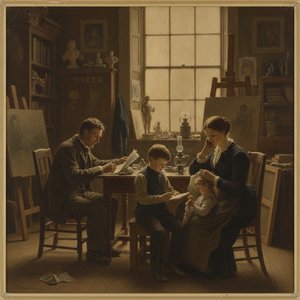
A Portrait of Loss and Remembrance: Sir John Everett Millais’s ‘The North-West Passage’
Sir John Everett Millais’s “The North-West Passage,” completed in 1874, stands as a cornerstone of the Pre-Raphaelite Brotherhood’s artistic vision—a movement that vehemently rejected academic conventions and championed meticulous observation alongside profound emotional resonance. More than just a depiction of a landscape, it's an exquisitely crafted tableau conveying grief, remembrance, and the enduring power of familial love against the backdrop of Victorian anxieties surrounding exploration and mortality.
- Subject Matter: The painting portrays a grieving mother holding her deceased infant son—a poignant meditation on bereavement rendered with unparalleled realism. Millais deliberately chose this subject matter to explore themes of maternal sorrow and the fragility of life, aligning powerfully with Victorian sensibilities regarding death and mourning rituals.
- Style & Technique: Characteristic of Pre-Raphaelite art, “The North-West Passage” employs a technique rooted in detailed botanical illustration—a hallmark of Millais’s scientific pursuits. He painstakingly recreated the interior of a cottage, capturing every nuance of texture and color with painstaking accuracy. The muted palette—dominated by earthy browns and greens—contributes to the painting's melancholic atmosphere.
- Historical Context: Created during an era obsessed with imperial expansion and scientific discovery, “The North-West Passage” reflects anxieties about venturing into uncharted territories. However, Millais subtly subverts this narrative of heroic ambition by portraying a scene of quiet domesticity—a deliberate rejection of the grandiose depictions favored by academic artists.
- Symbolism: The infant’s pallid skin symbolizes death and decay, while the mother's sorrowful gaze embodies universal grief. Millais utilizes symbolic imagery to elevate the painting beyond mere representation, inviting viewers to contemplate profound philosophical questions about life, loss, and the enduring bonds of family.
- Emotional Impact: “The North-West Passage” achieves its remarkable emotional impact through Millais’s masterful manipulation of light and shadow—creating a sense of intimacy and vulnerability. The painting compels contemplation on themes of mortality and remembrance, leaving an indelible impression on the viewer's psyche.
Displayed prominently at Tate Britain since its unveiling, “The North-West Passage” continues to captivate audiences with its breathtaking realism and evocative storytelling—a testament to Millais’s artistic genius and the enduring legacy of the Pre-Raphaelite Brotherhood. Its serene composition and subtle symbolism offer a poignant reflection on human experience, making it an invaluable addition to any discerning collection.
Kysymykset ja vastaukset
Mitä John Everett Millais:n "The North-West Passage" tuo sisustukseen?
John Everett Millais:n "The North-West Passage"-teoksessa on Romantic tunnelma, ja se sopii erinomaisesti Living Room-tilaan. Tunnelmalla tarkoitetaan sitä, minkä fiiliksen teos tuo ympäröivään tilaan.
Milloin teos John Everett Millais:n "The North-West Passage" on luotu?
Teos John Everett Millais:n "The North-West Passage" on valmistunut vuonna 1874.
Onko teokselle John Everett Millais:n "The North-West Passage" opasta?
Opas teokseen "The North-West Passage" on teoksen Opas -sivu – tulostettava tietolomake, joka sisältää teoksen kuvatekstin, tekijätiedot ja tunnistetaulukon (taiteilija, päivämäärät, tekniikka, alkuperäinen koko, kokoelma).
 Esikatselu
 Jaa teos
 Jaa
Jaa
 Tiedot
 Opas
Opas

 Lataa kuva
 Samanlaisia kohteita
 Röntgenkuvaus
 Diaesitys
 Kysymykset ja vastaukset
 Tilastot