
 Esikatselu
 Jaa teos
 Jaa
Jaa
 Tiedot
 Opas
Opas

 Lataa kuva
 Samanlaisia kohteita
 Röntgenkuvaus
 Diaesitys
 Kysymykset ja vastaukset
 Tilastot
Holy martyr (Saint Stephan?)

- 18.0 x 13.0 cm


 Lue lisää
Giclée- ja taideprintit
Museolaatuisia giclée- tai kankaitaulun tulosteita nopealla tuotannolla ja joustavilla viimeistelyvaihtoehdoilla. ( Osta käsinmaalattu taideteos Siirry digitaaliseen kuvaan)




P118B €10

P118H €10

P118W €10

P438Z €10

P508JH €12

P508YH €12

P805H €10

P805Z €10

P919BZ €10

P919G €10

P919XJ €10

P959ZH €10

P968JZ €12

W106C €8

W218G €10

W218JH €8

W218Y €10

W307PJ €10

W316G €10

W316PJ €8

W316Y €10

W398PJ €8

W4111J €10

W500HY €15

W500JH €15

W692G €12

W849H €8

W940BG €15

W953PJ €8




Valitse valmiista mitoistamme sellaiset, jotka vastaavat teoksen alkuperäisiä mittasuhteita.

Syötä tarvitsemasi leveys ja korkeus, jotta tuloste sopii kehyksiisi tai seinällesi. Tulostetta voidaan vain leikata, sitä ei voida koskaan suurentaa alkuperäistä kuvaa suuremmaksi, joten eri muotoinen koko aiheuttaa osan kuvasta katoamisen. Lähetämme sinulle digitaalisen mallikuvan hyväksyttäväksi ennen kuin aloitamme tulostuksen. Tällä sivulla näkyvä kuva ei näytä lopullista rajausta — vain mallikuva näyttää sen.
Maailmanlaajuinen toimitus () 2 viikossa tavallisen 4–5 viikon sijaan. (5 marraskuu)

Ilmainen pikatoimitus ympäri maailman

Korkealaatuinen pellavakangas

Kattava kuljetusvakuutus

Tulliveron palautustakuu

Takuu täydellisestä värien vastaavuudesta

100 päivän palautusoikeus (vain valmistusvirheet)

100% rahat takaisin -takuu

Määräalennus tarjolla
 Lasivaihtoehto on saatavilla vain alle 110 cm kokoisille teoksille

Holy martyr (Saint Stephan?)
Giclée- ja taideprintit
Replikaatin koko
-


Kokonaishinta
€ 72
A Vision of Devotion and Drama
In the evocative realm of the Italian Baroque, few works capture the raw, visceral tension of spiritual struggle as effectively as this masterful drawing by Mattia Preti. Titled Holy Martyr (Saint Stephan?), the piece presents a profound moment of vulnerability and transcendence. The subject, captured in a state of intense physical and emotional upheaval, lies upon the earth with hands raised toward the heavens, a gesture that oscillates between desperate supplication and ecstatic surrender. While historical debate lingers over whether the figure represents Saint Stephen or perhaps a more secularized depiction of a suffering soul, the ambiguity only deep to the work's haunting power. The composition draws the viewer into an intimate encounter with the divine, where the boundaries between earthly pain and celestial hope become beautifully blurred.
The artistry of Il Cavalier Calabrese is on full display through his command of light and shadow. Drawing deeply from his Caravaggist roots, Preti employs a dramatic use of chiaroscuro to sculpt the figure out of the darkness. Every line serves to emphasize the muscular tension and the weight of the body against the ground, creating a sense of three-dimensional presence that feels almost tactile. The interplay of light across the subject's form does more than just define shape; it acts as a narrative force, illuminating the struggle of the flesh while casting much of the surrounding space into a mysterious, contemplative gloom. This technique creates a rhythmic movement within the small 18 x 13 cm frame, guiding the eye from the grounded reality of the figure to the upward reach of the hands.
A Masterpiece for the Discerning Collector
For the art enthusiast or interior designer, this work offers an unparalleled opportunity to introduce a sense of historical gravity and dramatic elegance into a curated space. As a reproduction of a 17th-century treasure, it brings with it the sophisticated atmosphere of the Baroque era—a period defined by its grand scale and emotional depth. The piece functions not merely as decoration but as a focal point for conversation, inviting onlookers to contemplate themes of resilience, faith, and the human condition. Its intimate size makes it an ideal selection for a private study, a library, or a sophisticated gallery wall where it can command attention without overwhelming the surrounding environment.
Integrating such a piece into a modern interior allows for a striking contrast between contemporary minimalism and classical intensity. When placed within a room featuring rich textures, deep velvets, or muted earth tones, the dramatic shadows of Preti’s work find their perfect resonance. Collectors seeking to honor the legacy of Italian masters will find in this drawing a profound connection to the golden age of Baroque painting, offering a timeless aesthetic that transcends fleeting trends and provides a lasting sense of cultural enrichment.
Kysymykset ja vastaukset
Miltä historialliselta aikakaudelta Mattia Preti:n "Holy martyr (Saint Stephan?)" on peräisin?
Mattia Preti:n "Holy martyr (Saint Stephan?)" on peräisin Early Modern-kaudelta. Kyseinen aikakausi antaa teokselle historiallisen kontekstin.
Mistä voin hankkia painoksen teoksesta Mattia Preti:n "Holy martyr (Saint Stephan?)"?
"Holy martyr (Saint Stephan?)" on saatavilla muodossa taideteosvedos puuvillakangas- tai arkistoluokan kankaalle painettuna. Tilaukset voit tehdä Taidevedos -sivulla valitsemassasi koossa.
Kuka on teoksen "Holy martyr (Saint Stephan?)" taiteilija ja mikä on sen tyyli?
Mattia Preti loi teoksen "Holy martyr (Saint Stephan?)" Baroque-suuntauksen piirissä.
Taiteilijan elämäkerta
Mattia Preti (1613 – 1699): The Calabrian Knight of the Baroque
Mattia Preti, known as *Il Cavalier Calabrese* – the Calabrian Knight – stands as a monumental figure in 17th-century Italian Baroque painting. Born in Taverna, Calabria, on February 24, 1613, his artistic journey was one of remarkable transformation and evolution, absorbing diverse influences and culminating in a uniquely expressive style that profoundly impacted the art world, particularly in Malta where he spent much of his later life. Preti’s early training began under Giovanni Battista Caracciolo, a painter deeply rooted in the Caravaggist movement – a lineage that would forever shape his artistic vision. This foundational exposure instilled within him an acute understanding of dramatic *chiaroscuro* – the intense interplay of light and shadow – and a commitment to realistic depiction that remained central to his work throughout his career.
Before 1630, he joined his brother Gregorio in Rome, immersing himself completely in the vibrant artistic atmosphere of the city. Here, he studied under the masters who defined the era: Caravaggio, Guercino, Rubens, Guido Reni, and Giovanni Lanfranco. This period wasn’t merely about imitation; it was a crucial process of synthesis, where Preti absorbed the techniques and philosophies of these giants, gradually forging his own distinctive voice.
Forging a Dynamic Style: Beyond Caravaggism
Preti's artistic development wasn't simply a mimicry of his predecessors; it was a masterful integration of diverse influences into a style uniquely his own. While initially deeply influenced by Caravaggism, he skillfully moved beyond its strict confines, embracing the dynamism and emotional intensity that characterized the High Baroque. His time in Naples further refined this evolution, exposing him to the vibrant work of Luca Giordano – a painter known for his exuberant color palettes and dramatic compositions.
This period saw Preti’s canvases swell with energetic movement, complex compositions, and a heightened sense of drama. He masterfully employed dramatic contrasts of light and shadow, inherited from Caravaggio, not simply as a technical device but as a means of intensifying emotional impact and guiding the viewer's eye. His figures are imbued with palpable emotion – piety, anguish, ecstasy – conveyed through expressive faces and dynamic body language. This ability to evoke powerful feelings became a defining characteristic of his oeuvre. He wasn’t content merely to depict scenes; he sought to *animate* them, breathing life into biblical narratives and religious iconography.
Major Commissions and Artistic Achievements
Mattia Preti's exceptional talent quickly garnered recognition, leading to a series of significant commissions throughout Italy. Early in his career, he created impressive fresco cycles for Roman churches like Sant’Andrea della Valle and San Carlo ai Catinari, demonstrating an aptitude for large-scale decorative painting. His work at the church of San Biagio in Modena showcased his ability to adapt his style to different architectural settings.
However, some of his most ambitious – though sadly lost – works were the frescoes he painted on seven city gates in Naples depicting the Virgin or saints delivering people from the plague. Though only sketches remain today, they testify to the scale and impact of these monumental creations. These commissions weren’t simply about fulfilling a patron's request; they were opportunities for Preti to engage with the religious and cultural life of the communities he served, imbuing his art with meaning and purpose.
The Maltese Zenith: St. John’s Co-Cathedral
It was in Malta, however, that Mattia Preti reached the pinnacle of his artistic achievement. Appointed a Knight of the Order of Saint John in 1660, he embarked on a transformative project: the complete redecoration of the interior of St. John’s Co-Cathedral in Valletta. This undertaking – arguably his most significant legacy – involved an astonishing series of paintings depicting the life and martyrdom of Saint John the Baptist.
The sheer scale of the project is breathtaking; Preti essentially created a visual narrative that enveloped the viewer, immersing them in the story of the saint. The opulent Baroque setting provided the perfect canvas for his dramatic style, and the resulting artwork cemented his reputation as one of Europe’s leading painters. His work at St. John's wasn’t merely decorative; it was an act of devotion, a testament to his faith, and a powerful expression of the Order’s religious identity.
A Lasting Legacy
Mattia Preti continued to receive commissions from across Europe following his success in Malta, solidifying his position as a leading figure in Italian Baroque art. He died in 1699, leaving behind a rich artistic legacy that continues to inspire and captivate audiences today. His masterful use of light and shadow, dynamic compositions, and ability to convey intense emotion remain hallmarks of his style. His contributions are preserved in museums such as the Capodimonte Museum in Naples, and through reproductions made available by platforms like OriginalUniqueArt.com, ensuring that his art continues to reach new generations. The enduring impact of Preti’s work is perhaps most vividly felt within the walls of St. John's Co-Cathedral, a breathtaking testament to his artistic genius and unwavering dedication to the Baroque aesthetic.
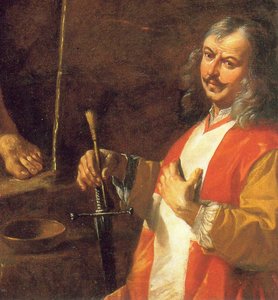
Mattia Preti
1613 - 1699 , Italia
Pähkinänkuoressa
- Artistic Movement Or Style: Barokki
- Artists Or Movements Influenced By This Artist: ['Stringa']
- Artists Who Influenced This Artist:
- Caravaggio
- Guercino
- Date Of Birth: 24 feb 1613
- Date Of Death: 3 jan 1699
- Full Name: Mattia Preti
- Nationality: Italian
- Notable Artworks:
- Absalomin juhla
- Jael tappaa Sisara
- Place Of Birth: Taverna, Italia
Aiheeseen liittyvät artikkelit

The Visceral Stage: Exploring Dramatic Narratives & Emotional Intensity in Baroque Art
Explore the dramatic world of Baroque art! Discover iconic masters like Caravaggio & Rembrandt, their techniques, and the movement's lasting impact. Expert insights for collectors & enthusiasts at OriginalUniqueArt.

The Dramatic Flourish: Exploring the Baroque Movement's Enduring Legacy in Art History
Explore the dramatic world of Baroque art! Discover iconic artists like Caravaggio & Rubens, defining techniques, and its lasting impact on art history. Expert insights for collectors & enthusiasts at OriginalUniqueArt.
The Dramatic Flourish: Exploring Baroque Painting's Emotional Intensity & Artistic Innovations
Explore the dramatic world of Baroque painting! Discover its history, defining characteristics, iconic artists like Caravaggio & Rubens, and lasting influence on Western art. Expert insights for collectors.

Barokin dramaattinen valo ja varjo: Syväluotaava opas 1600-luvun taidehistoriaan
Opi barokin draaman ja chiaroscuro-tekniikan mestaruus. Tutustu 1600-luvun upeisiin mestareihin nyt.

The Visceral Power of Dramatic Art: Exploring Emotional Intensity Across Movements & Media
Explore the captivating world of Baroque art! Discover its history, defining characteristics, and lasting influence on painting, sculpture & design. Expert insights for collectors.


