Vaihda tulosteeseen
 Lue lisää







































 Teoksille tai reproduktioille, joiden mikä tahansa sivu on suurempi kuin 105 cm (noin 41 tuumaa), kehys toimitetaan osina purettuna sarjana. Tämä menetelmä varmistaa turvallisen toimituksen ja ehkäisee vaurioita kuljetuksen aikana.


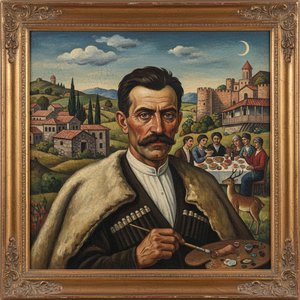
Grigory Gagarin: A Vision of Caucasian Identity
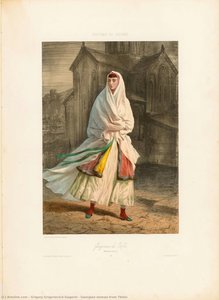
Grigory Grigorievich Gagarin (1810-1893) stands as a singular figure in 19th-century Russian art, blending aristocratic lineage with artistic ambition and diplomatic service. Born into the noble Rurikid Gagarin family – his father, Prince Grigory Ivanovich Gagarin, served as Russia’s ambassador to Italy – Gagarin's upbringing instilled within him a cosmopolitan outlook that profoundly shaped his creative endeavors. Despite lacking formal artistic training, he benefited from invaluable instruction from Karl Briullov, arguably the most celebrated painter of his era, fostering an understanding of Romantic aesthetics and masterful technique. This confluence of influences propelled Gagarin into a prolific artistic career marked by collaborations with literary giants like Alexander Pushkin and Mikhail Lermontov, cementing his place as a visual interpreter of Russia’s cultural landscape.- Subject Matter: Gagarin's oeuvre centered on capturing the essence of Caucasian peoples—specifically Kurds—a subject that reflects both his fascination with ethnographic observation and his engagement with the burgeoning Romantic interest in exotic cultures. His depictions weren’t merely portraits; they were attempts to distill the spirit of a region undergoing significant transformation during the Crimean War era.
- Style: Gagarin's artistic style aligns closely with Romanticism, characterized by dramatic lighting, expressive brushwork, and an emphasis on conveying emotion rather than strict realism. He skillfully employed chiaroscuro—the interplay of light and shadow—to sculpt form and imbue his subjects with psychological depth.
- Technique: Gagarin predominantly utilized oil paint on canvas, demonstrating exceptional control over texture and color. His meticulous attention to detail is evident in the rendering of fabrics, costumes, and facial expressions, reflecting Briullov’s influence and highlighting a commitment to capturing nuanced visual information.
- Provenance: The artwork is housed at the Art Palace of Georgia – Museum of Cultural History (Tbilisi, Georgia).
- Material: Oil paint on paper
Kysymykset ja vastaukset
Onko Grigori Grigorevitš Gagarin teos "Kurdi Ararat" tekijänoikeudeltaan vapaa (public domain), ja miksi?
Grigori Grigorevitš Gagarin:n "Kurdi Ararat" on vapaasti käytettävissä – tekijänoikeussuoja on päättynyt. Tekijänoikeuden voimassaolo lasketaan taiteilijan kuolinvuodesta, joka oli 1893.
Mihin vaiheeseen Grigori Grigorevitš Gagarin uralla teoksen "Kurdi Ararat" vuosiluku 1855 sijoittuu?
Teoksen 1855 valmistumisvuoden perusteella "Kurdi Ararat" sijoittuu Grigori Grigorevitš Gagarin:n tuotantokaudelle Mature Period.
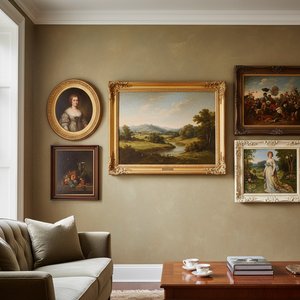
Millaista tunnelmaa "Kurdi Ararat" toisi tilaan?
Elegantti-tunnelmansa ansiosta "Kurdi Ararat" sopii erinomaisesti tilaan Hotellin aula.
 Esikatselu
 Jaa teos
 Jaa
Jaa
 Tiedot
 Opas
Opas

 Lataa kuva
 Samanlaisia kohteita
 Röntgenkuvaus
 Diaesitys
 Q&A
Q&A Tilastot