Katso seinällä
 Lähetä
 Jaa
Jaa
 Tarkemmat tiedot
 Opas
Opas

 Lataa kuva
 Samanlaisia kohteita
 Röntgenkuvaus
 Diaesitys
 Tilastot
Paulus Verschuur
 Oil On Canvas
- WallArt
- Baroque
 1643
1643 119.0 x 94.0 cm
 Metropolitanin museo
 Lue lisää
Giclée- ja taideprintit
Museolaatuisia giclée- tai kankaitaulun tulosteita nopealla tuotannolla ja joustavilla viimeistelyvaihtoehdoilla. ( Tilaa käsinmaalattu jäljennös Siirry digitaaliseen kuvaan)




P118B €10

P118H €10

P118W €10

P438Z €10

P508JH €12

P508YH €12

P805H €10

P805Z €10

P919BZ €10

P919G €10

P919XJ €10

P959ZH €10

P968JZ €12

W106C €8

W218G €10

W218JH €8

W218Y €10

W307PJ €10

W316G €10

W316PJ €8

W316Y €10

W398PJ €8

W4111J €10

W500HY €15

W500JH €15

W692G €12

W849H €8

W940BG €15

W953PJ €8




Valitse valmiista mitoistamme sellaiset, jotka vastaavat teoksen alkuperäisiä mittasuhteita.

Voit syöttää omat mitat sopiaksesi tiettyyn kehykseen tai tilaan. Jos valittu koko ei vastaa alkuperäisen kuvan mittasuhteita, rajaamme teosta tai laajennamme kuvaa peilatulla tai yhtenäisellä reunalla. Digitaalinen mallikuva lähetetään hyväksyttäväksi ennen tuotannon aloittamista.
Huomaathan, että näytöllä näkyvä esikatselu ei vastaa lopullista rajausta tai laajennusta. Vain mallikuva näyttää lopullisen sommittelun tarkasti.
Vaikka räätälöityjä kokoja on saatavilla, suosittelemme valitsemaan mitat valmiista listasta alkuperäisten mittasuhteiden säilyttämiseksi.
Maailmanlaajuinen toimitus () 2 viikossa tavallisen 4–5 viikon sijaan. (10 lokakuu)

Ilmainen pikatoimitus ympäri maailman

Korkealaatuinen pellavakangas

Kattava kuljetusvakuutus

Tulliveron palautustakuu

Takuu täydellisestä värien vastaavuudesta

100 päivän palautusoikeus valmistusvirhetapauksissa

100% rahat takaisin -takuu

Määräalennus saatavilla
 Lasivaihtoehto on saatavilla vain alle 110 cm kokoisille teoksille

Paulus Verschuur
Giclée- ja taideprintit
Replikaatin koko
-


Kokonaishinta
€ 69
A Portrait of Dignified Authority: Paulus Verschuur by Frans Hals
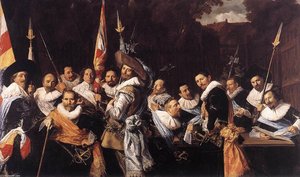
Frans Hals’s “Paulus Verschuur,” painted in 1643, is more than simply a portrait; it's a meticulously crafted study in Dutch Golden Age formality and understated power. The painting captures the likeness of Paulus Verschuur, a prominent Rotterdam mayor and director of the Dutch East India Company, offering a glimpse into the social standing and civic responsibility of a man at the heart of his city’s bustling commercial world. Hals masterfully employs his signature loose brushwork to create an image that is both strikingly realistic and imbued with a palpable sense of character – a testament to his revolutionary approach to portraiture.
The composition centers on Verschuur's face, rendered with remarkable detail despite the artist’s characteristic disregard for rigid precision. His gaze, direct and unwavering, engages the viewer immediately, conveying an air of quiet confidence and authority. The lighting, a dramatic chiaroscuro technique, sculpts his features, highlighting the strong lines of his face and emphasizing the subtle textures of his clothing. Hals skillfully uses light to draw attention to key elements – the meticulously rendered lace collar, a clear indicator of wealth and social status in 17th-century Holland, and the gesture of his hand resting lightly on his hip, suggesting both control and a certain relaxed dignity.
The Language of Form: Technique and Style
Hals’s distinctive style is immediately recognizable. He eschews the smooth, polished surfaces favored by many of his contemporaries, opting instead for a vibrant, almost impasto-like application of paint. The brushstrokes are visible, energetic, and full of life – a deliberate choice that imbues the portrait with a sense of immediacy and movement. This technique, combined with Hals’s masterful use of color, creates an illusion of depth and texture, particularly evident in the folds of his dark coat and cloak. The layering of thin glazes of oil paint builds up rich colors and subtle gradations, contributing to the painting's luminous quality.
Furthermore, Hals utilizes a carefully considered perspective – a single-point perspective that draws the viewer’s eye directly to Verschuur’s face. Geometric shapes—rectangles defining his clothing, circles for his eyes and nose, ovals for his head—are employed with precision, yet they never feel rigid or artificial. The background, rendered in muted grey-brown tones, serves as a neutral backdrop, allowing the subject to command attention without distraction. The overall effect is one of controlled elegance and understated sophistication – hallmarks of Hals’s artistic vision.
Symbolism and Context: A Window into 17th-Century Rotterdam
Beyond its technical brilliance, “Paulus Verschuur” offers a fascinating window into the social and cultural context of 17th-century Rotterdam. The portrait reflects the city's prominence as a major center for trade and commerce during the Dutch Golden Age. The hat worn by Verschuur is not merely an accessory; it’s a clear symbol of his elevated social standing, signifying membership in the merchant elite. The lace collar, another prominent detail, further reinforces this status, demonstrating wealth and refinement – attributes highly valued within the city's hierarchical society.
The fact that Verschuur was a director of the Dutch East India Company adds another layer of significance to the portrait. This powerful trading organization played a crucial role in shaping Rotterdam’s prosperity and influence during this period, highlighting the subject’s involvement in one of the most dynamic economic ventures of its time. The painting, therefore, serves as both a personal commemoration and a reflection of the city's thriving commercial landscape.
A Timeless Masterpiece: Reproduction and Legacy
“Paulus Verschuur” remains a captivating example of Dutch Golden Age portraiture, admired for its technical skill, psychological depth, and evocative atmosphere. Today, high-quality reproductions offer art lovers the opportunity to experience Hals’s masterpiece firsthand, bringing this remarkable image into homes and galleries worldwide. Whether displayed as a statement piece or incorporated into interior design schemes, a reproduction of “Paulus Verschuur” serves as a powerful reminder of the enduring legacy of Frans Hals and his profound contribution to the history of art.
Useful Links:
- Frans Hals Paulus Verschuur 1643 Oil Painting Reproduction
- Paulus Verschuur - Wikipedia
- Frans Hals Museum
Additional Research:
- Paulus Verschuur in *Dutch Paintings in the Metropolitan Museum of Art*, by Walter A. Liedtke, Metropolitan Museum of Art, 2007
- 1643, Frans Hals, Paulus Verschuur -- Metropolitan Museum of Art (New York)
Kysymykset ja vastaukset
Kenelle taiteilijalle "Paulus Verschuur" on laitettu tekijyys?
Teoksen "Paulus Verschuur" taiteilija on Frans Hals I. Teos on luetteloitu Frans Hals I nimellä.
Onko teoksessa Frans Hals I:n "Paulus Verschuur" värit kylläisiä vai hillittyjä?
Teoksen "Paulus Verschuur" väripaletti on kylläisyydeltään Muted.
Kuinka monta ihmistä katsoo teosta "Paulus Verschuur"?
Teokselle "Paulus Verschuur" on olemassa Tilastot -sivu. Se esittää teoksen ja taiteilijan muiden teosten kuukausittaiset vierailumäärät maakohtaisesti ja kielittäin eriteltynä.
Missä museossa alkuperäinen "Paulus Verschuur" on esillä?
Voit nähdä alkuperäisteoksen "Paulus Verschuur" kohteessa Metropolitanin museo, New York, United States of America.
Kuinka vanha Frans Hals I oli, kun "Paulus Verschuur" luotiin?
Frans Hals I oli 63 vuotias luodessaan teoksen "Paulus Verschuur" vuonna 1643. Ikä on laskettu taiteilijan syntymävuodesta 1580.
Käyttääkö teos Frans Hals I:n "Paulus Verschuur" voimakkaita kontrasteja vai pehmeitä harmonioita?
Teoksen Frans Hals I:n "Paulus Verschuur" värianalyysi osoittaa Serene kontrastin ja Strong Color Unity harmonian.
Milloin "Paulus Verschuur" on tehty?
Teos Frans Hals I:n "Paulus Verschuur" on valmistunut vuonna 1643.
Taiteilijan elämäkerta
Frans Hals I: Elämä maalauksessa
Frans Hals I oli hollantilainen mestari, joka syntyi Antwerpenissa, Belgiassa, noin vuonna 1580. Vaikka hänen varhaisista vuosistaan tiedetään vain vähän, hän nousi yhdeksi hollantilaisen kultakauden merkittävimmistä hahmoista. Häntä juhlitaan nykyään erityisesti innovatiivisesta muotokuvauksestään ja eläväisistä genremaalauksistaan, jotka vangitsevat ajan henkeä tavalla, joka on säilyttänyt lumun vuosisatoja.
Varhaiset vuodet ja taiteellinen kasvu
Tiedot Halsin muovautuvista vuosista ovat harvinaisia. Uskotaan, että hän sai ensimmäisen taidekoulutuksensa Antwerpenissa, joka oli tuolloin merkittävä maalaustaiteen keskus. Uskonnollinen ja poliittinen levottomuus kuitenkin pakotti hänen perheensä muuttamaan Alankomaihin, Haarlemiin. Vuonna 1610 hänestä tuli Haarlemin Pyhän Luukkaan kilta jäsen, mikä merkitsi hänen ammatillisen uransa virallista alkua ja avasi ovet arvostetun taiteilijayhteisön pariin.
Taiteellinen tyyli ja kehitys
Hals erottui aikalaisistaan hämmästyttävän tuoreella ja spontaanilla tyylillään. Toisin kuin monet hänen aikalaistensa mestarit, jotka suosivat äärimmäistä tarkkuutta ja yksityiskohtia, Hals käytti vapaata ja ilmaisukasta sivellintä. Tämä tekniikka antoi hänen maalauksilleen välittömyyden ja elinvoiman tuntua, vangiten kohteidensa persoonallisuuden ja luonteen tavalla, joka oli aikanaan vallankumouksellista.
- Hänen muotokuvansa eivät olleet pelkkiä kasvonpiirteiden kopioita; ne olivat psykologisia tutkimusmatkoja.
- Hän oli mestari kuvaamaan ohikiitäviä hetkiä – naurua, keskustelua tai syvää mietiskelyä.
- Halsin taitava valon ja varjon käyttö lisäsi syvyyttä ja draamaa hänen sommitelmiinsa.
Merkittävät teokset
Vaikka Hals loi laajan kirjon erilaisia teoksia, hänet tunnetaan parhaiten muotokuvistaan. Hänen kuuluisimpien maalauksensa joukossa ovat:
- The Laughing Cavalier (1624) – Täydellinen esimerkki hänen kyvystään vangita luonne ja liike. avli
- Malle Babbe (n. 1633–1635) – Silmiinpistävä kuvaus iäkkäästä naisesta, joka osoittaa Halsin taitoa kuvata ikääntymistä ja persoonallisuutta.
- Haarlemin vanhustenkodin regenttien muotokuvat (1664) – Teos, joka osoittaa hänen mestaruutensa ryhmämuotokuvauksessa.
Hän loi myös kiehtovia genrekohtauksia – arjen kuvauksia – jotka tarjosivat katsojalle ikkunan hollantilaiseen yhteiskuntaan.
Vaikutteet ja perintö
Halsin suorien vaikutteiden määrittäminen on haastavaa, sillä hän kehitti erittäin yksilöllisen tyylin. On kuitenkin todennälin, että hän tunsi varhaisten flaamilaisten maalaajien, kuten Pieter Bruegel vanhemman, työn. Hänen innovatiivinen lähestymistapansa muotokuvaukseen vaikutti syvästi seuraaviin taiteilijasukupolviin.
- Hän vaikutti taiteilijoihin, kuten Adriaen Brouweriin ja Johannes Vermeeriiin.
- Hänen painotuksensa persoonallisuuden vangitsemiseen raivasi tietä intiimmimmille ja psykologisemmille muotokuville.
- Myöhemmät taiteilijat, mukaan lukien impressionistit, ihailivat hänen vapaata sivellintekniikkaansa ja valon käyttöään.
Historiallinen merkitys
Frans Hals I pelasi ratkaisevan roolin hollantilaisen maalaustaiteen muovaamisessa kultakauden aikana. Hänen työnsä heijastaa Alankomaiden tuolloista kasvavaa vaurautta ja yksilöllisyyttä. Hän siirtyi jäykästä muodollisuudesta kohti luonnollisempaa ja ilmaisukasta tyyliä, jättäen pysyvän jäljen taidehistoriaan.
Nykyään hänen maalauksiaan etsitään suurella intohimolla, ja niitä löytyy suurista museoista ympäri maailmaa, mukaan lukien Haarlemin Frans Hals Museum, jossa säilytetään hänen teostensa laajinta kokoelmaa. Hänen panoksensa jatkaa taiteilijoiden inspiroimista ja yleisön lumoamista vielä vuosisatojen jälkeenkin.

Frans Hals I
1580 - 1585 , Belgia
Tietoa taiteilijasta
- Artistic Movement Or Style: Dutch Golden Age
- Artists Or Movements Influenced By This Artist:
- Adriaen Brouwer
- Johannes Vermeer
- Artists Who Influenced This Artist: ['Pieter Bruegel the Elder']
- Date Of Birth: c. 1582
- Date Of Death: 1666-08-26
- Full Name: Frans Hals I
- Nationality: Dutch
- Notable Artworks:
- Laughing Cavalier
- Malle Babbe
- Portraits of the Regents
- Place Of Birth: Antwerp, Belgium
Aiheeseen liittyvät artikkelit

Golden Age Reflections: Dutch Baroque Painting & Cultural Innovation
Explore the Dutch Golden Age of painting! Discover key artists like Vermeer & ter Borch, their innovative techniques, and the rich cultural context behind these Baroque masterpieces. Learn about collecting & appreciating this iconic art period.

Frans Hals I: Innovation, Intimacy & the Dutch Golden Age Portrait
Explore the revolutionary portraiture of Frans Hals I, a master of the Dutch Golden Age. Discover his innovative techniques, captivating character studies & lasting impact on art history. Learn more at OriginalUniqueArt.

Hollantilaisen barokin mestariteokset: Taidetta ja inspiraatiota kotiin
Uppoudu hollantilaisen barokin maailmaan! Tutustu Rembrandtin, Vermeerin ja muiden mestarien ikonisiin teoksiin. Taidetta, historiaa ja inspiraatiota kotiisi – löydä upeat reproduktiot OriginalUniqueArt.comista.

Hollantilaisen kultakauden 10 mestariteosta – Taidetta kotiisi OriginalUniqueArt.com
Uppoudu hollantilaisen kultakauden taiteen maailmaan! Tutustu Rembrandtin, Vermeerin ja muiden mestareiden ikonisiin maalauksiin. Löydä inspiraatiota kotiisi OriginalUniqueArt.com:ista – laadukkaat taidevedokset ja sisustustaulut jokaiseen tilaan. Explore the full collection online!

Golden Light & Dutch Skies: The Timeless Magic of Dutch Golden Age Landscapes
Discover the breathtaking beauty of Dutch Golden Age landscapes. Explore the mastery of light, chiaroscuro, and 17th-century realism through an expert art history lens, celebrating the enduring legacy of the Dutch Masters for discerning collectors and art lovers.