Text size

() ·

A painting made for you, by hand

Paulus Verschuur

Käsinmaalattu öljyvärinen jäljennös

Käsinmaalattu öljyväri kankaalle haluamassasi koossa ja kehyksissä, taiteilijoidemme valmistamana tilauksesta. ( Vaihda tulosteeseen Siirry digitaaliseen kuvaan)

Keräilykohteen kuvaus

Admire Frans Hals I’s 1643 portrait of a dignified man in Baroque realism. Dramatic chiaroscuro & rich detail capture status & wealth. #DutchArt #Portraiture

Taiteilijan elämäkerta

Frans Hals I oli hollantilainen maalari kultaisen aikakauden aikana, joka tunnettiin erityisesti elävistä henkilökuvista ja arkielämän näkymistä. Hänen tyylinsä oli vallitseva tapa kuvata ihmisiä ja tapahtumia! #FransHals #DutchArt

from ·

Chapter 1

How large should it be?

Slide to change the size; the picture on the left shows the frame at its real width. The proportions of the original are kept.

Vakiokoko
räätälöity
CM
INCH

Valitse valmiista mitoistamme sellaiset, jotka vastaavat teoksen alkuperäisiä mittasuhteita.

leveys
korkeus

Kirjoita tarvitsemasi leveys ja korkeus, jotta teos sopii kehyksiisi tai seinällesi. Koska kyseessä on käsinmaalattu teos, taiteilija voi maalata hieman enemmän kuvan ympärille tai rajata sitä hieman, jos haluat eri muotoisen koon — valinta on sinun. Lähetämme sinulle digitaalisen mallikuvan hyväksyttäväksi ennen kuin maalaus alkaa. Tällä sivulla näkyvä kuva ei vastaa lopullista tulosta — vain mallikuva näyttää sen.

Chapter 2

How should it arrive?

Choose the edges of the stretched canvas

Choose your frame

Corner sample of the WhiteWrap canvas edge finish, stretched on massiivipuu bars
White €1
Corner sample of the BlurSideWrap canvas edge finish, stretched on massiivipuu bars
Blurside €1
Corner sample of the ExtendedWrap canvas edge finish, stretched on massiivipuu bars
Extended €1
Corner sample of the P118B picture frame: valettu polystyreeni, 5 cm wide and 3 cm thick
P118B €10
Corner sample of the P118H picture frame: valettu polystyreeni, 5 cm wide and 3 cm thick
P118H €10
Corner sample of the P118W picture frame: valettu polystyreeni, 5 cm wide and 3 cm thick
P118W €10
Corner sample of the P438Z picture frame: valettu polystyreeni, 5.5 cm wide and 3.5 cm thick
P438Z €10
Corner sample of the P508JH picture frame: valettu polystyreeni, 7 cm wide and 3.5 cm thick
P508JH €12
Corner sample of the P508YH picture frame: valettu polystyreeni, 7 cm wide and 3.5 cm thick
P508YH €12
Corner sample of the P805H picture frame: valettu polystyreeni, 5 cm wide and 3.5 cm thick
P805H €10
Corner sample of the P805Z picture frame: valettu polystyreeni, 5 cm wide and 3.5 cm thick
P805Z €10
Corner sample of the P919BZ picture frame: valettu polystyreeni, 7 cm wide and 3.5 cm thick
P919BZ €10
Corner sample of the P919G picture frame: valettu polystyreeni, 7 cm wide and 3.5 cm thick
P919G €10
Corner sample of the P919XJ picture frame: valettu polystyreeni, 7 cm wide and 3.5 cm thick
P919XJ €10
Corner sample of the P959ZH picture frame: valettu polystyreeni, 5 cm wide and 3 cm thick
P959ZH €10
Corner sample of the P968JZ picture frame: valettu polystyreeni, 6 cm wide and 4 cm thick
P968JZ €12
Corner sample of the W106C picture frame: massiivipuu, 5 cm wide and 3 cm thick
W106C €8
Corner sample of the W218G picture frame: massiivipuu, 5 cm wide and 3 cm thick
W218G €10
Corner sample of the W218JH picture frame: massiivipuu, 5 cm wide and 3 cm thick
W218JH €8
Corner sample of the W218Y picture frame: massiivipuu, 5 cm wide and 3 cm thick
W218Y €10
Corner sample of the W307PJ picture frame: massiivipuu, 6 cm wide and 3 cm thick
W307PJ €10
Corner sample of the W316G picture frame: massiivipuu, 6 cm wide and 3 cm thick
W316G €10
Corner sample of the W316PJ picture frame: massiivipuu, 6 cm wide and 3 cm thick
W316PJ €8
Corner sample of the W316Y picture frame: massiivipuu, 6 cm wide and 3 cm thick
W316Y €10
Corner sample of the W398PJ picture frame: massiivipuu, 5 cm wide and 3 cm thick
W398PJ €8
Corner sample of the W4111J picture frame: massiivipuu, 6.5 cm wide and 3.5 cm thick
W4111J €10
Corner sample of the W500HY picture frame: massiivipuu, 7 cm wide and 5 cm thick
W500HY €15
Corner sample of the W500JH picture frame: massiivipuu, 7 cm wide and 5 cm thick
W500JH €15
Corner sample of the W692G picture frame: massiivipuu, 8 cm wide and 4 cm thick
W692G €12
Corner sample of the W849H picture frame: massiivipuu, 5 cm wide and 3 cm thick
W849H €8
Corner sample of the W940BG picture frame: massiivipuu, 7.5 cm wide and 4.5 cm thick
W940BG €15
Corner sample of the W953PJ picture frame: massiivipuu, 6 cm wide and 3.5 cm thick
W953PJ €8
Corner sample of the H24-GOLD picture frame: kaiverrettua puuta ja gessoa, 10 cm wide and 6 cm thick
H24-GOLD €30
Corner sample of the H24-SILVER picture frame: kaiverrettua puuta ja gessoa, 10 cm wide and 6 cm thick
H24-SILVER €30
Corner sample of the H36-GOLD picture frame: kaiverrettua puuta ja gessoa, 15 cm wide and 6.5 cm thick
H36-GOLD €45
Corner sample of the H36-SILVER picture frame: kaiverrettua puuta ja gessoa, 15 cm wide and 6.5 cm thick
H36-SILVER €45
Kehyksen esikatselu
Kehystetty

Moulding: . Overall size with the frame: .

Chapter 3

Who paints it, and should anything change?

Examples of what can be changed: Replace face with customer photo; Add pet (e.g., replace cat with dog); Include hidden message in background; Change background landscape or elements.
After order, OriginalUniqueArt.com team will email client for instructions and provide a mockup preview

Maailmanlaajuinen toimitus () 3–4 viikossa tavallisen 5 viikon sijaan. (3 marraskuu). Laadusta ei tingitä.

Chapter 4

The finishing touches

A nameplate, as in a museum?

Kaiverretun pronssilaatan tiedot

This elegant plaque features the artist's name and the title of the artwork, finely engraved for a timeless presentation.

It is made from bronze with a refined, elegant finish. The text is precisely laser-engraved for a sharp and permanent result. Measuring 9x2 cm, the plaque is compact yet easy to read. It's built to be durable and scratch-resistant, offering a professional, museum-quality look. Mounting is simple thanks to the included adhesive backing.

Läpinäkyvän akryylilaatan tiedot

The plaque includes essential engraved details such as the artist's name, the title of the artwork, the date it was created, the type of media used-like oil on canvas or watercolor-a brief description of the piece, and a QR code that links to the complete artwork information.

It is crafted from clear acrylic, offering a sleek, modern appearance. The text is UV-engraved in black to ensure strong visual contrast. With a size of 10x15 cm, it ensures optimal readability. It comes equipped with two metal hooks for secure wall mounting. The plaque is designed to be weather-resistant, making it suitable for various environments, and it includes interactive features that work seamlessly with smartphone scanning.

Mustan akryylilaatan tiedot

This elegant plaque includes engraved information such as the artist's name, the title of the artwork, the date it was created, the type of media used (like oil on canvas or watercolor), a short description of the artwork, and a QR code for quick access to more information.

The plaque itself is made from refined black acrylic with a premium finish. The text is laser-engraved in white for high contrast and readability. Its size is 10x15 cm, designed to be easy to read. It comes with two metal hooks for professional mounting. The design is sleek and fits any interior style. It is also weather-resistant and durable, with built-in digital integration for mobile compatibility.

A protective varnish?

When do you need it?

Chapter 5

Your painting, as you ordered it

Paulus Verschuur

Reproduktiotekniikka

Replikaatin koko

-

Kokenut huipputaiteilija

Lisää yksityiskohtia, hienostuneisuutta ja enemmän aikaa tuotantoon

-

Reproduktion kehystysvaihtoehdot

-

-

Teoksille tai reproduktioille, joiden mikä tahansa sivu on suurempi kuin 105 cm (noin 41 tuumaa), kehys toimitetaan osina purettuna sarjana. Tämä menetelmä varmistaa turvallisen toimituksen ja ehkäisee vaurioita kuljetuksen aikana.

Vaatii ammattimaista kokoamista – kyseessä ei ole tee-se-itse-tuote.
Sarja on koottava ja kangas kiristettävä kokeneen kehystysammattilaisen toimesta käyttäen puuliimaa (ei sisälly pakkaukseen), kangaspinnetteitä ja puristimia, jotta kehyksen kulmat pysyvät suorina liiman kuivuessa. Virheellinen kokoaminen tai epätasainen kankaan kiristys voi vaurioittaa teosta pysyvästi, eikä tällaiset vauriot ala takuun piiriin.

  • Kaikki massiivipuupalat sisältyvät, tarkasti mittojen mukaan leikattuina.

  • Kootaan mukana tulevilla ruuveilla sekä kulmaliitoksia varten tarvittavalla puuliimalla, jota ei toimiteta, joten se on hankittava kehystäjältä.

  • Vaatii ammattilaisvälineitä, jotka eivät sisälly pakkaukseen: kankaan venytyspihdit (kiristin) ja puristimet, joilla pidetään kehyksen puut suorassa liiman kuivuessa.

Tärkeää:
Kulmaliitoksissa tarvitaan puuliimaa, kehyksien osat on pidettävä puristimilla, kunnes liima on täysin kuivunut, ja koottuun kehykseen jännitettävän kankaan kiristämiseen tarvitaan kangaspenssipihti. Mikään näistä ei sisälly pakkaukseen. Suosittelemme varmistamaan kokeneen kehystäjän saatavuuden ennen tämän kokoisen kehyksen tilaamista.

Nimilaatta

-

-

Suojalakkaus

Kiiltävä lakka (syventää värejä, suojaa valolta ja kosteudelta)

-

Mukauta taideteokseni

Esimerkkejä muokattavista asioista: Vaihda kasvot asiakkaan omaan valokuvaan; Lisää lemmikki (esim. vaihda kissa koiraan); Lisää taustalle piilotettu viesti; Muuta taustan maisemaa tai elementtejä.

-

Pikatoimitus

Maailmanlaajuinen toimitus () 3–4 viikossa tavallisen 5 viikon sijaan. (3 marraskuu). Laadusta ei tingitä.

-

Pikatoimitus

Maailmanlaajuinen toimitus () 5 viikon kuluessa. (10 marraskuu).

Sisältyy hintaan

Kokonaishinta

€ 267

Kokonaishinta € 267

Lasivaihtoehto on saatavilla vain alle 110 cm kokoisille teoksille

Included with every order

  • Ilmainen pikatoimitus ympäri maailman
  • Korkealaatuinen pellavakangas
  • Kattava kuljetusvakuutus
  • Tulliveron palautustakuu
  • Takuu täydellisestä värien vastaavuudesta
  • 100 päivän palautusoikeus (vain valmistusvirheet)
  • 100% rahat takaisin -takuu
  • Määräalennus tarjolla

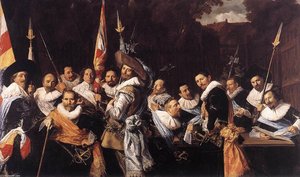
A Portrait of Dignified Authority: Paulus Verschuur by Frans Hals

Frans Hals’s “Paulus Verschuur,” painted in 1643, is more than simply a portrait; it's a meticulously crafted study in Dutch Golden Age formality and understated power. The painting captures the likeness of Paulus Verschuur, a prominent Rotterdam mayor and director of the Dutch East India Company, offering a glimpse into the social standing and civic responsibility of a man at the heart of his city’s bustling commercial world. Hals masterfully employs his signature loose brushwork to create an image that is both strikingly realistic and imbued with a palpable sense of character – a testament to his revolutionary approach to portraiture.

The composition centers on Verschuur's face, rendered with remarkable detail despite the artist’s characteristic disregard for rigid precision. His gaze, direct and unwavering, engages the viewer immediately, conveying an air of quiet confidence and authority. The lighting, a dramatic chiaroscuro technique, sculpts his features, highlighting the strong lines of his face and emphasizing the subtle textures of his clothing. Hals skillfully uses light to draw attention to key elements – the meticulously rendered lace collar, a clear indicator of wealth and social status in 17th-century Holland, and the gesture of his hand resting lightly on his hip, suggesting both control and a certain relaxed dignity.

The Language of Form: Technique and Style

Hals’s distinctive style is immediately recognizable. He eschews the smooth, polished surfaces favored by many of his contemporaries, opting instead for a vibrant, almost impasto-like application of paint. The brushstrokes are visible, energetic, and full of life – a deliberate choice that imbues the portrait with a sense of immediacy and movement. This technique, combined with Hals’s masterful use of color, creates an illusion of depth and texture, particularly evident in the folds of his dark coat and cloak. The layering of thin glazes of oil paint builds up rich colors and subtle gradations, contributing to the painting's luminous quality.

Furthermore, Hals utilizes a carefully considered perspective – a single-point perspective that draws the viewer’s eye directly to Verschuur’s face. Geometric shapes—rectangles defining his clothing, circles for his eyes and nose, ovals for his head—are employed with precision, yet they never feel rigid or artificial. The background, rendered in muted grey-brown tones, serves as a neutral backdrop, allowing the subject to command attention without distraction. The overall effect is one of controlled elegance and understated sophistication – hallmarks of Hals’s artistic vision.

Symbolism and Context: A Window into 17th-Century Rotterdam

Beyond its technical brilliance, “Paulus Verschuur” offers a fascinating window into the social and cultural context of 17th-century Rotterdam. The portrait reflects the city's prominence as a major center for trade and commerce during the Dutch Golden Age. The hat worn by Verschuur is not merely an accessory; it’s a clear symbol of his elevated social standing, signifying membership in the merchant elite. The lace collar, another prominent detail, further reinforces this status, demonstrating wealth and refinement – attributes highly valued within the city's hierarchical society.

The fact that Verschuur was a director of the Dutch East India Company adds another layer of significance to the portrait. This powerful trading organization played a crucial role in shaping Rotterdam’s prosperity and influence during this period, highlighting the subject’s involvement in one of the most dynamic economic ventures of its time. The painting, therefore, serves as both a personal commemoration and a reflection of the city's thriving commercial landscape.

A Timeless Masterpiece: Reproduction and Legacy

“Paulus Verschuur” remains a captivating example of Dutch Golden Age portraiture, admired for its technical skill, psychological depth, and evocative atmosphere. Today, high-quality reproductions offer art lovers the opportunity to experience Hals’s masterpiece firsthand, bringing this remarkable image into homes and galleries worldwide. Whether displayed as a statement piece or incorporated into interior design schemes, a reproduction of “Paulus Verschuur” serves as a powerful reminder of the enduring legacy of Frans Hals and his profound contribution to the history of art.

Useful Links:

Additional Research:

Kysymykset ja vastaukset

Onko Frans Hals I:n "Paulus Verschuur" -teoksesta saatavilla opiskelijoille suunnattua tietolomaketta?

Teoksesta Frans Hals I:n "Paulus Verschuur" on saatavilla Opas -sivu: tulostettava tietolomake teoksesta, joka on suunniteltu opiskelijoita ja luokkahuonekäyttöä varten.

Mikä on "Paulus Verschuur" hallitseva sävy?

Teoksen Frans Hals I:n "Paulus Verschuur" hallitseva sävy on Amber to Saffron. Tämä sävy toimii paletin perusvärinä.

Mikä on teoksen Frans Hals I:n "Paulus Verschuur" luminanssi?

Teoksella Frans Hals I:n "Paulus Verschuur" on Dark luminanssi. Luminanssi kuvaa sitä, kuinka paljon värit näyttävät heijastavan valoa.

More about this painting

Esikatselu Esikatsele AR-tilassa Vaihda tulosteeseen Siirry digitaaliseen kuvaan Jaa teos
Tiedot Opas Lisää suosikkeihin Lataa kuva Samanlaisia kohteita Röntgenkuvaus Diaesitys Q&A Tilastot

In numbers

  • 1643the year it was painted
  • 29frames to choose from
  • standard sizes, in its own proportions
  • 5weeks to paint and deliver it
Frans Hals I

Frans Hals I

1580 - 1585, Belgia

Quick facts about Frans Hals I

  • Artistic Movement Or Style: Dutch Golden Age
  • Artists Or Movements Influenced By This Artist:
    • Adriaen Brouwer
    • Johannes Vermeer
  • Artists Who Influenced This Artist: ['Pieter Bruegel the Elder']
  • Date Of Birth: c. 1582
  • Date Of Death: 1666-08-26
  • Full Name: Frans Hals I
  • Nationality: Dutch
  • Notable Artworks:
    • Laughing Cavalier
    • Malle Babbe
    • Portraits of the Regents
  • Place Of Birth: Antwerp, Belgium

Taiteilijan elämäkerta

Frans Hals I: Elämä maalauksessa

Frans Hals I oli hollantilainen mestari, joka syntyi Antwerpenissa, Belgiassa, noin vuonna 1580. Vaikka hänen varhaisista vuosistaan tiedetään vain vähän, hän nousi yhdeksi hollantilaisen kultakauden merkittävimmistä hahmoista. Häntä juhlitaan nykyään erityisesti innovatiivisesta muotokuvauksestään ja eläväisistä genremaalauksistaan, jotka vangitsevat ajan henkeä tavalla, joka on säilyttänyt lumun vuosisatoja.

Varhaiset vuodet ja taiteellinen kasvu

Tiedot Halsin muovautuvista vuosista ovat harvinaisia. Uskotaan, että hän sai ensimmäisen taidekoulutuksensa Antwerpenissa, joka oli tuolloin merkittävä maalaustaiteen keskus. Uskonnollinen ja poliittinen levottomuus kuitenkin pakotti hänen perheensä muuttamaan Alankomaihin, Haarlemiin. Vuonna 1610 hänestä tuli Haarlemin Pyhän Luukkaan kilta jäsen, mikä merkitsi hänen ammatillisen uransa virallista alkua ja avasi ovet arvostetun taiteilijayhteisön pariin.

Taiteellinen tyyli ja kehitys

Hals erottui aikalaisistaan hämmästyttävän tuoreella ja spontaanilla tyylillään. Toisin kuin monet hänen aikalaistensa mestarit, jotka suosivat äärimmäistä tarkkuutta ja yksityiskohtia, Hals käytti vapaata ja ilmaisukasta sivellintä. Tämä tekniikka antoi hänen maalauksilleen välittömyyden ja elinvoiman tuntua, vangiten kohteidensa persoonallisuuden ja luonteen tavalla, joka oli aikanaan vallankumouksellista.

  • Hänen muotokuvansa eivät olleet pelkkiä kasvonpiirteiden kopioita; ne olivat psykologisia tutkimusmatkoja.
  • Hän oli mestari kuvaamaan ohikiitäviä hetkiä – naurua, keskustelua tai syvää mietiskelyä.
  • Halsin taitava valon ja varjon käyttö lisäsi syvyyttä ja draamaa hänen sommitelmiinsa.

Merkittävät teokset

Vaikka Hals loi laajan kirjon erilaisia teoksia, hänet tunnetaan parhaiten muotokuvistaan. Hänen kuuluisimpien maalauksensa joukossa ovat:

  • The Laughing Cavalier (1624) – Täydellinen esimerkki hänen kyvystään vangita luonne ja liike.
  • avli
  • Malle Babbe (n. 1633–1635) – Silmiinpistävä kuvaus iäkkäästä naisesta, joka osoittaa Halsin taitoa kuvata ikääntymistä ja persoonallisuutta.
  • Haarlemin vanhustenkodin regenttien muotokuvat (1664) – Teos, joka osoittaa hänen mestaruutensa ryhmämuotokuvauksessa.

Hän loi myös kiehtovia genrekohtauksia – arjen kuvauksia – jotka tarjosivat katsojalle ikkunan hollantilaiseen yhteiskuntaan.

Vaikutteet ja perintö

Halsin suorien vaikutteiden määrittäminen on haastavaa, sillä hän kehitti erittäin yksilöllisen tyylin. On kuitenkin todennälin, että hän tunsi varhaisten flaamilaisten maalaajien, kuten Pieter Bruegel vanhemman, työn. Hänen innovatiivinen lähestymistapansa muotokuvaukseen vaikutti syvästi seuraaviin taiteilijasukupolviin.

  • Hän vaikutti taiteilijoihin, kuten Adriaen Brouweriin ja Johannes Vermeeriiin.
  • Hänen painotuksensa persoonallisuuden vangitsemiseen raivasi tietä intiimmimmille ja psykologisemmille muotokuville.
  • Myöhemmät taiteilijat, mukaan lukien impressionistit, ihailivat hänen vapaata sivellintekniikkaansa ja valon käyttöään.

Historiallinen merkitys

Frans Hals I pelasi ratkaisevan roolin hollantilaisen maalaustaiteen muovaamisessa kultakauden aikana. Hänen työnsä heijastaa Alankomaiden tuolloista kasvavaa vaurautta ja yksilöllisyyttä. Hän siirtyi jäykästä muodollisuudesta kohti luonnollisempaa ja ilmaisukasta tyyliä, jättäen pysyvän jäljen taidehistoriaan.

Nykyään hänen maalauksiaan etsitään suurella intohimolla, ja niitä löytyy suurista museoista ympäri maailmaa, mukaan lukien Haarlemin Frans Hals Museum, jossa säilytetään hänen teostensa laajinta kokoelmaa. Hänen panoksensa jatkaa taiteilijoiden inspiroimista ja yleisön lumoamista vielä vuosisatojen jälkeenkin.

Pikaista tietoa

  • Year: 1643
  • Location: Haarlem Museum
  • Influences: Baroque
  • Artist: Frans Hals I
  • Title: Paulus Verschuur
  • Notable elements: Dramatic lighting, lace collar

Taidevisat

Jokaisessa kysymyksessä on vain yksi oikea vastaus.

Kysymys 1:
What is the primary artistic style of Paulus Verschuur by Frans Hals?
Kysymys 2:
The portrait prominently features a lace collar. What does this detail likely symbolize?
Kysymys 3:
According to the description, in what year was this portrait painted?
Kysymys 4:
What technique is most evident in the rendering of the fabric and skin in the portrait?
Kysymys 5:
What is the significance of the diagonal composition in the portrait?