

 Esikatselu
 Jaa
Jaa Jaa
Jaa
 Tarkemmat tiedot

 Lataa
Lataa
 Samanlaisia
 Röntgenkuva
 Diaesitys
Pear and Apple


 Näytä lisää
Käsinmaalattu öljykopio
Käsinmaalattu öljyväri kankaalle haluamassasi koossa ja kehyksissä, taiteilijoidemme valmistamana tilauksesta. ( Osta printti Osta kuva)




P118B $10

P118H $10

P118W $10

P438Z $10

P508JH $12

P508YH $12

P805H $10

P805Z $10

P919BZ $10

P919G $10

P919XJ $10

P959ZH $10

P968JZ $12

W106C $8

W218G $10

W218JH $8

W218Y $10

W307PJ $10

W316G $10

W316PJ $8

W316Y $10

W398PJ $8

W4111J $10

W500HY $15

W500JH $15

W692G $12

W849H $8

W940BG $15

W953PJ $8




Valitse valmiista mitoistamme sellaiset, jotka vastaavat teoksen alkuperäisiä mittasuhteita.

Voit syöttää omat mitat sopimaan tiettyyn kehykseen tai tilaan. Jos valitsemasi koko ei vastaa alkuperäisen kuvan mittasuhteita, rajaamme taideteoksen tai jatkamme maalausta käsin maalatuilla elementeillä. Digitaalinen esikatselu lähetetään hyväksyttäväksi ennen tuotannon aloittamista.
Huomioithan, että näytöllä oleva esikatselu ei vastaa todellista rajausta tai jatkamista. Vain digitaalinen mallikuva näyttää lopullisen sommittelun tarkasti.
Vaikka mittatilaustyöt ovat mahdollisia, suosittelemme valitsemaan mitan ennalta määritetystä listasta alkuperäisten mittasuhteiden säilyttämiseksi.
Tilauksen jälkeen OriginalUniqueArt.com -tiimi lähettää asiakkaalle ohjeet ja esikatselukuvan.
Maailmanlaajuinen toimitus () 3–4 viikossa tavallisen 5 viikon sijaan. (28 elokuu). Laadusta ei tingitä.

Ilmainen pikatoimitus ympäri maailman

Korkealaatuinen pellavakangas

Kattava kuljetusvakuutus

Tulliveron palautustakuu

Täydellinen värien vastaavuustakuu

60 päivän palautusoikeus (vain valmistusvirheet)

100% rahat takaisin -takuu

Määräalennus tarjous
 Lasivaihtoehto on saatavilla vain alle 110 cm kokoisina teoksina

Pear and Apple
Reproduktiotekniikka
Replikaatin koko
-


Kokonaishinta
$ 300
A Glimpse into the Soul: Avigdor Arikha's 'Pear and Apple'
Avigdor Arikha’s 1972 work, “Pear and Apple,” isn’t merely a still life; it’s a distilled meditation on form, texture, and the profound simplicity of observation. Born in Romania amidst displacement and hardship – his father perished during the horrors of World War II – Arikha's artistic journey is inextricably linked to this experience of loss and resilience. This piece, rendered with an almost austere elegance, speaks volumes about his commitment to capturing the essence of a subject through direct engagement, eschewing photographic representation for a deeply personal and immediate portrayal.
The composition itself is deceptively straightforward: two fruits – a pear and an apple – presented side-by-side against a muted, undefined background. Yet, within this apparent simplicity lies a remarkable depth of observation. Arikha doesn’t attempt to recreate the fruit with photographic precision; instead, he employs loose, gestural lines, a technique honed during his time studying fresco in Paris, to build up volume and texture. The marks themselves are imbued with a sense of movement and spontaneity, as if the artist were capturing a fleeting moment of perception rather than meticulously rendering an object.
The Language of Line: Technique and Materiality
Arikha’s masterful use of line is central to the work's impact. He employs hatching, cross-hatching, and varying pressures to create a rich tapestry of tones and textures. The surface isn’t smooth or polished; it’s deliberately rough and uneven, mirroring the natural imperfections of the fruit skin. This tactile quality invites the viewer to engage with the artwork on a sensory level, almost as if they could reach out and touch the cool, yielding flesh of the pear or the firm, waxy surface of the apple.
The choice of medium – etching on paper – further contributes to the work’s character. Etching, a technique involving transferring ink through a textured plate, lends itself beautifully to Arikha's expressive style. The delicate lines and subtle tonal variations are achieved through meticulous handwork, demonstrating the artist’s extraordinary control and precision. The monochrome palette—primarily shades of gray, black, and cream—amplifies this effect, stripping away any distractions and focusing attention on the fundamental elements of form and texture.
Echoes of History and Symbolism
Arikha's artistic trajectory is deeply intertwined with his personal history. His early years in Bukovina, a region caught between empires and ravaged by conflict, instilled in him a profound appreciation for the fragility of life and the importance of bearing witness. “Pear and Apple” can be interpreted as a quiet meditation on these themes – a reminder of beauty amidst hardship, and a testament to the enduring power of observation.
The pairing of the pear and apple itself carries symbolic weight. The pear, often associated with innocence and fertility, contrasts with the apple, traditionally linked to temptation and knowledge. Together, they create a subtle tension, suggesting a contemplation on human desires and limitations. Furthermore, Arikha’s commitment to painting *from life*, directly observing his subjects without preliminary sketches or photographs, reflects a deliberate rejection of illusionism and an embrace of authentic experience – a philosophy deeply rooted in the traditions of Chinese brush painting.
A Legacy of Intensity: Viewing ‘Pear and Apple’ Today
“Pear and Apple” is more than just a still life; it's a window into the soul of one of the 20th century’s most compelling artists. Arikha’s ability to distill complex emotions and ideas into simple, evocative forms continues to resonate with viewers today. Whether displayed in a private collection or a public gallery, this work invites contemplation, prompting us to consider the beauty that can be found in the ordinary and the profound insights that emerge from direct observation.
Taiteilijan elämäkerta
Avigdor Arikha – Romanian Roots, Parisian Vision
Victor Długacz (later Avigdor Arikha) was born in Radauti, Bukovina (Romania), April 28, 1929, to German-speaking Jewish parents. His early life was marked by displacement and hardship; his family endured the horrors of Nazi persecution during World War II, culminating in forced deportation to Transnistria Governorate where his father tragically perished due to violence inflicted by Romanian gendarmes. This formative experience profoundly shaped Arikha’s artistic sensibility—a sensitivity honed through meticulous observation and a deep understanding of human suffering. He grew up in Czernowitz, Bukovina, continuing to develop his artistic skills at Bezalel Academy of Art and Design in Jerusalem (1946-1949), where he studied under Mordecai Ardon and Isidor Ascheim.- Early Career & Abstraction: Arikha’s initial artistic explorations centered around abstract painting in the late 1950s, influenced by movements like Surrealism and exploring geometric forms as a means of conveying emotion and psychological depth.
- The Turning Point – Drawing from Life: Recognizing the limitations of abstraction, Arikha embarked on a radical stylistic shift in 1965—abandoning painting altogether and dedicating himself solely to drawing from life. This uncompromising approach lasted for eight years, during which he meticulously captured fleeting moments and textures with unparalleled precision.
- Signature Style & Influences: Arikha’s distinctive technique involved painting directly from observation, utilizing natural light only—a method strikingly reminiscent of Henri Cartier-Bresson's “instant décisif.” He drew inspiration from Chinese brush painting, prioritizing spontaneity and capturing the essence of a subject rather than striving for photographic realism.
Major Achievements & Recognition
Arikha’s artistic reputation soared throughout his career, earning him widespread acclaim as "perhaps the best painter from life in the last decades of the 20th century," according to *The Economist*. His commissions included portraits of Queen Elizabeth II and Lord Home, both housed at the Scottish National Portrait Gallery. He also undertook notable projects depicting Catherine Deneuve for France’s state and Pierre Mauroy for Lille. Arikha’s exhibitions spanned London and New York, showcasing over twenty solo shows—a testament to his enduring influence on the art world. His retrospective at Tel Aviv Museum of Art (paintings) and Jerusalem Museum (prints and drawings) in 1998 solidified his place as a pivotal figure in contemporary art history. He received numerous honors including Chevalier des Arts et Lettres, Grand Prix des Arts de la Ville Paris, Prix des Arts des Lettres et des Sciences, and Chevalier of the Légion d’honneur—recognitions reflecting both his artistic prowess and intellectual curiosity.Art Historical Significance
Marco Livingstone eloquently described Arikha as bridging “the modernist avant-garde of pure abstraction with traditions of observational drawing and painting stretching back to the Renaissance.” He championed a “post-abstract representational artist,” prioritizing spatial composition derived from abstract principles while retaining the immediacy of direct observation—a distinction that underscored his profound understanding of artistic evolution. Arikha’s unwavering commitment to capturing the decisive moment, mirroring Cartier-Bresson's photographic philosophy, distinguished him as an innovator who honored both tradition and experimentation. His legacy continues to inspire artists today, ensuring that his distinctive style—characterized by meticulous draughtsmanship and a singular approach to painting—remains relevant in the 21st century.Art Historian & Writer
Beyond his artistic accomplishments, Arikha possessed considerable scholarly expertise as an art historian and writer. He meticulously documented Poussin and Ingres at the Louvre, producing detailed catalogues that illuminated their stylistic innovations. His books explored themes of perception and representation—examining how artists convey meaning through visual language. Arikha lectured extensively at prestigious institutions like Princeton University, Yale University, and The Frick Collection, disseminating his knowledge and fostering dialogue about art history.
Avigdor Arikha
1929 - 2010 , Romania
Pikatiedot
- Artistic Movement Or Style: Post-abstract realism
- Artists Or Movements Influenced By This Artist: ['Mondrian']
- Artists Who Influenced This Artist:
- Henri Cartier-Bresson
- Pablo Picasso
- Date Of Birth: 28. huhtikuuta 1929
- Date Of Death: 29. huhtikuuta 2010
- Full Name: Avigdor Arikha
- Nationality: Romania
- Notable Artworks:
- Beckettin kasvot
- Kuningatar Elisabet I.
- Lord Home
- Place Of Birth: Rădăuţi, Romania
Liittyvät artikkelit

Avigdor Arikha: A Life in Painting – From Witness to Abstraction
Explore the life and work of Avigdor Arikha, a master painter celebrated for his striking portraits and commitment to painting directly from life. Discover his journey from trauma to abstraction & lasting influence.

Silent Narratives: Exploring the Enduring Appeal of Still Life Painting Across Centuries
Explore the rich history of still life painting with OriginalUniqueArt. Discover Dutch Masters, decode vanitas symbolism & learn about collecting timeless art. Expert insights and museum-quality reproductions.

The Nuances of Graphite: Exploring Emotional Depth & Technical Mastery in Pencil Drawing
Explore the captivating world of graphite drawing! Discover its rich history, master essential techniques like chiaroscuro, and learn how artists evoke emotion through this timeless medium. Expert insights for art enthusiasts.
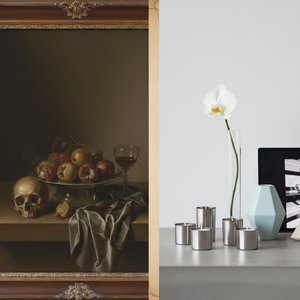
The Enduring Appeal of Still Life: A Historical & Contemporary Exploration
Explore the rich history & symbolism of still life painting with OriginalUniqueArt. Discover masterpieces from the Dutch Golden Age, learn about vanitas art, and find expert guidance for collecting timeless artworks.

Mastering the Line: A Comprehensive Expert Guide to Technical Precision and Expressive Depth in Drawing
Elevate your artistic practice with this expert guide to mastering the line. Discover advanced techniques in graphite, charcoal, and contour drawing designed for art students seeking technical precision and expressive depth in their fine art studies.

