Vaata sisu
 Jaga teost
 Jaga
Jaga
 Detailid
 Õppekate juhend

 Laadi alla
 Sarnased teosed
 Röntgenuuring
 Slaidietendus
 Statistika
Sea coast
 Oil On Canvas
- WallArt
- Romanticism
 1840
1840- 19th Century
 40.0 x 61.0 cm
 Tretyakov galerii
 Loe lähemalt
Giclée / Kunstiprint
Muuseumikvaliteediga giclée- või kangasprint kiire tootmisega ja paindlikud viimistlusvõimalused. ( Telli käsitsi maalitud reproduktsioon Ülemineku digitaalse pildi müügi kanalisse)




P118B €10

P118H €10

P118W €10

P438Z €10

P508JH €12

P508YH €12

P805H €10

P805Z €10

P919BZ €10

P919G €10

P919XJ €10

P959ZH €10

P968JZ €12

W106C €8

W218G €10

W218JH €8

W218Y €10

W307PJ €10

W316G €10

W316PJ €8

W316Y €10

W398PJ €8

W4111J €10

W500HY €15

W500JH €15

W692G €12

W849H €8

W940BG €15

W953PJ €8




Vali meie eelmääratud suurused, mis vastavad teose algupärastele proportsioonidele.

Sisestage vajalik laius ja kõrgus, et see sobiks teie raamile või seinale. Trükki saab ainult lõigata, seda ei saa kunagi pildist suuremaks teha, seega ka differentse vormiga suurus kaotab osa pildist. Enne trükkimist saadame teile kinnitamiseks digitaalse näidisprojektsiooni. Sellel lehel näidatud pilt ei kujuta reaalset lõiget — seda näitab ainult näidisprojekttsioon.
Ülemaailmne tarne () 2 nädala jooksul, tavalise 4/5 nädala asemel. (27 oktoober)

Tasuta ekspresssaatmine üle maailma

Kõrgekvaliteediline lina-kangastest muld

Täielik transpordikindlustus

Tollimaksude tagastamise garantii

Värvitoime täpsuse garantii

100 päeva tagastusõigus (ainult defektide korral)

100% raha tagasi garantii

Hulgusoodustus
 Klaasivalik on saadaval ainult kuni 110 cm suuruses teostes

Sea coast
Giclée / Kunstiprint
Reproduktsiooni mõõtmed
-


Lõppsumma
€ 70
A Symphony of Salt and Silence
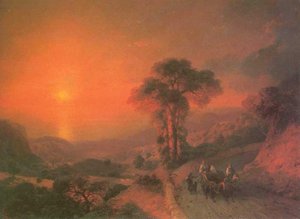
In the quietude of 1840, Ivan Konstantinovich Aivazovsky captured a moment that transcends mere landscape, offering instead a window into the very soul of the maritime world. His masterpiece, Sea Coast, is far more than a depiction of water and shore; it is an evocative dialogue between the vast, untamed ocean and the solitary human spirit. As one gazes upon this oil on canvas, the viewer is immediately enveloped by a sense of profound tranquility. The composition is masterfully balanced, centering on a lone figure standing near the shoreline—a sentinel of sorts, whose presence provides a poignant scale to the infinite horizon. This man, lost in contemplation or perhaps simply absorbing the rhythmic pulse of the tides, serves as our emotional anchor, inviting us to share in his silent communion with the sea.
The water itself is a marvel of Romantic sensibility, rendered with a precision that suggests both movement and stillness. Several boats drift upon the surface, their varying positions creating a sense of depth that pulls the eye from the immediate shoreline toward the distant, cloud-swept sky. Aivazovsky, a master of the marine genre, utilizes light not merely to illuminate, but to breathe life into the scene. The way the sunlight filters through the atmospheric clouds and dances upon the gentle swells demonstrates a technical virtuosity that was the hallmark of his illustrious career. For the collector or interior designer, this painting offers a rare opportunity to introduce a sense of serene grandeur into a space, acting as a focal point that commands attention while maintaining an atmosphere of peaceful reflection.
The Mastery of Romantic Light and Texture
To understand the brilliance of Sea Coast, one must delve into the technical prowess of Aivazovsky’s brushwork. As a leading figure of the late Romantic movement, he possessed an uncanny ability to manipulate oil pigments to mimic the translucent quality of water and the ephemeral nature of mist. The technique employed here avoids the heavy, opaque textures of some of his more tempestuous works, opting instead for a luminous clarity that allows the light to appear as if it is emanating from within the canvas itself. This luminosity is essential to the painting's emotional impact; it transforms a simple coastal scene into a sublime experience, where the boundaries between the sea, the sky, and the air seem to dissolve in a soft, painterly haze.
The historical context of this work adds another layer of richness for the discerning enthusiast. Created during a period when Aivazovsky was establishing himself as a premier voice in Russian art, the painting reflects the era's fascination with the sublime—the concept of nature's overwhelming beauty and power. While many of his contemporaries focused on the violent drama of shipwrecks and crashing waves, this particular work celebrates the restorative power of the sea's calm. It is a testament to his versatility as an artist, capable of evoking deep emotion through subtlety rather than spectacle. For those seeking to adorn a home or gallery with a high-quality reproduction, this piece provides a timeless elegance that complements both classical and contemporary aesthetics, bringing the enduring magic of the Black Sea coast into the modern interior.
Küsimused ja vastused
Kas teos „Sea coast“, autor Ivan Konstantinovitš Айвазовский on portree-, maastiku- või ruudukompositsioon?
Teose „Sea coast“, autor Ivan Konstantinovitš Айвазовский vorm on Landscape. See vorm kirjeldab kompositsiooni proportsioone.
Millises muuseumis on säilitatud originaal "Sea coast"?
Originaalteost „Sea coast“, autor Ivan Konstantinovitš Айвазовский hoiustatakse Tretyakov galerii, Moskva, Eesti muuseumis. Reproduktsioon võimaldab teost koduses keskkonnas esitleda.
Kui hele on teos "Sea coast" üldiselt?
Teel sündinud valgusest on teose „Sea coast“, autor Ivan Konstantinovitš Айвазовский ereonim brilliant.
Kunstniku elulugu
Ivan Konstantinovich Aivazovsky – Hovhannes Aivazian
Ivan Konstantinovich Aivazovsky, born Hovhannes Aivazian in 1817, was more than just a painter of seascapes; he embodied the Romantic spirit—a conduit to the ocean’s soul. His very existence seemed inextricably linked to the Black Sea—that vast, unpredictable expanse that would forever dominate his artistic vision and fuel an extraordinary career spanning nearly six decades. Born in Feodosia, Crimea, Russia – a city steeped in maritime history – Aivazovsky didn't merely observe the sea; he felt it – its raw energy, sublime beauty, and inherent danger becoming the very essence of his art. From a young age, this connection was nurtured by Jacob Koch, an architect who recognized the boy’s innate talent, then blossoming within the rigorous academic environment of Saint Petersburg’s Imperial Academy of Arts. Yet, formal training alone couldn't account for the depth of Aivazovsky’s understanding; it was the constant presence of salt-laced air and the cries of gulls that truly shaped his artistic sensibility. His Armenian heritage – he was baptized at St. Sargis Armenian Church in Feodosia – instilled a profound appreciation for cultural traditions, occasionally informing his expansive body of work with motifs reflecting Armenian landscapes and folklore.Early Influences and Artistic Formation
Aivazovsky’s formative years were marked by exposure to influential artistic currents. Like many aspiring artists of his time, he studied at the Imperial Academy of Arts in Saint Petersburg, absorbing the stylistic conventions of Academic painting—characterized by idealized forms and meticulous detail. However, Aivazovsky possessed a rebellious streak that would soon propel him beyond these established boundaries. He found inspiration in the works of Claude Lorrain and Salvator Rosa – artists who championed dramatic landscapes infused with emotion—artists who captured the sublime grandeur of nature. These influences instilled in him a desire to depict not merely what was seen, but what was felt—a conviction that resonated deeply throughout his artistic career. His early paintings demonstrated remarkable technical skill, reflecting meticulous observation and careful rendering of light and color.The Rise of a Marine Master: Patronage and Naval Service
A pivotal moment arrived when Aivazovsky secured the patronage of Czar Nicholas I – a relationship that profoundly shaped his artistic trajectory. Recognizing his talent and unwavering dedication to his craft, the Tsar appointed him the main painter of the Russian Navy—a position that granted him unparalleled access to naval life, battleships, and firsthand observation of maritime expeditions. This wasn’t merely a prestigious title; it was transformative – providing him with invaluable material for artistic inspiration and fostering an intimate understanding of the challenges faced by sailors at sea. He became acutely aware of the psychological impact of confronting turbulent waters and perilous storms—themes that would permeate his paintings throughout his life. The patronage afforded him by the Tsar allowed him to pursue his artistic ambitions without constraint, securing funding for ambitious projects and enabling him to travel extensively – documenting naval voyages and capturing breathtaking vistas across Europe.A Style Defined by Drama and Luminosity
Aivazovsky’s distinctive style—characterized by dramatic compositions and masterful use of color—became synonymous with Romantic marine art. He eschewed the polished surfaces of Academic painting, favoring looser brushstrokes and vibrant hues that conveyed a palpable sense of movement and emotion. Like Turner – whom he admired greatly – Aivazovsky sought to capture not just the visual spectacle of the sea but its very soul—its moods, its power, and its mystery. His technique involved applying paint in thin layers, creating luminous textures that seemed to emanate from within the canvas itself. He meticulously studied atmospheric perspective, skillfully rendering distant landscapes with hazy blues and greys – techniques that heightened the dramatic impact of his paintings. Works such as *Chaos (The Creation)* and *Ship in a Stormy Sea* exemplify this approach—capturing the terror and majesty of nature with breathtaking precision.Legacy and Enduring Influence
Ivan Konstantinovich Aivazovsky’s contribution to Russian art is undeniable – securing him a place among the most celebrated marine artists of his era. His paintings continue to inspire awe and admiration, demonstrating an unparalleled ability to convey emotion and capture the essence of the sea. He profoundly influenced subsequent generations of painters—establishing a precedent for Romantic landscape painting that prioritized expressive power over strict adherence to academic conventions. The saying “worthy of Aivazovsky’s brush” – popularized by Anton Chekhov – encapsulates the enduring legacy of this artistic genius—a testament to his unwavering commitment to capturing the sublime beauty and dramatic intensity of the natural world. His paintings remain exhibited in museums worldwide, ensuring that his vision continues to resonate with audiences across cultures and generations.
Ivan Konstantinovitš Айвазовский
1817 - 1900 , Россия
Lühikest infot
- Artistic Movement Or Style: Romanticism, Marine art
- Artists Who Influenced This Artist:
- Claude Lorrain
- Salvator Rosa
- Date Of Birth: 1817
- Date Of Death: 1900
- Full Name: Ivan Konstantinovich Aivazovsky
- Nationality: Russian-Armenian
- Notable Artworks:
- The Ninth Wave
- Ship in a Stormy Sea
- Seascape with Full Moon
- Place Of Birth: Feodosia, Russia
Sarnased artiklid
The Allure of the Horizon: A Comprehensive Exploration of Seascape Art Through History & Emotion
Explore the captivating world of seascape art! Discover its history, key artists & movements – from Dutch Masters to Impressionism. Expert insights for collectors and enthusiasts at OriginalUniqueArt.
Navigating the Depths of Representation: A Historical Exploration of Marine Painting
Explore the rich history of marine painting with OriginalUniqueArt. Discover Dutch Masters, Romantic seascapes & renowned artists like Wyllie and Harris. Expert guidance for collectors & custom reproductions.
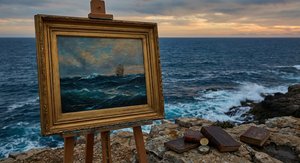
The Azure Depths: Exploring Representations of the Ocean in Art History
Explore the rich history of ocean art! Discover Romantic seascapes, renowned artists like Aivazovsky & Harris, and expert guidance for collectors at OriginalUniqueArt.com.

Dark Masterpieces: 10 Iconic Paintings Dominated by Black Tones |
Explore 10 iconic paintings dominated by black tones, from Rembrandt’s chiaroscuro to Goya's dark expressions. Discover the stories behind these masterpieces & find museum-quality art reproductions for your home at .
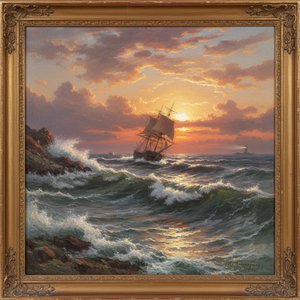
Ivan Aivazovsky: Mastering Light & Emotion in 19th-Century Marine Painting
Explore the captivating world of Ivan Aivazovsky, a master of 19th-century marine painting. Discover his techniques, iconic artworks & lasting legacy in this expert guide.