Modernism
Sculptural Objects (Cramer 47) (Henry Moore)
Henry Moore (1898–1986) on loonud teose Sculptural Objects (Cramer 47). See kuulub Modernism suuntrime. Teos on valmistatud materjalist Painting.
- Painting

 Eelvaade

 Käsitsi maalatud õlimaalatsioon
 Saada
 Jaga
 Teave teose kohta


 Laadi alla
 Sarnased teosed
 Röntgenuuring
 Slaidietendus
 KÜSIMUSED JA VASTUSID

 Statistika
Sculptural Objects (Cramer 47) lühidalt
- Pealkiri
- Sculptural Objects (Cramer 47)
- Kunstnik
- Henry Moore (1898–1986)
- Kunstnik on sündinud
- Castleford, Suurbritannia
- Tehnika
- Painting
- Suunad
- Modernism
- Aeglkond
- Modern
- Teema
- blue ball, red shoe, red ball, people, sculptures, abstract shapes
Mida Sculptural Objects (Cramer 47) kujutab?
A Symphony of Form: The Modernist Vision of Henry Moore
In the vast landscape of twentieth-century modernism, few names resonate with as much tactile power and organic grace as Henry Moore. While the world often recognizes him through his monumental bronze figures that command public squares across the globe, his foray into the two-dimensional realm offers a uniquely intimate window into his creative psyche. Sculptural Objects (Cramer 47) stands as a breathtaking testament to this versatility, a painting that does not merely depict shapes but breathes life into them. In this work, Moore transcends the boundaries of his usual medium, using the canvas to explore the very essence of volume, weight, and spatial relationship that defined his sculptural career.
The composition is a masterful dance of geometry and humanity. At first glance, the viewer is greeted by an array of striking shapes—a large, commanding blue sphere, a vibrant red shoe, and smaller crimson accents that punctuate the scene like rhythmic beats in a visual melody. Yet, these are not isolated relics; they exist within a living ecosystem. Moore populates this abstract landscape with figures who interact with these objects, creating a profound dialogue between the inanimate and the animate. This interplay suggests that art is not a distant, untouchable entity, but something woven into the fabric of human experience, inviting us to touch, move, and inhabit the space alongside the subjects.
Technique, Perspective, and the Modernist Spirit
What makes Sculptural Objects (Cramer 47) so captivating for the discerning collector or interior designer is its sophisticated use of perspective and depth. Moore employs a technique that allows for multiple viewpoints to coexist within a single frame, a hallmark of modernist innovation. This creates a sense of kinetic energy, as if the painting is shifting beneath our gaze. The way light and shadow play across the blue ball and the red forms gives them a palpable three-dimensionality, tricking the eye into perceiving weight where there is only pigment. It is this illusion of mass that makes the piece feel remarkably "sculptural" despite being a flat surface.
The emotional impact of the work lies in its balance of abstraction and familiarity. While the shapes are undeniably modern and abstract, the presence of the human figures anchors the piece in a recognizable reality. There is a sense of wonderment, a childlike curiosity as the people navigate this world of colorful totems. For those looking to adorn a sophisticated interior, this painting offers more than just decoration; it provides a focal point of intellectual depth and aesthetic joy. It brings with it the legacy of the English master—a legacy of finding the eternal in the organic and the monumental in the small.
Owning a high-quality reproduction of such a masterpiece allows one to bring the revolutionary spirit of Moore into the home. Whether placed in a minimalist contemporary gallery or a richly textured traditional study, Sculptural Objects (Cramer 47) serves as a conversation starter, an invitation to contemplate the beautiful tension between the shapes we create and the lives we lead.
Sculptural Objects (Cramer 47) kõrge resolutsiooniga pildid

Protected by copyright: these files are for personal reference, not a licence to republish.
Henry Moore, Sculptural Objects (Cramer 47).
Küsimused teemal Sculptural Objects (Cramer 47) – vastused
Millises materjalis on teos „Sculptural Objects (Cramer 47)“, autor Henry Moore valmistatud?
Teose „Sculptural Objects (Cramer 47)“, autor Henry Moore materjal on Painting. Reproduktsioonide eesmärk on jälitada selle tehnika välimust.
Mille kohta teos "Sculptural Objects (Cramer 47)" on?
Teose "Sculptural Objects (Cramer 47)" teemad on blue ball, red shoe, red ball, people, sculptures, abstract shapes.
Kas teos "Sculptural Objects (Cramer 47)" on ilma autoriõigusteta?
Tegijateõiguse osas on teos "Sculptural Objects (Cramer 47)" kuuluv klassifikatsiooni alla: on endiselt autoriõiguse all under kaitse.
Millisele kunstnikule on teos "Sculptural Objects (Cramer 47)" atribuutseeritud?
Teose "Sculptural Objects (Cramer 47)" autoriks on mõeldud Henry Moore.
Millissele kunstisuunale kuulub teos „Sculptural Objects (Cramer 47)“, autor Henry Moore?
Teos „Sculptural Objects (Cramer 47)“, autor Henry Moore kuulub Modernism suunasse. See suund annab teosele stilistilise konteksti.
Kuhu Henry Moore loomingulisse perioodi kuulub teos "Sculptural Objects (Cramer 47)"?
Teos "Sculptural Objects (Cramer 47)" esindab kunstniku Henry Moore loovperioodi Modern Period.
Kas Henry Moore teos "Sculptural Objects (Cramer 47)" kuulub avalikku omandisse ja miks?
Teose "Sculptural Objects (Cramer 47)" autoriõiguste staatus - on endiselt autoriõiguse all under kaitse - tuleneb kunstniku surma aastast 1986.
Milliseid ühiseid elemente jagab teos "Sculptural Objects (Cramer 47)" Henry Moore muud loominguga?
"Sculptural Objects (Cramer 47)" kuulub Henry Moore Modernism perioodi teosetele, mille tuntud teemad hõlmavad modernist abstraction, nature and human form, human experience interaction, versatile artistic approach, evolution of sculpture.
Kuidas teose "Sculptural Objects (Cramer 47)" motiiv seobub Henry Moore tavalistega teemadega?
"Sculptural Objects (Cramer 47)" kujutab teemasid blue ball, red shoe, red ball, people, sculptures, abstract shapes, samal ajal kui Henry Moore tuntud teemad on modernist abstraction, nature and human form, human experience interaction, versatile artistic approach, evolution of sculpture. Nende kahe võrdlemine näitab, kuidas teos seobub kunstniku tavalistega motiividega.
Kunstnikust, Henry Moore

1898–1986, Suurbritannia
Henry Moore
A Life Sculpted in Form: The World of Henry Moore Henry Spencer Moore OM CH FBA (30 July 1898 – 31 August 1986) was an English visual artist. He is best known for his semi-abstract monumental bronze sculptures, which revolutionized modern British sculpture and cemented his place as one of the most influential artists of the twentieth century. Born in Castleford, Yorkshire, Moore’s early life instilled in him a profound appreciation for the natural world—a fascination that would permeate his artistic vision throughout his career. His father, Raymond Spencer Moore, was a self-taught man who championed education and steered Henry away from the traditional path of coal mining, recognizing his innate talent for modeling clay and carving wood.
Ka Henry Moore teosed
 Reclining Figure
 Falling Warrior1957
 Sheep 1
 A Miner at Work1942
Essee teemadel Sculptural Objects (Cramer 47)
 Unveiling the Dreamer: The 25 Most Iconic Masterpieces by Gustave MoreauStep into the dreamlike world of Gustave Moreau. Explore 25 iconic Symbolist masterpieces, from mythic legends to opulent textures. Find in…
 The Power of One: Exploring Depth and Emotion in Monochromatic ArtistryExplore the profound depth of monochromatic mastery from Malevich to Klein. Discover the power of single-hue art today.
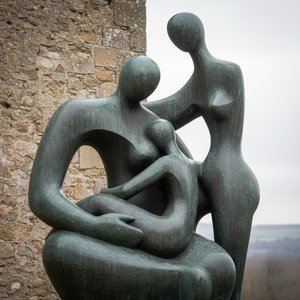 Henry Moore: Sculpting Modernity – Form, Emotion & the Human ConditionExplore the revolutionary sculptures of Henry Moore – abstract forms, reclining figures & powerful expressions of the human condition. Disc…