

 Eelvaade
 Saada
Saada Jaga
Jaga
 Teave teose kohta

 Laadi alla
 Sarnased teosed
 Röntgenuuring
 Slaidietendus
 Statistika
Bacchus, Ceres and Cupid
 Acrylic On Canvas
- WallArt
- Northern Mannerism
 163.0 x 113.0 cm
 Kunsthistorisches Museum
 Loe lähemalt
Giclée / Kunstiprint
Muuseumikvaliteediga giclée- või kangasprint kiire tootmisega ja paindlikud viimistlusvõimalused. ( Osta käsitsi maalitud maal Ülemineks digitaalse pildiga müügi kanalisse)




P118B $10

P118H $10

P118W $10

P438Z $10

P508JH $12

P508YH $12

P805H $10

P805Z $10

P919BZ $10

P919G $10

P919XJ $10

P959ZH $10

P968JZ $12

W106C $8

W218G $10

W218JH $8

W218Y $10

W307PJ $10

W316G $10

W316PJ $8

W316Y $10

W398PJ $8

W4111J $10

W500HY $15

W500JH $15

W692G $12

W849H $8

W940BG $15

W953PJ $8




Vali meie eelmääratud suurused, mis vastavad teose algupärastele proportsioonidele.

Saate sisestada oma mõõdud, et need sobiks konkreetse raami või ruumi sisse. Kui valitud suurus ei vasta originaalteose proportsioonidele, lõigame teose ära või laiendame pilti peegeldatud või ühtlase servaga. Enne tootmisprotsessi algust saadetakse Teie kinnitamiseks digitaalne näidis.
Palun märka, et ekraanil kuvatav eelvaade ei kajasta tegelikku lõigamist või laiendamist. Ainult näidis kujutab täpselt lõplikku kompositsiooni.
Kuigi erimõõdu on saadaval, soovitame originaaproportsioonide säilitamiseks valida mõõt ette määratud nimekirjast.
Ülemaailmne tarne () 2 nädala jooksul, tavalise 4/5 nädala asemel. (16 september)

Tasuta ekspresssaatmine üle maailma

Kõrgekvaliteediline linakangas

Täielik transpordikindlustus

Tollimaksude tagastamise garantii

Värvitoime täpsuse garantii

100 päeva tagastusõigus (ainult tootmisdefektide korral)

100% raha tagasi garantii

Hulgusoodustus
 Klaasivalik on saadaval ainult suuruses kuni 110 cm

Bacchus, Ceres and Cupid
Giclée / Kunstiprint
Reproduktsiooni suurus
-


Kogusumma
$ 80
Bacchus, Ceres, and Cupid: A Baroque Dance of Divine Excess
Hans von Aachen’s “Bacchus, Ceres, and Cupid,” painted likely in the late 16th century, is more than just a depiction of mythological figures; it's a vibrant distillation of the Northern Mannerist style – a period characterized by its dramatic contrasts, elongated forms, and an intense exploration of psychological depth. The painting, now residing within the Kunsthistorisches Museum in Vienna, offers a glimpse into the artistic currents flowing between Italy, Germany, and beyond during this transformative era. Von Aachen’s work stands out not merely for its technical skill but also for its ability to imbue classical subjects with a palpable sense of energy and sensuality, reflecting the tastes of powerful patrons like Emperor Rudolf II of Prague.
The composition immediately draws the eye into a dynamic interplay of figures. Dominating the left side is Bacchus, the god of wine, rendered in robust musculature and adorned with a leafy crown – symbols of his intoxicating domain. His expression is one of unrestrained joy, a boisterous celebration that spills outwards, inviting the viewer to partake in his revelry. To his right sits Ceres, the goddess of agriculture, embodying abundance and fertility. She’s depicted with serene grace, holding a basket overflowing with fruits – a visual testament to her role as provider and sustainer. Finally, Cupid, the mischievous god of love, darts across the scene, an arrow poised in his hand, representing desire and passion. The positioning of these three deities isn't merely decorative; it’s carefully orchestrated to suggest a narrative arc—a dance between indulgence, sustenance, and the driving force of romantic longing.
A Mannerist Masterpiece: Technique and Style
Von Aachen’s mastery lies in his skillful manipulation of light and shadow, a hallmark of the Baroque style that was beginning to emerge during this period. The painting is bathed in dramatic chiaroscuro – stark contrasts between light and dark – which sculpts the figures and creates a sense of theatricality. Notice how the musculature of Bacchus is highlighted against the darker background, emphasizing his power and vitality. The elongated forms characteristic of Mannerism are evident throughout, lending an air of elegance and sophistication to the scene. Von Aachen’s brushwork is remarkably detailed, particularly in the rendering of drapery and the intricate patterns on the figures' attire. This meticulous attention to detail speaks to both his technical proficiency and his desire to capture the textures and nuances of the world around him.
The color palette is rich and vibrant, dominated by deep reds, golds, and blues – colors associated with royalty, wealth, and divine power. These hues are juxtaposed against earthy tones, creating a visual tension that mirrors the painting’s thematic complexity. The background landscape, rendered in muted greens and browns, serves as a grounding element, anchoring the figures within a believable, albeit stylized, setting.
Symbolism and Historical Context
“Bacchus, Ceres, and Cupid” is steeped in classical mythology, but it also carries layers of symbolic meaning. The arrangement of the three deities alludes to the Roman proverb “Sine Cerere et Bacchus friget Venus,” or "Without Ceres and Bacchus, Venus would freeze"—a reminder that pleasure, abundance, and love are essential components of a fulfilling life. The painting reflects the artistic tastes of Emperor Rudolf II, who was known for his patronage of both art and science, and whose court in Prague became a hub for cultural exchange between Northern and Southern Europe.
Von Aachen’s work is deeply intertwined with the broader context of the Renaissance and Mannerism. He drew inspiration from Italian masters like Raphael and Michelangelo, but he also incorporated elements of Netherlandish realism – particularly in his attention to detail and his use of light and shadow. His paintings were highly sought after by European nobility, who commissioned them as symbols of wealth, power, and sophistication.
A Timeless Appeal: Reproduction and Interpretation
Today, “Bacchus, Ceres, and Cupid” continues to captivate viewers with its dramatic composition, vibrant colors, and profound symbolism. Reproductions offer a wonderful opportunity to bring this masterpiece into your home or office, allowing you to appreciate its beauty and complexity on a daily basis. When selecting a reproduction, consider the quality of materials used – a high-quality print on archival paper will ensure that the colors remain true for years to come. Whether displayed as a statement piece in a grand salon or as a subtle accent in a smaller room, this painting’s enduring appeal is sure to spark conversation and inspire contemplation.
Kunstniku elulugu
varajane elu ja õppimine
Hans von Aachen, saksa maalari nimi, sündis 1552. aastal Kölni linnas. Tema varajase elu kohta on vähe teada, kuid uskumisi on, et ta sai oma kunstilist haridust kohaliku maalari Leonardus Sievenhoveni töökodas.kunstiline stiil ja mõjud
Von AACHeni loomingut iseloomustavad elavad värvid ja dramaatilised kompositsioonid, mis on tüüpilised manierismi stiilile. Tema maalid sisaldasid sageli pikunäidelisi kujundid, keerulisi detaile ja pinget, millele mõjutasid El Greco (Domenikos Theotokopulos) teosed. Tema mõned silmapaistvad teosed on:- Ristiiumine (1585), maal, mis demonstreerib tema julget värvikasutust ja dramaatilist valgustust.
- Viimane õigus (1590), teos, mis näitab tema võimet tasakaalutada mitmeid isikuid ühes kompositsioonis.
- Tundmatu daami portree (1595), portree, mis rõhutab tema oskust tabada inimaväljenduse peenusi nüansse.
olulised kogumikud ja näitused
Von AACHeni teoseid saab leida erinevatest muuseumidest, sealhulgas:- Gemäldegalerie Alte Meister, Dresden, Saksamaa - mis esitleb laia 15. kuni 18. sajandi Euroopa maali kogu™.
- Museum Ostdeutsche Galerie, Regensburg, Saksamaa - mis näitab unikaalset Ida-Saksamaa kunsti kogumust.
pärand
Hans von Aachen suri 1615. aastal, jättades järele pärandi, mis koosneb keerulistest ja emotsionaalselt laengutest maalidest. Tema töö jätkub inspireerimas nii kunstnikke kui ka kunstuhureid, pakkudes ainulaadset vaadet manierismi kunsti maailma. avasta rohkem Hans von Aacheni elu ja loomingust OriginalUniqueArt.com leheküljel: [https://OriginalUniqueArt.com/@@/a@d3aquv](https://OriginalUniqueArt.com/@@/a@d3aquv) | avastades Museum Ostdeutsche Galerie (Saksamaa)
Hans Von Aachen
1552 - 1615 , Saksamaa
Lühikesed faktid
- Artistic Movement Or Style: Manierism
- Artists Or Movements Influenced By This Artist: ['Renessanss']
- Artists Who Influenced This Artist: ['El Greco']
- Date Of Birth: 1552 Köln, Saksamaa
- Date Of Death: 1615
- Full Name: Hans von Aachen
- Nationality: Saksa
- Notable Artworks:
- Ristiloomine
- Viimne õudmine
- Tundmatu daami portret
- Place Of Birth: Köln
Seotud artiklid

Baroque Classicism: The Grandeur of Order and Drama in 17th-Century Art History
Explore the profound elegance of Baroque Classicism. Discover how 17th-century masters synthesized dramatic emotion with classical order through the lens of the Counter-Reformation and the works of legends like Carlo Maratta and Andrea Sacchi.
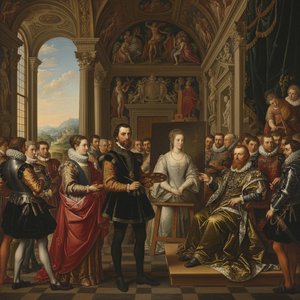
Hans von Aachen: Mannerism's Courtly Visionary & Imperial Portraiture
Explore the captivating world of Hans von Aachen, a leading Mannerist painter renowned for his exquisite imperial portraits & mythological scenes. Discover his legacy and influence on 16th-century European art.

The Dramatic Flourish: Exploring the Baroque Movement's Enduring Legacy in Art History
Explore the dramatic world of Baroque art! Discover iconic artists like Caravaggio & Rubens, defining techniques, and its lasting impact on art history. Expert insights for collectors & enthusiasts at OriginalUniqueArt.
Echoes of Olympus: Mythological Narratives in Western Art Through the Ages
Explore the captivating history of mythological narratives in Western art! From ancient Greece to modern masterpieces, discover iconic artworks & symbolism. Expert analysis and high-quality reproductions at OriginalUniqueArt.

Baroki draama ja luksus: Kuidas ajalooline elegants kaasaegsesse interjööri tuua
Avastage baroki maalide võlu OriginalUniqueArt'is! Käsitsi valmistatud reproduktsioonid, fotodest maalid ja ekspertkonsultatsioonid. Toome ajaloolise elegantsi Teie interjööri. Kvaliteet garanteeritud!