Eelvaade
 Saada
Saada Jaga
Jaga
 Teave teose kohta
 Juhend

 Laadi alla
 Sarnased teosed
 Röntgenuuring
 Slaidietendus
 Q&A
Q&A Statistika
Self Portrait


 Loe lähemalt
Sellel lehel kuvatav kunstiteos on kaitstud autoriõigusega, mis tähendab, et meil ei ole seaduslikku õigust luua või müüa identset reproduktsiooni. Seda kaitset rakendatakse rahvusvaheliste kokkulepete alusel, nagu näiteks Berne konventsioon ning riiklike seadustega, sealhulgas nendega, mida on sätestatud USA autoriõiguse seadus – 17. peatükk.
See meetod järgib täielikult autoriõiguse reegleid, kuna see ei põhine kaitstud kunstiteose kopeerimisel või dupliteerimisel. Selle asemel on tegu loova reinterpreetatsiooniga – uue maaldisega, mis on algteosest inspireeritud, kuid ei ole sellest identiline.
Giclée / Kunstiprint
Muuseumikvaliteediga giclée- või kangasprint kiire tootmisega ja paindlikud viimistlusvõimalused. ( Osta käsitsi maalatud teos Lülita digitaalse pildi juurde)




P118B €10

P118H €10

P118W €10

P438Z €10

P508JH €12

P508YH €12

P805H €10

P805Z €10

P919BZ €10

P919G €10

P919XJ €10

P959ZH €10

P968JZ €12

W106C €8

W218G €10

W218JH €8

W218Y €10

W307PJ €10

W316G €10

W316PJ €8

W316Y €10

W398PJ €8

W4111J €10

W500HY €15

W500JH €15

W692G €12

W849H €8

W940BG €15

W953PJ €8




Vali meie eelmääratud suurused, mis vastavad teose algupärastele proportsioonidele.

Sisestage vajalik laius ja kõrgus, et see sobiks teie raamile või seinale. Trükki saab ainult lõigata, seda ei saa kunagi pildist suuremaks teha, seega ka erineva mustega suurus kaotab osa pildist. Enne trükkimist saadame teile kinnitamiseks digitaalse näidisprojektsiooni. Sellel lehel näidatud pilt ei kujuta reaalset lõiget — seda näitab ainult näidisprojektsioon.
Ülemaailmne tarne () 2 nädala jooksul, tavalise 4/5 nädala asemel. (3 november)

Tasuta ekspresssaatmine üle maailma

Kõrgekvaliteediline lina-kangas

Täielik transpordikindlustus

Tollimaksude tagastamise garantii

Värvitoime täpsuse garantii

100 päeva tagastusõigus (ainult valmistusdefektide korral)

100% raha tagasi garantii

Hulgusoodustus
 Klaasivalik on saadaval ainult kuni 110 cm suuruses teostes

Self Portrait
Giclée / Kunstiprint
Reproduktsiooni suurus
-


Koguhind
€ 71
A Portrait of Disquiet: De Chirico’s ‘Self Portrait’ (1911)
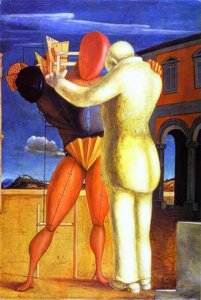
Giorgio de Chirico's “Self Portrait,” painted in 1911, is not merely a depiction of an artist; it’s a meticulously crafted evocation of the anxieties and intellectual currents that defined the early years of modernism. This striking image, rendered with a precision born from his training in Athens and honed further in Munich, immediately arrests the viewer with its unsettling stillness. The subject, a man with a thoughtful gaze framed by spectacles and a neatly trimmed beard, stands before a window, lost in contemplation. His clasped hands suggest a profound introspection, while the distant look in his eyes hints at a world beyond immediate perception – a key element of de Chirico’s artistic vision.
The Genesis of Metaphysical Painting
Created during a pivotal moment in art history, “Self Portrait” exemplifies de Chirico's emergence as a leading figure in the movement he termed "metaphysical painting." Influenced profoundly by the philosophical writings of Nietzsche and Schopenhauer, de Chirico sought to depict not reality as it appears, but rather the subjective experience of reality – the unsettling feeling that lies beneath the surface of everyday life. This is achieved through a deliberate manipulation of perspective, scale, and atmosphere, creating an almost dreamlike quality. The painting’s power resides in its ability to evoke a sense of unease and disorientation, mirroring the anxieties of a rapidly changing world.
- Technique: De Chirico masterfully employs oil paint with a meticulous attention to detail, particularly evident in the rendering of textures – the fabric of the man’s clothing, the glass of his spectacles, and the weathered surface of the wall.
- Composition: The use of receding planes and ambiguous spatial relationships is central to the work's impact. The window acts as a portal, drawing the viewer into an indeterminate space, while the clock on the wall subtly reinforces the theme of time’s relentless passage and its potential for distortion.
Symbolism and the Fragmented Self
Beyond its technical brilliance, “Self Portrait” is laden with symbolic meaning. The boat glimpsed through the window – a recurring motif in de Chirico’s work – represents both escape and entrapment, suggesting a yearning for freedom intertwined with an awareness of confinement. The man's pose itself speaks to themes of isolation and alienation, reflecting the artist’s own feelings about his place in the world. The overall effect is one of psychological depth, inviting viewers to confront their own anxieties and uncertainties.
Historical Context and Lasting Influence
Painted in 1911, “Self Portrait” predates de Chirico’s later association with the Surrealists, yet it anticipates many of their key concerns. It stands as a crucial bridge between early modernism and the dreamlike imagery that would come to define the Surrealist movement. De Chirico's influence can be seen in the works of artists such as René Magritte and Max Ernst, demonstrating the enduring power of his vision. This piece continues to resonate with contemporary audiences, offering a poignant meditation on the nature of perception, identity, and the unsettling beauty of the subconscious.
Korduvad küsimused
Millise riigi kunstilihubast pärineb Metaphysical Surrealism teos "Self Portrait"?
Teose "Self Portrait" on loonud Kreeka-s sündinud Giorgio De Chirico, tuginedes Metaphysical Surrealism suunale. Kunstniku päritolu seob teose Metaphysical Surrealism stiiliga, mida praktiseerivad Kreeka kunstnikud.
Kas „Self Portrait“, autor Giorgio De Chirico on tuntud teos?
Teos "Self Portrait" kuulub kategooria Recognized hulka.
Millissele ajalukuna kuulub teos „Self Portrait“, autor Giorgio De Chirico?
Teose „Self Portrait“, autor Giorgio De Chirico ajalooline periood on 19th Century. See klassifikatsioon aitab teost kunstiloostikus paikata.
Kunstniku elulugu
Giorgio de Chirico: A Dreamscape of the Mind
Giorgio de Chirico (10. mai 1888 Volos, Kreeka – 20. november 1978 Rooma, Itaalia) oli itaalia maalikunstnik, kes koos Carlo Carràga ja Giorgio Morandiaga asutas metafüüsilise maalilise stiili. Ta õppis Ateena polütehnikumis ja Müncheni Kunstiakadeemias. De Chirico oli mõjutatud Arnold Böcklini loomingu poolest ja Friedrich Nietzsche filosoofiast. Tema esimeste tööde perioodil olid tema huvid keskendunud klassikalisele arhitektuurile ning müüdi kunstniku Carlo Carràga koosolemusele metafüüsilise maalilise stiili põhimõtete kohta, mis ilmnevad de Chirico kõrgaja (1910–1918) teostes. Tema töö oli täielikult mõjutatud Arnold Böcklini ja Max Klingeri kunstniku tööd ning Friedrich Nietzsche filosoofiast.- Varane Elu ja Haridus: Giorgio de Chirico sündis Volos, Kreegas 1888. aastal itaalia päritoluga perele – Genoese ema ja Sicilian isa. Tema varased õppetööd Ateena polütehnikumis pakkusid talle klassikalise tehnika baasi, kuid Müncheni Kunstiakadeemia oli tema loomingulisele mõtete arengule kriitilise tähtsusega koht.
- Müncheni Kunstiakadeemia ja Esimese Maailmasööda Algus: Müncheni Kunstiakadeemias õppis de Chirico kunstniku Carlo Carràga koosolemusele metafüüsilise maalilise stiili põhimõtete kohta, mis ilmnevad de Chirico kõrgaja (1910–1918) teostes.
Metafüüsiline Maal ja Tema Põhimõtted
De Chirico püsis otsingutes sellega, kuidas saada täielikult mõjutatud Arnold Böcklini ja Max Klingeri kunstniku tööd ning Friedrich Nietzsche filosoofiast. Ta oli erityötegija metafüügilise maalilise stiili põhimõtete kohta koos Carlo Carràga ning Giorgio Morandiaga. Tema esimeste tööde perioodil olid tema huvid keskendunud klassikalisele arhitektuurile ning müüdi kunstniku Carlo Carràga koosolemusele metafüüsilise maalilise stiili põhimõtete kohta, mis ilmnevad de Chirico kõrgaja (1910–1918) teostes. Tema töö oli täielikult mõjutatud Arnold Böcklini ja Max Klingeri kunstniku tööd ning Friedrich Nietzsche filosoofiast. Ta püsis otsingutes sellega, kuidas saada täielikult mõjutatud Arnold Böcklini ja Max Klingeri kunstniku tööd ning Friedrich Nietzsche filosoofiast. Tema esimeste tööde perioodil olid tema huvid keskendunud klassikalisele arhitektuurile ning müüdi kunstniku Carlo Carràga koosolemusele metafüüsilise maalilise stiili põhimõtete kohta, mis ilmnevad de Chirico kõrgaja (1910–1918) teostes. Tema töö oli täielikult mõjutatud Arnold Böcklini ja Max Klingeri kunstniku tööd ning Friedrich Nietzsche filosoofiast.- “Sügisõhtu Mõistatus” ja Ühe Tänavaga Saladus: De Chirico suurim saavutus oli “Sügisõhtu Mõistatus”, mis kujutab endast täielikult mõjutatud Arnold Böcklini ja Max Klingeri kunstniku tööd ning Friedrich Nietzsche filosoofiast.
Surrealismi Ühine Põhimõte ja De Chirico Vägede Ühendamine
De Chirico oli erityötegija Surrealismi ühise põhimõtte kohta koos Pablo Picasso ja Guillaume Apollinairega ning Giorgio Morandiaga. Tema esimeste tööde perioodil olid tema huvid keskendunud klassikalisele arhitektuurile ning müüdi kunstniku Carlo Carràga koosolemusele metafüüsilise maalilise stiili põhimõtete kohta, mis ilmnevad de Chirico kõrgaja (1910–1918) teostes. Tema töö oli täielikult mõjutatud Arnold Böcklini ja Max Klingeri kunstniku tööd ning Friedrich Nietzsche filosoofiast. Ta püsis otsingutes sellega, kuidas saada täielikult mõjutatud Arnold Böcklini ja Max Klingeri kunstniku tööd ning Friedrich Nietzsche filosoofiast. Tema esimeste tööde perioodil olid tema huvid keskendunud klassikalisele arhitektuurile ning müüdi kunstniku Carlo Carràga koosolemusele metafüüsilise maalilise stiili põhimõtete kohta, mis ilmnevad de Chirico kõrgaja (1910–1918) teostes. Tema töö oli täielikult mõjutatud Arnold Böcklini ja Max Klingeri kunstniku tööd ning Friedrich Nietzsche filosoofiast.Pärand ja Tähtsus Kunstilises Histoorias
Giorgio de Chirico jäi maha mitte ainult suurepääradena maalitud tööde kogu, vaid ka uus nägemisviis – nägemisviis, mis väljendub metafüüsilise maalilise stiili põhimõtete kohta koos Pablo Picasso ja Guillaume Apollinairega ning Giorgio Morandiaga. Tema suurim saavutus oli “Sügisõhtu Mõistatus”, mis kujutab endast täielikult mõjutatud Arnold Böcklini ja Max Klingeri kunstniku tööd ning Friedrich Nietzsche filosoofiast. Ta püsis otsingutes sellega, kuidas saada täielikult mõjutatud Arnold Böcklini ja Max Klingeri kunstniku tööd ning Friedrich Nietzsche filosoofiast. Tema esimeste tööde perioodil olid tema huvid keskendunud klassikalisele arhitektuurile ning müüdi kunstniku Carlo Carràga koosolemusele metafüüsilise maalilise stiili põhimõtete kohta, mis ilmnevad de Chirico kõrgaja (1910–1918) teostes. Tema töö oli täielikult mõjutatud Arnold Böcklini ja Max Klingeri kunstniku tööd ning Friedrich Nietzsche filosoofiast. Ta püsis otsingutes sellega, kuidas saada täielikult mõjutatud Arnold Böcklini ja Max Klingeri kunstniku tööd ning Friedrich Nietzsche filosoofiast. Tema esimeste tööde perioodil olid tema huvid keskendunud klassikalisele arhitektuurile ning müüdi kunstniku Carlo Carràga koosolemusele metafüüsilise maalilise stiili põhimõtete kohta, mis ilmnevad de Chirico kõrgaja (1910–1918) teostes. Tema töö oli täielikult mõjutatud Arnold Böcklini ja Max Klingeri kunstniku tööd ning Friedrich Nietzsche filosoofiast.
Giorgio De Chirico
1888 - 1978 , Kreeka
Lühikest infot
- Artistic Movement Or Style: Metafüüsiline kunst
- Artists Who Influenced This Artist:
- Arnold Böcklin
- Max Klinger
- Friedrich Nietzsche
- Date Of Birth: 10. mai 1888
- Date Of Death: 20. novembril 1978
- Full Name: Giorgio de Chirico
- Nationality: Itaalia
- Notable Artworks:
- Väsimuse mõistatus
- Talvepäev õhtul
- Armastuselu
- Place Of Birth: Volos, Kreeka
Sarnased artiklid

OriginalUniqueArt.com F.A.Q.: Elevate Your Decor with Premium Textured Giclée Prints
Discover the distinction of OriginalUniqueArt.com premium textured Giclée prints. Expertly crafted with archival 12-color pigments and museum-grade substrates, our prints offer unparalleled vividness for the discerning collector seeking luxury, durability, and timeless elegance.