 Osta käsitsi maalatud teos
 Loe lähemalt







































 Kunstiteoste või reproduktsioonide puhul, mille üks külg on üle 105 cm (umbikmolt 41 tolli), saadetakse raam kirjal asendis, la Dismantlitud komplektina. See meetod tagab ohutuse kohaletoimetamisel ja väldib transpordil tekkivaid kahjustusi.


A Symphony of Form and Modernity
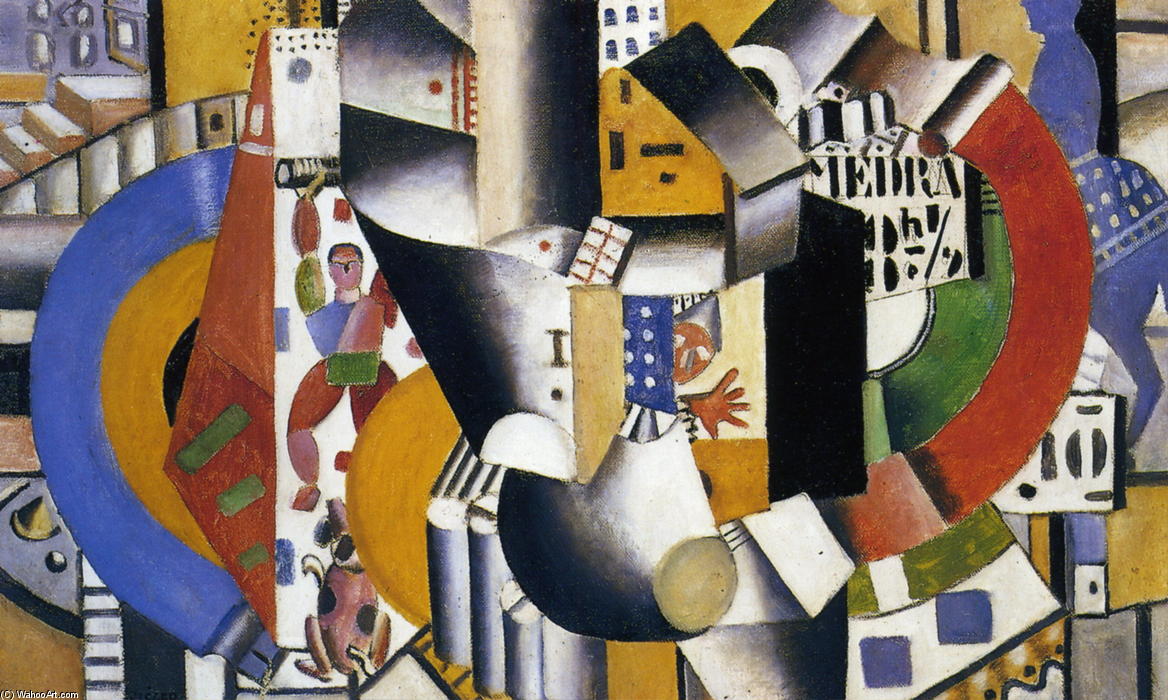
In the vibrant tapestry of early 20th-century avant-garde art, few works capture the electric pulse of a changing world as masterfully as Fernand Léger’s “The Circus.” Completed in 1918, this masterpiece serves as a breathtaking window into a moment where the traditional and the industrial began to collide. Léger, a visionary who found profound inspiration in the rhythmic precision of the machine age, does not merely depict a circus; he orchestrates a visual symphony. The canvas is a dizzying, joyful collage of movement, where acrobats, animals, and mechanical elements dance together in a choreographed chaos that feels both ancient and startlingly modern.
To gaze upon this work is to experience the very essence of Cubism through Léger’s unique lens. Unlike the more fragmented and monochromatic explorations of his contemporaries, Léger infused his compositions with a robust, sculptural energy. In “The Circus,” he utilizes flattened planes and bold, geometric shapes—cylinders, spheres, and cubes—to reconstruct reality. This technique, often referred to as "Tubism," allows the viewer to perceive the world not as a collection of static objects, but as a dynamic interplay of volumes and light. The presence of an elephant, a clock, and even architectural echoes like trains creates a sense of layered perception, mirroring how the human eye captures the fragmented, rapid-fire stimuli of modern urban life.
The Pulse of the Machine Age
The historical context of 1918 provides a poignant backdrop to this exuberant display. As the world emerged from the shadows of conflict, there was a burgeoning fascination with progress, technology, and the relentless pace of industrialization. Léger, whose early life in rural Normandy instilled in him a deep respect for physical labor and structure, translated this fascination into a visual language of strength and clarity. In “The Circus,” the circus performers are not merely entertainers; they are embodiments of vitality and resilience. The way their forms are broken down into essential, powerful shapes suggests a world being rebuilt—one that is more structured, more mechanical, yet undeniably alive.
For the discerning collector or interior designer, this painting offers much more than mere decoration; it provides a focal point of intellectual and emotional depth. The composition’s inherent energy makes it an extraordinary addition to contemporary spaces, where its bold lines can interact with modern architecture to create a sense of sophisticated movement. The interplay of disparate elements—the organic curve of an elephant contrasted against the rigid geometry of a chair or a clock—invites endless contemplation. It is a piece that demands attention, offering a sense of theatrical spectacle that can transform a room into a gallery of modern thought.
A Legacy of Visual Rhythm
Ultimately, the emotional impact of “The Circus” lies in its ability to evoke wonder. There is a profound sense of optimism embedded within Léger’s fragmented forms—a celebration of the spectacle that life presents to us. The painting captures that fleeting moment of equilibrium found in an acrobat's leap or a performer's feat, reminding the viewer of the beauty found in balance and tension. By integrating the mechanical with the human, Léger created a timeless aesthetic that continues to resonate with anyone moved by the intersection of art and life.
Owning a high-quality reproduction of this work allows one to bring this historical dynamism into the home. It is an invitation to live surrounded by the rhythmic beauty of the modern era, providing a constant source of inspiration through its masterful use of color, form, and the enduring spirit of the avant-garde.
Korduvad küsimused
Kas teos The Circus on käsitsi maaldis või trükis?
Käsin maalitud: professionaalne kunstnik koopia teose The Circus õli-linast veebilehel.
Millise suuruse teose The Circus jaoks valida?
Suurused on vahemikus 24.5 x 40.8 cm (€179) kuni 149.5 x 249.5 cm (€1262); sellel lehel olev tabel on toodud peamised sammud ja nende hinnad.
Kui kaua kohalelymine aega võtab?
Tarneglus kestab 4–5 nädalat, pakkudes tasuta ekspresslaenitust üle maailma; kiiremat tootmist võimaldab seda lehte valitud valik. Teil on võimalik toote 100 päeva jooksul ilma tingimusteta täiesumma tagastamisega naasta, kui te ei ole sellest rahul.
Kus asub originaalteos The Circus?
Originaalakade on Centre Pompidou kollektsioonis, Pariis.
Mida Fernand Léger teoseks The Circus kasutas?
Oil On Canvas
 Eelvaade

 Saada
 Jaga
 Teave teose kohta
 Juhend


 Laadi alla
 Sarnased teosed
 Röntgenuuring
 Slaidietendus
 KÜSIMUSED JA VASTUSID

 Statistika