Cubist Style
Mechanical Elements (Fernand Léger)
Fernand Léger (1881–1955) on loonud teose Mechanical Elements. See kuulub Cubist Style suuntrime. Teos on valmistatud materjalist Oil On Canvas. Teos asub Metropolitan Museum of Art kogamuses New York, USA.
- Oil On Canvas
- Metropolitan Museum of Art, New York

 Eelvaade

 Käsitsi maalatud õlimaalatsioon
 Saada
 Jaga
 Teave teose kohta


 Laadi alla
 Sarnased teosed
 Röntgenuuring
 Slaidietendus
 KÜSIMUSED JA VASTUSID

 Statistika
Mechanical Elements lühidalt
- Pealkiri
- Mechanical Elements
- Kunstnik
- Fernand Léger (1881–1955)
- Kunstnik on sündinud
- Argentan, Prantsusmaa
- Tehnika
- Oil On Canvas
- Kus seda näeb
- Metropolitan Museum of Art, New York, USA
- Suunad
- Cubist Style
- Aeglkond
- Modern
- Teema
- mechanical elements, cubism, geometry, industrial design, abstraction, assemblage
Mida Mechanical Elements kujutab?
A Vision of Industrial Harmony
Fernand Léger’s “Mechanical Elements,” painted in 1924, stands as a striking testament to the burgeoning fascination with technology during the interwar period. More than just a depiction of gears and pipes—though undeniably prominent—the artwork embodies Léger's ambitious goal: to synthesize Cubist fragmentation with the dynamism of the machine age, creating an aesthetic that simultaneously challenged artistic conventions and reflected the transformative realities of modern life.
Born Joseph Fernand Henri Léger in Argentan, Normandy, 1881, Léger embarked on a journey from rural landscapes to the epicenter of Parisian avant-garde. Initially drawn to architecture, his artistic path swiftly pivoted toward painting after arriving in Paris around 1900, fueled by an unwavering conviction that art could engage with the complexities of its time.
Cubism Revisited: Geometric Precision
Léger’s stylistic evolution is inextricably linked to Cubism. Influenced profoundly by Picasso and Braque, he adopted the fractured perspective and simultaneous viewpoints characteristic of this revolutionary movement—a deliberate rejection of traditional representation in favor of exploring spatial relationships through geometric forms. However, Léger didn't simply replicate Cubist principles; he pushed them further, distilling them into a simplified vocabulary of circles, squares, and lines.
“Mechanical Elements” exemplifies this approach brilliantly. The canvas is dominated by interlocking geometric shapes—primarily circles and squares—arranged in a rhythmic pattern that evokes the precision and repetition found in industrial machinery. These forms aren’t merely decorative; they actively contribute to conveying a sense of movement and energy, mirroring the ceaseless pace of urban life.
Symbolism Beyond Mechanism
While the artwork's visual language speaks directly to the influence of technology, Léger imbued “Mechanical Elements” with deeper symbolic resonance. The repetition of geometric shapes isn’t merely a stylistic device; it represents an attempt to capture the impersonal logic and order inherent in industrial processes—a deliberate contrast to the organic forms favored by Impressionism and Post-Impressionism.
Furthermore, Léger's use of color – predominantly shades of gray punctuated by vibrant accents – underscores this thematic preoccupation. Gray symbolizes the materiality of metal and concrete, while bursts of color represent human vitality and creativity—a harmonious blend reflecting Léger’s belief that art could coexist with technological advancement without sacrificing beauty or emotional depth.
A Legacy of Innovation
"Mechanical Elements" cemented Léger's position as a pioneer of Tubism – a variant of Cubism developed by Léger himself—characterized by the use of tubular forms to represent objects and figures. This innovative technique anticipated developments in Pop Art decades later, demonstrating Léger’s enduring influence on subsequent generations of artists.
Today, reproductions of “Mechanical Elements” continue to captivate audiences with their bold aesthetic and intellectual ambition. They serve as a powerful reminder that art can not only reflect the spirit of its time but also actively shape our understanding of it—a timeless masterpiece celebrating both geometric precision and human resilience.
Kumba muuseumis asub teos Mechanical Elements?
Metropolitan Museum of Art
New York, USA
Metropolitan Museum of Art päritolu ja ajalugu Metropolitan Museum of Art sai alguse visioonis, mida jagas grupp ettevõtjaid, finantsierimeid ning juhtkavad kunstnikud ja mõtlejad. Pärast asutamist 1870. aastal otsis institutsioon püsivat kodu oma üha suurendale koguvedele.


Mechanical Elements kõrge resolutsiooniga pildid

Avalik omanik: kunstnik suri aastal 1955.
Teised laiused, uueste lõikud ja alluding →Fernand Léger, Mechanical Elements, Metropolitan Museum of Art. Avalik omaniklik õigus
Digitaalsete ekspertide poolt originaalvärvidega vastavaks vormitud ja kunstniku pintlapidega täpselt kohanitud, hoolikalt retušeeritud fail.
Osta kõrge resolutsiooniga failKüsimused teemal Mechanical Elements – vastused
Millises muuseumis on säilitatud originaal "Mechanical Elements"?
Originaalteost „Mechanical Elements“, autor Fernand Léger hoiustatakse Metropolitan Museum of Art, New York, USA muuseumis. Reproduktsioon võimaldab teost koduses keskkonnas esitleda.
Millises materjalis on teos „Mechanical Elements“, autor Fernand Léger valmistatud?
Teose „Mechanical Elements“, autor Fernand Léger materjal on Oil On Canvas. Reproduktsioonide eesmärk on jälitada selle tehnika välimust.
Millised teemad teoses „Mechanical Elements“, autor Fernand Léger esile tõelve?
„Mechanical Elements“, autor Fernand Léger kujutab: mechanical elements, cubism, geometry, industrial design, abstraction, assemblage, modern art.
Kas teose „Mechanical Elements“, autor Fernand Léger pilt on vabalt reproduseeritav?
Autoriõiguse teave teose „Mechanical Elements“, autor Fernand Léger kohta: teos kuulub luba ala avalikus õiguses – selle autoriõigud onหมดunud. See määrab, kas kujundist on lubatud vabadelt reproduktsioone teha.
Kes on teose "Mechanical Elements" kunstnik?
Teose "Mechanical Elements" loovija on Fernand Léger. Selle lehe info kirjeldab Fernand Léger algteost.
Millisse kunstisuuna kuulub teos „Mechanical Elements“, autor Fernand Léger?
Teos „Mechanical Elements“, autor Fernand Léger kuulub Cubist Style suunasse. See suund annab teosele stilistilise konteksti.
Millissele perioodile Fernand Léger karjäärist kuulub teos "Mechanical Elements"?
Teos "Mechanical Elements" kuulub Fernand Léger loomingulise karjääri perioodi Mechanical Period. See klassifikatsioon seostab teose kunstniku loovliku arenguga.
Mis selgitab teose „Mechanical Elements“, autor Fernand Léger autoriõiguste olukorda?
Teose "Mechanical Elements" autoriõiguste staatus - avalikus õiguses – selle autoriõigud onหมดunud - tuleneb kunstniku surma aastast 1955.
Kas teost „Mechanical Elements“, autor Fernand Léger hoiustatakse kunstniku kodumaal?
Ei – teos asub välismaal. Teost "Mechanical Elements" hoivadatud USA, samal ajal sündis Fernand Léger riigis Prantsusmaa.
Kunstnikust, Fernand Léger

1881–1955, Prantsusmaa
Fernand Léger
Fernand Léger'i elu Fernand Léger'i lugu algab Argentani külas, mis asub Madrõun-Normandie piirkonnas Orne ängis. Ta tuli homma valgama 4. veebruaril 1881 aastal kui ainukein poeg. Tema varajased aastad said vormistada Prantsuse maapiirkonna vaiksuse ja tema ema, Marie-Adèle Daunou, kohalolun mõju all.
Ka Fernand Léger teosed
 Linn1919
 Mehaanik1920
 Kolm naist tükkidega1921
 Naised metsas1910

Essee teemadel Mechanical Elements
 Cubism Unveiled: How Picasso and Braque Redefined Modern Art through Geometric RevolutionExplore the revolutionary world of Cubism. Discover how Pablo Picasso and Georges Braque dismantled perspective to redefine modern art thro…
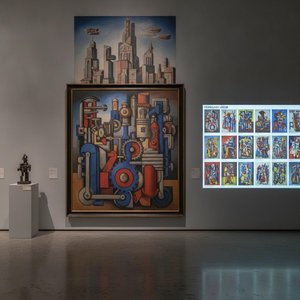 Mastering the Machine Age: The 25 Best Artworks by Fernand LégerImmerse yourself in the vibrant world of Fernand Léger. Explore 25 iconic masterpieces of Cubism and Tubism, from bold geometric forms to m…
 Industrial Revolution on Canvas: 10 Artworks That Define a Modern AestheticExplore 10 iconic artworks capturing the Industrial Revolution’s grit & beauty. From Monet to Manet, discover realism, impressionism & powe…