

 Vaata sisu
 Jaga teost
 Jaga
Jaga
 Detailid
 Õppekate juhend

 Laadi alla
 Sarnased teosed
 Röntgenuuring
 Slaidietendus
 Statistika
Italian, approx. agentileschi)


 Loe lähemalt
Giclée / Kunstiprint
Muuseumikvaliteediga giclée- või kangasprint kiire tootmisega ja paindlikud viimistlusvõimalused. ( Telli käsitsi maalitud reproduktsioon Ülemineku digitaalse pildi müügi kanalisse)




P118B $10

P118H $10

P118W $10

P438Z $10

P508JH $12

P508YH $12

P805H $10

P805Z $10

P919BZ $10

P919G $10

P919XJ $10

P959ZH $10

P968JZ $12

W106C $8

W218G $10

W218JH $8

W218Y $10

W307PJ $10

W316G $10

W316PJ $8

W316Y $10

W398PJ $8

W4111J $10

W500HY $15

W500JH $15

W692G $12

W849H $8

W940BG $15

W953PJ $8




Vali meie eelmääratud suurused, mis vastavad teose algupärastele proportsioonidele.

Saate sisestada oma mõõdud, et need sobiks konkreetse raami või ruumi sisse. Kui valitud suurus ei vasta originaalteose proportsioonidele, lõigame teose ära või laiendame pilti peegeldatud või ühtlase servaga. Enne tootmisprotsessi algust saadetakse Teie kinnitamiseks digitaalne näidis.
Palun märka, et ekraanil kuvatav eelvaade ei kajasta tegelikku lõigamist või laiendamist. Ainult näidis kujutab täpselt lõplikku kompositsiooni.
Kuigi erimõõdu on saadaval, soovitame originaaproportsioonide säilitamiseks valida mõõt ette määratud nimekirjast.
Ülemaailmne tarne () 2 nädala jooksul, tavalise 4/5 nädala asemel. (26 september)

Tasuta ekspresssaatmine üle maailma

Kõrgekvaliteediline lina-kangastest muld

Täielik transpordikindlustus

Tollimaksude tagastamise garantii

Värvitoime täpsuse garantii

100 päeva tagastusõigus (ainult defektide korral)

100% raha tagasi garantii

Hulgusoodustus
 Klaasivalik on saadaval ainult kuni 110 cm suuruses teostes

Italian, approx. agentileschi)
Giclée / Kunstiprint
Reproduktsiooni mõõtmed
-


Lõppsumma
$ 80
A Baroque Embrace: Unveiling Artemisia Gentileschi’s ‘Italian’
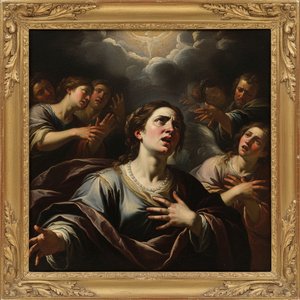
Artemisia Gentileschi's “Italian,” painted circa 1593, is more than just a depiction of a gathering; it’s a potent distillation of the Baroque era’s dramatic intensity and a testament to the burgeoning artistic voice of a woman challenging convention. Executed in the heart of Rome, this painting captures a moment of profound intimacy – a group surrounding a baby, radiating warmth and support within a richly appointed room. The scene, likely commissioned for a private patron, speaks volumes about the social dynamics and familial values prevalent during the late 16th century.
- Subject Matter: The central focus is undeniably the infant, presented with an almost devotional reverence. This wasn’t merely a portrait of a child; it was a symbol of hope, lineage, and the continuation of life – themes frequently explored in religious art of the period.
- Composition & Technique: Gentileschi masterfully employs Caravaggio's signature tenebrism—a dramatic contrast between light and dark—to heighten the emotional impact. The strong directional lighting illuminates the faces of the figures, drawing the viewer’s eye to their expressions of concern, tenderness, and perhaps even a touch of anxiety. Her brushwork is characterized by rapid, confident strokes, creating a sense of movement and immediacy.
- Setting & Atmosphere: The room itself contributes significantly to the painting's narrative. The presence of a dining table suggests a shared meal, reinforcing the idea of community and mutual support. The carefully arranged chairs and furnishings speak to a level of wealth and status, hinting at the importance of this gathering.
The Genius of Artemisia: A Revolutionary Vision
Artemisia Gentileschi’s rise within the male-dominated art world is itself a remarkable story. Born into a family deeply involved in artistic pursuits – her father, Orazio Gentileschi, was a prominent painter influenced by Caravaggio – she received an unparalleled education and training. This privileged access, coupled with her innate talent, allowed her to develop a distinctly Baroque style characterized by its emotional intensity, realistic portrayal of figures, and masterful use of light and shadow. Unlike many female artists of the time who were confined to domestic roles, Artemisia actively sought opportunities to exhibit her work, challenging societal expectations and establishing herself as one of the most accomplished painters of her era.
- Caravaggio’s Influence: Gentileschi was profoundly influenced by Caravaggio's revolutionary approach to painting. Like him, she favored realistic depictions of human figures, often portraying biblical scenes with a raw and unflinching honesty.
- Female Representation: Her choice to depict women – particularly in dramatic narratives traditionally reserved for male artists – was a bold statement. She elevated the status of female characters, imbuing them with agency and emotional depth.
Symbolism & Emotional Resonance
Beyond its technical brilliance, “Italian” is rich in symbolic meaning. The act of gathering around the baby represents protection, nurture, and the transmission of values. The expressions on the faces of the figures – a mixture of concern, affection, and perhaps even awe – convey a powerful sense of emotional connection. The bowl near the center could be interpreted as a symbol of sustenance, both literal and metaphorical, representing the nourishment provided by this community to the vulnerable infant.
- Color Palette: The use of warm earth tones—ochres, browns, and reds—creates a sense of intimacy and comfort.
- Emotional Impact: The painting’s enduring appeal lies in its ability to evoke empathy and compassion. It is a timeless depiction of human connection and the profound responsibility associated with caring for the next generation.
A Timeless Masterpiece – Recreated for Today
This meticulously hand-painted reproduction captures every nuance of Gentileschi’s original vision, offering you an exceptional opportunity to own a piece of art history. Perfect for adorning your home or office, this artwork will undoubtedly become a focal point, sparking conversation and inspiring contemplation. OriginalUniqueArt offers the highest quality reproductions, ensuring that you receive a faithful representation of this Baroque masterpiece for generations to come.
Kunstniku elulugu
Artemisia Gentileschi – A Daughter of Rome: The Life and Art of Artemisia Gentileschi
Artemisia Gentileschi’s name echoes through the halls of art history, resonating not simply as that of a painter, but as an emblem of resilience, defiance, and extraordinary artistic talent in a world determined to silence female voices. Born in Rome in 1593, she entered a milieu steeped in artistry—her father, Orazio Gentileschi, was a respected painter deeply influenced by the revolutionary realism of Caravaggio. From her earliest years, Artemisia’s gift was undeniable, nurtured within her father's workshop where she absorbed techniques of composition and the dramatic use of light and shadow that would become hallmarks of her distinctive style. This formative training wasn’t merely about mastering brushstrokes; it was an immersion into a world of artistic ambition, one typically closed to women. Recognizing his daughter’s exceptional talent, Orazio provided opportunities unavailable to most females of the era, allowing her to study from life models—a crucial step in developing anatomical accuracy and expressive power.
Early Life and Artistic Training
Artemisia was born into a family deeply rooted in artistic tradition. Her father, Orazio Gentileschi, was a prominent painter who had embraced Caravaggio’s groundbreaking approach of combining realism with theatrical drama—a stylistic influence that would profoundly shape Artemisia's own artistic vision. Despite facing considerable obstacles as a woman pursuing an artistic career during the Baroque period, Orazio recognized his daughter’s extraordinary potential and ensured she received comprehensive training. She began her artistic education in her father’s workshop alongside her siblings, absorbing invaluable knowledge about pigment preparation, brushwork techniques, and compositional strategies. This early exposure to art instilled in her a lifelong passion for observation and experimentation—qualities that would ultimately define her distinctive style.
The Influence of Caravaggio and Artistic Development
Caravaggio’s dramatic use of tenebrism—the stark contrast between light and darkness—became a cornerstone of Artemisia's artistic aesthetic. Like her father, she adopted this technique, skillfully manipulating chiaroscuro to heighten emotional impact and create scenes imbued with palpable tension. However, Artemisia didn’t merely imitate Caravaggio; she forged her own unique voice, characterized by a raw psychological depth and a compelling focus on female subjects often depicted with unprecedented agency and strength. Her early works demonstrate an astonishing command of anatomy and expressive gesture—skills honed through meticulous study from life models.
Major Achievements: Bold Narratives and Female Portraits
Artemisia Gentileschi achieved remarkable success as an artist during her lifetime, establishing herself as one of the foremost painters of her era. Her canvases are renowned for their dramatic narratives—particularly depictions of biblical scenes featuring courageous women—and for their unflinching portrayal of human emotion. She tackled challenging themes with unwavering conviction and artistic brilliance, demonstrating a mastery of technique that captivated audiences and cemented her legacy as a pioneer in Baroque art. Among her most celebrated works are *Judith Slaying Holofernes*, *Susanna and the Elders*, and *Danaë*, each infused with Caravaggio’s tenebristic style and imbued with psychological complexity.
Legacy: A Feminist Icon
Artemisia Gentileschi's story transcends mere artistic achievement; it embodies a courageous defiance of societal constraints—a refusal to accept limitations imposed upon women in pursuit of their ambitions. Her unwavering determination to pursue her craft despite facing adversity served as an inspiration for countless aspiring artists—particularly female painters—who followed in her footsteps. Today, Artemisia Gentileschi is recognized as a pivotal figure in feminist art history—a symbol of resilience and artistic triumph who challenged conventions and paved the way for greater recognition of women’s contributions to the visual arts.

Artemisia Gentleski
1593 - 1656 , Itaalia
Lühikest infot
- Artistic Movement Or Style: Baroque painting
- Artists Who Influenced This Artist:
- Caravaggio
- Orazio Gentileschi
- Date Of Birth: 1593
- Full Name: Artemisia Gentileschi
- Nationality: Italian
- Notable Artworks:
- Judith Slaying Holofernes
- Susanna and the Elders
- Place Of Birth: Rome, Italy
Sarnased artiklid

Baroki tippteosed: 10 kunstiteost, mis muutisid maailma
Sukeldu baroki maailma! Avasta 10 meistriteost, mis defineerisid kunstivoolu – Rembrandt, Caravaggio jt. Loe lugusid, vaata värve ja naudi ajatu ilu. Leia inspiratsiooni interjööriks OriginalUniqueArt.com-ist!

The Visceral Stage: Exploring Dramatic Narratives & Emotional Intensity in Baroque Art
Explore the dramatic world of Baroque art! Discover iconic masters like Caravaggio & Rembrandt, their techniques, and the movement's lasting impact. Expert insights for collectors & enthusiasts at OriginalUniqueArt.
Chiaroscuro and Soul: A Definitive Guide to the Drama and Emotion of Italian Baroque Masterpieces
Embark on a sophisticated journey through Italian Baroque art. Discover the dramatic interplay of light and emotion in Caravaggio’s masterpieces and explore how to bring this timeless grandeur into your collection with expert art insights.

The Dramatic Flourish: Exploring the Baroque Movement's Enduring Legacy in Art History
Explore the dramatic world of Baroque art! Discover iconic artists like Caravaggio & Rubens, defining techniques, and its lasting impact on art history. Expert insights for collectors & enthusiasts at OriginalUniqueArt.

Drama and Light: A Definitive Guide to the Italian Baroque Masterpieces and the Revolution of Chiaroscuro
Explore the dramatic world of Italian Baroque art. Discover how masters like Caravaggio used chiaroscuro and tenebrism to revolutionize painting through light, shadow, and profound realism. A definitive guide for history lovers and art collectors.


