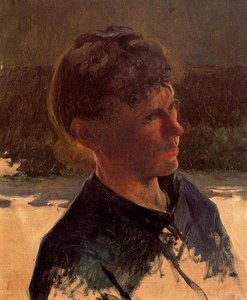
Retrato de José Jiménez Aranda

Las 76 pinturas más famosas de José Jiménez Aranda, cada una única en su clase

Actualizado noviembre 2026 · clasificado según nuestro índice de popularidad (búsquedas, visitas y pedidos de cada obra) · 76 obras de José Jiménez Aranda en nuestro catálogo

En resumen

Una desgracia (1890) es la pintura de José Jiménez Aranda que más llama la atención. Después, la mirada se dirige a El Quijote 4 y Pequeños naturalistas. De las 76 obras de José Jiménez Aranda en nuestro catálogo, estas 76 son las más famosas; cada una es un original único presentado con su año, su museo y la razón de su trascendencia.

1837 – 1903, Sevilla Costumbrista Más obras: Museo del Prado

Las 10 mejores pinturas de José Jiménez Aranda, bajo la mirada de la galería

1
Una desgracia (1890) de José Jiménez Aranda

Una desgracia

1890 · Óleo

Nos encontramos ante Una desgracia, una obra de 1890 del pintor español José Jiménez Aranda. Esta pieza representa un momento significativo en la carrera del artista, marcando un giro hacia el estilo costumbrista que definiría gran parte de su producción posterior. Se trata de una sombría representación en blanco y negro de un grupo de personas reunidas ante un edificio en construcción. La escena, ambientada en el siglo XIX, captura…

2
El Quijote 4 de José Jiménez Aranda

El Quijote 4

Óleo

La obra titulada El Quijote 4 es una creación del pintor español José Jiménez Aranda. En ella se captura un momento específico e inquietante extraído del universo literario de Miguel de Cervantes. Dentro del encuadre, el caballero Don Quijote y su compañero Sancho Panza cabalgan sobre sus corceles. Se desplazan a través de un paisaje de movimiento repentino, atrapados en medio de un encuentro o escaramuza que involucra a varias…

3
Pequeños naturalistas de José Jiménez Aranda

Pequeños naturalistas

Óleo sobre lienzo

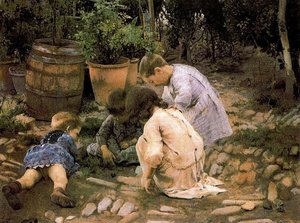
Tres niños se acuclillan sobre la tierra, con sus cuerpos formando un suave triángulo de curiosidad. Se encuentran inclinados, con la mirada fija en las pequeñas vidas en movimiento que se esconden entre las piedras y el barro. Un gran barril y varias vasijas de terracota reposan en el fondo, situando la escena en un espacio habitado y sin artificios. La luz es difusa, como si se filtrara a través…

4
La tienda de Fígaro (1875) de José Jiménez Aranda

La tienda de Fígaro

1875 · Óleo sobre lienzo · Walters Art Museum, Baltimore

El sol de la tarde se derrama sobre una calle polvorienta, proyectando sombras suaves que danzan contra el yeso desgastado de un edificio. Frente a un umbral, la vida se despliega con un pulso tranquilo y rítmico. Un hombre está sentado con una guitarra, con sus dedos arrancando melodías de las cuerdas, mientras otros se reúnen alrededor de una mesa, perdidos en la natural gravedad de una conversación. Existe la…

5
El viejo naturalista (1880) de José Jiménez Aranda

El viejo naturalista

1880 · Óleo

Un hombre solitario se yergue en medio de una asamblea silenciosa de aves disecadas. Viste el atuendo pesado y estructurado del siglo XVIII, con un sombrero de tres picos y una levita larga que lo ancla a las tablas del suelo. Su boca permanece abierta, capturada en un jadeo repentino o en una súbita inspiración de aire. A su alrededor, la quietud de la sala del museo solo se ve…

6
The Hato (1896) de José Jiménez Aranda

The Hato

1896 · Oil On Canvas

The Hato emerges from the brush of José Jiménez Aranda, a painter who carries the spirit of Seville, Spain, within his work. Born in 1837, Aranda brings a deep understanding of light and shadow to this scene. The painting, created about 1896, captures a quiet, suspended moment in a sun-dappled woodland. It is a scene of rest where a large, reclining hunting dog and a sleeping infant share a peaceful…

7
Spring in Seville (1903) de José Jiménez Aranda

Spring in Seville

1903 · Oil On Canvas · Fundación Banco Santander, Madrid

Spring in Seville by José Jiménez Aranda presents a large-scale oil on canvas composition created about 1903. The subject matter focuses on the various festivities and traditions associated with the season in Seville, Spain. The painting incorporates specific cultural references, including elements of bullfighting, known as corridas de toros. These elements are integrated into a dense arrangement of figures and objects that characterize the local customs of the period.

Pinturas famosas de José Jiménez Aranda, de la número 11 a la 76

11Un lance en la Plaza de Toros (1880) de José Jiménez ArandaUn lance en la Plaza de Toros1880 12Holy Week in Seville (1879) de José Jiménez ArandaHoly Week in Seville1879 · Fine Arts Museums of San Francisco 13The Dancing Lesson (1888) de José Jiménez ArandaThe Dancing Lesson1888 14The painter's family de José Jiménez ArandaThe painter's family 15Couple de José Jiménez ArandaCouple 16Study for ''La murga'' de José Jiménez ArandaStudy for ''La murga'' 17Sketch illustration for''Captain Montoya de José Jiménez ArandaSketch illustration for''Captain Montoya 18Study for ''Un sermón en el patio de los naranjos'' de José Jiménez ArandaStudy for ''Un sermón en el patio de los naranjos'' 19El Quijote de José Jiménez ArandaEl Quijote 20Academical study 1 de José Jiménez ArandaAcademical study 1 21the drunk de José Jiménez Arandathe drunk 22El Quijote 1 de José Jiménez ArandaEl Quijote 1 23El Quijote 6 de José Jiménez ArandaEl Quijote 6 24Preparatory drawing for a painting de José Jiménez ArandaPreparatory drawing for a painting 25The jump of the bull de José Jiménez ArandaThe jump of the bull 26El Quijote 7 de José Jiménez ArandaEl Quijote 7 27Figure de José Jiménez ArandaFigure 28El Quijote 9 de José Jiménez ArandaEl Quijote 9 29Study for ''Los dulces del santo'' de José Jiménez ArandaStudy for ''Los dulces del santo'' 30Portrait of the artist's father de José Jiménez ArandaPortrait of the artist's father 31Study of dogs de José Jiménez ArandaStudy of dogs 32El Quijote 5 de José Jiménez ArandaEl Quijote 5 33Fruit seller de José Jiménez ArandaFruit seller 34Study for ''Tartarín sur les Alpes'' de José Jiménez ArandaStudy for ''Tartarín sur les Alpes'' 35El Quijote 3 de José Jiménez ArandaEl Quijote 3 36Study of a soldier de José Jiménez ArandaStudy of a soldier 37Nude de José Jiménez ArandaNude 38Study of a soldier 1 de José Jiménez ArandaStudy of a soldier 1 39Study for ''Galanterías'' de José Jiménez ArandaStudy for ''Galanterías'' 40small talk de José Jiménez Arandasmall talk 41El Quijote 2 de José Jiménez ArandaEl Quijote 2 42Retrato de Emilio Sala de José Jiménez ArandaRetrato de Emilio Sala 43El Quijote 8 de José Jiménez ArandaEl Quijote 8 44Retrato de Mujer de José Jiménez ArandaRetrato de Mujer 45Juez de José Jiménez ArandaJuez 46Good night de José Jiménez ArandaGood night 47Fugure studies de José Jiménez ArandaFugure studies 48The old canary de José Jiménez ArandaThe old canary 49Study de José Jiménez ArandaStudy 50The sweet saint de José Jiménez ArandaThe sweet saint 51Portrait (Studio) de José Jiménez ArandaPortrait (Studio) 52A gourmet de José Jiménez ArandaA gourmet 53Retrato de José Jiménez ArandaRetrato 54Portrait of the artists mother de José Jiménez ArandaPortrait of the artists mother 55Tocando el violín de José Jiménez ArandaTocando el violín 56Study of horses de José Jiménez ArandaStudy of horses 57Study of horses 1 de José Jiménez ArandaStudy of horses 1 58Paisaje boscoso de José Jiménez ArandaPaisaje boscoso 59Study of a horse de José Jiménez ArandaStudy of a horse 60Paisaje de José Jiménez ArandaPaisaje 61Landscape in Alcalá de Guadaira de José Jiménez ArandaLandscape in Alcalá de Guadaira 62Academical study de José Jiménez ArandaAcademical study 63Landscape with rocks de José Jiménez ArandaLandscape with rocks 64En la iglesia de José Jiménez ArandaEn la iglesiaMuseo del Prado 65Birds Corner de José Jiménez ArandaBirds Corner 66Hombre de color de José Jiménez ArandaHombre de color 67Hombre Sentado de José Jiménez ArandaHombre Sentado 68Woman turning off the light (Good Night) de José Jiménez ArandaWoman turning off the light (Good Night) 69Study for ''Un concierto ante su Eminencia'' de José Jiménez ArandaStudy for ''Un concierto ante su Eminencia'' 70Dos Mujeres de José Jiménez ArandaDos Mujeres 71Retrato de Sorolla de José Jiménez ArandaRetrato de SorollaMuseo del Prado 72The morning in Alcalá de Guadaira de José Jiménez ArandaThe morning in Alcalá de Guadaira 73The departure of Christ's Passion during Holy Week in Seville de José Jiménez ArandaThe departure of Christ's Passion during Holy Week in Seville 74El violinista de José Jiménez ArandaEl violinista 75Pine-trees at Alcalá de Guadaira de José Jiménez ArandaPine-trees at Alcalá de Guadaira 76La esclava de José Jiménez ArandaLa esclavaMuseo del Prado

Pinturas famosas de José Jiménez Aranda, época por época

Los temas que cautivaron la mirada de José Jiménez Aranda

Los cuatro temas que se repiten con más frecuencia en estas obras originales, cada uno con su mejor ejemplo.

Los museos que conservan los originales de José Jiménez Aranda

Los 5 museos que albergan la mayoría de las pinturas de esta página.

Museos Ciudad Obras de José Jiménez Aranda Pinturas de esta lista
Museo del Prado, MadridMuseo del Prado Madrid 3 En la iglesia, Retrato de Sorolla, La esclava
Walters Art Museum, BaltimoreWalters Art Museum Baltimore 1 La tienda de Fígaro
Fundación Banco Santander, MadridFundación Banco Santander Madrid 1 Spring in Seville
Museo Carmen Thyssen Málaga, MálagaMuseo Carmen Thyssen Málaga Málaga 1 A Pass in the Bullring
Fine Arts Museums of San Francisco, San FranciscoFine Arts Museums of San Francisco San Francisco 1 Holy Week in Seville

José Jiménez Aranda a través de las décadas: una obra original única para cada una

Obras por década

Elige una década para ver la obra original que la define.

Pinturas de José Jiménez Aranda: preguntas para la galería

¿Cuál es la obra más famosa de José Jiménez Aranda?Descubre la respuesta

Una desgracia (1890). A continuación, El Quijote 4 y Pequeños naturalistas.

¿A qué edad creó José Jiménez Aranda Una desgracia?Descubre la respuesta

53 años: Una desgracia data de 1890, y José Jiménez Aranda nació en 1837.

¿Cuáles son las diez pinturas más famosas de José Jiménez Aranda?Descubre la respuesta

Una desgracia, El Quijote 4, Pequeños naturalistas, La tienda de Fígaro, El viejo naturalista, The Hato, Spring in Seville, The first child, Don Quixote and Sancho Panza y A Pass in the Bullring. La clasificación anterior indica el año y el museo de cada una.

¿Cuántas obras de José Jiménez Aranda se conocen?Descubre la respuesta

Nuestro catálogo cuenta con 76 obras de José Jiménez Aranda, datadas desde 1870 hasta 1903.

¿Dónde se pueden ver los originales más famosos de José Jiménez Aranda?Descubre la respuesta

Principalmente en Museo del Prado (Madrid), Walters Art Museum (Baltimore) y Fundación Banco Santander (Madrid). La tabla de museos arriba los enumera todos.

¿En qué periodo creó José Jiménez Aranda sus pinturas más conocidas?Descubre la respuesta

En 1870s: 3 de las 76 obras de esta página se realizaron entonces, La tienda de Fígaro de ellas.

¿Cuál es la pintura más antigua de José Jiménez Aranda y cuál es la más reciente?Descubre la respuesta

En esta página, la más antigua es A Pass in the Bullring (1870) y la más reciente Spring in Seville (1903).

¿Qué temas prefería José Jiménez Aranda?Descubre la respuesta

Portrait (5), Melancholy (4) y Personas (3), en las 76 obras de esta página.

¿Con qué materiales pintó más José Jiménez Aranda?Descubre la respuesta

Óleo, para 3 de las 76 obras de esta página.

¿A qué movimiento pertenece la obra de José Jiménez Aranda?Descubre la respuesta

Costumbrista y Contemporary realism, a juzgar por los originales de esta página.

¿Qué obras originales de José Jiménez Aranda puedo ver en el Museo del Prado?Descubre la respuesta

En la iglesia, Retrato de Sorolla y La esclava: el Museo del Prado, Madrid posee 3 de las obras de esta página.

José Jiménez Aranda: un retrato del artista

A Life Immersed in Light and Shadow

José Jiménez Aranda, born in the vibrant city of Seville in 1837, was a painter who navigated the complex currents of 19th-century Spanish art with remarkable versatility. His life, spanning just over six decades, coincided with an era of profound transformation—socially, politically, and artistically—and his work serves as a compelling reflection of this dynamic period. From rigorous academic training to embracing the influence of masters like Goya and Velázquez, and later finding inspiration in the luminous scenes championed by Mariano Fortuny, Aranda’s artistic journey was one of continuous evolution. He wasn't merely a recorder of his time; he was an interpreter, capturing both the grandeur of historical moments and the quiet intimacy of everyday life with equal skill. The tragic loss of his wife and daughter in 1892 cast a long shadow over his later years, prompting a return to Seville where he dedicated himself to teaching and continued to refine his distinctive style, leaving behind a legacy that continues to resonate within Spanish art history.

Formative Years and Artistic Pilgrimages

Aranda’s artistic inclinations were nurtured from an early age, receiving initial instruction from Manuel Cabral and Eduardo Cano de la Peña. This foundational training proved crucial when, in 1851, he entered the Real Academia de Bellas Artes de Santa Isabel de Hungría in Seville. The Academy provided a rigorous grounding in classical techniques, but it was his subsequent travels that truly ignited his artistic vision. A pivotal moment came during an extended stay in Rome between 1871 and 1878, where he encountered the work of Mariano Fortuny. Fortuny’s influence is palpable in Aranda's paintings from this period—a shared fascination with luminous color, meticulous detail, and a penchant for depicting elegant scenes often set in historical contexts. This wasn't simply imitation; Aranda absorbed Fortuny’s techniques and adapted them to his own sensibilities. Before Rome, however, he immersed himself in the masterpieces of Spanish art at the Museo del Prado in Madrid, studying the works of Goya and Velázquez with a discerning eye. These masters instilled in him an appreciation for dramatic lighting, psychological depth, and the power of observation—qualities that would become hallmarks of his own style. He also spent time as a restorer and designer of stained glass in Jerez de la Frontera, further honing his technical skills and developing a keen understanding of color and composition.

Parisian Refinement and Costumbrista Visions

The years Aranda spent in Paris (1881-1890) were arguably the most commercially successful of his career. He specialized in what became known as “tableautin” painting—small-scale genre scenes, often depicting 18th-century life with a refined elegance reminiscent of Fortuny. These works found favor among collectors and established Aranda’s reputation as a skilled and sophisticated painter. During this period, he developed a distinctive style characterized by delicate brushwork, subtle color palettes, and an ability to capture the fleeting expressions of his subjects. However, upon returning to Madrid, his artistic focus shifted. He began to explore *costumbrismo*, a distinctly Spanish genre that focused on depicting the customs, traditions, and everyday life of the people. Paintings like “Una Desgracia” (A Disaster) from 1890 demonstrate this new direction—a poignant portrayal of human suffering rendered with both realism and emotional depth. This work earned him a first medal at the Nacional exhibition, solidifying his position as a leading figure in Spanish art. It was a move away from the purely decorative towards a more socially conscious form of representation, reflecting a growing engagement with the realities of contemporary Spain.

A Monumental Legacy: Don Quijote and Beyond

While Aranda produced numerous paintings throughout his career—dynamic bullfighting scenes like “A Pass in the Bullring” (1870), insightful social commentaries such as “Slave for Sale” (c. 1897)—it is perhaps his illustrations for a tercentenary edition of *Don Quijote* that represent his most ambitious and enduring achievement. He created an astonishing 689 highlighted drawings for this project, a monumental undertaking that showcased not only his technical virtuosity but also his deep understanding of Cervantes’ masterpiece. These illustrations are more than mere accompaniments to the text; they are interpretations—vivid, expressive renderings of iconic scenes and characters that capture the spirit of the novel. Beyond *Don Quijote*, Aranda dedicated himself to teaching at the Academy of Fine Arts in Seville after returning to his birthplace, nurturing a new generation of Spanish artists including Daniel Vázquez Díaz, Eugenio Hermoso, Ricardo López Cabrera, Manuel González Santos, and Sanz Arizmendi. His influence extended beyond his own artistic output, shaping the course of Spanish painting for years to come. He became a pivotal figure in the Alcala de Guadaíra circle of landscape painters, further enriching the artistic landscape of Spain.

Enduring Significance

José Jiménez Aranda’s legacy lies in the breadth and depth of his work—from the elegant historical scenes influenced by Fortuny to the insightful portrayals of everyday life rooted in *costumbrismo*. He was a master of technique, known for his meticulous attention to detail, refined brushwork, and ability to capture the essence of Spanish culture. His illustrations for Don Quijote stand as a testament to his versatility and artistic vision, cementing his place as a significant figure in 19th-century Spanish art. Though perhaps not as widely recognized today as some of his contemporaries, Aranda’s paintings continue to captivate viewers with their beauty, sensitivity, and enduring relevance—a lasting tribute to a life dedicated to the pursuit of artistic excellence. *His ability to blend technical skill with emotional depth ensures that his work will continue to inspire and resonate with audiences for generations to come.*