Menú

() ·

A painting made for you, by hand

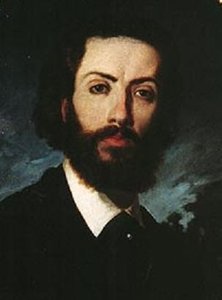
Retrato

Reproducción al óleo hecha a mano

Óleo sobre lienzo pintado a mano en el tamaño y marco de su elección, realizado por encargo por nuestros artistas. ( Cambiar a impresiones Cambiar a imagen digital)

Biografía del artista

¿Quién fue José Jiménez Aranda? Pintor español reconocido por escenas costumbristas elegantes y obras maestras del siglo XVIII, influenciado por Fortuny, Goya y Velázquez. Descubre su legado artístico en Sevilla.

from ·

Chapter 1

How large should it be?

Slide to change the size; the picture on the left shows the frame at its real width. The proportions of the original are kept.

Tamaño estándar
a medida
CM
INCH

Elija entre nuestros tamaños predefinidos que respetan las proporciones originales de la obra.

ancho
altura

Indique el ancho y el alto que necesite para adaptarse a su marco o pared. Al tratarse de una obra pintada a mano, si requiere un tamaño con una proporción distinta, el artista puede pintar un poco más alrededor de la imagen o recortarla ligeramente; usted elige. Le enviaremos una maqueta digital para su aprobación antes de comenzar la pintura. La imagen que se muestra en esta página no refleja el resultado real; solo la maqueta lo hace.

Chapter 2

How should it arrive?

Choose the edges of the stretched canvas

Choose your frame

Corner sample of the WhiteWrap canvas edge finish, stretched on madera maciza bars
White €1
Corner sample of the BlurSideWrap canvas edge finish, stretched on madera maciza bars
Blurside €1
Corner sample of the ExtendedWrap canvas edge finish, stretched on madera maciza bars
Extended €1
Corner sample of the P118B picture frame: poliestireno moldeado, 5 cm wide and 3 cm thick
P118B €10
Corner sample of the P118H picture frame: poliestireno moldeado, 5 cm wide and 3 cm thick
P118H €10
Corner sample of the P118W picture frame: poliestireno moldeado, 5 cm wide and 3 cm thick
P118W €10
Corner sample of the P438Z picture frame: poliestireno moldeado, 5.5 cm wide and 3.5 cm thick
P438Z €10
Corner sample of the P508JH picture frame: poliestireno moldeado, 7 cm wide and 3.5 cm thick
P508JH €12
Corner sample of the P508YH picture frame: poliestireno moldeado, 7 cm wide and 3.5 cm thick
P508YH €12
Corner sample of the P805H picture frame: poliestireno moldeado, 5 cm wide and 3.5 cm thick
P805H €10
Corner sample of the P805Z picture frame: poliestireno moldeado, 5 cm wide and 3.5 cm thick
P805Z €10
Corner sample of the P919BZ picture frame: poliestireno moldeado, 7 cm wide and 3.5 cm thick
P919BZ €10
Corner sample of the P919G picture frame: poliestireno moldeado, 7 cm wide and 3.5 cm thick
P919G €10
Corner sample of the P919XJ picture frame: poliestireno moldeado, 7 cm wide and 3.5 cm thick
P919XJ €10
Corner sample of the P959ZH picture frame: poliestireno moldeado, 5 cm wide and 3 cm thick
P959ZH €10
Corner sample of the P968JZ picture frame: poliestireno moldeado, 6 cm wide and 4 cm thick
P968JZ €12
Corner sample of the W106C picture frame: madera maciza, 5 cm wide and 3 cm thick
W106C €8
Corner sample of the W218G picture frame: madera maciza, 5 cm wide and 3 cm thick
W218G €10
Corner sample of the W218JH picture frame: madera maciza, 5 cm wide and 3 cm thick
W218JH €8
Corner sample of the W218Y picture frame: madera maciza, 5 cm wide and 3 cm thick
W218Y €10
Corner sample of the W307PJ picture frame: madera maciza, 6 cm wide and 3 cm thick
W307PJ €10
Corner sample of the W316G picture frame: madera maciza, 6 cm wide and 3 cm thick
W316G €10
Corner sample of the W316PJ picture frame: madera maciza, 6 cm wide and 3 cm thick
W316PJ €8
Corner sample of the W316Y picture frame: madera maciza, 6 cm wide and 3 cm thick
W316Y €10
Corner sample of the W398PJ picture frame: madera maciza, 5 cm wide and 3 cm thick
W398PJ €8
Corner sample of the W4111J picture frame: madera maciza, 6.5 cm wide and 3.5 cm thick
W4111J €10
Corner sample of the W500HY picture frame: madera maciza, 7 cm wide and 5 cm thick
W500HY €15
Corner sample of the W500JH picture frame: madera maciza, 7 cm wide and 5 cm thick
W500JH €15
Corner sample of the W692G picture frame: madera maciza, 8 cm wide and 4 cm thick
W692G €12
Corner sample of the W849H picture frame: madera maciza, 5 cm wide and 3 cm thick
W849H €8
Corner sample of the W940BG picture frame: madera maciza, 7.5 cm wide and 4.5 cm thick
W940BG €15
Corner sample of the W953PJ picture frame: madera maciza, 6 cm wide and 3.5 cm thick
W953PJ €8
Corner sample of the H24-GOLD picture frame: madera tallada con estuco, 10 cm wide and 6 cm thick
H24-GOLD €30
Corner sample of the H24-SILVER picture frame: madera tallada con estuco, 10 cm wide and 6 cm thick
H24-SILVER €30
Corner sample of the H36-GOLD picture frame: madera tallada con estuco, 15 cm wide and 6.5 cm thick
H36-GOLD €45
Corner sample of the H36-SILVER picture frame: madera tallada con estuco, 15 cm wide and 6.5 cm thick
H36-SILVER €45

Moulding: . Overall size with the frame: .

Chapter 3

Who paints it, and should anything change?

Examples of what can be changed: Replace face with customer photo; Add pet (e.g., replace cat with dog); Include hidden message in background; Change background landscape or elements.
After order, OriginalUniqueArt.com team will email client for instructions and provide a mockup preview

Envío a todo el mundo () en 3-4 semanas en lugar de las 5 semanas estándar. (29 octubre). Sin comprometer la calidad.

Chapter 4

The finishing touches

A nameplate, as in a museum?

Detalles de la placa de bronce grabada

This elegant plaque features the artist's name and the title of the artwork, finely engraved for a timeless presentation.

It is made from bronze with a refined, elegant finish. The text is precisely laser-engraved for a sharp and permanent result. Measuring 9x2 cm, the plaque is compact yet easy to read. It's built to be durable and scratch-resistant, offering a professional, museum-quality look. Mounting is simple thanks to the included adhesive backing.

Detalles de la placa de acrílico transparente

The plaque includes essential engraved details such as the artist's name, the title of the artwork, the date it was created, the type of media used-like oil on canvas or watercolor-a brief description of the piece, and a QR code that links to the complete artwork information.

It is crafted from clear acrylic, offering a sleek, modern appearance. The text is UV-engraved in black to ensure strong visual contrast. With a size of 10x15 cm, it ensures optimal readability. It comes equipped with two metal hooks for secure wall mounting. The plaque is designed to be weather-resistant, making it suitable for various environments, and it includes interactive features that work seamlessly with smartphone scanning.

Detalles de la placa de acrílico negro

This elegant plaque includes engraved information such as the artist's name, the title of the artwork, the date it was created, the type of media used (like oil on canvas or watercolor), a short description of the artwork, and a QR code for quick access to more information.

The plaque itself is made from refined black acrylic with a premium finish. The text is laser-engraved in white for high contrast and readability. Its size is 10x15 cm, designed to be easy to read. It comes with two metal hooks for professional mounting. The design is sleek and fits any interior style. It is also weather-resistant and durable, with built-in digital integration for mobile compatibility.

A protective varnish?

When do you need it?

Chapter 5

Your painting, as you ordered it

Retrato

Técnica de reproducción

Dimensiones de la reproducción

-

Selección de artistas premium

Mayor nivel de detalle, delicadeza y tiempo de producción adicional

-

Enmarcado de reproducción

-

-

Para obras de arte o reproducciones que midan más de 105 cm (aproximadamente 41 pulgadas) en cualquiera de sus lados, el marco se enviará como un kit desmontado. Este método garantiza una entrega segura y evita daños durante el transporte.

Se requiere montaje profesional: este no es un producto para hacer usted mismo (DIY).
El kit debe ser ensamblado y el lienzo tensado por un enmarcador profesional con experiencia, utilizando cola para madera (no incluida), una tenaza para tensar lienzos y sargentos para mantener los bastidores alineados mientras la cola se seca. Un montaje incorrecto o una tensión desigual del lienzo pueden dañar la obra de arte de forma permanente y no están cubiertos por nuestra garantía.

  • Se incluyen todos los listones de madera maciza, cortados con precisión según las medidas.

  • Se ensambla con los tornillos incluidos, además de cola para madera para las uniones de las esquinas, la cual no se incluye y debe ser proporcionada por su enmarcador.

  • Se requieren herramientas profesionales que no están incluidas: un alicate para tensar lienzos (tensor) y abrazaderas para mantener los bastidores alineados mientras se seca el pegamento.

Importante:
Las uniones de las esquinas requieren cola para madera, los listones deben sujetarse con prensas hasta que la cola esté completamente seca, y para tensar el lienzo en el bastidor ensamblado se requiere una pinza para tensar lienzos. Ninguno de estos elementos está incluido en el kit. Por favor, contacte con un profesional del enmarcado con experiencia antes de realizar un pedido de este tamaño.

Cartela

-

-

Barniz protector

Barniz brillante (realza los colores y protege contra la luz y la humedad)

-

Personalizar mi obra

Ejemplos de lo que se puede personalizar: sustituir el rostro por una foto del cliente; añadir una mascota (por ejemplo, cambiar un gato por un perro); incluir un mensaje oculto en el fondo; cambiar el paisaje o los elementos del fondo.

-

Envío urgente

Envío a todo el mundo () en 3 o 4 semanas, en lugar de las 5 semanas habituales. (29 octubre). Sin comprometer la calidad.

-

Envío urgente

Envío internacional () en 5 semanas. (5 noviembre).

Incluido

Precio total final

€ 265

Precio total € 265

La opción de vidrio solo está disponible en tamaños inferiores a 110 cm.

Included with every order

  • Envío exprés gratuito a todo el mundo
  • Lienzo de lino de alta calidad
  • Seguro de envío total
  • Garantía de reembolso de aranceles aduaneros
  • Garantía de fidelidad cromática exacta
  • Política de devolución de 100 días (solo por defectos)
  • Garantía de devolución del 100% del dinero
  • Descuento por cantidad

More about this painting

Ver en contexto Vista previa en RA Cambiar a impresiones Cambiar a imagen digital Enviar
Detalles Guía Añadir a favoritos Descargar Similares Radiografía Presentación de diapositivas Q&A Estadísticas

In numbers

  • 29frames to choose from
  • standard sizes, in its own proportions
  • 5weeks to paint and deliver it

About the original
José Jiménez Aranda

José Jiménez Aranda

1837 - 1903, España

Quick facts about José Jiménez Aranda

  • Artistic Movement Or Style: Costumbrismo, Genre painting
  • Artists Who Influenced This Artist:
    • Fortuny
    • Goya
    • Velázquez
  • Date Of Birth: 1837
  • Date Of Death: 1903
  • Full Name: José Jiménez Aranda
  • Nationality: Spanish
  • Notable Artworks:
    • Una Desgracia
    • Don Quijote illustrations
    • A Pass in the Bullring
  • Place Of Birth: Seville, Spain

Biografía del artista

A Life Immersed in Light and Shadow

José Jiménez Aranda, born in the vibrant city of Seville in 1837, was a painter who navigated the complex currents of 19th-century Spanish art with remarkable versatility. His life, spanning just over six decades, coincided with an era of profound transformation—socially, politically, and artistically—and his work serves as a compelling reflection of this dynamic period. From rigorous academic training to embracing the influence of masters like Goya and Velázquez, and later finding inspiration in the luminous scenes championed by Mariano Fortuny, Aranda’s artistic journey was one of continuous evolution. He wasn't merely a recorder of his time; he was an interpreter, capturing both the grandeur of historical moments and the quiet intimacy of everyday life with equal skill. The tragic loss of his wife and daughter in 1892 cast a long shadow over his later years, prompting a return to Seville where he dedicated himself to teaching and continued to refine his distinctive style, leaving behind a legacy that continues to resonate within Spanish art history.

Formative Years and Artistic Pilgrimages

Aranda’s artistic inclinations were nurtured from an early age, receiving initial instruction from Manuel Cabral and Eduardo Cano de la Peña. This foundational training proved crucial when, in 1851, he entered the Real Academia de Bellas Artes de Santa Isabel de Hungría in Seville. The Academy provided a rigorous grounding in classical techniques, but it was his subsequent travels that truly ignited his artistic vision. A pivotal moment came during an extended stay in Rome between 1871 and 1878, where he encountered the work of Mariano Fortuny. Fortuny’s influence is palpable in Aranda's paintings from this period—a shared fascination with luminous color, meticulous detail, and a penchant for depicting elegant scenes often set in historical contexts. This wasn't simply imitation; Aranda absorbed Fortuny’s techniques and adapted them to his own sensibilities. Before Rome, however, he immersed himself in the masterpieces of Spanish art at the Museo del Prado in Madrid, studying the works of Goya and Velázquez with a discerning eye. These masters instilled in him an appreciation for dramatic lighting, psychological depth, and the power of observation—qualities that would become hallmarks of his own style. He also spent time as a restorer and designer of stained glass in Jerez de la Frontera, further honing his technical skills and developing a keen understanding of color and composition.

Parisian Refinement and Costumbrista Visions

The years Aranda spent in Paris (1881-1890) were arguably the most commercially successful of his career. He specialized in what became known as “tableautin” painting—small-scale genre scenes, often depicting 18th-century life with a refined elegance reminiscent of Fortuny. These works found favor among collectors and established Aranda’s reputation as a skilled and sophisticated painter. During this period, he developed a distinctive style characterized by delicate brushwork, subtle color palettes, and an ability to capture the fleeting expressions of his subjects. However, upon returning to Madrid, his artistic focus shifted. He began to explore *costumbrismo*, a distinctly Spanish genre that focused on depicting the customs, traditions, and everyday life of the people. Paintings like “Una Desgracia” (A Disaster) from 1890 demonstrate this new direction—a poignant portrayal of human suffering rendered with both realism and emotional depth. This work earned him a first medal at the Nacional exhibition, solidifying his position as a leading figure in Spanish art. It was a move away from the purely decorative towards a more socially conscious form of representation, reflecting a growing engagement with the realities of contemporary Spain.

A Monumental Legacy: Don Quijote and Beyond

While Aranda produced numerous paintings throughout his career—dynamic bullfighting scenes like “A Pass in the Bullring” (1870), insightful social commentaries such as “Slave for Sale” (c. 1897)—it is perhaps his illustrations for a tercentenary edition of *Don Quijote* that represent his most ambitious and enduring achievement. He created an astonishing 689 highlighted drawings for this project, a monumental undertaking that showcased not only his technical virtuosity but also his deep understanding of Cervantes’ masterpiece. These illustrations are more than mere accompaniments to the text; they are interpretations—vivid, expressive renderings of iconic scenes and characters that capture the spirit of the novel. Beyond *Don Quijote*, Aranda dedicated himself to teaching at the Academy of Fine Arts in Seville after returning to his birthplace, nurturing a new generation of Spanish artists including Daniel Vázquez Díaz, Eugenio Hermoso, Ricardo López Cabrera, Manuel González Santos, and Sanz Arizmendi. His influence extended beyond his own artistic output, shaping the course of Spanish painting for years to come. He became a pivotal figure in the Alcala de Guadaíra circle of landscape painters, further enriching the artistic landscape of Spain.

Enduring Significance

José Jiménez Aranda’s legacy lies in the breadth and depth of his work—from the elegant historical scenes influenced by Fortuny to the insightful portrayals of everyday life rooted in *costumbrismo*. He was a master of technique, known for his meticulous attention to detail, refined brushwork, and ability to capture the essence of Spanish culture. His illustrations for Don Quijote stand as a testament to his versatility and artistic vision, cementing his place as a significant figure in 19th-century Spanish art. Though perhaps not as widely recognized today as some of his contemporaries, Aranda’s paintings continue to captivate viewers with their beauty, sensitivity, and enduring relevance—a lasting tribute to a life dedicated to the pursuit of artistic excellence. *His ability to blend technical skill with emotional depth ensures that his work will continue to inspire and resonate with audiences for generations to come.*
Explore obras de arte organizadas por temas, estilos y características.


































