Contemporary Art · 1985
Mask (Yi Eungro, 1985)
Yi Eungro (1904–1989) creó Mask. Data de 1985. Pertenece al movimiento Contemporary Art. Está realizado en Wood. Se conserva en Museo Lee Ungno, en Daegu, South Korea. Sus dimensiones son 30 × 4 cm.
- 1985
- Wood
- 30 × 4 cm
- Museo Lee Ungno, Daegu

 Óleo pintado a mano
 Enviar
 Compartir
 Ficha técnica


 Descargar
 Similares
 Presentación de diapositivas
 Preguntas y respuestas

 Estadísticas
Mask en breve
- Título
- Mask
- Artista
- Yi Eungro (1904–1989)
- Lugar de nacimiento del artista
- Séoul, Corea del Sur
- Fecha
- 1985
- Técnica
- Wood
- Dimensiones
- 30 × 4 cm
- Dónde verlo
- Museo Lee Ungno, Daegu, South Korea
- Movimiento
- Contemporary Art
- Época
- Modern
- Tema
- mask, sculpture, face, wood carving, portrait, distorted face
¿Qué representa Mask?
The Soul Within the Wood: A Glimpse into Yi Eungro’s Mask
In the quiet intimacy of Mask, we encounter a profound dialogue between form and raw material. Created in 1985, this evocative sculpture serves as a hauntingly beautiful testament to the late-career explorations of the master Korean-French artist, Yi Eungro. While much of his legacy is anchored in the fluid grace of ink wash landscapes and the delicate precision of traditional Korean motifs, this piece reveals a more visceral, tactile dimension of his creative spirit. The work presents a face carved with an almost primal intensity, where the grain of the wood meets the deliberate, distorted contours of a human expression. It is a piece that does not merely sit in a space; it commands it, inviting the viewer to peer into the very essence of identity and the masks we wear in the theater of existence.
The technique employed here speaks to a mastery of texture and volume. The artist has manipulated the medium to create a striking interplay of light and shadow, particularly within the hollowed recesses of the eyes and the jagged, rhythmic placement of the teeth. There is a deliberate roughness to the surface that honors the organic nature of the wood, yet the anatomical distortions suggest a sophisticated understanding of movement and emotion. This sculptural approach allows the piece to transcend the two-dimensional plane, offering a physical presence that feels both ancient and strikingly modern. For the discerning collector or interior designer, such a work offers a centerpiece of immense character, providing a grounding, earthy element that pairs exquisitely with contemporary minimalist settings or more traditional, curated galleries.
Beyond its physical attributes, Mask carries a heavy symbolic weight. The concept of the mask is universal—a symbol of protection, deception, and the multifaceted nature of the human psyche. By rendering this face with such raw, unpolished features, Yi Eungro strips away the veneer of social artifice to reveal something more fundamental and perhaps more unsettling. The visible teeth and the asymmetrical gaze evoke a sense of primal vulnerability, reminding us of the wilder, untamed aspects of our shared humanity. It is an artwork that resonates on an emotional level, stirring feelings of curiosity, introspection, and even a touch of melancholy.
Integrating a high-quality reproduction of this masterpiece into a collection allows for the preservation of this profound emotional experience within a domestic or professional environment. Whether placed under soft gallery lighting to highlight its carved depths or positioned as a focal point in a study, Mask serves as a constant source of inspiration. It is more than a mere object; it is a window into the historical intersection of Korean tradition and French modernism, captured through the hands of an artist who spent his life bridging two worlds to find a singular, universal truth.
¿En qué museo se encuentra Mask?
Museo Lee Ungno
Daegu, South Korea
Una Sinfonía de Tinta y Modernidad: El Legado de Lee Ungno En el corazón del paisaje cultural de Daejeon, el Museo Lee Ungno se erige como un profundo testimonio del poder transformador de la visión artística. Esta institución sirve como un puente entre eras, ofreciendo una mirada excepcional al alma de un hombre que logró sintetizar con éxito el peso meditativo de la pintura con tinta oriental con las fronteras audaces y experimentales del modernismo occidental. Adentrarse en este museo es entrar en un espacio donde las antiguas tradiciones de la caligrafía coreana se encuentran con la energía eléctrica del expresionismo abstracto europeo, creando un diálogo que resuena a través de las generaciones.
Imágenes en alta resolución de Mask

Protegido por derechos de autor: estos archivos son para uso personal y no constituyen una licencia de republicación.
Yi Eungro, Mask (1985).
Yi Eungro (1904–1989), Mask, 1985, wood, Museo Lee Ungno, Daegu, South Korea. Imagen: OriginalUniqueArt.com.
Preguntas sobre Mask respondidas
¿Dónde puedo ver la obra original "Mask" de Yi Eungro?
La obra original "Mask" de Yi Eungro se encuentra en Museo Lee Ungno, Daegu, South Korea. Una reproducción permite que la obra se exhiba en su hogar.
¿En qué año se creó "Mask"?
¿En qué técnica está ejecutada "Mask" de Yi Eungro?
¿Cuáles son las dimensiones de la obra original "Mask"?
"Mask" mide 4 x 30 cm en su formato original. Las dimensiones originales son una referencia útil al elegir el tamaño de una reproducción.
¿Qué representa "Mask" de Yi Eungro?
¿Es "Mask" de Yi Eungro de dominio público?
¿Quién es el autor de "Mask"?
¿A qué movimiento artístico pertenece "Mask" de Yi Eungro?
"Mask" es una obra de Contemporary Art. El movimiento indica la tradición artística a la que pertenece la obra.
Sobre el artista, Yi Eungro

1904–1989, Corea del Sur
Yi Eungro
Early Life and Training Yi Eungro (Lee Ungno), born in Seoul, South Korea in 1904, possessed an innate fascination for painting from a young age. He nurtured this passion during his formative years at Hongseong Botong Hakyo (홍성보통학교, 홍城초등학교, 洪城普通學校), where he received foundational instruction in Chinese calligraphy and painting—a tradition deeply rooted in Korean artistic heritage. Recognizing his ambition to excel as an artist, Lee pursued further studies under Yeomjae Song Tae-hoe (예명 송태호), a celebrated calligrapher-painter-photographer who instilled in him the principles of Haegang Style (해강식). This influential style emphasized naturalism and harmonious blending of Eastern brushstrokes with Western perspective.
Otras obras de Yi Eungro
 Untitled1969
 Composition1970
 I Ching 64 Hexagrams Sequence(山風蠱)1974
 People1979
Ensayos sobre Mask
 Las 25 obras maestras de Francis Bacon: El arte del grito y la emoción puraExplora las 25 obras maestras de Francis Bacon y su arte visceral. Descubre reproducciones de museo en OriginalUniqueArt.com.
 Las 25 obras maestras de James Ensor: Un viaje al mundo de lo grotescoExplora las 25 obras maestras de James Ensor y su expresionismo. Descubre su legado en OriginalUniqueArt.com.
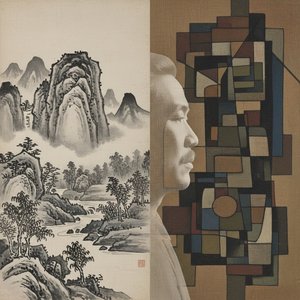 Yi Eungro: Bridging East & West in the Landscape of Korean ModernismExplore the captivating world of Yi Eungro (Lee Ungno), a pivotal figure in Korean modernism. Discover his unique fusion of Eastern and Wes…