 Cambiar a impresiones
 Ver más







































 Para obras de arte o reproducciones que midan más de 105 cm (aproximadamente 41 pulgadas) en cualquiera de sus lados, el marco se enviará como un kit desmontado. Este método garantiza una entrega segura y evita daños durante el transporte.


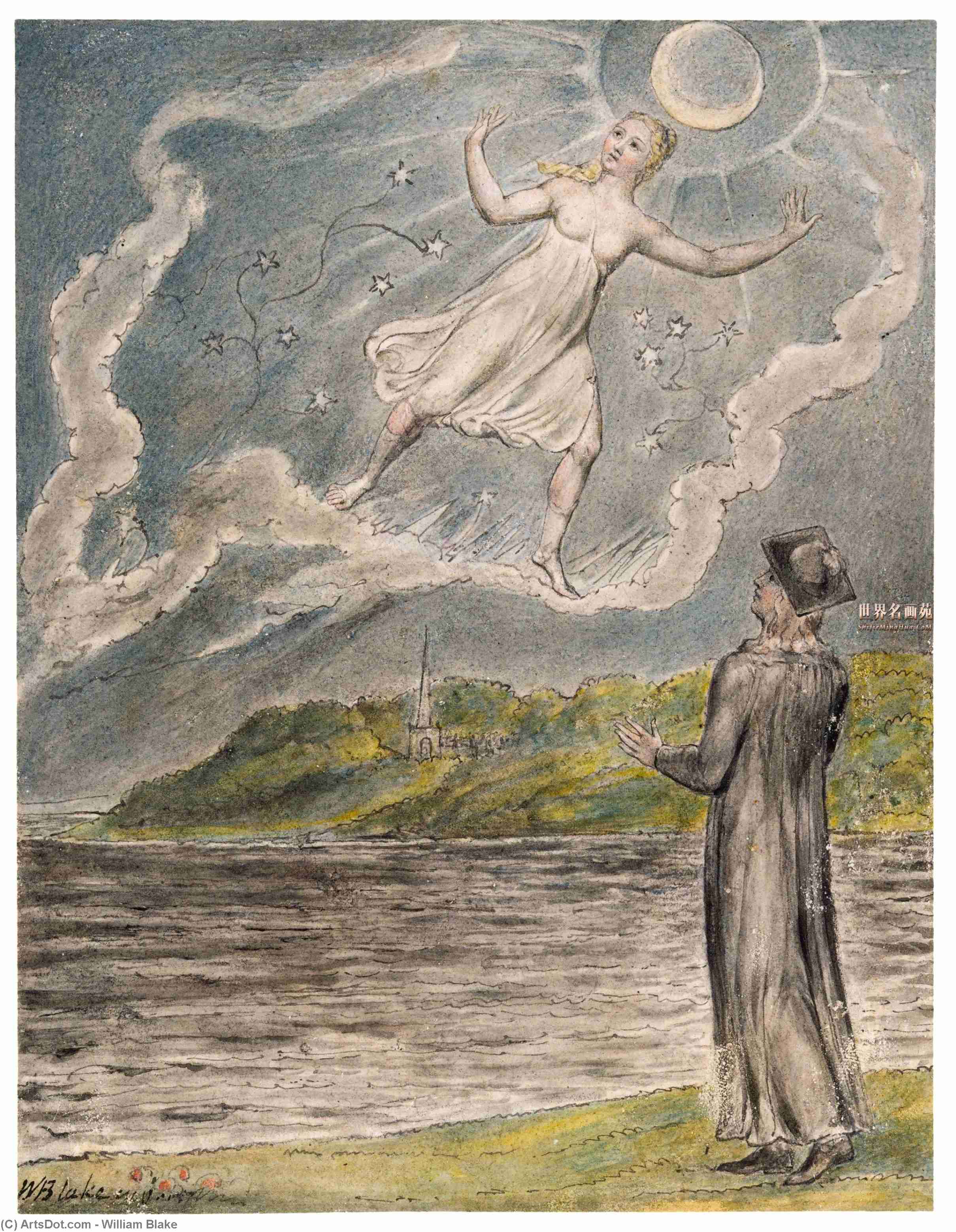
The Wandering Moon: A Romantic Vision of Transcendence
William Blake’s The Wandering Moon transcends mere depiction; it embodies the very spirit of Romanticism—a fervent belief in imagination as a conduit to divine truth and an unwavering fascination with the sublime beauty of nature intertwined with spiritual contemplation.
Created in 1820 during Blake’s prolific artistic output, this watercolour painting isn't simply a visual representation but rather a carefully crafted allegory. The central figure—a woman ascending into the night sky—represents humanity striving for enlightenment and liberation from earthly constraints. Her outstretched arms symbolize yearning, aspiration, and an unwavering faith in something beyond the tangible world.
Composition and Symbolism: Celestial Dance
Blake’s masterful composition draws inspiration from biblical narratives and mythological symbolism. The woman's flight is juxtaposed against a backdrop of swirling clouds illuminated by the silvery glow of the moon—a celestial body traditionally associated with femininity, intuition, and cyclical renewal. This lunar luminescence casts an ethereal light upon the scene, fostering an atmosphere of mystery and wonder.
Beneath her gaze lies a tranquil hillside dotted with trees, hinting at earthly grounding while simultaneously acknowledging the interconnectedness between humanity and the natural realm. The church steeple punctuates the landscape, symbolizing faith and spiritual aspiration—a deliberate inclusion that underscores Blake’s Romantic conviction in the transformative power of religion.
Artistic Style: Watercolor's Delicate Embrace
Blake’s choice of watercolor is pivotal to conveying the painting’s emotive core. The medium allows for subtle gradations of color and luminous washes, creating a dreamlike quality that captures the essence of Romantic idealism. Each brushstroke is imbued with intention—a deliberate effort to evoke feelings of serenity, contemplation, and spiritual yearning.
Blake's technique demonstrates his profound understanding of watercolor’s capabilities. He skillfully blends hues to achieve atmospheric depth and luminosity, mirroring the ethereal beauty of the night sky. The delicate texture of the paint surface contributes to the overall impression of tranquility and invites viewers into a meditative state—a hallmark of Romantic art.
Context and Influence: Blake's Romantic Legacy
William Blake stands as one of the foremost figures in the Romantic movement, alongside poets like Wordsworth and Coleridge. His artistic vision was profoundly shaped by influences ranging from Dante Alighieri’s Divine Comedy to Milton’s Paradise Lost—texts that explored themes of morality, spirituality, and the human condition.
Blake's exploration of visionary experience—drawing inspiration from his own mystical encounters—became a cornerstone of Romantic aesthetics. He championed imagination as an antidote to reason and dogma, asserting its capacity to reveal hidden truths about existence. The Wandering Moon exemplifies this Romantic impulse—a testament to Blake’s enduring legacy as a prophet of beauty and spiritual insight.
For those seeking to immerse themselves in the grandeur of Romantic art, The Wandering Moon awaits at https://OriginalUniqueArt.com. Explore Blake’s broader oeuvre and discover the transformative power of artistic contemplation.
- A Sunshine Holiday by William Blake: View on OriginalUniqueArt
- The Sun in His Wrath by William Blake: View on OriginalUniqueArt
- The Book of Job: When the Morning Stars Sang Together by William Blake: View on OriginalUniqueArt
- Carl Haag: Learn more about the artist at https://OriginalUniqueArt.com/@/Carl-Haag
Preguntas y respuestas
¿Dónde puedo comprar una imagen digital de "La Luna Errante" de William Blake?
Puede adquirir una imagen digital de "La Luna Errante" de William Blake en su página de Imagen digital de alta resolución: descarga de una imagen digital en alta resolución.
¿Qué color predomina en "La Luna Errante"?
El color dominante de "La Luna Errante" de William Blake es Marrón rosáceo (#c1b3a3).
¿A qué etapa de la trayectoria de William Blake pertenece "La Luna Errante"?
Dentro de la trayectoria de William Blake, "La Luna Errante" pertenece al Madurez. Esta etapa permite compararla con otras obras del artista.
 Ver en contexto
 Enviar
 Compartir
 Detalles
 Guía
Guía

 Descargar
 Similares
 Radiografía
 Presentación de diapositivas
 Q&A
Q&A Estadísticas