

 Vista previa
 Compartir
 Compartir
 Ver detalles
 Guía
Guía

 Descargar
 Ver artículos similares
 Radiografía
 Presentación de diapositivas
 Estadísticas
The Crucifixion


 Leer más
Giclée / Impresión de arte
Impresiones giclée o en lienzo de calidad de museo con producción rápida y opciones de acabado flexibles. ( Encargar reproducción pintada a mano Ver versión en imagen digital)




P118B €10

P118H €10

P118W €10

P438Z €10

P508JH €12

P508YH €12

P805H €10

P805Z €10

P919BZ €10

P919G €10

P919XJ €10

P959ZH €10

P968JZ €12

W106C €8

W218G €10

W218JH €8

W218Y €10

W307PJ €10

W316G €10

W316PJ €8

W316Y €10

W398PJ €8

W4111J €10

W500HY €15

W500JH €15

W692G €12

W849H €8

W940BG €15

W953PJ €8




Elija entre nuestros tamaños predefinidos que respetan las proporciones originales de la obra.

Introduzca el ancho y el alto que necesite para adaptarse a su marco o pared. Una impresión solo puede recortarse, nunca hacerse más grande que la imagen original, por lo que un tamaño con una forma distinta perderá parte de la obra. Le enviaremos una maqueta digital para su aprobación antes de realizar cualquier impresión. La imagen que se muestra en esta página no refleja el recorte real; solo la maqueta lo hace.
Envío a todo el mundo () en 2 semanas en lugar de las 4/5 semanas estándar. (23 octubre)

Envío exprés gratuito a todo el mundo

Lienzo de lino de alta calidad

Seguro de envío completo

Garantía de reembolso de impuestos aduaneros

Garantía de fidelidad cromática exacta

Política de devolución de 100 días (solo por defectos)

Garantía de devolución del 100% del dinero

Oferta por volumen
 La opción de vidrio solo está disponible en tamaños inferiores a 110 cm.

The Crucifixion
Giclée / Impresión de arte
Tamaño de la reproducción
-


Precio total
€ 70
Thomas Eakins’ *The Crucifixion*: A Study in Stark Realism
Thomas Eakins' 1880 painting, *The Crucifixion*, isn’t the grand, overtly religious depiction one might expect. Instead, it presents a profoundly unsettling and remarkably intimate portrayal of Christ on the cross—a work that reveals the artist’s deeply rooted commitment to unflinching realism and his unique perspective on human suffering. Far from glorifying martyrdom, Eakins strips away any sentimentalism, offering instead a brutally honest depiction of death and decay, rendered with an almost clinical precision.
The painting immediately commands attention through its sheer scale—an imposing eight feet tall—placing the viewer directly within the scene. The composition is remarkably simple: a solitary figure, Christ, hangs suspended from the cross against a bleak, undefined landscape. There’s no dramatic sky, no crowd of mourners, no overt signs of grief. Instead, we are confronted with the stark reality of death – the pallor of the body, the rough texture of the wood, and the unsettling stillness of the scene. Eakins masterfully utilizes a muted palette of browns, grays, and ochres, further emphasizing the somber mood and the sense of isolation.
A Masterclass in Anatomical Detail and Observation
Eakins’ technical skill is undeniable. He was obsessed with accurate representation, honed through years of rigorous study and a deep understanding of human anatomy—a fascination evident in his portraits and medical illustrations. *The Crucifixion* showcases this expertise to its fullest extent. Every detail, from the subtle wrinkles on Christ's skin to the rough grain of the wood, is rendered with painstaking accuracy. This isn’t simply a depiction of a corpse; it’s an anatomical study—a testament to Eakins’ dedication to observing and faithfully recreating the physical world.
Interestingly, Eakins’ background as a student at Jefferson Medical College profoundly influenced his approach. He dissected cadavers extensively, gaining an unparalleled understanding of human musculature and skeletal structure. This knowledge is seamlessly integrated into the painting, lending it a remarkable sense of realism and immediacy. The way Christ's body hangs, the subtle tension in his limbs—all are informed by Eakins’ anatomical expertise.
Symbolism Beyond the Biblical Narrative
While rooted in Christian iconography, *The Crucifixion* transcends a simple retelling of the biblical story. It becomes a meditation on mortality, suffering, and the human condition. The lack of emotional expression—the absence of tears or lamentation—forces the viewer to confront the stark reality of death without sentimentality. Some art historians suggest that Eakins’ deliberate choice to omit traditional religious symbols reflects his own disillusionment with organized religion, prioritizing instead a direct engagement with the subject matter.
Furthermore, the painting's setting – an undefined landscape—can be interpreted as representing the universal experience of death. It is not tied to any specific location or time period, but rather speaks to the fundamental human condition. The figure’s face, obscured in shadow, invites contemplation and encourages viewers to project their own emotions and interpretations onto the scene.
Eakins' Legacy: A Realist Icon
Despite its unsettling nature, *The Crucifixion* is considered one of Eakins’ most significant works. It exemplifies his commitment to realism, his meticulous attention to detail, and his willingness to confront difficult subjects with unflinching honesty. It stands as a powerful reminder of the artist's unique vision—a vision that continues to resonate with viewers today.
Reproductions of *The Crucifixion* offer an exceptional opportunity to experience Eakins’ masterful technique and profound insights into the human condition. Whether displayed in a grand salon or a more intimate setting, this iconic painting remains a compelling testament to the power of realism and the enduring fascination with mortality.
Preguntas y respuestas
¿Puedo examinar "The Crucifixion" con más detalle?
La vista de rayos X de "The Crucifixion" de Thomas Eakins se encuentra en la página Rayos X de la obra: un examen interactivo de la imagen a través de once capas ópticas.
¿Qué tan intensos son los colores en "The Crucifixion" de Thomas Eakins?
"The Crucifixion" de Thomas Eakins muestra una intensidad de color Vivid.
¿Cuándo se creó "The Crucifixion" y a qué movimiento pertenece?
"The Crucifixion" de Thomas Eakins data de 1880 y pertenece al Contemporary Realism.
Biografía del artista
Una vida dedicada a capturar la realidad
Thomas Cowperthwait Eakins, pintor realista estadounidense, fotógrafo, escultor y educador en bellas artes, dejó una huella imborrable en el lienzo de la historia del arte americano. Nacido el 25 de julio de 1844 en Filadelfia, Pensilvania, su vida fue un testimonio de su inquebrantable dedicación a capturar la esencia de la realidad.Primeros años y educación
Los primeros años de Eakins estuvieron marcados por su agudo interés en el dibujo y las ciencias. Asistió a la escuela secundaria central y luego estudió en la Academia de Bellas Artes de Pensilvania, donde perfeccionó sus habilidades en dibujo y anatomía. Su tiempo en Europa, particularmente bajo la tutela de Jean-Léon Gérôme en París, influyó significativamente en su enfoque artístico.Una carrera definida por el realismo
La obra de Eakins se caracteriza por su implacable realismo, una característica que lo distinguía de sus contemporáneos. Sus retratos, que suman varios cientos, ofrecen una visión conmovedora del tejido intelectual y social de finales del siglo XIX y principios del XX en Filadelfia. Obras notables incluyen Max Schmitt en una Cesta de Remo Individual, que no solo muestra la maestría de Eakins para capturar el movimiento, sino también su profundo interés en la forma humana.Enseñanza y controversia
El período de Eakins como instructor en la Academia de Bellas Artes de Pensilvania se caracterizó tanto por la influencia como por la controversia. Su enfoque docente, que enfatizaba la importancia de estudiar la forma humana desde la vida, a menudo provocaba fricciones con sus colegas. Esto, junto con escándalos personales, truncó su éxito y dañó su reputación durante su vida.Legado
A pesar de los desafíos que enfrentó, Eakins es ahora celebrado como "el realista más fuerte y profundo en el arte estadounidense del siglo XIX y principios del XX". Su obra se puede encontrar en varios museos, incluido el Museo Metropolitano de Arte, que alberga varias de sus obras notables.- El campeón en una cesta de remo individual (Max Schmitt en una cesta de remo individual) - Una obra fundamental que muestra la temprana maestría de Eakins para capturar el movimiento.
- Thomas Eakins - Explore la extensa colección de obras de Eakins en OriginalUniqueArt, ofreciendo una inmersión profunda en su evolución artística y estilo.
- Wikipedia: Thomas Eakins - Profundice en la completa entrada de Wikipedia sobre Eakins, que detalla su vida, influencias y el impacto de su obra en la historia del arte americano.

Thomas Eakins
1844 - 1916 , Estados Unidos de América
Datos clave
- Artistas Que Influyeron: ['Jean-Léon Gérôme']
- Fecha De Fallecimiento: 25 de junio de 1916
- Fecha De Nacimiento: 25 de julio de 1844
- Lugar De Nacimiento: Filadelfia, Estados Unidos
- Movimiento Artístico: Realismo estadounidense
- Nacionalidad: Estadounidense
- Nombre Completo: Thomas Cowperthwait Eakins
- Obras Notables:
- La Clínica Gross
- Max Schmitt en una cesta individual
- El Agnew Clinic
Artículos relacionados

Realismo Estadounidense: 10 Obras Maestras que Cambiaron el Arte y la Decoración
Descubre 10 obras maestras del Realismo Estadounidense: Winslow Homer, Edward Hopper y más. Explora la historia, técnica y emoción de estos icónicos cuadros. Encuentra reproducciones de arte de museo en OriginalUniqueArt.com.
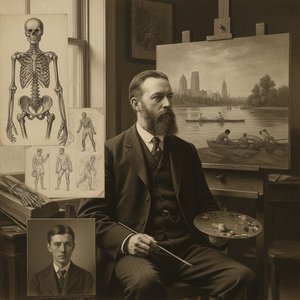
Thomas Eakins: Realism, Anatomy & the American Spirit – A Comprehensive Exploration of Life and Legacy
Explore the life & legacy of Thomas Eakins, a pivotal American Realist painter. Discover his groundbreaking techniques, anatomical precision, and iconic works like 'The Gross Clinic.' A comprehensive guide for art enthusiasts.
Realism in Art: A Professional Guide to Authentic Detail and Lifelike Masterpieces for Large-Scale Interior Projects
Master the use of Realism in professional interiors. This expert guide explores 19th-century masterpieces, offering procurement managers and designers technical insights into selecting authentic, hand-painted oil reproductions for high-end hotel and corporate projects.

Ecos de la Sociedad: El Legado Duradero del Realismo Social en el Arte
Descubre el fascinante mundo del Realismo Social. Explora sus orígenes, artistas clave y su impacto duradero en la historia del arte. ¡Encuentra reproducciones de alta calidad en OriginalUniqueArt!

10 Obras Maestras del Realismo Romántico que Debes Conocer
Explora la emoción y el detalle del Realismo Romántico. Un viaje por 10 obras maestras que capturan la esencia humana con técnica y alma. Encuentra inspiración y reproducciones de calidad museo para tu hogar en OriginalUniqueArt.com. ¡Descubre toda la colección online!


