- Inicio

- Impresión en lienzo
- Sébastien Bourdon
- Presentation in the Temple
 Encargar reproducción Comprar imagen en alta resolución
 Enviar
 Compartir
 Detalles
 Añadir a favoritos

 Descargar
 Similares
 Radiografía
 Presentación de diapositivas
Presentation in the Temple
 Oil On Canvas
- WallArt
- Baroque Painting
 1644
1644- Early Modern
 71.0 x 61.0 cm
 Museo del Louvre
 Ver más
Giclée / Impresión de arte
Impresión giclée o en lienzo de calidad de museo con producción rápida y opciones de acabado flexibles.




P118B $10

P118H $10

P118W $10

P438Z $10

P508JH $12

P508YH $12

P805H $10

P805Z $10

P919BZ $10

P919G $10

P919XJ $10

P959ZH $10

P968JZ $12

W106C $8

W218G $10

W218JH $8

W218Y $10

W307PJ $10

W316G $10

W316PJ $8

W316Y $10

W398PJ $8

W4111J $10

W500HY $15

W500JH $15

W692G $12

W849H $8

W940BG $15

W953PJ $8




Elija entre nuestros tamaños predefinidos que respetan las proporciones originales de la obra.

Puede introducir sus propias dimensiones para adaptarse a un marco o espacio específico. Si el tamaño seleccionado no coincide con las proporciones de la imagen original, recortaremos la obra de arte o extenderemos la imagen con un borde con efecto espejo o de color sólido. Se enviará una maqueta digital para su aprobación antes de que comience la producción.
Tenga en cuenta que la vista previa en pantalla no refleja el recorte o la extensión real. Solo la maqueta mostrará con precisión la composición final.
Aunque existen tamaños personalizados, recomendamos seleccionar una dimensión de la lista predefinida para preservar las proporciones originales.
Entrega mundial () en 2 semanas en lugar de las 4/5 semanas estándar. (23 julio)

Envío exprés gratuito a todo el mundo

Lienzo de lino de alta calidad

Seguro de envío total

Garantía de reembolso de impuestos aduaneros

Garantía de fidelidad de color

Política de devolución de 60 días (solo por defectos)

Garantía de devolución del 100% del dinero

Descuento por pedido múltiple
 La opción de vidrio solo está disponible en tamaños inferiores a 110 cm.

Presentation in the Temple
Giclée / Impresión de arte
Tamaño de la reproducción
-


Precio total final
-
Descripción de la obra
A Moment of Divine Revelation in Baroque Light
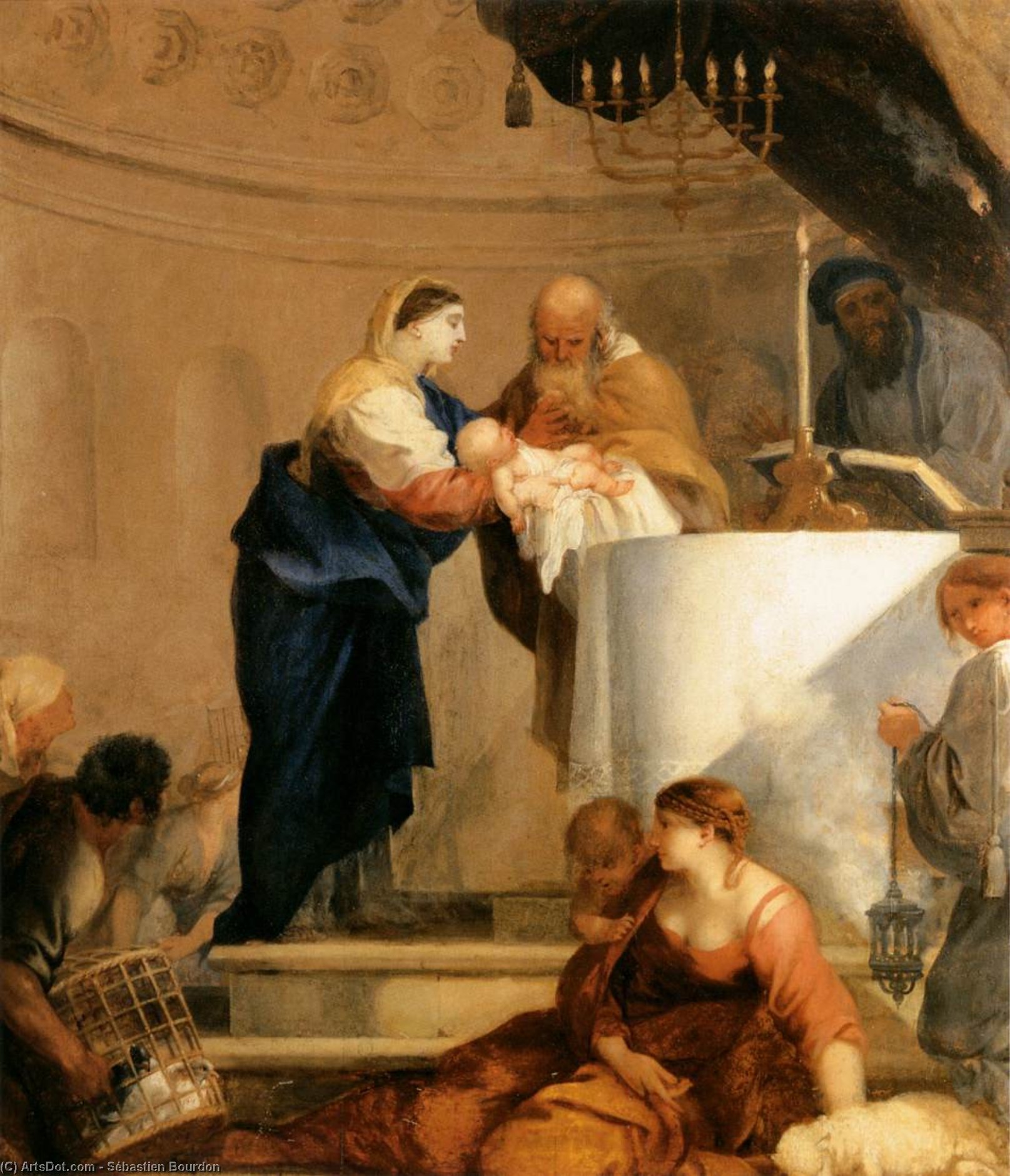
To stand before this depiction of Presentation in the Temple is to be enveloped by the dramatic chiaroscuro that defined the height of the Baroque era. Sébastien Bourdon, a master whose brushstrokes seem imbued with palpable emotion, captures not merely an event, but a profound spiritual moment. The scene unfolds with an immediacy that pulls the viewer directly into the sacred gathering. Observe the central grouping: the tender interaction between mother and child forms the emotional core, while surrounding figures participate in a tableau vivant of devotion. Bourdon’s handling of light is nothing short of miraculous; it does not simply illuminate the scene, it seems to emanate from the divine action itself, carving out figures from deep shadow with masterful precision.
Mastery of Baroque Drama and Composition
Bourdon, trained in the grand traditions that flowed from Rome, understood drama as a compositional element. This painting is a testament to his ability to merge narrative storytelling with technical brilliance. The composition guides the eye effortlessly across the figures—from the solemnity of the old man holding an infant, to the attentive gazes of those nearby. Even the inclusion of seemingly incidental elements, such as the two watchful dogs positioned on either side, adds a layer of grounded realism that anchors the spiritual weight of the subject matter. The placement of the chair near the center suggests both repose and ritual importance, subtly directing our focus toward the unfolding narrative.
Symbolism Woven into Sacred Detail
The symbolism within this work is rich and deeply resonant for the art connoisseur. The act of presentation itself speaks to themes of piety, lineage, and divine acknowledgment. Every gesture—the gentle touch, the upward gaze—is weighted with theological meaning. In Baroque art, animals often serve as silent witnesses or symbolic complements; here, the dogs may represent fidelity or the earthly connection to the sacred rite taking place. To own a reproduction of this piece is to invite into your space not just decoration, but contemplation—a visual meditation on faith and human connection.
Technique and Enduring Emotional Resonance
Executed in 1644, this work showcases Bourdon’s mature technique: a vibrant yet controlled palette used to heighten the emotional stakes. The texture suggested by the paint handling—the softness of drapery against the solidity of flesh—is breathtaking. For those who appreciate historical painting and the dramatic flair of the seventeenth century, this piece offers an unparalleled opportunity. It speaks to a time when art was not merely observed, but experienced; it demands participation from the viewer's heart. Reproducing such a work allows modern interiors to breathe with the grandeur and emotional depth of a Baroque masterwork.
Biografía del artista
Sébastien Bourdon: Un Maestro Barroco de Luz Dramática y Emoción
Sébastien Bourdon (1616 – 1671) ocupa un lugar fundamental en el paisaje artístico francés del siglo XVII, encarnando la grandeza y la intensidad emocional características del período barroco. Nacido en Montpellier, Francia, descendía de una familia arraigada en tradiciones artísticas —su padre era pintor de vidrio— y recibió una educación temprana que inculcó en él una profunda apreciación por el relato visual. Sus años formativos estuvieron marcados por aprendizaje bajo Jean Baptiste Tourneyn, pintor parisino quien le exponía a las convenciones estilísticas de su tiempo. Crucialmente, esta formación fomentó una conexión con las corrientes artísticas que emanaban de Roma, donde emprendió un viaje transformador en 1636. Inspirado por luminarias como Nicolas Poussin, Claude Lorrain y Caravaggio —artistas cuyo dominio cautivaba la imaginación de Bourdon— perfeccionó sus habilidades entre el fervor intelectual de la corte papal. Bourdon’s estilo artístico se caracteriza por su notable versatilidad y adaptabilidad. Aunque destacó en retrato, capturando sujetos con sensibilidad y sutileza – frecuentemente empleando un enfoque rubensem o favoreciendo retratos de tamaño busto contra fondos apagados –, igualmente demostró habilidad en lienzos monumentales impregnados de dramatismo barroco. Su logro más celebrado sigue siendo “La Crucifixión de San Pedro”, encargada para la catedral de Notre Dame, una obra maestra que ejemplifica el dominio magistral de Bourdon del claroscuro y su capacidad para transmitir emoción espiritual profunda. Otros trabajos notables incluyen “La Deposición”, que muestra la meticulosa atención al detalle de Bourdon y su capacidad para representar escenas rebosantes de pathos palpable. Su producción artística trascendió las encargas religiosas; produjo paisajes cautivadores que reflejaban la grandeza del paisaje italiano, demostrando un compromiso más amplio con ideales humanistas. Bourdon fue fundador de la Academia Real de Pintura y Escultura de París junto con otros artistas destacados como Laurent de La Hyre, consolidando así su papel en el desarrollo artístico francés de la época. Su obra maestra sigue siendo “La Crucifixión de San Pedro”, una pieza clave del arte barroco que continúa inspirando admiración por su belleza estética y profundidad emocional. Además, sus paisajes ofrecen un testimonio de la influencia del Renacimiento italiano en el pensamiento artístico de Bourdon y en la sensibilidad artística de su tiempo.
Sébastien Bourdon
1616 - 1671 , Francia
Datos clave
- Artistic Movement Or Style: Barroco
- Artists Who Influenced This Artist:
- Nicolas Poussin
- Claude Lorrain
- Caravaggio
- Date Of Birth: 2 febrero 1616
- Date Of Death: 8 mayo 1671
- Full Name: Sébastien Bourdon
- Nationality: Francés
- Notable Artworks:
- El Martirio de San Pedro
- La Caída de Simón el Mago
- Place Of Birth: Montpellier, Francia
Artículos relacionados
Claude Monet: Las 25 Obras Maestras del Impresionismo para Decorar tu Hogar con Arte
Descubre las 25 obras maestras de Claude Monet, el padre del impresionismo. Explora la historia, técnica y belleza de sus paisajes, nenúfares y 'Impresión, sole levant'. Encuentra reproducciones de arte exclusivas en OriginalUniqueArt.com.

Barroco Sublime: 10 Obras Maestras que Definieron una Época |
Descubre las 10 obras maestras del Barroco que marcaron una época. Caravaggio, Bernini y Velázquez cobran vida en . Reproducciones de arte de calidad museo para decorar tu hogar con elegancia. ¡Explora la colección online!
Gris Maestros: Los 10 Cuadros Más Famosos Dominados por el Color Gris |
Descubre los 10 cuadros más famosos dominados por el gris. Explora la historia, técnica y significado de obras maestras de Monet, Van Gogh, Hopper y otros artistas icónicos. Encuentra reproducciones de arte en .

El Greco: Las 25 Obras Maestras que Definen un Genio del Arte y la Fe
Descubre las 25 obras maestras de El Greco, el genio del Renacimiento español. Explora su arte religioso, manierismo y la historia detrás de cuadros icónicos como 'El Entierro del Conde de Orgaz'. Encuentra reproducciones de alta calidad en OriginalUniqueArt.com.
Marianne North: Las 25 Obras Maestras de una Artista Victoriana en OriginalUniqueArt
Descubre las 25 obras maestras de Marianne North, la artista victoriana que capturó la belleza exótica de la botánica. Pinturas vibrantes y llenas de historia. Reproducciones de arte exclusivas en OriginalUniqueArt.com.