

 Ver en contexto
 Enviar
 Compartir
 Detalles

 Descargar
 Similares
 Radiografía
 Presentación de diapositivas
Two Ruffed Grouse


 Ver más
Giclée / Impresión de arte
Impresiones giclée o en lienzo de calidad de museo con producción rápida y opciones de acabado flexibles. ( Comprar pintura hecha a mano Comprar imagen)




P118B $10

P118H $10

P118W $10

P438Z $10

P508JH $12

P508YH $12

P805H $10

P805Z $10

P919BZ $10

P919G $10

P919XJ $10

P959ZH $10

P968JZ $12

W106C $8

W218G $10

W218JH $8

W218Y $10

W307PJ $10

W316G $10

W316PJ $8

W316Y $10

W398PJ $8

W4111J $10

W500HY $15

W500JH $15

W692G $12

W849H $8

W940BG $15

W953PJ $8




Elija entre nuestros tamaños predefinidos que respetan las proporciones originales de la obra.

Puede introducir sus propias dimensiones para adaptarse a un marco o espacio específico. Si el tamaño seleccionado no coincide con las proporciones de la imagen original, recortaremos la obra de arte o extenderemos la imagen con un borde con efecto espejo o de color sólido. Se enviará una maqueta digital para su aprobación antes de que comience la producción.
Tenga en cuenta que la vista previa en pantalla no refleja el recorte o la extensión real. Solo la maqueta mostrará con precisión la composición final.
Aunque existen tamaños personalizados, recomendamos seleccionar una dimensión de la lista predefinida para preservar las proporciones originales.
Envío a todo el mundo () en 2 semanas en lugar de las 4/5 semanas estándar. (29 agosto)

Envío exprés gratuito a todo el mundo

Lienzo de lino de alta calidad

Seguro de envío total

Garantía de reembolso de impuestos aduaneros

Garantía de fidelidad cromática exacta

Política de devolución de 60 días (solo por defectos)

Garantía de devolución del 100% del dinero

Descuento por cantidad
 La opción de vidrio solo está disponible en tamaños inferiores a 110 cm.

Two Ruffed Grouse
Giclée / Impresión de arte
Dimensiones de la reproducción
-


Precio total final
$ 80
A Moment of Woodland Serenity: Unpacking the Depths of Peale’s “Two Ruffed Grouse”
Rubens Peale's "Two Ruffed Grouse in Underbrush," painted in 1864, isn’t merely a depiction of two birds; it’s a carefully constructed tableau of American naturalism and the burgeoning spirit of scientific observation that defined the mid-19th century. The painting immediately draws the eye with its intimate portrayal of these elusive creatures nestled within a dense undergrowth—a scene brimming with quiet drama and subtle detail. Peale, a key figure in Philadelphia’s vibrant artistic and scientific community, masterfully blends elements of realism with an almost painterly softness, creating an image that feels both meticulously observed and deeply imbued with feeling.

The Painter’s Process: Observation and the Pursuit of Natural Truth
Peale's approach to this work is particularly fascinating when considered within the context of his career. He wasn’t primarily a painter of grand landscapes or heroic figures; instead, he dedicated himself to documenting the natural world through meticulous observation and scientific illustration – a practice deeply rooted in his family history, tracing back to his father, Charles Willson Peale, a renowned naturalist and museum curator. “Two Ruffed Grouse” exemplifies this dedication. The painting’s realism is remarkable, achieved not through idealized representation but by painstakingly rendering the textures of feathers, foliage, and earth. Notice the subtle variations in color—the mottled browns and greys of the birds' plumage blending seamlessly with the muted tones of the underbrush. Peale employed a technique that prioritized capturing the essence of the subject rather than imposing an artistic interpretation, a hallmark of the Hudson River School movement but executed with a distinctly American sensibility.
Symbolism Woven into the Woodland Scene
Beyond its straightforward depiction of two ruffed grouse, the painting is rich in symbolic layers. The inclusion of the geranium—a vibrant splash of red against the predominantly earthy palette—introduces an element of unexpected beauty and perhaps even a touch of melancholy. Some art historians suggest that this deliberate juxtaposition highlights the delicate balance between nature’s raw beauty and the human desire to capture and preserve it. Furthermore, the birds themselves hold symbolic weight; in American folklore, grouse were often associated with good fortune and prosperity. The placement of the birds within the dense undergrowth also speaks to themes of concealment, resilience, and the quiet dignity of the natural world—a sentiment increasingly valued during a period of rapid industrialization and westward expansion.
A Legacy of Observation: Peale’s Influence and Enduring Appeal
Rubens Peale's "Two Ruffed Grouse in Underbrush" stands as a testament to the power of observation and the evolving role of art in documenting the natural world. It reflects a shift away from purely decorative painting towards a more scientific and nuanced understanding of nature—a trend that would profoundly influence American art throughout the 19th century. The painting’s quiet intimacy, coupled with its meticulous detail and subtle symbolism, continues to resonate with viewers today, offering a glimpse into a bygone era and reminding us of the enduring beauty and complexity of the American wilderness. Its inclusion in the Detroit Institute of Arts collection underscores its significance as a pivotal work in American art history.
Biografía del artista
Rubens Peale: Una Vida que Une Arte, Ciencia y Museos
- Nacido: 4 de mayo de 1784, Filadelfia, Estados Unidos de América
- Fallecido: 17 de julio de 1865
Rubens Peale fue una figura multifacética en la historia temprana estadounidense – un artista, director de museo y emprendedor profundamente arraigado dentro de la renombrada familia Peale. Nacido en una línea familiar celebrada por sus contribuciones al arte y a la ciencia natural, la vida de Rubens refleja tanto las oportunidades como los desafíos de perseguir diversas pasiones en una nación rápidamente cambiante.
Primeros Años y Legado Familiar
Rubens era el cuarto hijo de Charles Willson Peale, un destacado pintor de retratos y naturalista que fundó el Museo Peale de Filadelfia. Sus hermanos, Raphaelle y Rembrandt, también fueron artistas consumados, mientras que su hermano menor, Titian, se distinguió como explorador. A diferencia de muchos de sus hermanos que abrazaron la pintura, Rubens luchó con una vista débil, lo que inicialmente obstaculizó sus aspiraciones artísticas. Recibió una educación formal, asistiendo a clases en la Universidad de Pensilvania en 1803.
- Influencia Familiar: La familia Peale fomentó un fuerte interés en la historia natural y la observación científica, influyendo en todos sus miembros.
- Primeros Viajes: Rubens acompañó a su familia en viajes a Europa en 1802, pero el estallido de la guerra impidió más viajes continentales.
Dirección de Museos y Emprendimientos Empresariales
A pesar de sus desafíos visuales, Rubens jugó un papel importante en la gestión y promoción de museos a lo largo de su carrera. Sucedió a su padre como director del Museo de Filadelfia de 1810 a 1821, demostrando una aptitud para la organización y el compromiso público.
- Museo Peale en Baltimore: Co-gestionó el Museo Peale en Baltimore con su hermano Rembrandt, implementando estrategias innovadoras como la iluminación a gas para atraer visitantes.
- Museo de Historia Natural y Ciencia de Nueva York: En 1825, Rubens estableció su propio museo en la ciudad de Nueva York, renombrándolo más tarde Museo de Historia Natural y Ciencia de Nueva York. Esta empresa enfrentó dificultades financieras debido a la competencia con el Museo Americano de P.T. Barnum y la recesión económica del pánico de 1837, lo que finalmente llevó a la venta de su colección en 1843.
Desarrollo Artístico Tardío y Pintura de Bodegones
Aunque inicialmente se le desanimó a perseguir la pintura debido a su vista, Rubens regresó al arte más tarde en la vida. Después de retirarse a Woodland Farm cerca de Schuylkill Haven, Pensilvania, se dedicó a la pintura de bodegones, inspirándose en el interés de su familia por la historia natural.
- Producción Artística Tardía: En los últimos diez años de su vida (1864-1865), Rubens produjo aproximadamente 130 pinturas.
- Influencia de Edward Moran: Estudió pintura paisajista con el renombrado artista Edward Moran, perfeccionando aún más sus habilidades artísticas.
- Enfoque en Bodegones: Sus bodegones a menudo presentaban frutas, verduras y flores meticulosamente representadas, reflejando una aguda observación del mundo natural.
Significado Histórico y Legado
El legado de Rubens Peale se extiende más allá de su producción artística. Fue un pionero en la gestión de museos, contribuyendo al desarrollo de instituciones públicas dedicadas a la educación científica y artística. Sus esfuerzos para iluminar los museos con iluminación a gas fueron innovadores para su época. El alto precio pagado por el retrato de Rembrandt de Rubens con un geranio (4,07 millones de dólares en 1985) subraya la creciente apreciación por el arte estadounidense temprano.
- Director de Museo Pionero: Su trabajo gestionando varios museos ayudó a dar forma al panorama de las instituciones públicas en Estados Unidos.
- Contribución Familiar: Como parte de la familia Peale, contribuyó a un legado más amplio de exploración artística y científica que impactó significativamente la cultura estadounidense temprana.
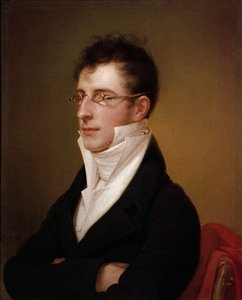
Rubens Peale
1784 - 1865 , Estados Unidos de América
Datos clave
- Artistas Influyentes:
- Charles Willson Peale
- Rembrandt Peale
- Fecha De Fallecimiento: 17 de julio de 1865
- Fecha De Nacimiento: 4 de mayo de 1784
- Lugar De Nacimiento: Filadelfia, EE. UU.
- Movimiento Artístico: Retrato, Naturaleza muerta
- Nacionalidad: Estadounidense
- Nombre Completo: Rubens Peale
- Obras Notables: ['Rubens Peale con un geranio']
Artículos relacionados
Feathered Visions: A Historical & Artistic Exploration of Birds in Painting
Explore the rich history of birds in painting! Discover symbolism, artistic movements & master artists like Audubon. High-quality reproductions available at OriginalUniqueArt.
The Enchanted Canopy: Exploring Forests in Art History – From Romantic Idealization to Ecological Consciousness
Explore the rich history of forests in art! Discover Romantic masterpieces by Friedrich & Monet, Symbolist depths, and contemporary visions. Find inspiration & quality reproductions at OriginalUniqueArt.
Nature’s Sanctuary: Curating Enchanting Forest Artworks to Transform Your Home into a Serene Woodland Retreat
Transform your home into a serene woodland retreat with enchanting forest artworks. Discover museum-quality oil reproductions and custom landscape commissions designed to bring the peaceful beauty of nature indoors.

Wild Majesty: The Collector's Guide to Capturing the Spirit of Nature Through Masterful Wildlife Art
Discover the profound beauty of wildlife art through a curated journey of masterworks. From classical naturalism to bespoke oil commissions, explore how premium textures and expert craftsmanship capture nature's untamed spirit for the discerning collector.
John James Audubon: A Life Immersed in Ornithological Art & the American Wilderness
Explore the life & art of John James Audubon, pioneer of ornithological illustration! Discover his stunning 'Birds of America' watercolors and complex legacy. Hand-painted reproductions available at OriginalUniqueArt.

