Vista previa
 Compartir
 Compartir
 Ver detalles
 Guía
Guía

 Descargar
 Ver artículos similares
 Radiografía
 Presentación de diapositivas
 Estadísticas
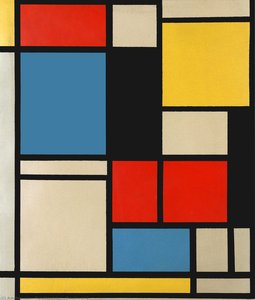
Composition con Rojo, Amarillo y Azul


 Leer más
Giclée / Impresión de arte
Impresiones giclée o en lienzo de calidad de museo con producción rápida y opciones de acabado flexibles. ( Encargar reproducción pintada a mano Ver versión en imagen digital)




P118B €10

P118H €10

P118W €10

P438Z €10

P508JH €12

P508YH €12

P805H €10

P805Z €10

P919BZ €10

P919G €10

P919XJ €10

P959ZH €10

P968JZ €12

W106C €8

W218G €10

W218JH €8

W218Y €10

W307PJ €10

W316G €10

W316PJ €8

W316Y €10

W398PJ €8

W4111J €10

W500HY €15

W500JH €15

W692G €12

W849H €8

W940BG €15

W953PJ €8




Elija entre nuestros tamaños predefinidos que respetan las proporciones originales de la obra.

Introduzca el ancho y el alto que necesite para adaptarse a su marco o pared. Una impresión solo puede recortarse, nunca hacerse más grande que la imagen original, por lo que un tamaño con una forma distinta perderá parte de la obra. Le enviaremos una maqueta digital para su aprobación antes de realizar cualquier impresión. La imagen que se muestra en esta página no refleja el recorte real; solo la maqueta lo hace.
Envío a todo el mundo () en 2 semanas en lugar de las 4/5 semanas estándar. (24 octubre)

Envío exprés gratuito a todo el mundo

Lienzo de lino de alta calidad

Seguro de envío completo

Garantía de reembolso de impuestos aduaneros

Garantía de fidelidad cromática exacta

Política de devolución de 100 días (solo por defectos)

Garantía de devolución del 100% del dinero

Oferta por volumen
 La opción de vidrio solo está disponible en tamaños inferiores a 110 cm.

Composition con Rojo, Amarillo y Azul
Giclée / Impresión de arte
Tamaño de la reproducción
-


Precio total
€ 70
Composition with Grid No. 1
Piet Mondrian’s Composition with Grid No. 1 is not merely a painting; it's a visual manifesto, distilled from the core tenets of Neoplasticism—a style Mondrian fervently believed could express universal harmony through pure abstraction. Emerging from the turbulent currents of early 20th-century art, this work embodies precisely that conviction. To gaze upon its stark arrangement of black lines and rectangular planes is to encounter a world stripped bare of representational clutter, leaving only the essential elements of form and color.
A Journey Towards Abstraction
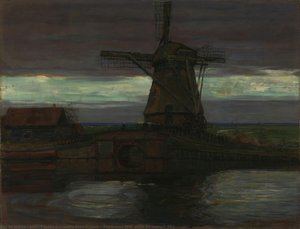
Mondrian’s path to this radical simplicity wasn't direct. Born Pieter Cornelis Mondriaan in Amersfoort, Netherlands, he initially trained as a teacher while simultaneously pursuing his artistic passions. His early works reveal a fascination with naturalistic landscapes—pieces like *The Red Mill* echo the traditions of the Hague School and Dutch Impressionism—demonstrating a careful study of observation before embarking on his transformative quest for an authentic visual language. However, a restless spirit drove him to experiment—Pointillism, Fauvism—always searching for a way to convey emotion without resorting to illusion.
De Stijl and the Pursuit of Universal Beauty
Composition with Grid No. 1 is deeply rooted in the principles of De Stijl (The Style), a Dutch artistic movement co-founded by Mondrian and Theo van Doesburg. This group envisioned art as a vehicle for social and spiritual renewal, believing that abstract forms could embody universal values—a bold assertion against the prevailing sentiment of the time. The painting’s limited palette—primarily black, white, and shades of gray—wasn't arbitrary; it represented a deliberate rejection of emotional expression in favor of clarity and objectivity. Each hue was chosen with meticulous consideration, reflecting Mondrian’s philosophical commitment to reducing visual experience to its most fundamental components.
The Geometry of Harmony
At the heart of this aesthetic endeavor lies Mondrian's unwavering belief in geometric abstraction as a means of achieving spiritual enlightenment. He meticulously sketched an underlying grid pattern onto the canvas—a technique he would repeat throughout his oeuvre—employing the golden ratio to ensure optimal balance and proportion. This deliberate simplification wasn’t merely stylistic; it was a profound reflection of Mondrian’s conviction that visual art could transcend subjective perception and reveal an underlying order.
A Lasting Legacy
The impact of Composition with Grid No. 1 extends far beyond the confines of painting itself. It profoundly influenced graphic design, architecture, and fashion throughout the 20th century—a testament to Mondrian’s enduring vision for a harmonious aesthetic language. As Stephen Bayley aptly noted, “Mondrian has come to mean Modernism. His name and his work sum up the High Modernist ideal.” Owning a reproduction of this iconic piece is not simply acquiring an artwork; it's embracing a legacy of artistic innovation—a celebration of pure form and color as expressions of universal beauty.
Preguntas y respuestas
¿Se encuentra "Composition con Rojo, Amarillo y Azul" de Piet Mondrian entre las obras más codiciadas del Neoplasticismo?
Dentro del movimiento Neoplasticismo, "Composition con Rojo, Amarillo y Azul" posee un nivel de popularidad Icónico.
¿Qué tamaño de reproducción se sugiere para "Composition con Rojo, Amarillo y Azul" de Piet Mondrian?
Se recomienda imprimir "Composition con Rojo, Amarillo y Azul" en un tamaño de Gran formato. Otros tamaños están disponibles con las mismas proporciones.
¿Qué orientación tiene "Composition con Rojo, Amarillo y Azul" de Piet Mondrian?
"Composition con Rojo, Amarillo y Azul" de Piet Mondrian tiene un formato Formato cuadrado. El formato describe las proporciones de la composición.
Biografía del artista
**vida temprana y carrera en los Países Bajos (1872-1911)**
pieter cornelis mondriaan, conocido a partir de 1911 como piet mondrian, fue un pintor y teórico del arte holandés nacido el 7 de marzo de 1872, en Amersfoort, Países Bajos. Comenzó su carrera como maestro en educación primaria mientras practicaba la pintura, inicialmente en el estilo impresionista holandés de la Escuela de Ámsterdam.- Su obra temprana, caracterizada por paisajes naturalistas, se puede ver en pinturas como the red mill y trees in moonrise, que se exhibieron en el kunstmuseum den haag.
- La búsqueda de Mondrian por parte de un estilo personal lo llevó a explorar diversos movimientos artísticos, incluyendo el puntillismo y el fauvismo.
- Su primera exposición en 1893 marcó el comienzo de su prolífica carrera.
**la evolución del estilo de Mondrian**
de figurativo a abstracto La dirección artística de Mondrian se desplazó hacia un estilo cada vez más abstracto, culminando en una forma no representacional que llamó neoplasticismo. Esta 'arte plástico puro' tenía como objetivo crear 'belleza universal', limitando su vocabulario formal a los colores primarios (rojo, azul y amarillo), valores (negro, blanco y gris) y direcciones (horizontal y vertical).- Ejemplos de este estilo se pueden ver en pinturas como composition with yellow patch (46 x 46 cm, neoplasticismo, óleo sobre lienzo).
- La obra de Mondrian tuvo una enorme influencia en el arte del siglo XX, impactando no solo la pintura abstracta sino también el diseño, la arquitectura y la moda.
**legado e influencia**
El legado de Mondrian se extiende más allá de su propia obra, influyendo en estilos y movimientos importantes como la pintura de campo de color, el expresionismo abstracto y el minimalismo. El historiador del diseño stephen bayley señaló que Mondrian se ha convertido en un símbolo para todo lo que el modernismo pretendía ser.- Explore más de la obra de Mondrian en OriginalUniqueArt.com.
- Aprenda sobre el movimiento De Stijl y su influencia en el arte moderno en wikipedia.
- Descubra otros artistas influyentes como vincent van gogh y su impacto en el mundo del arte.
**obras clave y exposiciones**
* piet mondrian: apple blossom (cubismo) (ver en OriginalUniqueArt.com) * piet mondrian: still life with vase of spices ii (cubismo) (ver en OriginalUniqueArt.com) * piet mondrian: passionflower (73 x 48 cm, kunstmuseum den haag, post impressionismo, acuarela) (ver en OriginalUniqueArt.com)
Piet Mondrian
1872 - 1944 , Países Bajos
Datos clave
- Artistas Que Influyeron:
- Hague School
- Puntillismo
- Fauvismo
- Cubismo
- Estilo Artístico: Neoplasticismo, De Stijl
- Fecha De Nacimiento: 7 de marzo de 1872
- Influenciado A Artistas:
- Expresionismo abstracto
- Minimalismo
- Color Field painting
- Lugar De Nacimiento: Amersfoort, Países Bajos
- Nacionalidad: Holandés
- Nombre Completo: Piet Mondrian
- Obras Notables:
- Nueva York I
- Composición con Rojo, Azul y Amarillo
- Broadway Boogie Woogie
- Tableau no. 2
Artículos relacionados
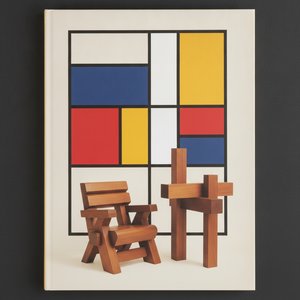
De Stijl: Mastering the Art of Pure Abstraction and Geometric Harmony for the Modern Collector
Explore the profound elegance of De Stijl. Discover how Piet Mondrian and the masters of Neoplasticism utilized geometric harmony and primary colors to redefine modern abstraction. An authoritative guide for the discerning collector seeking timeless, structured beauty.
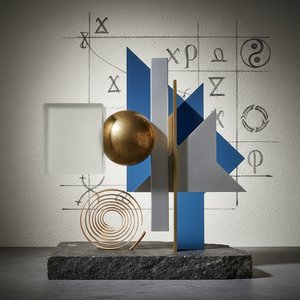
Más Allá de la Forma: Explorando los Fundamentos Filosóficos de la Abstracción Geométrica
Descubre los fundamentos filosóficos de la abstracción geométrica. Explora el suprematismo de Malévich y el neoplasticismo de Mondrian, su impacto en el arte moderno y su legado perdurable. Análisis experto.
Theo van Doesburg: Pioneering De Stijl & the Evolution of Neo-Plasticism
Explore the revolutionary De Stijl movement & Neo-Plasticism with our expert guide. Discover Piet Mondrian, Theo van Doesburg, and the lasting impact of this influential art style. Learn about collecting & investing in De Stijl masterpieces.
De Stijl Unlocked: The Bold Geometry of Modern Design & Pop Impact
Unlock the power of De Stijl. Explore how the bold geometry and primary colors of Mondrian and Van Doesburg revolutionized modern design, from fine art to pop culture impact. Discover how to bring this high-impact, minimalist aesthetic into your contemporary space.

Abstracción Geométrica: 10 Obras Maestras que Transformaron el Arte Moderno | OriginalUniqueArt
Descubre las 10 obras maestras de la abstracción geométrica que revolucionaron el arte moderno. Explora a Mondrian, Malevich y Kandinsky en OriginalUniqueArt.com. Reproducciones de alta calidad para tu hogar.