
 Ver en contexto
 Enviar
 Compartir
 Detalles
 Guía
Guía

 Descargar
 Similares
 Radiografía
 Presentación de diapositivas
 Preguntas y respuestas
 Estadísticas
Shipwreck

- 58.0 x 81.0 cm


 Ver más
Giclée / Impresión de arte
Impresiones giclée o en lienzo de calidad de museo con producción rápida y opciones de acabado flexibles. ( Comprar pintura hecha a mano Cambiar a imagen digital)




P118B €10

P118H €10

P118W €10

P438Z €10

P508JH €12

P508YH €12

P805H €10

P805Z €10

P919BZ €10

P919G €10

P919XJ €10

P959ZH €10

P968JZ €12

W106C €8

W218G €10

W218JH €8

W218Y €10

W307PJ €10

W316G €10

W316PJ €8

W316Y €10

W398PJ €8

W4111J €10

W500HY €15

W500JH €15

W692G €12

W849H €8

W940BG €15

W953PJ €8




Elija entre nuestros tamaños predefinidos que respetan las proporciones originales de la obra.

Introduzca el ancho y el alto que necesite para adaptarse a su marco o pared. Una impresión solo puede recortarse, nunca hacerse más grande que la imagen original, por lo que un tamaño con una forma distinta perderá parte de la obra. Le enviaremos una maqueta digital para su aprobación antes de realizar cualquier impresión. La imagen que se muestra en esta página no refleja el recorte real; solo la maqueta lo hace.
Envío a todo el mundo () en 2 semanas en lugar de las 4/5 semanas estándar. (6 noviembre)

Envío exprés gratuito a todo el mundo

Lienzo de lino de alta calidad

Seguro de envío total

Garantía de reembolso de aranceles aduaneros

Garantía de fidelidad cromática exacta

Política de devolución de 100 días (solo por defectos)

Garantía de devolución del 100% del dinero

Descuento por cantidad
 La opción de vidrio solo está disponible en tamaños inferiores a 110 cm.

Shipwreck
Giclée / Impresión de arte
Dimensiones de la reproducción
-


Precio total final
€ 72
A Tempestuous Vision: Philip James de Loutherbourg’s “Shipwreck”
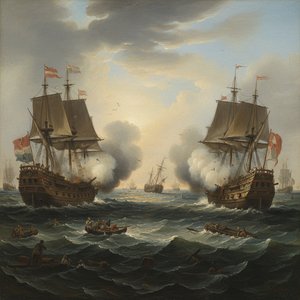
Philip James de Loutherbourg's "Shipwreck," painted in 1793, isn’t merely a depiction of maritime disaster; it’s a visceral exploration of human vulnerability against the overwhelming power of nature. This dramatic landscape, now housed within the Southampton City Art Gallery, transcends simple realism to become a potent allegory for survival, desperation, and the precariousness of existence – themes that resonated deeply with the burgeoning Romantic movement of the late 18th century.
The painting immediately commands attention through its turbulent composition. A colossal wave, rendered in thick, swirling brushstrokes of indigo, ochre, and grey, dominates the scene, threatening to engulf a shattered vessel – the remnants of a once-proud ship now reduced to splintered wood and clinging figures. Loutherbourg masterfully employs chiaroscuro, utilizing stark contrasts between light and shadow to heighten the drama and emphasize the immediate threat. The dark, brooding sky, pregnant with impending storm, mirrors the despair etched on the faces of those struggling for survival amidst the wreckage.
The Baroque Influence & Dramatic Lighting
While firmly rooted in the Romantic sensibility, "Shipwreck" reveals a clear debt to the Baroque tradition, particularly in its theatrical use of light and shadow. Loutherbourg, who had trained under Charles-André van Loo, inherited a penchant for dramatic effects – a skill he honed not only as a painter but also as a stage designer for London’s Drury Lane Theatre. This influence is evident in the painting's heightened emotional intensity and its carefully orchestrated composition, designed to draw the viewer directly into the heart of the scene.
The figures themselves are illuminated from the left, casting long, dramatic shadows that accentuate their vulnerability and heighten the sense of urgency. Loutherbourg’s technique is particularly noteworthy in his rendering of water – not as a smooth, reflective surface, but as a chaotic, dynamic force, teeming with movement and energy. The artist's attention to detail extends to the depiction of the ship itself, meticulously rendered with a sense of both grandeur and impending doom. The use of layered textures—the rough splintered wood, the slickness of the waves, the ragged clothing of the survivors—adds considerable depth and realism to the scene.
Symbolism & The Romantic Spirit
Beyond its immediate depiction of a shipwreck, “Shipwreck” is rich in symbolic meaning. The storm represents not just a natural event but also the unpredictable forces that govern human life – fate, adversity, and the limitations of control. The survivors, huddled together on the rocks, embody the resilience of the human spirit in the face of overwhelming odds. Their desperate struggle for survival speaks to our shared vulnerability and our innate desire to endure.
The inclusion of bandits attacking the lifeboat adds another layer of complexity, suggesting a broader theme of exploitation and injustice. It’s a subtle but powerful commentary on the darker aspects of human nature – the willingness to prey upon the weak in times of crisis. This painting perfectly encapsulates the Romantic spirit's fascination with both the sublime beauty and terrifying power of the natural world, alongside its exploration of profound emotional experiences.
A Legacy of Dramatic Art
Philip James de Loutherbourg’s “Shipwreck” stands as a testament to his artistic versatility and his ability to capture the drama and intensity of human experience. It's a work that continues to resonate with viewers today, prompting reflection on our own vulnerabilities and our capacity for both despair and resilience. The painting’s enduring appeal lies in its masterful composition, its evocative use of light and shadow, and its profound exploration of timeless themes – all rendered with the skill and passion characteristic of a true Romantic artist.
Preguntas y respuestas
¿Cómo equilibra la luz y la sombra "Shipwreck"?
Los valores registrados para "Shipwreck" de Philip James de Loutherbourg son: deep_shadow de brillo y Dark de luminancia.
¿Cuáles son las dimensiones de la obra original "Shipwreck"?
"Shipwreck" mide 58 x 81 cm en su formato original. Las dimensiones originales son una referencia útil al elegir el tamaño de una reproducción.
¿En qué etapa de la trayectoria de Philip James de Loutherbourg se sitúa "Shipwreck", dada su fecha?
"Shipwreck", creada en 1767, pertenece al Mature Period de la trayectoria de Philip James de Loutherbourg.
Biografía del artista
Primeros Años y Formación
- Nacido: Estrasburgo, Francia (1740)
- Fallecido: 1812
- Philip James de Loutherbourg, también conocido como Philip Jacques de Loutherbourg, fue un pintor franco-británico.
- Comenzó su formación artística a una edad temprana y rápidamente se hizo conocido por su habilidad para pintar.
- Fue nombrado miembro de la Royal Academy en 1781.
- Su padre era grabador y miniaturista, lo que influyó en su exposición temprana al arte.
- Inicialmente destinado al ministerio, rechazó este camino para dedicarse a la pintura.
- Estudió bajo Charles-André van Loo y Francesco Giuseppe Casanova en París.
Obras Notables y Estilo Artístico
- Acción de Lord Howe, o el Primer Junio Glorioso: Conmemoró las victorias navales británicas (1795).
- La Destrucción de la Armada: Mostró su habilidad para capturar escenas dramáticas.
- Coalbrookdale por la Noche: Resaltó su interés en la Revolución Industrial.
- Jinete y Ganado en una Tormenta: Una representación dramática del poder de la naturaleza (1780).
- Paisaje con Ganado y Figuras, una Tormenta se Acerca: Una impresionante escena pastoral renderizada al óleo (1781).
- Sus pinturas a menudo presentaban temas históricos, navales y paisajísticos.
- Se le conocía por sus composiciones dramáticas y su atención al detalle.
- El estilo de Loutherbourg se asocia con el Romanticismo, enfatizando la emoción y la grandeza.
El Eidophusikon e Innovaciones Teatrales
- En 1789, Loutherbourg abandonó temporalmente la pintura para explorar la alquimia y lo sobrenatural.
- Conoció a Alessandro di Cagliostro y viajó con él antes de la condena de Cagliostro.
- Loutherbourg inventó el Eidophusikon, un teatro mecánico que combinaba escenografía pintada con efectos de iluminación y figuras móviles.
- El Eidophusikon fue una innovación significativa en el diseño teatral y el entretenimiento.
- Diseñó elaborados decorados para teatros de Londres, incluido Drury Lane, mostrando sus habilidades inventivas.
Carrera Posterior y Legado
- Loutherbourg regresó a la pintura después de su participación con Cagliostro.
- Sus obras posteriores incluyeron pinturas históricas y temas bíblicos.
- Publicó dos colecciones de grabados: Picturesque Scenery of Great Britain (1801) y The Romantic and Picturesque Scenery of England and Wales (1805).
- Su obra se puede encontrar en museos de todo el mundo, incluido el National Maritime Museum y el British Museum.
- La influencia de Loutherbourg se extendió a artistas posteriores como J.M.W. Turner.
- Es recordado por sus contribuciones tanto a la pintura como al diseño teatral.
Significado Histórico
- Loutherbourg jugó un papel significativo en el desarrollo del arte británico romántico.
- Sus pinturas navales ayudaron a popularizar las representaciones de eventos marítimos.
- El Eidophusikon demostró su espíritu innovador y contribuyó a los avances en la tecnología teatral.
- Puenteó la brecha entre la pintura, el diseño teatral y la exploración científica.
- El legado de Loutherbourg radica en su capacidad para combinar habilidad artística con innovación tecnológica y una fascinación por el mundo natural.

Philip James de Loutherbourg
1740 - 1812 , Francia
Datos clave
- Artistas Influenciados: ['J.M.W. Turner']
- Artistas Que Influyeron:
- Charles-André van Loo
- Francesco Giuseppe Casanova
- Fecha De Fallecimiento: 11 de marzo de 1812
- Fecha De Nacimiento: 31 de octubre de 1740
- Lugar De Nacimiento: Strasburgo, Francia
- Movimiento Artístico: Romanticismo
- Nacionalidad: Franco-Británico
- Nombre Completo: Philip James de Loutherbourg
- Obras Notables:
- Lord Howe's action
- Destrucción de la Armada
- Coalbrookdale por la noche
Artículos relacionados
Masterpieces of Maritime Warfare: The Artistry and Intensity of Naval Combat in Historical Painting
Explore the dramatic intensity of naval combat through art history. From Romanticism to classical maritime masterpieces, discover how legendary painters captured the chaos, light, and heroism of sea battles in breathtaking oil paintings.

Acerca de nosotros
Descubre nuestra historia! Llevamos el arte de clase mundial a tu vida gracias a una selección experta, creaciones personalizadas y vistas previas gratuitas. Aprobado por particulares y empresas desde el año 2000.

Willem van de Velde the Elder: Master of Maritime Painting & Chronicler of the Dutch Golden Age
Discover the captivating maritime paintings of Willem van de Velde the Elder, a master chronicler of the Dutch Golden Age. Explore his unparalleled realism and lasting influence on naval art history.

Philip James de Loutherbourg: Romantic Visions of Maritime Life & the Sublime
Explore the dramatic naval scenes & landscapes of Philip James de Loutherbourg (1740-1812), a key figure in Romantic painting. Discover his legacy, theatrical innovations & iconic works like 'The Battle of the Nile' at OriginalUniqueArt.

Dominando las Sombras: Las 25 Obras Maestras de Francisco de Goya
Explora las 25 obras maestras de Goya, del romanticismo a sus pinturas negras. ¡Descubre toda la colección en OriginalUniqueArt.com!


