Text size

() ·

A painting made for you, by hand

LA FERME

Reproducción al óleo hecha a mano

Óleo sobre lienzo pintado a mano en el tamaño y marco de su elección, realizado por encargo por nuestros artistas. ( Cambiar a impresiones Cambiar a imagen digital)

Descripción del objeto

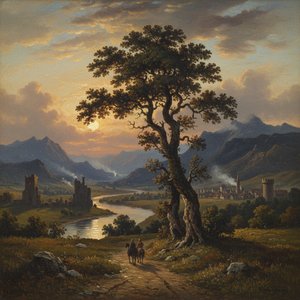
Paul Huet's "La Ferme" captures a serene rural scene with a solitary figure amidst rolling hills and distant mountains, showcasing the Barbizon School’s realism & Romantic spirit.

Biografía del artista

Paul Huet (1803-1869) fue un pintor romántico francés de paisajes, influyó en la Escuela de Barbizon e inspiró al impresionismo. Descubre sus evocadoras acuarelas y pinturas a óleo que capturan la esencia de la luz y la naturaleza.

from ·

Chapter 1

How large should it be?

Slide to change the size; the picture on the left shows the frame at its real width. The proportions of the original are kept.

Tamaño estándar
a medida
CM
INCH

Elija entre nuestros tamaños predefinidos que respetan las proporciones originales de la obra.

ancho
altura

Indique el ancho y el alto que necesite para adaptarse a su marco o pared. Al tratarse de una obra pintada a mano, si requiere un tamaño con una proporción distinta, el artista puede pintar un poco más alrededor de la imagen o recortarla ligeramente; usted elige. Le enviaremos una maqueta digital para su aprobación antes de comenzar la pintura. La imagen que se muestra en esta página no refleja el resultado real; solo la maqueta lo hace.

Chapter 2

How should it arrive?

Choose the edges of the stretched canvas

Choose your frame

Corner sample of the WhiteWrap canvas edge finish, stretched on madera maciza bars
White €1
Corner sample of the BlurSideWrap canvas edge finish, stretched on madera maciza bars
Blurside €1
Corner sample of the ExtendedWrap canvas edge finish, stretched on madera maciza bars
Extended €1
Corner sample of the P118B picture frame: poliestireno moldeado, 5 cm wide and 3 cm thick
P118B €10
Corner sample of the P118H picture frame: poliestireno moldeado, 5 cm wide and 3 cm thick
P118H €10
Corner sample of the P118W picture frame: poliestireno moldeado, 5 cm wide and 3 cm thick
P118W €10
Corner sample of the P438Z picture frame: poliestireno moldeado, 5.5 cm wide and 3.5 cm thick
P438Z €10
Corner sample of the P508JH picture frame: poliestireno moldeado, 7 cm wide and 3.5 cm thick
P508JH €12
Corner sample of the P508YH picture frame: poliestireno moldeado, 7 cm wide and 3.5 cm thick
P508YH €12
Corner sample of the P805H picture frame: poliestireno moldeado, 5 cm wide and 3.5 cm thick
P805H €10
Corner sample of the P805Z picture frame: poliestireno moldeado, 5 cm wide and 3.5 cm thick
P805Z €10
Corner sample of the P919BZ picture frame: poliestireno moldeado, 7 cm wide and 3.5 cm thick
P919BZ €10
Corner sample of the P919G picture frame: poliestireno moldeado, 7 cm wide and 3.5 cm thick
P919G €10
Corner sample of the P919XJ picture frame: poliestireno moldeado, 7 cm wide and 3.5 cm thick
P919XJ €10
Corner sample of the P959ZH picture frame: poliestireno moldeado, 5 cm wide and 3 cm thick
P959ZH €10
Corner sample of the P968JZ picture frame: poliestireno moldeado, 6 cm wide and 4 cm thick
P968JZ €12
Corner sample of the W106C picture frame: madera maciza, 5 cm wide and 3 cm thick
W106C €8
Corner sample of the W218G picture frame: madera maciza, 5 cm wide and 3 cm thick
W218G €10
Corner sample of the W218JH picture frame: madera maciza, 5 cm wide and 3 cm thick
W218JH €8
Corner sample of the W218Y picture frame: madera maciza, 5 cm wide and 3 cm thick
W218Y €10
Corner sample of the W307PJ picture frame: madera maciza, 6 cm wide and 3 cm thick
W307PJ €10
Corner sample of the W316G picture frame: madera maciza, 6 cm wide and 3 cm thick
W316G €10
Corner sample of the W316PJ picture frame: madera maciza, 6 cm wide and 3 cm thick
W316PJ €8
Corner sample of the W316Y picture frame: madera maciza, 6 cm wide and 3 cm thick
W316Y €10
Corner sample of the W398PJ picture frame: madera maciza, 5 cm wide and 3 cm thick
W398PJ €8
Corner sample of the W4111J picture frame: madera maciza, 6.5 cm wide and 3.5 cm thick
W4111J €10
Corner sample of the W500HY picture frame: madera maciza, 7 cm wide and 5 cm thick
W500HY €15
Corner sample of the W500JH picture frame: madera maciza, 7 cm wide and 5 cm thick
W500JH €15
Corner sample of the W692G picture frame: madera maciza, 8 cm wide and 4 cm thick
W692G €12
Corner sample of the W849H picture frame: madera maciza, 5 cm wide and 3 cm thick
W849H €8
Corner sample of the W940BG picture frame: madera maciza, 7.5 cm wide and 4.5 cm thick
W940BG €15
Corner sample of the W953PJ picture frame: madera maciza, 6 cm wide and 3.5 cm thick
W953PJ €8
Corner sample of the H24-GOLD picture frame: madera tallada con estuco, 10 cm wide and 6 cm thick
H24-GOLD €30
Corner sample of the H24-SILVER picture frame: madera tallada con estuco, 10 cm wide and 6 cm thick
H24-SILVER €30
Corner sample of the H36-GOLD picture frame: madera tallada con estuco, 15 cm wide and 6.5 cm thick
H36-GOLD €45
Corner sample of the H36-SILVER picture frame: madera tallada con estuco, 15 cm wide and 6.5 cm thick
H36-SILVER €45

Moulding: . Overall size with the frame: .

Chapter 3

Who paints it, and should anything change?

Examples of what can be changed: Replace face with customer photo; Add pet (e.g., replace cat with dog); Include hidden message in background; Change background landscape or elements.
After order, OriginalUniqueArt.com team will email client for instructions and provide a mockup preview

Envío a todo el mundo () en 3-4 semanas en lugar de las 5 semanas estándar. (2 noviembre). Sin comprometer la calidad.

Chapter 4

The finishing touches

A nameplate, as in a museum?

Detalles de la placa de bronce grabada

This elegant plaque features the artist's name and the title of the artwork, finely engraved for a timeless presentation.

It is made from bronze with a refined, elegant finish. The text is precisely laser-engraved for a sharp and permanent result. Measuring 9x2 cm, the plaque is compact yet easy to read. It's built to be durable and scratch-resistant, offering a professional, museum-quality look. Mounting is simple thanks to the included adhesive backing.

Detalles de la placa de acrílico transparente

The plaque includes essential engraved details such as the artist's name, the title of the artwork, the date it was created, the type of media used-like oil on canvas or watercolor-a brief description of the piece, and a QR code that links to the complete artwork information.

It is crafted from clear acrylic, offering a sleek, modern appearance. The text is UV-engraved in black to ensure strong visual contrast. With a size of 10x15 cm, it ensures optimal readability. It comes equipped with two metal hooks for secure wall mounting. The plaque is designed to be weather-resistant, making it suitable for various environments, and it includes interactive features that work seamlessly with smartphone scanning.

Detalles de la placa de acrílico negro

This elegant plaque includes engraved information such as the artist's name, the title of the artwork, the date it was created, the type of media used (like oil on canvas or watercolor), a short description of the artwork, and a QR code for quick access to more information.

The plaque itself is made from refined black acrylic with a premium finish. The text is laser-engraved in white for high contrast and readability. Its size is 10x15 cm, designed to be easy to read. It comes with two metal hooks for professional mounting. The design is sleek and fits any interior style. It is also weather-resistant and durable, with built-in digital integration for mobile compatibility.

A protective varnish?

When do you need it?

Chapter 5

Your painting, as you ordered it

LA FERME

Técnica de reproducción

Dimensiones de la reproducción

-

Selección de artistas premium

Mayor nivel de detalle, delicadeza y tiempo de producción adicional

-

Enmarcado de reproducción

-

-

Para obras de arte o reproducciones que midan más de 105 cm (aproximadamente 41 pulgadas) en cualquiera de sus lados, el marco se enviará como un kit desmontado. Este método garantiza una entrega segura y evita daños durante el transporte.

Se requiere montaje profesional: este no es un producto para hacer usted mismo (DIY).
El kit debe ser ensamblado y el lienzo tensado por un enmarcador profesional con experiencia, utilizando cola para madera (no incluida), una tenaza para tensar lienzos y sargentos para mantener los bastidores alineados mientras la cola se seca. Un montaje incorrecto o una tensión desigual del lienzo pueden dañar la obra de arte de forma permanente y no están cubiertos por nuestra garantía.

  • Se incluyen todos los listones de madera maciza, cortados con precisión según las medidas.

  • Se ensambla con los tornillos incluidos, además de cola para madera para las uniones de las esquinas, la cual no se incluye y debe ser proporcionada por su enmarcador.

  • Se requieren herramientas profesionales que no están incluidas: un alicate para tensar lienzos (tensor) y abrazaderas para mantener los bastidores alineados mientras se seca el pegamento.

Importante:
Las uniones de las esquinas requieren cola para madera, los listones deben sujetarse con prensas hasta que la cola esté completamente seca, y para tensar el lienzo en el bastidor ensamblado se requiere una pinza para tensar lienzos. Ninguno de estos elementos está incluido en el kit. Por favor, contacte con un profesional del enmarcado con experiencia antes de realizar un pedido de este tamaño.

Cartela

-

-

Barniz protector

Barniz brillante (realza los colores y protege contra la luz y la humedad)

-

Personalizar mi obra

Ejemplos de lo que se puede personalizar: sustituir el rostro por una foto del cliente; añadir una mascota (por ejemplo, cambiar un gato por un perro); incluir un mensaje oculto en el fondo; cambiar el paisaje o los elementos del fondo.

-

Envío urgente

Envío a todo el mundo () en 3 o 4 semanas, en lugar de las 5 semanas habituales. (2 noviembre). Sin comprometer la calidad.

-

Envío urgente

Envío internacional () en 5 semanas. (9 noviembre).

Incluido

Precio total final

€ 267

Precio total € 267

La opción de vidrio solo está disponible en tamaños inferiores a 110 cm.

Included with every order

  • Envío exprés gratuito a todo el mundo
  • Lienzo de lino de alta calidad
  • Seguro de envío total
  • Garantía de reembolso de aranceles aduaneros
  • Garantía de fidelidad cromática exacta
  • Política de devolución de 100 días (solo por defectos)
  • Garantía de devolución del 100% del dinero
  • Descuento por cantidad

A Rustic Symphony: Paul Huet’s “La Ferme”

Paul Huet's "La Ferme," painted in 1856, isn’t merely a depiction of a rural landscape; it’s an immersion into the quiet dignity and profound connection between humanity and nature. This oil on canvas, now housed within the Louvre Museum, captures a fleeting moment in the French countryside – a solitary figure traversing a winding path towards distant, hazy mountains. Huet, a pivotal yet often understated figure of the Barbizon School and a significant influence on the nascent Impressionists, masterfully employed light, color, and texture to evoke not just what he saw, but how it *felt* to be present in that space.

The painting’s strength lies in its deliberate rejection of academic formality. Huet, deeply influenced by the English landscape painters like Constable and Turner, moved away from the rigid structures and idealized forms prevalent in earlier French art. Instead, he embraced a more direct observation of nature, prioritizing atmospheric perspective and the subtle shifts in light and shadow. This commitment to truthfulness is immediately apparent; the scene feels utterly authentic, as if captured during a spontaneous moment of contemplation.

Composition and Color – A Dance of Earth Tones

The composition of “La Ferme” is remarkably balanced, guiding the viewer’s eye along the meandering path that dominates the foreground. The solitary figure, positioned slightly off-center, acts as an anchor, drawing us into the scene's quiet drama. To the right, a modest farmhouse – likely a symbol of rural life and sustenance – provides a grounding element, partially obscured by the lush vegetation. The distant mountains, rendered in delicate blues and purples, create a sense of depth and vastness, while the trees and shrubs in the midground offer a tactile richness.

Huet’s color palette is deliberately restrained, dominated by earthy tones – browns, greens, ochres, and muted yellows. These colors aren't vibrant or saturated; rather, they are subtly blended to create a sense of atmospheric depth and realism. The diffused lighting, characteristic of the Barbizon School, further enhances this effect, softening edges and lending an air of tranquility to the scene. Notice how the light catches on the foliage, creating subtle variations in tone that suggest texture and volume.

Technique and Texture – A Painterly Approach

Huet’s technique is distinctly painterly, characterized by visible brushstrokes and a layered approach to application. He didn't strive for smooth, blended surfaces; instead, he embraced the materiality of paint itself, allowing the individual strokes to contribute to the overall image. This creates a sense of immediacy and spontaneity, as if the painting were created in a single, uninterrupted session. The texture is particularly evident in the depiction of the trees – rough bark, uneven branches, and the suggestion of foliage all contribute to a remarkably tactile quality.

The use of atmospheric perspective—the gradual fading of detail and color with distance—is expertly executed. The mountains in the background appear paler and less distinct than those closer to the viewer, creating an illusion of depth and space. This technique, borrowed from the Old Masters, is crucial to the painting’s overall effect, lending it a sense of realism and grandeur.

Symbolism and Emotional Resonance

“La Ferme” transcends a simple landscape depiction; it carries profound symbolic weight. The solitary figure represents humanity's connection to nature, a theme central to Romantic art. The path itself can be interpreted as a journey – both literal and metaphorical – suggesting a search for meaning or perhaps simply the quiet pleasure of being present in the natural world. The farmhouse symbolizes stability and community, while the distant mountains evoke a sense of aspiration and possibility.

Ultimately, “La Ferme” is a painting that invites contemplation. It’s a reminder of the beauty and serenity to be found in the simple things – the warmth of the sun, the scent of the earth, and the quiet dignity of rural life. Huet's masterful use of light, color, and texture creates an emotional resonance that lingers long after the viewer has turned away, offering a glimpse into a timeless connection between humanity and the natural world.

Preguntas y respuestas

¿A qué se debe la situación de los derechos de autor de "LA FERME" de Paul Huet?

"LA FERME" de Paul Huet es de en el dominio público: sus derechos de autor han expirado. Los términos de derechos de autor se calculan a partir del fallecimiento del artista, y Paul Huet murió en 1869.

¿Se encuentra "LA FERME" de Paul Huet en el país de origen del artista?

Sí, la obra se encuentra en el país de origen del artista. Paul Huet nació en Francia, y el original de "LA FERME" se encuentra en un museo de Francia.

¿Qué uso y espacio se recomiendan para "LA FERME" de Paul Huet?

Se recomienda el uso de (Harmony) y su ubicación en (Living Room) para "LA FERME" de Paul Huet.

More about this painting

Ver en contexto Vista previa en RA Cambiar a impresiones Cambiar a imagen digital Enviar
Detalles Guía Añadir a favoritos Descargar Similares Radiografía Presentación de diapositivas Q&A Estadísticas

In numbers

  • 29frames to choose from
  • standard sizes, in its own proportions
  • 5weeks to paint and deliver it
Paul Huet

Paul Huet

1803 - 1869, Francia

Quick facts about Paul Huet

  • Artistic Movement Or Style: Paisaje Romántico
  • Artists Or Movements Influenced By This Artist:
    • Barbizon
    • Impresionismo
  • Artists Who Influenced This Artist:
    • Bonington
    • Constable
  • Date Of Birth: 1803-10-03
  • Date Of Death: 1869-01-08
  • Full Name: Paul Huet
  • Nationality: Francés
  • Notable Artworks:
    • Villa Roma
    • Efecto de la tarde
  • Place Of Birth: París, Francia

Biografía del artista

Paul Huet: Un Pionero del Paisaje Romántico

Paul Huet (1803-1869) se erige como una figura clave, aunque a menudo subestimada, en el arte francés del siglo XIX – un pintor de paisajes que influyó profundamente tanto en la Escuela de Barbizon como en los primeros impresionistas. Nacido en París, en medio de un clima artístico floreciente, el viaje de Huet fue uno de observación incesante, una profunda conexión con la naturaleza y una deliberada ruptura con las tendencias neoclásicas predominantes. Su obra no era simplemente una representación del paisaje; era un intento de capturar la esencia misma de la luz, la atmósfera y la belleza efímera del mundo natural, una búsqueda que consolidó su lugar como un innovador fundamental en la pintura francesa.

Influencias Tempranas y Formación Artística

El desarrollo artístico de Huet comenzó con una base sólida en técnicas tradicionales. Recibió instrucción temprana de Jean-Julien Deltil, antiguo alumno de Jacques-Louis David, seguido de estudios en la École des Beaux-Arts bajo Pierre Guérin y Antoine-Jean Gros. Crucialmente, su camino se cruzó con el de Richard Parkes Bonington, un estudiante compañero de Gros. Este encuentro resultó transformador. El enfoque de Bonington en la pintura al aire libre – trabajando directamente desde la naturaleza – cautivó a Huet, llevándolo a abandonar la rigidez formal del Neoclasicismo y abrazar un estilo más espontáneo y observacional. Las pinturas de paisajes británicas exhibidas en el Salón de 1824 sirvieron como una revelación; la capacidad de John Constable para representar la frescura y la belleza exuberante sin recurrir a sombras oscuras o artificialidad resonó profundamente con Huet, dando forma a su propia filosofía artística. Él describió las obras de Constable como “quizás por primera vez que uno sintió la frescura, que vio una naturaleza verde y luxuriante, sin oscuridad, cruditud o manierismo”.

La Escuela de Barbizon y los Maestros Holandeses

El estilo de Huet evolucionó a través de una fascinante síntesis de influencias. Inicialmente, imitió la técnica del aguafuerte de Bonington, pero sus sensibilidades artísticas se extendieron mucho más allá de mera imitación. Sin embargo, su interés se dirigió hacia los maestros holandeses como Jacob van Ruysdael y Meindert Hobbema, particularmente por su maestría en el uso de la luz y el color para transmitir ambiente y emoción. Esta admiración por los maestros antiguos influyó en su propio enfoque, dando lugar a obras que poseían una dignidad tranquila y un notable realismo – no fotográfico, sino profundamente sentido. Durante este período, su obra se caracterizó por una ruptura deliberada con las convenciones académicas, favoreciendo pinceladas sueltas, colores vibrantes y un énfasis en capturar la impresión inmediata de la naturaleza.

Debut en el Salón e Involucramiento Político

La carrera artística de Huet ganó impulso con su debut en el Salón de 1827, donde una de sus ocho pinturas presentadas fue aceptada. Continuó exhibiendo regularmente en el Salón a lo largo de la década de 1830 y 40, construyendo gradualmente una reputación entre críticos y coleccionistas. Eugène Delacroix, otro artista y amigo cercano, defendió su obra, reconociendo sus cualidades únicas. Étienne-Jean Delécluze ofreció una perspectiva más crítica, considerándolo demasiado devoto de Constable y Turner, a veces descuidando los principios fundamentales del diseño. Más allá de sus esfuerzos artísticos, Huet fue un participante activo en la Revolución de Julio de 1830 y posteriormente involucrado en la política republicana, reflejando el clima social y político turbulento de Francia en ese momento. Su compromiso con estas ideales le valió reconocimiento del Rey Luis Felipe, quien le otorgó un par de vajillas de Sèvres en 1844, y una medalla de oro en el Salón de 1848.

Legado e Importancia Artística

El impacto de Paul Huet en la pintura de paisajes francesa es considerable. Su innovador uso del aguafuerte – no solo para bocetos sino como medio principal para obras terminadas – demostró su potencial para lograr una profundidad y riqueza notables, a menudo similares a las de las pinturas al óleo. Fue un pionero en la pintura al aire libre, priorizando la observación directa de la naturaleza sobre el trabajo en estudio. Más importante aún, la insistencia de Huet en capturar los efectos fugaces de la luz y la atmósfera influyó profundamente en la Escuela de Barbizon y más tarde en los impresionistas. Artistas como Théodore Rousseau y Jean-François Millet, que buscaban pintar directamente desde la naturaleza con un enfoque en la vida rural y los paisajes, deben una deuda a su enfoque pionero. Su obra es un testimonio del poder de la observación, la belleza de la simplicidad y el atractivo perdurable de capturar la esencia del mundo natural. Murió en París en 1869, dejando atrás un cuerpo sustancial de obras que siguen cautivando a los espectadores con su atmósfera evocadora y su profunda conexión con la naturaleza.

Datos clave

  • Artist: Paul Huet
  • Movement: Barbizon School
  • Subject or theme: Rural landscape
  • Dimensions: 31.8 x 47cm
  • Notable elements: Atmospheric perspective
  • Year: 1856

Test de conocimientos artísticos

Cada pregunta tiene una única respuesta correcta.

Pregunta 1:
What is the primary subject matter depicted in Paul Huet’s ‘LA FERME’?
Pregunta 2:
The painting ‘LA FERME’ is primarily associated with which artistic movement?
Pregunta 3:
What technique does Paul Huet employ to create a sense of depth in ‘LA FERME’?
Pregunta 4:
According to the description, what is the overall mood or feeling conveyed by ‘LA FERME’?
Pregunta 5:
Paul Huet was a significant figure in French art, particularly known for his influence on which later artistic movements?