 Vista previa
 Compartir
 Compartir
 Ver detalles

 Descargar
 Ver similares
 Radiografía
 Presentación de diapositivas
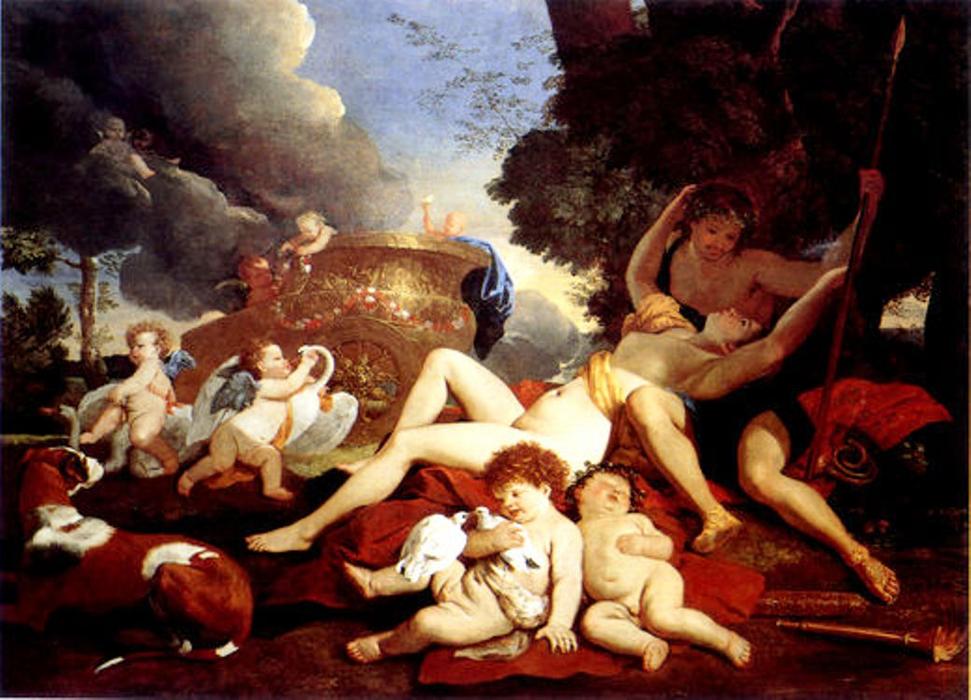
Venus and Adonis
 Oil On Canvas
- WallArt
- Classical Baroque
 1624
1624- Early Modern
 99.0 x 134.0 cm
 Leer más
Reproducción al óleo hecha a mano
Óleo sobre lienzo pintado a mano en el tamaño y marco de su elección, realizado por encargo por nuestros artistas. ( Pedir impresión Comprar descarga)




P118B $10

P118H $10

P118W $10

P438Z $10

P508JH $12

P508YH $12

P805H $10

P805Z $10

P919BZ $10

P919G $10

P919XJ $10

P959ZH $10

P968JZ $12

W106C $8

W218G $10

W218JH $8

W218Y $10

W307PJ $10

W316G $10

W316PJ $8

W316Y $10

W398PJ $8

W4111J $10

W500HY $15

W500JH $15

W692G $12

W849H $8

W940BG $15

W953PJ $8




Elija entre nuestros tamaños predefinidos que respetan las proporciones originales de la obra.

Puede ingresar sus propias dimensiones para adaptarse a un marco o espacio específico. Si el tamaño seleccionado no coincide con las proporciones de la imagen original, recortaremos la obra o extenderemos la pintura con elementos adicionales pintados a mano. Se le enviará una maqueta digital para su aprobación antes de comenzar la producción.
Tenga en cuenta que la vista previa en pantalla no refleja el recorte o la extensión reales. Solo la maqueta mostrará con precisión la composición final.
Si bien existen tamaños personalizados, recomendamos seleccionar una dimensión de la lista predefinida para preservar las proporciones originales.
Tras realizar el pedido, el equipo de OriginalUniqueArt.com enviará un correo electrónico al cliente para solicitar instrucciones y proporcionarle una vista previa del boceto.
Envío a todo el mundo () en 3-4 semanas en lugar de las 5 semanas estándar. (21 agosto). Sin comprometer la calidad.

Envío exprés gratuito a todo el mundo

Lienzo de lino de alta calidad

Seguro de envío completo

Garantía de reembolso de aranceles aduaneros

Garantía de fidelidad cromática exacta

Política de devolución de 60 días (solo por defectos)

Garantía de devolución del 100% del dinero

Oferta por volumen
 La opción de vidrio solo está disponible en tamaños inferiores a 110 cm.

Venus and Adonis
Técnica de reproducción
Tamaño de la reproducción
-


Precio total
$ 300
Descripción de la obra
A Symphony of Classical Idealism
In the grand tapestry of the French Baroque, few works capture the delicate tension between eternal beauty and the fleeting nature of life as poignantly as Nicolas Poussin’s Venus and Adonis. Completed in 1624, this monumental canvas serves as a profound meditation on desire and mortality, bridging the gap between the humanist ideals of the Italian Renaissance and the burgeoning grandeur of the French classical tradition. As one gazes upon the expansive composition, measuring an impressive 99 x 134 cm, the viewer is immediately transported to a mythological realm where every brushstroke serves a narrative purpose. The painting does not merely depict a scene; it orchestrates a drama of the soul, inviting collectors and art enthusiasts alike to contemplate the heavy weight of destiny that hangs over its central figures.
At the heart of this luminous tableau lies the tender, almost desperate embrace between Venus, the goddess of love, and her mortal lover, Adonis. Bathed in a soft, celestial light reminiscent of Raphael’s most idealized works, the pair rests upon a verdant landscape that feels both intimate and infinite. Yet, beneath this surface of romantic tranquility, a subtle sense of foreboding permeates the air. Poussin masterfully weaves a web of symbolism throughout the scene: while the gods Zephyr, Boreas, and Chloris attempt to pull Adonis back toward the joys of springtime and the hunt, a serpent coils menacingly near his feet. This small but potent detail serves as a chilling memento mori, representing the inevitable intrusion of death into the sanctuary of passion. The presence of dogs, horses, and birds further ennobles the landscape, grounding the divine drama in the primal rhythms of the natural world.
Mastery of Light and Illusion
Technically, Venus and Adonis is a triumph of atmospheric perspective and illusionistic painting. Poussin moves beyond the rigid linear boundaries of his predecessors, instead employing subtle gradations of color and tonal shifts to create an ethereal sense of depth. This technique allows the distant horizons to recede into a soft, hazy blue, giving the landscape a vast, breathing quality that enhances the emotional scale of the narrative. For the interior designer or connoisseur, this mastery of light offers a unique opportunity; the painting possesses a luminous palette that can breathe life and sophisticated energy into a room, acting as a focal point that commands attention through its quiet intensity rather than mere spectacle.
The emotional impact of the work lies in its ability to balance the sensuous with the intellectual. While the initial impression is one of lush, painterly beauty—a legacy of Poussin's early encounters with Venetian masters like Titian—the underlying structure is one of rigorous order and classical poise. It is a piece that rewards prolonged study, revealing new layers of meaning in the interplay between the figures and their environment. Whether displayed as a centerpiece in a formal gallery or as a sophisticated accent in a curated living space, this reproduction of Poussin’s masterpiece offers a timeless connection to the heights of human creativity, making it an incomparable acquisition for those who seek art that speaks to both the eye and the intellect.
Biografía del artista
vida temprana y formación
nicolás poussin, nacido en junio de 1594, fue la quintaesencia de la pintura barroca francesa clásica. A pesar de pasar la mayor parte de su carrera en Roma, permaneció profundamente arraigado en las tradiciones artísticas francesas. Sus primeros días como pintor estuvieron envueltos en incertidumbre, pero ya en 1612 había iniciado estudios formales en París, absorbiendo influencias de artistas menos conocidos antes de ser atraído a Roma en 1624.estilo artístico e influencias
El estilo estético de Poussin, celebrado por su composición coherente y priorización de la linealidad, sentó un precedente que influyó en maestros como jacques-luís david y paul cézanne bien hasta el siglo XX. Su estilo distintivo se cristalizó a través de obras maestras como la muerte de germanicus y su seminal serie de los siete sacramentos.obras notables y museos
- nicolás poussin: autorretrato 1 (barroco, óleo), un testimonio de su maestría en el medio.
- bacanal frente a un templo (74 x 101 cm, Legión de Honor, San Francisco, Estados Unidos, óleo sobre lienzo), que muestra su capacidad para equilibrar la composición y la narrativa.
- el musée des beaux-arts de carcassonne, un destino imprescindible para los amantes del arte, que alberga una impresionante colección de pinturas occidentales desde el siglo XVII hasta el XX.
legado e impacto
La lealtad de Poussin permaneció en Roma, donde finalmente se centró en incorporar paisajes expansivos a su arte. Su madurez como artista está encapsulada en obras como Orión ciego buscando el sol y las estaciones, que anunciaron una era de composición rigurosa impregnada de la belleza serena del mundo natural.explore más con OriginalUniqueArt.com
descubra las obras maestras del musée france e inicie su viaje al mundo de la pintura barroca francesa con musée picasso, musée des beaux-arts de carcassonne y otros museos notables. Visite la página de nicolás poussin en OriginalUniqueArt.com para explorar más de sus obras y aprender sobre el contexto en el que fueron creadas.referencias

Nicolás Poussin
1594 - 1665 , Francia
Datos clave
- Artistas Influenciados:
- Jacques-Louis David
- Paul Cézanne
- Artistas Que Influyeron:
- Rafael
- Tiziano
- Fecha De Muerte: 1665
- Fecha De Nacimiento: Junio de 1594
- Lugar De Nacimiento: Le Havre, Francia
- Movimiento Artístico: Barroco clásico
- Nacionalidad: Francés
- Nombre Completo: Nicolás Poussin
- Obras Notables:
- La Muerte de Germanicus
- Los Siete Sacramentos
- Una Carretera Romana
- Orion Ciego Buscando el Sol
- Las Estaciones
Artículos relacionados

Baroque Classicism: The Grandeur of Order and Drama in 17th-Century Art History
Explore the profound elegance of Baroque Classicism. Discover how 17th-century masters synthesized dramatic emotion with classical order through the lens of the Counter-Reformation and the works of legends like Carlo Maratta and Andrea Sacchi.
Nicolas Poussin: Classicism, Allegory & Order in 17th-Century French Painting
Explore the life & work of Nicolas Poussin, a master of French Classicism. Discover his allegorical paintings, Roman influences, and enduring impact on art history. Expert analysis & insights.
Baroque Classicism: Reconciling Drama & Order in 17th-Century Art
Explore the captivating world of Baroque Classicism! Discover its history, key artists like Caravaggio & Rubens, and defining characteristics. Expert insights & high-quality reproductions at OriginalUniqueArt.
El Legado Perenne del Clasicismo: Principios Fundamentales, Evolución e Influencia en el Arte Occidental
Descubre la historia del arte clásico occidental: desde sus orígenes en Grecia y Roma hasta su influencia en el Renacimiento y las corrientes contemporáneas. Análisis experto, artistas clave y obras maestras imperdibles.
Barroco en su Esplendor: 10 Obras Maestras que Definieron una Época | OriginalUniqueArt
Descubre las 10 obras maestras del Barroco que revolucionaron el arte. Caravaggio, Rembrandt y Velázquez te esperan en OriginalUniqueArt. Reproducciones de alta calidad para decorar tu hogar con la grandeza de este estilo. ¡Explora la colección online!