Vista previa
 Compartir
 Compartir
 Ver detalles
 Guía
Guía

 Descargar
 Ver artículos similares
 Radiografía
 Presentación de diapositivas
 Estadísticas
El Triunfo de Neptuno
 Óleo sobre lienzo
- Arte de pared
- Baroque
 1634
1634- Renacimiento
 114.0 x 146.0 cm
 Philadelphia Art Museum
 Leer más
Giclée / Impresión de arte
Impresiones giclée o en lienzo de calidad de museo con producción rápida y opciones de acabado flexibles. ( Encargar reproducción pintada a mano Ver versión en imagen digital)




P118B $10

P118H $10

P118W $10

P438Z $10

P508JH $12

P508YH $12

P805H $10

P805Z $10

P919BZ $10

P919G $10

P919XJ $10

P959ZH $10

P968JZ $12

W106C $8

W218G $10

W218JH $8

W218Y $10

W307PJ $10

W316G $10

W316PJ $8

W316Y $10

W398PJ $8

W4111J $10

W500HY $15

W500JH $15

W692G $12

W849H $8

W940BG $15

W953PJ $8




Elija entre nuestros tamaños predefinidos que respetan las proporciones originales de la obra.

Puede introducir sus propias dimensiones para adaptarse a un marco o espacio específico. Si el tamaño seleccionado no coincide con las proporciones de la imagen original, recortaremos la obra de arte o extenderemos la imagen con un borde con efecto espejo o de color sólido. Se enviará una maqueta digital para su aprobación antes de que comience la producción.
Tenga en cuenta que la vista previa en pantalla no refleja el recorte o la extensión real. Solo la maqueta mostrará con precisión la composición final.
Aunque existen tamaños personalizados, recomendamos seleccionar una dimensión de la lista predefinida para preservar las proporciones originales.
Envío a todo el mundo () en 2 semanas en lugar de las 4/5 semanas estándar. (25 septiembre)

Envío exprés gratuito a todo el mundo

Lienzo de lino de alta calidad

Seguro de envío completo

Garantía de reembolso de impuestos aduaneros

Garantía de fidelidad cromática exacta

Política de devolución de 100 días (solo por defectos)

Garantía de devolución del 100% del dinero

Oferta por volumen
 La opción de vidrio solo está disponible en tamaños inferiores a 110 cm.

El Triunfo de Neptuno
Giclée / Impresión de arte
Tamaño de la reproducción
-


Precio total
$ 80
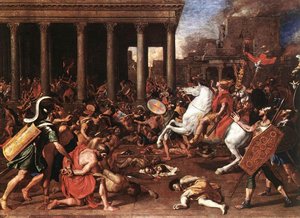
The Triumph of Neptune
Nicolas Poussin’s The Triumph of Neptune is a captivating oil on canvas painting that showcases the artist’s mastery in depicting mythological scenes. Created in 1634, this large-scale artwork measures 114 x 146 cm and is currently housed at the Philadelphia Museum of Art in Philadelphia, United States.
This monumental composition transports viewers to a dramatic seascape dominated by the turbulent sea and punctuated by towering cliffs. At its heart lies a serene tableau featuring Venus, Amphitrite, and Tritons—figures embodying love, marriage, and dominion over the ocean—engaged in a celebration of Neptune’s victory.
Composition and Symbolism
Poussin meticulously crafted this scene with an unwavering dedication to classical principles. The pyramidal structure lends stability and grandeur to the composition, guiding the eye upwards towards the celestial realm. Notice how Venus stands at the apex, radiating beauty and grace amidst the swirling drapery that underscores her divine status. Amphitrite, seated upon a scallop shell boat—a symbol of feminine purity and fertility—represents Neptune’s consort, reflecting his benevolent rule.
The Tritons, positioned on either side of the central figures, trumpet their approval with stylized horns, emphasizing the triumphant nature of the event. Scattered throughout the painting are doves and roses—traditional emblems of peace and love—further enriching its symbolic tapestry. The artist’s deliberate use of light and shadow enhances the dramatic effect, creating a palpable sense of movement and conveying the sublime grandeur of Neptune's triumph.
Influences and Style
Poussin’s artistic vision was profoundly shaped by the legacy of Raphael, whose fresco Triumph of Galatea in the Villa Farnesina served as a cornerstone for Poussin’s stylistic development. Like Raphael, Poussin embraced oil on canvas—a technique favored during this period—allowing for nuanced tonal gradations and exceptional detail. The painting exemplifies the Neoclassical style's emphasis on clarity, restraint, and idealized beauty.
Furthermore, Poussin drew inspiration from ancient sculptures, particularly those depicting mythological figures. He meticulously studied classical forms and proportions, striving to emulate their elegance and harmony. This meticulous attention to detail—evident in the drapery folds, the musculature of Neptune’s torso, and the expressive faces of the characters—underscores Poussin's commitment to reviving the ideals of antiquity.
Artistic Significance
“The Triumph of Neptune” stands as a testament to Poussin’s unparalleled ability to synthesize sculpture, painting, and architecture into a cohesive visual narrative. Scholars have debated the precise interpretation of Venus’s role in this scene—some viewing her as representing Aphrodite, while others suggesting she embodies Amphitrite—reflecting the multifaceted nature of mythological symbolism.
More broadly, the painting captures the spirit of its time—a period marked by intellectual curiosity and a renewed interest in classical culture. It exemplifies the Neoclassical movement’s aspiration to elevate art beyond mere ornamentation, aiming instead for moral instruction and aesthetic contemplation. “The Triumph of Neptune” continues to inspire artists and viewers alike, cementing Poussin's place as one of the most influential painters of his era.
Reproduction and Availability
For art enthusiasts who wish to experience the splendor of this masterpiece firsthand, Nicolas Poussin: The Triumph of Neptune is available at OriginalUniqueArt. Our team of skilled artists creates handmade oil on canvas reproductions that capture the essence and spirit of the original work.
Each reproduction adheres to exacting standards, meticulously replicating the painting’s colors, textures, and compositional intricacies. Bringing this iconic artwork into your home allows you to appreciate its beauty and grandeur for generations to come.
Biografía del artista
vida temprana y formación
nicolás poussin, nacido en junio de 1594, fue la quintaesencia de la pintura barroca francesa clásica. A pesar de pasar la mayor parte de su carrera en Roma, permaneció profundamente arraigado en las tradiciones artísticas francesas. Sus primeros días como pintor estuvieron envueltos en incertidumbre, pero ya en 1612 había iniciado estudios formales en París, absorbiendo influencias de artistas menos conocidos antes de ser atraído a Roma en 1624.estilo artístico e influencias
El estilo estético de Poussin, celebrado por su composición coherente y priorización de la linealidad, sentó un precedente que influyó en maestros como jacques-luís david y paul cézanne bien hasta el siglo XX. Su estilo distintivo se cristalizó a través de obras maestras como la muerte de germanicus y su seminal serie de los siete sacramentos.obras notables y museos
- nicolás poussin: autorretrato 1 (barroco, óleo), un testimonio de su maestría en el medio.
- bacanal frente a un templo (74 x 101 cm, Legión de Honor, San Francisco, Estados Unidos, óleo sobre lienzo), que muestra su capacidad para equilibrar la composición y la narrativa.
- el musée des beaux-arts de carcassonne, un destino imprescindible para los amantes del arte, que alberga una impresionante colección de pinturas occidentales desde el siglo XVII hasta el XX.
legado e impacto
La lealtad de Poussin permaneció en Roma, donde finalmente se centró en incorporar paisajes expansivos a su arte. Su madurez como artista está encapsulada en obras como Orión ciego buscando el sol y las estaciones, que anunciaron una era de composición rigurosa impregnada de la belleza serena del mundo natural.explore más con OriginalUniqueArt.com
descubra las obras maestras del musée france e inicie su viaje al mundo de la pintura barroca francesa con musée picasso, musée des beaux-arts de carcassonne y otros museos notables. Visite la página de nicolás poussin en OriginalUniqueArt.com para explorar más de sus obras y aprender sobre el contexto en el que fueron creadas.referencias

Nicolás Poussin
1594 - 1665 , Francia
Datos clave
- Artistas Influenciados:
- Jacques-Louis David
- Paul Cézanne
- Artistas Que Influyeron:
- Rafael
- Tiziano
- Fecha De Muerte: 1665
- Fecha De Nacimiento: Junio de 1594
- Lugar De Nacimiento: Le Havre, Francia
- Movimiento Artístico: Barroco clásico
- Nacionalidad: Francés
- Nombre Completo: Nicolás Poussin
- Obras Notables:
- La Muerte de Germanicus
- Los Siete Sacramentos
- Una Carretera Romana
- Orion Ciego Buscando el Sol
- Las Estaciones
Artículos relacionados
Echoes of Olympus: Mythological Narratives in Western Art Through the Ages
Explore the captivating history of mythological narratives in Western art! From ancient Greece to modern masterpieces, discover iconic artworks & symbolism. Expert analysis and high-quality reproductions at OriginalUniqueArt.
El Legado Perenne del Clasicismo: Principios Fundamentales, Evolución e Influencia en el Arte Occidental
Descubre la historia del arte clásico occidental: desde sus orígenes en Grecia y Roma hasta su influencia en el Renacimiento y las corrientes contemporáneas. Análisis experto, artistas clave y obras maestras imperdibles.
Barroco en su Esplendor: 10 Obras Maestras que Definieron una Época | OriginalUniqueArt
Descubre las 10 obras maestras del Barroco que revolucionaron el arte. Caravaggio, Rembrandt y Velázquez te esperan en OriginalUniqueArt. Reproducciones de alta calidad para decorar tu hogar con la grandeza de este estilo. ¡Explora la colección online!
Nicolas Poussin: Classicism, Allegory & Order in 17th-Century French Painting
Explore the life & work of Nicolas Poussin, a master of French Classicism. Discover his allegorical paintings, Roman influences, and enduring impact on art history. Expert analysis & insights.
Baroque Classicism: Reconciling Drama & Order in 17th-Century Art
Explore the captivating world of Baroque Classicism! Discover its history, key artists like Caravaggio & Rubens, and defining characteristics. Expert insights & high-quality reproductions at OriginalUniqueArt.