

 Vista previa
 Compartir
 Compartir
 Ver detalles
 Guía
Guía

 Descargar
 Ver artículos similares
 Radiografía
 Presentación de diapositivas
 Estadísticas
A Favourite Custom


 Leer más
Reproducción al óleo hecha a mano
Óleo sobre lienzo pintado a mano en el tamaño y marco de su elección, realizado por encargo por nuestros artistas. ( Cambiar a formato impreso Ver versión en imagen digital)




P118B $10

P118H $10

P118W $10

P438Z $10

P508JH $12

P508YH $12

P805H $10

P805Z $10

P919BZ $10

P919G $10

P919XJ $10

P959ZH $10

P968JZ $12

W106C $8

W218G $10

W218JH $8

W218Y $10

W307PJ $10

W316G $10

W316PJ $8

W316Y $10

W398PJ $8

W4111J $10

W500HY $15

W500JH $15

W692G $12

W849H $8

W940BG $15

W953PJ $8




Elija entre nuestros tamaños predefinidos que respetan las proporciones originales de la obra.

Puede ingresar sus propias dimensiones para adaptarse a un marco o espacio específico. Si el tamaño seleccionado no coincide con las proporciones de la imagen original, recortaremos la obra o extenderemos la pintura con elementos adicionales pintados a mano. Se le enviará una maqueta digital para su aprobación antes de comenzar la producción.
Tenga en cuenta que la vista previa en pantalla no refleja el recorte o la extensión reales. Solo la maqueta mostrará con precisión la composición final.
Si bien existen tamaños personalizados, recomendamos seleccionar una dimensión de la lista predefinida para preservar las proporciones originales.
Tras realizar el pedido, el equipo de OriginalUniqueArt.com enviará un correo electrónico al cliente para solicitar instrucciones y proporcionarle una vista previa del boceto.
Envío a todo el mundo () en 3-4 semanas en lugar de las 5 semanas estándar. (26 septiembre). Sin comprometer la calidad.

Envío exprés gratuito a todo el mundo

Lienzo de lino de alta calidad

Seguro de envío completo

Garantía de reembolso de impuestos aduaneros

Garantía de fidelidad cromática exacta

Política de devolución de 100 días (solo por defectos)

Garantía de devolución del 100% del dinero

Oferta por volumen
 La opción de vidrio solo está disponible en tamaños inferiores a 110 cm.

A Favourite Custom
Técnica de reproducción
Tamaño de la reproducción
-


Precio total
$ 450
A Glimpse of Roman Luxury: Alma-Tadema’s ‘A Favourite Custom’
Sir Lawrence Alma-Tadema's “A Favourite Custom,” painted in 1909, isn’t merely a depiction of an ancient bathhouse; it’s a meticulously crafted window into the opulent leisure life of Roman aristocracy. This oil on wood masterpiece transports us to a world of serene indulgence, where marble gleams under diffused light and the air hums with quiet conversation. Alma-Tadema, a master of Victorian academic art, achieved an astonishing level of realism, painstakingly recreating the textures and details of a bygone era – from the smooth coolness of the bathing pools to the delicate folds of the women’s drapery.
The scene unfolds across multiple levels, creating a dynamic composition that draws the eye. In the foreground, two nude figures—a striking contrast to the formal attire of the upper-class Romans depicted further back—are immersed in a pool, their poses radiating an effortless grace and tranquility. These women aren’t presented with overt sensuality; rather, they embody an idealized beauty, reflecting Alma-Tadema's fascination with classical forms and his deliberate avoidance of overtly erotic subject matter. The middle ground features steps leading to elevated platforms where other figures engage in various activities: reclining on cushions, exchanging pleasantries, and tenderly holding a baby – all contributing to the sense of a carefully orchestrated social gathering.
The Art of Academic Detail
Alma-Tadema’s artistic approach is deeply rooted in the academic tradition. He spent years studying ancient Roman architecture and sculpture, meticulously researching details like tile patterns, furniture styles, and even the way light would fall on marble surfaces. This dedication to accuracy is evident throughout the painting; every brushstroke contributes to a remarkably convincing illusion of reality. The artist employed a layering technique—glazes applied in thin, translucent layers—to achieve subtle color gradations and a luminous quality that seems to emanate from within the canvas. The use of warm, earthy tones – beiges, creams, and pale golds – dominates the palette, reflecting the cool, reflective surfaces of the bathhouse and creating an atmosphere of understated luxury.
Symbolism and Emotional Resonance
Beyond its technical brilliance, “A Favourite Custom” is rich in symbolic meaning. The scene represents a carefully constructed world of leisure and refinement—a deliberate contrast to the often-turbulent realities of Roman society. The bathhouse itself served as a social hub, a place for relaxation, conversation, and the maintenance of personal hygiene. The inclusion of the infants highlights the importance of family within this elite circle. Furthermore, Alma-Tadema’s choice of depicting nude figures in a classical context subtly references ancient ideals of beauty and virtue. The overall effect is one of serene contemplation—a moment captured in time that evokes feelings of tranquility, sophistication, and a wistful longing for a lost era.
A Victorian Masterpiece – Perfect for Interior Design
“A Favourite Custom” remains a powerfully evocative work of art, offering a captivating glimpse into the world of Roman aristocracy. Its meticulous detail, harmonious color palette, and serene subject matter make it an ideal choice for interior design enthusiasts seeking to infuse their spaces with a sense of timeless elegance and historical sophistication. Reproductions of this stunning painting are available in a variety of sizes and materials, allowing you to bring this exquisite scene into your home or office. Consider how the painting’s muted tones and classical composition would complement a room decorated in a neoclassical or Roman-inspired style – creating a truly immersive and luxurious atmosphere.
Biografía del artista
Sir Lawrence Alma-Tadema (1836–1912): The Architect of Atmospheric Detail
Lawrence Alma Tadema, later Lawrence Alma Tadema, was born in Dronryp, Friesland, Netherlands, on January 8, 1836. His father, Pieter Jiltes Tadema, a village notary, had three sons by his first marriage, and his mother, Hinke Dirks Brouwer, was the half sister of Pieter’s first wife. The Tadema family moved to Leeuwarden in 1838 where Pieter's position as a notary would be more lucrative. His father died when Laurens was four, leaving his mother with five children: Laurens, his sister, and three boys from his father’s first marriage. Hinke Brouwer had artistic leanings, and decided that drawing lessons should be incorporated into the children’s education. He received his first art training with a local drawing master hired to teach his older half-brothers. It was intended that Laurens would become a lawyer; but in 1851 he suffered a physical and mental breakdown. Diagnosed as consumptive; given only a short time to live, he was allowed to spend his remaining days at his leisure, drawing and painting. Left to his own devices he regained his health and decided to pursue a career as an artist. In 1852 he entered The Royal Academy of Antwerp where he studied early Dutch and Flemish masters, alongside absorbing the meticulous detail demanded by historical accuracy. During Laurens’ four years as a registered student at the Academy, he won several respectable awards. Before leaving school, towards the end of 1855, he became assistant to the painter Louis Jan de Taeye, whose courses in history and historical costume he had greatly enjoyed at the Academy. De Taeye introduced him to books that influenced his desire to portray Merovingian subjects early in his career. He was encouraged to depict historic accuracy in his paintings, a trait for which the artist became known. Laurens Tadema took this criticism very seriously, and it led him to improve his technique and to become the world’s foremost painter of marble and variegated granite.- Early Life: Alma-Tadema’s childhood was marked by tragedy when his father died prematurely, leaving his mother with five children. Despite facing significant hardship, Hinke Brouwer fostered Laurens' artistic inclinations through drawing lessons.
- Academic Training: He enrolled at The Royal Academy of Antwerp in 1852, immersing himself in the study of classical masters and honing his skills in historical representation.
- Personal Struggles: A debilitating illness struck Alma-Tadema in 1851, forcing him to abandon legal aspirations and dedicate himself entirely to artistic pursuits—a decision that ultimately revitalized his health.
Exploring Antiquity: Merovingian Mysteries and Egyptian Visions
Alma Tadema’s artistic trajectory began with explorations of Merovingian themes—the Frankish dynasty that ruled after the fall of the Western Roman Empire. These early works, though demonstrating his burgeoning talent for historical detail and narrative composition, didn’t achieve the widespread acclaim he would later find. It is perhaps in this series that Laurens Tadema moved by the deepest feeling and the strongest spirit of romance. He was encouraged to depict historic accuracy in his paintings, a trait for which the artist became known. However Merovingian subjects did not have a wide international appeal, so he switched to themes of life in ancient Egypt, then to the classical world of Greece and Rome. This transition wasn't arbitrary; it reflected a growing public appetite for romanticized visions of antiquity, fueled by archaeological discoveries and a Victorian fascination with moral lessons drawn from the past. He was captivated by the grandeur and elegance of Roman villas and interiors—a fascination that would define his artistic output for decades to come.The Architect of Atmosphere: Detail and Light
What truly set Alma Tadema apart was his unparalleled ability to create atmosphere. He wasn't just painting objects; he was capturing the very *feeling* of sunlight on marble, the coolness of mosaic floors underfoot, the gentle murmur of fountains in a Roman atrium. This mastery stemmed from an obsessive attention to detail and a deep understanding of materials. He meticulously researched ancient architecture, furniture, and clothing, ensuring that every element within his compositions was historically plausible. But beyond accuracy, he possessed a remarkable talent for rendering light and texture. His marble gleamed with a lifelike luminosity, his fabrics flowed with graceful realism, and his water shimmered with captivating clarity. This dedication to verisimilitude wasn’t merely about technical skill; it was about creating an illusion of reality so convincing that viewers felt transported to another time and place. He even went as far as to build miniature models of the settings he intended to paint, ensuring perfect perspective and architectural accuracy.Victorian Fame and Legacy
Alma Tadema enjoyed immense popularity during his lifetime, becoming a household name and receiving numerous accolades, including knighthood in 1899. His paintings—particularly those depicting Roman life—became symbols of Victorian elegance and moral virtue. Despite the stylistic shifts of the early 20th century, Alma Tadema’s meticulous realism endured, securing his place as one of the most influential artists of his era. Scholars and collectors rediscovered the beauty and technical brilliance of his works in the 1960s, recognizing him as a master of Victorian art and a significant figure in the history of classical representation—a testament to his enduring vision and unparalleled skill. His legacy continues to inspire contemporary artists who strive for similar levels of detail and atmospheric realism.
lourens alma tadema
1836 - 1912 , Países Bajos
Datos clave
- Artistic Movement Or Style: Pintura Victoriana
- Artists Or Movements Influenced By This Artist: ['Romanticismo']
- Artists Who Influenced This Artist: ['Louis Jan de Taeye']
- Date Of Birth: 8 enero 1836
- Date Of Death: 25 junio 1912
- Full Name: Lourens Alma Tadema
- Nationality: Holandés
- Notable Artworks:
- Un Beso
- Pregúntame No Más
- Un Rincón de Vista
- Place Of Birth: Dronryp, Países Bajos
Artículos relacionados

El Óleo sobre Lienzo: Historia, Técnica y la Persistencia de un Medio Artístico Atemporal
Descubre la historia y técnica del óleo sobre lienzo. Explora reproducciones fieles hechas a mano, personalización artística y consejos de expertos con OriginalUniqueArt. ¡Colecciona arte con confianza!

Sir Lawrence Alma-Tadema: A Study in Victorian Aestheticism & Classical Antiquity
Explore the captivating world of Sir Lawrence Alma-Tadema, a master of Victorian Aestheticism. Discover his stunning depictions of ancient Rome, artistic techniques, and enduring legacy with OriginalUniqueArt.
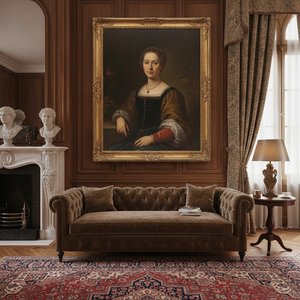
Timeless Elegance: The Ultimate Buyer's Guide to Choosing Classical Portraits for Sophisticated Interiors
Discover how to select the perfect classical portrait for your home. Our expert guide explores matching art styles to interiors, choosing between hand-painted oils and Giclée prints, and transforming personal photos into timeless masterpieces with professional artistry.
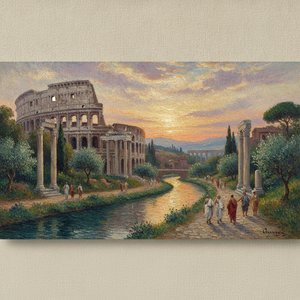
Capturing Eternal Glory: Impressionist Visions of the Roman Empire's Timeless Grandeur
Explore the breathtaking intersection of Roman grandeur and Impressionist light. Discover how masters like Monet reimagined classical ruins through vibrant, emotive brushstrokes. A cultural journey for true art lovers seeking to bring eternal glory into their homes.

The Enduring Legacy of Oil on Canvas: Technique, History & Aesthetic Impact
Explore the rich history & techniques of oil painting – from Renaissance masters to Impressionism. Discover pigments, layering methods, and why this timeless medium endures. Expert insights for artists & art enthusiasts.


