- Inicio

- Impresión en lienzo
- Lionello Spada
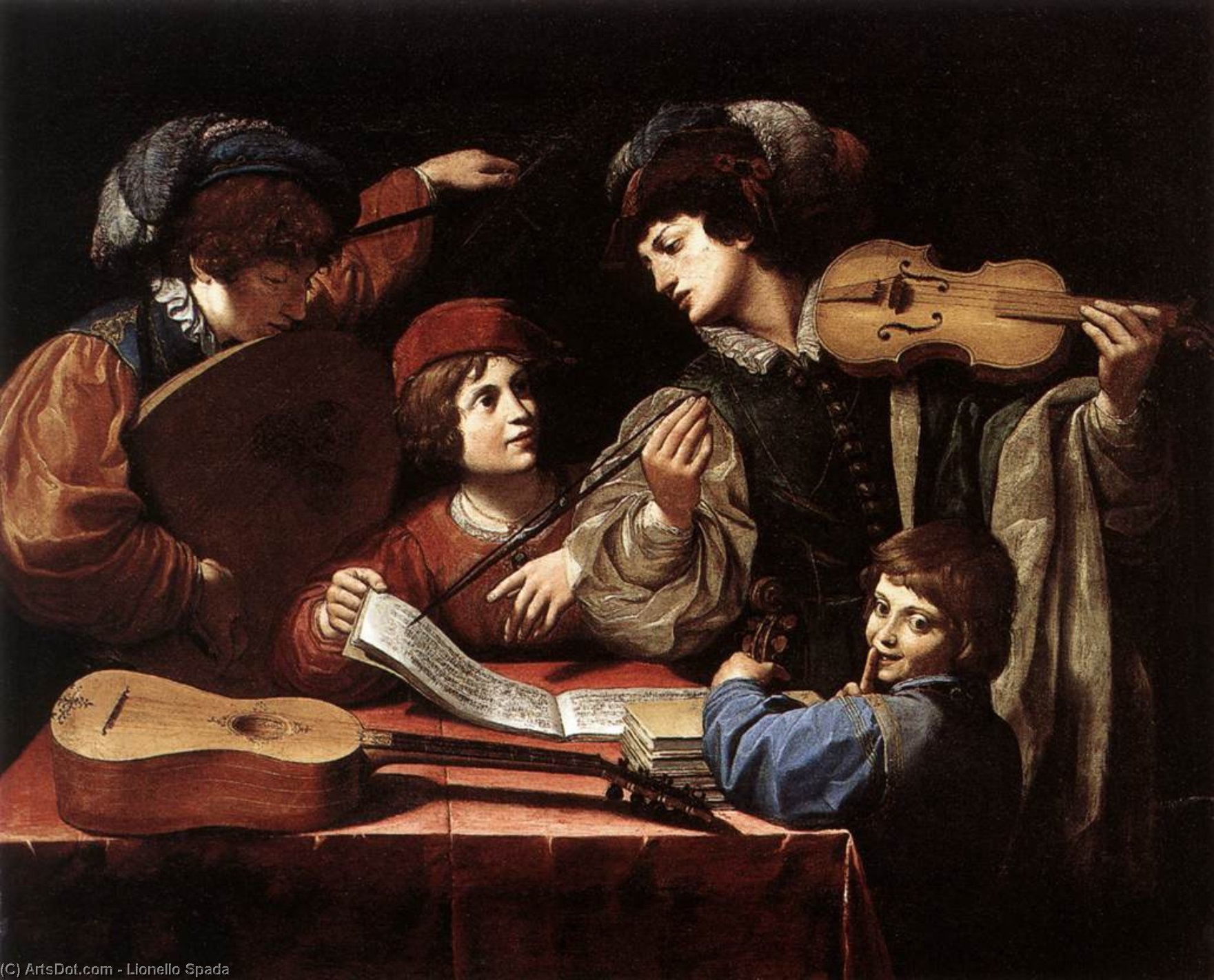
- El concierto
 Encargar reproducción Comprar imagen en alta resolución
 Enviar
 Compartir
 Detalles
 Añadir a favoritos

 Descargar
 Similares
 Radiografía
 Presentación de diapositivas
El concierto
 Óleo sobre lienzo
- Arte de pared
- Retorno al Barroco
 1615
1615- Renacimiento
 143.0 x 172.0 cm
 Museo del Louvre
 Ver más
Giclée / Impresión de arte
Impresión giclée o en lienzo de calidad de museo con producción rápida y opciones de acabado flexibles.




P118B $10

P118H $10

P118W $10

P438Z $10

P508JH $12

P508YH $12

P805H $10

P805Z $10

P919BZ $10

P919G $10

P919XJ $10

P959ZH $10

P968JZ $12

W106C $8

W218G $10

W218JH $8

W218Y $10

W307PJ $10

W316G $10

W316PJ $8

W316Y $10

W398PJ $8

W4111J $10

W500HY $15

W500JH $15

W692G $12

W849H $8

W940BG $15

W953PJ $8




Elija entre nuestros tamaños predefinidos que respetan las proporciones originales de la obra.

Puede introducir sus propias dimensiones para adaptarse a un marco o espacio específico. Si el tamaño seleccionado no coincide con las proporciones de la imagen original, recortaremos la obra de arte o extenderemos la imagen con un borde con efecto espejo o de color sólido. Se enviará una maqueta digital para su aprobación antes de que comience la producción.
Tenga en cuenta que la vista previa en pantalla no refleja el recorte o la extensión real. Solo la maqueta mostrará con precisión la composición final.
Aunque existen tamaños personalizados, recomendamos seleccionar una dimensión de la lista predefinida para preservar las proporciones originales.
Entrega mundial () en 2 semanas en lugar de las 4/5 semanas estándar. (22 julio)

Envío exprés gratuito a todo el mundo

Lienzo de lino de alta calidad

Seguro de envío total

Garantía de reembolso de impuestos aduaneros

Garantía de fidelidad de color

Política de devolución de 60 días (solo por defectos)

Garantía de devolución del 100% del dinero

Descuento por pedido múltiple
 La opción de vidrio solo está disponible en tamaños inferiores a 110 cm.

El concierto
Giclée / Impresión de arte
Tamaño de la reproducción
-


Precio total final
-
Descripción de la obra
El Concierto de Lionello Spada
“El Concierto” de Lionello Spada, completada en 1615, se erige como una piedra angular del arte barroco boloñés, siendo un testimonio de la revolucionaria influencia de Caravaggio y de la ejecución magistral de Spada. Más que una simple representación de músicos entregados a su interpretación, la obra encarna el fervor intelectual y los ideales humanistas característicos de su época, capturando un instante suspendido entre la anticipación y la creación artística.
Estilo y Técnica: Spada adoptó la dramática técnica del claroscuro de Caravaggio —un audaz juego de luces y sombras— para iluminar la escena. A diferencia de los contrastes crudos de Caravaggio, Spada emplea una iluminación más suave que, no obstante, enfatiza la musculatura de las figuras y transmite una atmósfera de profunda seriedad. El artista plasmó meticulosamente cada detalle, desde los propios instrumentos hasta las texturas de las vestiduras y la piel, demostrando una habilidad excepcional para capturar el naturalismo dentro de la estética barroca.
Contexto Histórico: Pintada durante el papado de Urbano VIII —un periodo marcado por el mecenazgo artístico y el debate intelectual—, la obra refleja el panorama cultural más amplio de Roma. La corte boloñesa, bajo el liderazgo de Spada, fomentó un entorno vibrante para la experimentación artística, atrayendo a creadores de toda Europa que buscaban emular el estilo innovador de Caravaggio.
Simbolismo y Emoción: Más allá de su brillantez técnica, “El Concierto” resuena con un profundo significado simbólico. Los músicos representan el intelecto y la contemplación, un contraste deliberado frente a las tendencias hedonistas predominantes de la época. Sus miradas concentradas y su postura transmiten un sentido de solemne dedicación, invitando al espectador a contemplar la belleza y el poder de la expresión artística.
Ubicación y Procedencia: Actualmente albergada en el Musée du Louvre, en París, “El Concierto” presume de una historia ilustre que se remonta a la colección de Maffeo Barberini. Sus trayectos posteriores por diversos museos —incluyendo el Palazzo Braschi, la Catedral de Siena, el Museo del Prado en Madrid y el Museo de Bellas Artes de Bilbao— subrayan su atractivo perdurable y consolidan su lugar como una obra maestra del arte barroco.
Investigación Adicional: Puede explorar más información sobre Lionello Spada y “El Concierto” en la Web Gallery of Art (https://www.wga.hu/html/s/spada/concert.html), donde encontrará imágenes detalladas y análisis académicos. Asimismo, le invitamos a profundizar en “El Concierto” de Valentin de Boulogne (/en/art/valentin-de-boulogne-the-concert-8Y2UV3-en/) para comparar enfoques estilísticos y visiones artísticas.
Biografía del artista
Lionello Spada: A Bolognese Baroque Visionary
Lionello Spada (1576 – 17 May 1622) stands as a pivotal figure in the Bolognese Baroque, an artist deeply rooted in the artistic currents of his time and profoundly impacted by the revolutionary style pioneered by Caravaggio. Born in Bologna, Italy, Spada’s life was tragically cut short at the age of forty-six, leaving behind a legacy of remarkable paintings that continue to captivate scholars and art enthusiasts alike. While biographical details remain somewhat sparse – largely due to the limitations of archival records – his artistic output speaks volumes about his talent and dedication to capturing the dramatic spirit of the era.Early Influences & Apprenticeship
Spada’s artistic journey began with an apprenticeship under Cesare Baglioni, a respected Bolognese painter who instilled in him foundational principles of disegno—the humanist approach to drawing that dominated Florentine art during the Renaissance. This formative experience established Spada's meticulous attention to detail and his mastery of anatomical accuracy, qualities that would become hallmarks of his distinctive style. Notably, Spada’s artistic sensibilities were further shaped by the presence of Denis Calvaert, a Flemish painter who resided in Bologna and championed Caravaggio’s expressive realism. Calvaert’s influence is palpable in Spada's early canvases, which exhibit a Mannerist aesthetic characterized by stylized figures and unsettling compositions—a deliberate departure from the idealized forms favored by earlier generations. He sought to portray emotion with visceral intensity, mirroring Caravaggio’s groundbreaking technique of tenebrismo – dramatic contrasts between light and dark – which aimed to heighten psychological impact and convey spiritual fervor.Decorative Quadratura & Bolognese Artistic Circles
By the early 17th century, Spada was actively engaged in the burgeoning field of quadratura painting – decorative illusionistic painting used to embellish ceilings and walls – alongside Girolamo Curti. Together, they formed a formidable artistic team specializing in creating immersive theatrical experiences for aristocratic patrons. Their collaborative efforts resulted in breathtaking frescoes that transformed Bolognese palaces into opulent spaces brimming with narrative grandeur. Spada’s involvement within the Carracci Academy—established by Ludovico Carracci—represented a crucial step in his artistic development. He contributed to the monumental funerary decorations commemorating Carracci's passing, absorbing the academy’s emphasis on classical ideals and mastering techniques of chiaroscuro – dramatic contrasts between light and dark – which would become integral to Spada’s visual vocabulary. This association fostered an environment conducive to experimentation and innovation, propelling Spada toward stylistic breakthroughs that cemented his place among Bolognese Baroque luminaries.The Caravaggio Connection & Artistic Evolution
The question of Spada’s relationship with Caravaggio remains debated among historians. While definitive proof is elusive, biographical accounts suggest a connection—possibly through mutual acquaintances—that fueled speculation about stylistic similarities. Malvasia's *Felsina Pittrice* portrays Spada and Caravaggio as equally “dissolute” and “precipitous,” hinting at a shared penchant for experimentation and disregard for convention. Intriguingly, there’s evidence suggesting Caravaggio himself sought Spada’s counsel regarding the depiction of John the Baptist in his iconic painting—a testament to Spada's reputation as a respected artist and perhaps a symbol of Caravaggio’s artistic ambition. As Spada matured, his style gradually embraced greater robustness and expressive force, exemplified by monumental canvases like “The Miraculous Draught of Fishes,” which showcased his command of color and texture alongside the dramatic chiaroscuro technique perfected during his formative years. He moved away from Mannerist conventions toward a more forceful realism, reflecting the broader artistic trends of the period.Legacy & Artistic Significance
Lionello Spada’s influence extended beyond his own lifetime, shaping the artistic landscape of Bologna and establishing him as one of the foremost disciples of Caravaggio. His pupils included Pietro Martire Armanni, who carried forward Spada's stylistic innovations into subsequent generations of Bolognese painters. Spada’s paintings—characterized by their unsettling realism, masterful use of light and shadow, and profound psychological depth—continue to resonate with audiences today. They stand as enduring emblems of the Baroque aesthetic – a testament to Spada’s unwavering commitment to artistic excellence and his indelible contribution to the history of Italian art. His works are housed in museums across Europe, ensuring that his visionary style will continue to inspire admiration for centuries to come. He is remembered not merely for his technical prowess but also for his daring exploration of human emotion and spiritual contemplation—a legacy that secures Spada’s place as a cornerstone of Bolognese Baroque artistry.
Lionello Spada
1576 - 1622 , Italia
Datos clave
- Artistic Movement Or Style: Baroque
- Artists Or Movements Influenced By This Artist: ['Caravaggio']
- Artists Who Influenced This Artist:
- Ludovico Carracci
- Denis Calvaert
- Date Of Birth: 1576 Bologna Italy
- Date Of Death: 1622 Parma
- Full Name: Lionello Spada
- Nationality: Italian
- Notable Artworks:
- Saint Sebastian
- Joseph & Potiphar’s Wife
- Martyrdom of St Peter
- Place Of Birth: Bologna Italy
Artículos relacionados

Barroco Sublime: 10 Obras Maestras que Definieron una Época |
Descubre las 10 obras maestras del Barroco que marcaron una época. Caravaggio, Bernini y Velázquez cobran vida en . Reproducciones de arte de calidad museo para decorar tu hogar con elegancia. ¡Explora la colección online!
Barroco en su Esplendor: 10 Obras Maestras que Definieron una Época | OriginalUniqueArt
Descubre las 10 obras maestras del Barroco que revolucionaron el arte. Caravaggio, Rembrandt y Velázquez te esperan en OriginalUniqueArt. Reproducciones de alta calidad para decorar tu hogar con la grandeza de este estilo. ¡Explora la colección online!
Claude Monet: Las 25 Obras Maestras del Impresionismo para Decorar tu Hogar con Arte
Descubre las 25 obras maestras de Claude Monet, el padre del impresionismo. Explora la historia, técnica y belleza de sus paisajes, nenúfares y 'Impresión, sole levant'. Encuentra reproducciones de arte exclusivas en OriginalUniqueArt.com.

Paul Cézanne: Las 25 Obras Maestras que Definieron el Arte Moderno | OriginalUniqueArt
Descubre las 25 obras maestras de Paul Cézanne que revolucionaron el arte moderno. Explora su técnica, inspiración y significado en paisajes, bodegones y retratos. Reproducciones de alta calidad para decorar tu hogar con arte inolvidable. ¡Explora la colección completa en OriginalUniqueArt.com!
Gris Maestros: Los 10 Cuadros Más Famosos Dominados por el Color Gris |
Descubre los 10 cuadros más famosos dominados por el gris. Explora la historia, técnica y significado de obras maestras de Monet, Van Gogh, Hopper y otros artistas icónicos. Encuentra reproducciones de arte en .



