Vista previa
 Compartir
 Compartir
 Ver detalles
 Guía
Guía

 Descargar
 Ver artículos similares
 Radiografía
 Presentación de diapositivas
 Estadísticas
El Gran Cavallo
 Tiza
Tiza- Renaissance
 1503
1503- Renacimiento
 153.0 x 142.0 cm
 Biblioteca Real de Windsor
 Leer más
Reproducción al óleo hecha a mano
Óleo sobre lienzo pintado a mano en el tamaño y marco de su elección, realizado por encargo por nuestros artistas. ( Cambiar a formato impreso Ver versión en imagen digital)




P118B €10

P118H €10

P118W €10

P438Z €10

P508JH €12

P508YH €12

P805H €10

P805Z €10

P919BZ €10

P919G €10

P919XJ €10

P959ZH €10

P968JZ €12

W106C €8

W218G €10

W218JH €8

W218Y €10

W307PJ €10

W316G €10

W316PJ €8

W316Y €10

W398PJ €8

W4111J €10

W500HY €15

W500JH €15

W692G €12

W849H €8

W940BG €15

W953PJ €8




Elija entre nuestros tamaños predefinidos que respetan las proporciones originales de la obra.

Puede ingresar sus propias dimensiones para adaptarse a un marco o espacio específico. Si el tamaño seleccionado no coincide con las proporciones de la imagen original, recortaremos la obra o extenderemos la pintura con elementos adicionales pintados a mano. Se le enviará una maqueta digital para su aprobación antes de comenzar la producción.
Tenga en cuenta que la vista previa en pantalla no refleja el recorte o la extensión reales. Solo la maqueta mostrará con precisión la composición final.
Si bien existen tamaños personalizados, recomendamos seleccionar una dimensión de la lista predefinida para preservar las proporciones originales.
Tras realizar el pedido, el equipo de OriginalUniqueArt.com enviará un correo electrónico al cliente para solicitar instrucciones y proporcionarle una vista previa del boceto.
Envío a todo el mundo () en 3-4 semanas en lugar de las 5 semanas estándar. (8 octubre). Sin comprometer la calidad.

Envío exprés gratuito a todo el mundo

Lienzo de lino de alta calidad

Seguro de envío completo

Garantía de reembolso de impuestos aduaneros

Garantía de fidelidad cromática exacta

Política de devolución de 100 días (solo por defectos)

Garantía de devolución del 100% del dinero

Oferta por volumen
 La opción de vidrio solo está disponible en tamaños inferiores a 110 cm.

El Gran Cavallo
Técnica de reproducción
Tamaño de la reproducción
-


Precio total
€ 258
The Enigma of Genius: Leonardo da Vinci’s Life and Legacy
Leonardo di ser Piero da Vinci, born in 1452 near the Tuscan village of Vinci, remains arguably the most universally recognized figure of the Renaissance—a true polymath whose insatiable curiosity propelled him across disciplines, leaving an indelible mark on art, science, and engineering. His very name has become synonymous with genius, a testament to his extraordinary breadth of talent and visionary thinking. Born out of wedlock to Piero da Vinci, a notary, and Caterina, a peasant woman, Leonardo’s early life was unconventional, yet provided him with access to both the practical world and an appreciation for nature that would profoundly shape his artistic vision. He received a basic education in reading, writing, and arithmetic, but it was his apprenticeship under Andrea del Verrocchio in Florence that truly ignited his creative spark. Within Verrocchio’s workshop, Leonardo wasn't merely learning to paint or sculpt; he absorbed the master’s meticulous observation skills and embraced experimentation—a foundation for his lifelong pursuit of knowledge and artistic innovation.A Study of Movement and Anatomy
The “Rearing Horse,” housed within the esteemed Royal Library of Windsor, United Kingdom, stands as a testament to the unparalleled genius of Leonardo Da Vinci. This chalk drawing, meticulously crafted in 1503 and measuring an impressive 153 x 142 cm, offers a glimpse into the mind of one of history’s most celebrated polymaths. It's not merely a depiction; it is a profound study—a cornerstone of Da Vinci’s artistic process and intellectual exploration. The artist’s choice of brown chalk lends an earthy quality to the animal, while the composition directs our gaze towards the left side where the horse’s body is positioned. Visible back legs on the right suggest a forward lean, emphasizing the motion. Da Vinci’s mastery lies not only in representing form but also in conveying movement with remarkable accuracy. His deep understanding of equine anatomy, honed through studies in both art and science, shines through every line. The drawing reveals his fascination with musculature, skeletal structure, and the mechanics of locomotion—a hallmark of Renaissance scientific inquiry.Historical Significance and Context within the High Renaissance
This artwork is part of Da Vinci’s extensive collection of preparatory drawings, many now residing in the Royal Library of Windsor. These sketches were crucial to his artistic process, serving as explorations for larger works and demonstrating his meticulous approach. Created during the High Renaissance (roughly 1490-1527), a period characterized by renewed interest in classical art and humanism, Da Vinci’s work exemplified the era's innovative spirit. As a polymath—excelling in painting, engineering, science, and architecture—he embodied the ideal of the “Renaissance man.” His notebooks, filled with observations and sketches, remain invaluable resources for understanding his creative process and intellectual pursuits. The commission to depict the Battle of Anghiari was ambitious, reflecting the grandeur of Florentine patronage during this transformative period.Symbolism and Emotional Resonance
While seemingly straightforward as an anatomical study, the “Rearing Horse” evokes a sense of power, energy, and controlled force. The rearing pose itself is symbolic—representing strength, defiance, and potential unleashed. Da Vinci’s masterful use of chalk allows for subtle gradations of tone that create depth and volume, imbuing the horse with a palpable presence. Though lacking overt narrative elements, the drawing resonates with an emotional intensity born from its meticulous observation and skillful execution. The image speaks to the beauty and power of nature, reflecting Da Vinci’s profound respect for the natural world. It captures not just the physical form of the horse but also its spirit—a testament to Da Vinci's ability to translate scientific understanding into artistic expression.Relevance for Modern Art Enthusiasts & Reproduction Opportunities
The “Rearing Horse” continues to captivate audiences today, offering a window into Da Vinci’s artistic process and his enduring fascination with movement and anatomy. For modern art enthusiasts, it serves as a reminder of the importance of studying the masters and appreciating the historical context that shaped their creations. At OriginalUniqueArt, we are dedicated to preserving this legacy by offering meticulously crafted, handmade oil painting reproductions of Da Vinci’s “Rearing Horse.” Our skilled artists faithfully recreate every detail, ensuring an authentic representation of this iconic masterpiece for art lovers and collectors alike.- Leonardo Da Vinci: Rearing horse
- The Museum Royal Library of Windsor, United Kingdom
- Royal Library, Windsor
Preguntas y respuestas
¿Los colores de "El Gran Cavallo" se ven intensos o suaves?
Los colores en "El Gran Cavallo" de Leonardo da Vinci tienen una intensidad Equilibrado.
¿Qué comparte "El Gran Cavallo" con el resto de la obra de Leonardo da Vinci?
Dentro de la obra de Leonardo da Vinci, "El Gran Cavallo" se inscribe en el estilo Renaissance, junto a los temas de scientific observation, humanist idealism, classical anatomy, renaissance precision, monumental sculpture, da vinci legacy, symbolic power, preparation for larger works.
¿Qué nivel de contraste presenta "El Gran Cavallo" de Leonardo da Vinci?
"El Gran Cavallo" de Leonardo da Vinci muestra un contraste Suave entre sus zonas de luz y sombra.
¿A qué artista se le atribuye "El Gran Cavallo"?
"El Gran Cavallo" se atribuye a Leonardo da Vinci.
¿A qué edad creó Leonardo da Vinci "El Gran Cavallo"?
Cuando se creó "El Gran Cavallo" en 1503, Leonardo da Vinci —nacido/a en 1452— tenía 51 años.
¿En qué año se creó "El Gran Cavallo"?
"El Gran Cavallo" de Leonardo da Vinci fue creada en 1503.
¿Qué espacio combina con los colores de "El Gran Cavallo" de Leonardo da Vinci?
Teniendo en cuenta sus colores Tonos pastel, se sugiere "El Gran Cavallo" para un/a Salón principal.
Biografía del artista
Leonardo da Vinci: Vida y Legado
Primeros Años y Aprendizaje (1452-1482)
Leonardo di ser Piero da Vinci (15 de abril de 1452 – 2 de mayo de 1519) nació fuera del matrimonio cerca de Vinci, en la República de Florencia. Su educación temprana incluyó lectura, escritura y aritmética, aunque las instrucciones formales en latín llegaron más tarde. A los catorce años, comenzó un aprendizaje con Andrea del Verrocchio, un destacado artista florentino. Esta formación inmersiva le expuso a la pintura, la escultura y las artes mecánicas, sentando las bases para su genio multifacético.
Primer Periodo Milanés (1482-1499)
En 1482, Leonardo entró al servicio de Ludovico Sforza, Duque de Milán. Él no era solo un artista; funcionó como ingeniero, arquitecto y escultor para la corte. Este período vio que diseñara fortificaciones militares, elaborados decorados escénicos y esculturas (muchas inconclusas). Una comisión monumental durante este tiempo fue La Última Cena, un fresco pintado en el refectorio del monasterio de Santa María delle Grazie – una obra que influiría profundamente en el arte occidental.
Regreso a Florencia y Maestros de la Alta Renacimiento (1500-1506)
Tras la invasión francesa de Milán en 1499, Leonardo regresó a Florencia durante un período álgido del desarrollo artístico. Si bien produjo menos obras que antes, su impacto fue inmenso. Esta época vio el comienzo del trabajo en Mona Lisa (La Gioconda), probablemente la pintura más famosa del mundo, y la refinación de sus técnicas.
Años Tardíos y Patronazgo Francés (1506-1519)
Los años tardíos de Leonardo estuvieron marcados por viajes entre Florencia, Milán y Roma, buscado por su experiencia pero a menudo dejando proyectos inconclusos. En 1516, aceptó la invitación del Rey Francisco I para vivir y trabajar en el Château du Clos Lucé cerca de Amboise en Francia. Murió allí en 1519, dejando atrás un vasto legado de exploración artística y científica.
Influencias y Desarrollo Artístico
- Las primeras influencias incluyeron a su maestro Verrocchio y la tradición artística florentina más amplia.
- Un profundo interés en la observación lo llevó a estudiar meticulosamente el mundo natural.
- Se alejó de la iconografía religiosa tradicional, favoreciendo representaciones realistas de las emociones humanas y la anatomía.
- Su desarrollo de sfumato – una técnica que utiliza sutiles gradaciones de luz y sombra para crear contornos borrosos y perspectiva atmosférica – revolucionó la pintura y contribuyó significativamente a su estilo distintivo.
Logros Principales
- Pintura: Mona Lisa, La Última Cena, Virgen de las Rocas, Anunciación
- Dibujo y Bocetos: Amplios estudios anatómicos, diseños de ingeniería (máquinas voladoras, armas), ilustraciones botánicas.
- Ciencia e Ingeniería: Trabajo pionero en anatomía, óptica, hidráulica, geología y cartografía. Conceptualizó invenciones siglos por delante de su tiempo.
Significado Histórico
El impacto de Leonardo da Vinci en la historia del arte es inmensurable. Sus pinturas son celebradas por su realismo, profundidad psicológica y técnicas innovadoras. Elevaron el estatus de los artistas de hábiles artesanos a figuras intelectuales. Más allá de sus logros artísticos, sus investigaciones científicas e invenciones prefiguraron muchos descubrimientos modernos. Sigue siendo un símbolo de la curiosidad humana, la creatividad y la búsqueda del conocimiento – una verdadera encarnación del espíritu renacentista. Su legado continúa inspirando asombro y fascinación siglos después de su muerte, consolidando su lugar como una de las figuras más notables de la historia.
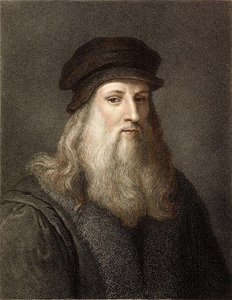
Leonardo da Vinci
1452 - 1519 , Italia
Datos clave
- Artistas Que Influyeron: ['Andrea del Verrocchio']
- Fecha De Muerte: 2 de mayo de 1519
- Fecha De Nacimiento: 15 de abril de 1452
- Lugar De Nacimiento: Vicenza, Italia
- Movimiento Artístico: Alto Renacimiento
- Nacionalidad: Italiano
- Nombre Completo: Leonardo da Vinci
- Obras Notables:
- Mona Lisa (La Gioconda)
- La Última Cena
- Virgen de las Rocas
- Anunciación
Artículos relacionados
The Noble Steed: A Historical and Artistic Exploration of Horses in Fine Art
Explore the rich history of horses in fine art! From ancient depictions to Renaissance masterpieces & beyond, discover iconic artworks and artists. Learn about symbolism, techniques, and find museum-quality reproductions at OriginalUniqueArt.
Leonardo da Vinci: Las 25 Obras Maestras que Definieron un Genio | OriginalUniqueArt
Descubre las 25 obras maestras de Leonardo da Vinci, desde la Mona Lisa hasta La Última Cena. Explora su arte renacentista, técnicas innovadoras y el legado del genio italiano. Reproducciones de alta calidad para decorar tu hogar con belleza y historia en OriginalUniqueArt.com.
Leonardo da Vinci: Síntesis del Arte, la Ciencia y la Observación Humana en el Renacimiento – Una Reinterpretación para el Coleccionista
Descubra la síntesis del arte y la ciencia en Leonardo da Vinci. Análisis profundo de sus obras maestras, técnicas innovadoras y legado para coleccionistas exigentes. Una reinterpretación experta.
Renacimiento Humanista: 10 Obras Maestras que Cambiaron la Historia del Arte | OriginalUniqueArt
Descubre 10 obras maestras del Renacimiento Humanista: Leonardo, Miguel Ángel y Rafael. Explora la historia, técnica y belleza de estos iconos del arte italiano. Reproducciones de alta calidad en OriginalUniqueArt.com. ¡Encuentra tu obra perfecta!
Los 25 Tesoros del Louvre: Arte Clásico para Decorar con Elegancia | OriginalUniqueArt
Descubre los 25 tesoros del Louvre: desde la Mona Lisa de Leonardo da Vinci hasta la Venus de Milo. Explora la historia, el arte clásico y encuentra reproducciones de alta calidad para decorar tu hogar con elegancia en OriginalUniqueArt.com.