Ver en contexto
 Enviar
 Compartir
 Detalles
 Guía
Guía

 Descargar
 Similares
 Radiografía
 Presentación de diapositivas
 Q&A
Q&A Estadísticas
Still-Life
 Acrylic On Canvas
- WallArt
- Dutch Golden Age
 54.0 x 44.0 cm
 Museo Wallraf-Richartz
 Ver más
Giclée / Impresión de arte
Impresiones giclée o en lienzo de calidad de museo con producción rápida y opciones de acabado flexibles. ( Comprar pintura hecha a mano Cambiar a imagen digital)




P118B €10

P118H €10

P118W €10

P438Z €10

P508JH €12

P508YH €12

P805H €10

P805Z €10

P919BZ €10

P919G €10

P919XJ €10

P959ZH €10

P968JZ €12

W106C €8

W218G €10

W218JH €8

W218Y €10

W307PJ €10

W316G €10

W316PJ €8

W316Y €10

W398PJ €8

W4111J €10

W500HY €15

W500JH €15

W692G €12

W849H €8

W940BG €15

W953PJ €8




Elija entre nuestros tamaños predefinidos que respetan las proporciones originales de la obra.

Introduzca el ancho y el alto que necesite para adaptarse a su marco o pared. Una impresión solo puede recortarse, nunca hacerse más grande que la imagen original, por lo que un tamaño con una forma distinta perderá parte de la obra. Le enviaremos una maqueta digital para su aprobación antes de realizar cualquier impresión. La imagen que se muestra en esta página no refleja el recorte real; solo la maqueta lo hace.
Envío a todo el mundo () en 2 semanas en lugar de las 4/5 semanas estándar. (29 octubre)

Envío exprés gratuito a todo el mundo

Lienzo de lino de alta calidad

Seguro de envío total

Garantía de reembolso de aranceles aduaneros

Garantía de fidelidad cromática exacta

Política de devolución de 100 días (solo por defectos)

Garantía de devolución del 100% del dinero

Descuento por cantidad
 La opción de vidrio solo está disponible en tamaños inferiores a 110 cm.

Still-Life
Giclée / Impresión de arte
Dimensiones de la reproducción
-


Precio total final
€ 71
The Enigmatic Still Life of Juriaen van Streeck
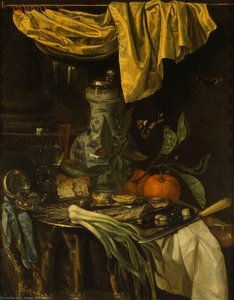
Juriaen van Streeck’s “Still-Life,” a remarkably preserved panel dating from the mid-17th century, offers a captivating glimpse into the world of Dutch Golden Age painting. More than simply a depiction of objects—a bowl of fruit, a porcelain ewer, and a scattering of silverware—it's an intricate meditation on light, texture, and the fleeting nature of beauty itself. The painting resides within the Bavarian State Painting Collections, a testament to its enduring quality and artistic merit.
Van Streeck’s style is deeply rooted in the traditions established by Willem Kalf, yet possesses a subtle individuality. He masterfully employs chiaroscuro—the dramatic contrast between light and shadow—to imbue each object with a palpable sense of volume and realism. The artist doesn't merely represent; he sculpts with light, creating an illusion of depth that draws the viewer into the scene. Notice how the folds of the velvet cloth seem to ripple in the reflected light, or how the sheen on the porcelain gleams with an almost ethereal quality.
A Symphony of Objects and Symbolism
The composition itself is a carefully orchestrated arrangement of seemingly disparate elements. The central focus rests upon a rich still life featuring a blue and white Wan-li bowl, overflowing with luscious peaches, a vibrant lemon, and an orange – each rendered with meticulous detail. A porcelain ewer and vase, alongside a gleaming silver knife, complete the tableau. But these are not merely decorative objects; they carry layers of symbolic meaning deeply embedded within the context of 17th-century Dutch society.
The inclusion of fruit, particularly peaches and oranges, was a deliberate reference to prosperity and abundance – hallmarks of the burgeoning merchant class that dominated the Netherlands at the time. The porcelain ewer, with its intricate floral patterns, speaks to the appreciation for luxury goods imported from the East. Even the loaf of bread, partially consumed, subtly alludes to the transient nature of earthly pleasures, a common theme in Dutch Golden Age art reflecting on mortality and the vanity of worldly possessions. The two butterflies fluttering amongst the objects further enhance this sense of ephemeral beauty.
The Painter’s Technique and Historical Context
Van Streeck's skill lies not just in his ability to render objects with photographic accuracy, but also in his understanding of how light interacts with different surfaces. He demonstrates a remarkable control over brushwork, creating subtle gradations of tone that mimic the way light would fall upon these materials. The painting’s palette is restrained yet sophisticated, dominated by rich browns, golds, and deep reds – colors that evoke the opulence of the Dutch merchant elite.
Created during a period of immense artistic innovation, “Still-Life” reflects the broader cultural trends of the time. The rise of the middle class fueled a demand for art depicting domestic life and luxurious objects, while artists like Van Streeck continued to explore themes of beauty, mortality, and the complexities of human experience. The painting’s provenance – its acquisition by the Princeton University Art Museum in 1954 – underscores its historical significance and enduring appeal.
A Timeless Appeal: Reproduction and Beyond
Reproductions of “Still-Life” offer a remarkable opportunity to bring this exquisite work into your home or office. The meticulous detail, the masterful use of light, and the profound symbolism combine to create a piece that is both visually stunning and intellectually stimulating. Consider pairing it with pieces that evoke similar themes – perhaps a richly textured rug, a vintage silver tray, or a collection of antique ceramics – to create an interior space that reflects your appreciation for beauty, history, and the enduring power of art.
Preguntas y respuestas
¿Qué tamaño de impresión de "Still-Life" de Juriaen van Streeck se adapta mejor a la habitación recomendada?
Para un/a Living Room, el tamaño de impresión recomendado para "Still-Life" de Juriaen van Streeck es Medium.
¿Cuál es el tono predominante en "Still-Life"?
El tono dominante de "Still-Life" de Juriaen van Streeck es Warm Sunset Tones. Este color constituye la base cromática de la paleta.
¿Qué representa "Still-Life"?
Los temas presentes en "Still-Life" de Juriaen van Streeck incluyen still life, fruit, food, gold, velvet, music, symbolism, dutch painting, los cuales resumen la temática de la obra.
Biografía del artista
Juriaen van Streeck: Una Vida en Silencio
Vida Temprana y Orígenes
Juriaen van Streeck, también conocido como Juriaan van Streek, nació en Ámsterdam, Países Bajos, en 1632. Los detalles de su vida temprana son algo escasos, pero surgió durante un período floreciente para el arte holandés – la Edad Dorada. Se casó con Grietje Claes en 1653 y residieron en varios lugares dentro del distrito de Jordaan antes de mudarse a Prinsengracht. La pareja tuvo nueve hijos, aunque tristemente tres no sobrevivieron al nacimiento. Para el momento de su muerte en 1687, van Streeck trabajaba como posadero en Kerkstraat, sugiriendo un cambio o complemento a sus ingresos artísticos más tarde en la vida.Desarrollo Artístico y Estilo
Van Streeck se dedicó a la pintura de bodegones, un género particularmente popular durante la Edad Dorada holandesa. Destacó al representar una amplia gama de temas dentro de esta categoría, incluyendo cascos, libros, cartas, instrumentos musicales, frutas e – significativamente – objetos simbólicos como cráneos o animales muertos. Estos últimos elementos eran esenciales para la tradición Vanitas, recordando a los espectadores la naturaleza efímera de la vida y las posesiones mundanas. Su estilo demuestra una clara influencia de Willem Kalf, otro maestro de la pintura de bodegones, particularmente en sus ricos paletas de colores y composiciones dramáticas.Temas Clave e Influencias
El tema central que recorre el trabajo de van Streeck es la contemplación de la mortalidad y la calidad efímera de la existencia. La inclusión de símbolos Vanitas – cráneos, frutas en descomposición, velas apagadas – sirvió como recordatorios visuales de estos conceptos. Más allá de esta profundidad filosófica, sus pinturas también muestran una atención meticulosa al detalle y a la textura, reflejando el dominio holandés del realismo. Fue influenciado por la capacidad de Kalf para crear arreglos lujosos y visualmente atractivos, pero desarrolló su propio enfoque distintivo para la composición y el simbolismo.Obras Notables
Si bien no existe un catálogo razonado completo de las obras de van Streeck, varias pinturas son ejemplos bien conocidos de sus habilidades. Estas incluyen “Snack”, “Bodegón”, “Bodegón con duraznos y limón”, “Bodegón: naranja, limón y vino en un vaso” ,“Bodegón con ostras, duraznos y limón sobre una mesa de mármol con una alfombra fruncida y vasos” y "Plato Schouburg K". Estas obras demuestran su capacidad para representar texturas de manera realista – el brillo del metal, la suavidad de la fruta, el delicado vidrio – al mismo tiempo que transmiten un significado simbólico más profundo.Significado Histórico y Legado
Juriaen van Streeck ocupa una posición significativa dentro de la tradición pictórica de la Edad Dorada holandesa. Aunque no es tan celebrado como algunos de sus contemporáneos como Kalf o Vermeer, fue reconocido durante su vida por el historiador del arte Arnold Houbraken, quien elogió su versatilidad en los temas de bodegones. La influencia de van Streeck se puede ver en el trabajo de artistas como Barend van der Meer. Sus pinturas ofrecen valiosas ideas sobre las preocupaciones culturales y filosóficas de la sociedad holandesa del siglo XVII, particularmente su preocupación por la mortalidad, la riqueza y el paso del tiempo. Contribuyó al desarrollo de la pintura de bodegones como un género capaz de transmitir tanto belleza estética como significado intelectual profundo.Legado Familiar
Vale la pena señalar que la influencia artística de van Streeck se extendió a su familia. Su hijo, Hendrick van Streeck, también se convirtió en pintor, estudiando bajo Emanuel de Witte y especializándose en interiores de iglesias, demostrando la continuación del talento artístico dentro de la línea familiar.
Juriaen van Streeck
1632 - 1687 , Países Bajos
Datos clave
- Artistic Movement Or Style: Still life, Baroque
- Artists Who Influenced This Artist: ['Willem Kalf']
- Date Of Birth: 1632 Amsterdam
- Date Of Death: 1687
- Full Name: Juriaen van Streeck
- Nationality: Dutch
- Notable Artworks:
- Schouburg Plate K
- Snack
- Still-Life With Peaches And A Lemon
- A Still Life With Oysters, Peoches And Lemon On A Marble Table With A Fringed Carpet And Glasses
- Place Of Birth: Amsterdam Netherlands
Artículos relacionados

Golden Light & Dutch Skies: The Timeless Magic of Dutch Golden Age Landscapes
Discover the breathtaking beauty of Dutch Golden Age landscapes. Explore the mastery of light, chiaroscuro, and 17th-century realism through an expert art history lens, celebrating the enduring legacy of the Dutch Masters for discerning collectors and art lovers.

Los 10 Maestros del Siglo de Oro Holandés: Arte, Historia y Decoración Exclusiva
Descubre los 10 imprescindibles del Siglo de Oro Holandés: Rembrandt, Vermeer y más. Explora la historia, técnica y belleza de estos lienzos clásicos. Encuentra reproducciones de arte exclusivas para decorar tu hogar en .

Luz y Sombra: Las 25 Mejores Obras Maestras de Rembrandt van Rijn
Explora las 25 obras maestras de Rembrandt y su claroscuro. Encuentra reproducciones de museo en OriginalUniqueArt.com.
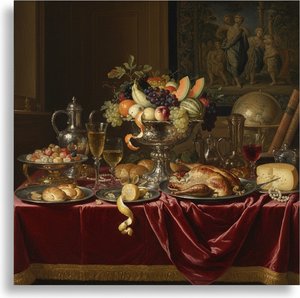
Abraham Hendricksz van Beyeren: Pioneering Dutch Still Life & the Banquet Tradition
Explore the captivating world of Dutch Golden Age still life with Abraham van Beyeren. Discover his innovative techniques, symbolic banquet scenes & lasting influence on art history. Learn about collecting these masterpieces.

Reflejos de una Época Dorada: La Pintura Barroca Holandesa y la Innovación Cultural
Descubra la riqueza y el detalle de la pintura barroca holandesa del Siglo de Oro. Explore las obras maestras de Rembrandt, Vermeer y otros artistas clave. Análisis experto e historia cultural.