

 Vista previa
 Compartir
 Compartir
 Ver detalles
 Guía
Guía

 Descargar
 Ver artículos similares
 Radiografía
 Presentación de diapositivas
 Estadísticas
MADAME LENOIR


 Leer más
Reproducción al óleo hecha a mano
Óleo sobre lienzo pintado a mano en el tamaño y marco de su elección, realizado por encargo por nuestros artistas. ( Cambiar a formato impreso Ver versión en imagen digital)




P118B $10

P118H $10

P118W $10

P438Z $10

P508JH $12

P508YH $12

P805H $10

P805Z $10

P919BZ $10

P919G $10

P919XJ $10

P959ZH $10

P968JZ $12

W106C $8

W218G $10

W218JH $8

W218Y $10

W307PJ $10

W316G $10

W316PJ $8

W316Y $10

W398PJ $8

W4111J $10

W500HY $15

W500JH $15

W692G $12

W849H $8

W940BG $15

W953PJ $8




Elija entre nuestros tamaños predefinidos que respetan las proporciones originales de la obra.

Puede ingresar sus propias dimensiones para adaptarse a un marco o espacio específico. Si el tamaño seleccionado no coincide con las proporciones de la imagen original, recortaremos la obra o extenderemos la pintura con elementos adicionales pintados a mano. Se le enviará una maqueta digital para su aprobación antes de comenzar la producción.
Tenga en cuenta que la vista previa en pantalla no refleja el recorte o la extensión reales. Solo la maqueta mostrará con precisión la composición final.
Si bien existen tamaños personalizados, recomendamos seleccionar una dimensión de la lista predefinida para preservar las proporciones originales.
Tras realizar el pedido, el equipo de OriginalUniqueArt.com enviará un correo electrónico al cliente para solicitar instrucciones y proporcionarle una vista previa del boceto.
Envío a todo el mundo () en 3-4 semanas en lugar de las 5 semanas estándar. (27 septiembre). Sin comprometer la calidad.

Envío exprés gratuito a todo el mundo

Lienzo de lino de alta calidad

Seguro de envío completo

Garantía de reembolso de impuestos aduaneros

Garantía de fidelidad cromática exacta

Política de devolución de 100 días (solo por defectos)

Garantía de devolución del 100% del dinero

Oferta por volumen
 La opción de vidrio solo está disponible en tamaños inferiores a 110 cm.

MADAME LENOIR
Técnica de reproducción
Tamaño de la reproducción
-


Precio total
$ 300
A Portrait of Grace: Madame Lenoir by Joseph Siffred Duplessis
Joseph-Siffred Duplessis’s “Madame Lenoir” is more than just a portrait; it's a carefully constructed tableau of 18th-century French society, imbued with an understated elegance and a poignant sense of intimacy. Painted around 1764, this work offers a rare glimpse into the life of a woman likely belonging to the aristocracy – Madame Lenoir herself, a figure whose identity is inextricably linked to her son, Alexandre Lenoir, the founder of the Musée des Monuments français. The painting’s enduring appeal lies not just in its technical mastery but also in the subtle narrative it unfolds, inviting viewers to contemplate the complexities of social status and familial legacy.
Duplessis, a master of his craft, expertly employs the Rococo style, characterized by its emphasis on delicate detail, soft lighting, and an overall sense of refined beauty. The composition is centered around Madame Lenoir, positioned slightly off-axis to create a dynamic balance within the frame. Her gaze, directed gently towards the viewer, conveys a quiet dignity and composure – a hallmark of the era’s portraiture tradition. The artist skillfully utilizes soft, blended lines, creating a smooth transition between colors and forms, contributing to the painting's overall sense of realism while retaining a distinctly romantic quality.
Color, Texture, and Symbolism
The color palette is remarkably restrained, dominated by muted blues, creams, and flesh tones. These cool hues are punctuated by warmer accents – subtle yellows and oranges within the floral embellishments adorning her dress and subtly illuminating her complexion. This careful orchestration of colors evokes a sense of understated luxury and wealth, reflecting Madame Lenoir’s social standing. Duplessis's meticulous attention to texture is equally noteworthy; he masterfully renders the smoothness of skin, the crispness of lace, and the delicate sheen of the decorative elements on her gown. The folds of fabric are rendered with a remarkable sense of volume, adding depth and realism to the portrait.
Beyond mere representation, “Madame Lenoir” is rich in symbolic detail. The object held delicately in her hands – often interpreted as a fan or perhaps a small book – serves as a subtle emblem of leisure and intellectual pursuits, suggesting a woman engaged with the finer aspects of life. The dark background, devoid of distracting details, effectively isolates Madame Lenoir, drawing attention to her figure and emphasizing her importance within the composition. This strategic use of negative space reinforces the painting’s intimate atmosphere.
Historical Context and Artistic Legacy
To understand “Madame Lenoir,” it's crucial to consider the broader artistic context of its creation. The Rococo period, in which Duplessis flourished, was a time of opulent excess and refined sensibilities. Portraits during this era were not simply representations of individuals; they were carefully crafted statements about social status, wealth, and identity. Duplessis’s work stands as a testament to the enduring appeal of this tradition, capturing the essence of 18th-century French aristocracy with remarkable skill and sensitivity.
Joseph-Siffred Duplessis himself was a pivotal figure in the development of French portraiture. Initially trained by his father, a surgeon, he honed his observational skills through meticulous study – a foundation that would prove invaluable as he transitioned to painting. His time in Rome under Pierre Subleyras exposed him to the techniques and conventions of Italian art, shaping his artistic style and contributing to his mastery of light, shadow, and composition. “Madame Lenoir” exemplifies this evolution, blending academic training with a distinctly personal vision.
A Timeless Portrait
“Madame Lenoir” is more than just a beautiful painting; it’s a window into the past, offering a glimpse into the lives of those who shaped French society. Its enduring appeal lies in its ability to evoke a sense of intimacy, elegance, and quiet dignity. Reproductions of this masterpiece capture not only its visual beauty but also the subtle nuances of Duplessis's artistry – a testament to his skill as a portraitist and a keen observer of human nature. It remains a poignant reminder of the complexities of social status, familial legacy, and the enduring power of art to transcend time.
Biografía del artista
Joseph-Siffred Duplessis: Una Vida Dedicada al Retrato
- Nacido: 22 de septiembre de 1725, Carpentras, Francia
- Fallecido: 1 de abril de 1802, Versalles, Francia
- Nacionalidad: Francés
- Movimiento Artístico: Rococó, Neoclasicismo
- Género: Retrato
Primeros Años y Formación
- Duplessis nació en una familia con inclinaciones artísticas. Su padre, un cirujano, también era un artista aficionado, proporcionando formación inicial.
- Estudió bajo Joseph Gabriel Imbert (1666–1749), un alumno de Charles Le Brun, adquiriendo habilidades fundamentales en técnicas pictóricas.
- De 1744 a 1747 (o posteriormente), trabajó en Roma dentro del taller de Pierre Subleyras (1699–1749). Este período fue crucial para su desarrollo artístico, fomentando amistades con artistas como Joseph Vernet y exposición al arte italiano.
Carrera y Reconocimiento
- Al regresar a Francia, Duplessis inicialmente pasó tiempo en Lyon antes de establecerse en París alrededor de 1752.
- Se unió a la Académie de Saint-Luc y comenzó a exponer retratos, aunque el reconocimiento inicial fue limitado.
- Un avance significativo ocurrió en el Salón de París de 1769, donde su exposición de diez pinturas obtuvo considerables elogios, notablemente por parte de Denis Diderot.
- Esto llevó a su aceptación en la Académie de peinture et de sculpture, un logro prestigioso a pesar de que el retrato se consideraba una categoría menos estimada en ese momento.
- Su nombramiento como *peintre du Roi* en 1771 y la posterior comisión para un retrato de la Delfina solidificaron su éxito. La mayoría de sus retratos notables datan de las décadas de 1770 y 1780, beneficiándose de alojamientos privilegiados en las Galeries del Louvre.
- Durante la Revolución Francesa, buscó refugio en Carpentras durante el Reinado del Terror. Más tarde, desde 1796, sirvió como curador en el recién establecido museo en Versalles hasta su muerte.
Obras Principales y Estilo Artístico
- Retrato de Benjamin Franklin (c. 1785): Quizás su obra más famosa, este retrato se ha convertido en icónico, incluso apareciendo en el billete de cien dólares estadounidense. Captura el carácter de Franklin con un realismo notable.
- Retrato de Luis XVI (1776): Una representación formal y majestuosa del Rey con ropas de coronación.
- Retrato de Jacques Necker: Demuestra su habilidad para retratar a individuos de diversos estratos sociales, capturando su esencia a través de detalles matizados.
- Retrato de Christoph Willibald Gluck: Una representación íntima del compositor en el trabajo, mostrando la habilidad de Duplessis para transmitir emoción e inspiración.
- Retrato de Christophe Gabriel Allegrain: Una descripción penetrante del escultor, destacando su oficio y personalidad.
El estilo de Duplessis se caracterizó por la claridad, la inmediatez y una notable capacidad para capturar el parecido y el carácter de sus retratados. Adaptó su enfoque según el estatus social del sujeto, desde retratos formales de la realeza hasta representaciones más íntimas de artistas e intelectuales. Su trabajo sirvió como puente entre la elegancia rococó y la contención neoclásica.
Significado Histórico
- Duplessis jugó un papel significativo en la configuración del retrato durante finales del siglo XVIII.
- Su habilidad para capturar el parecido y la personalidad de figuras prominentes, incluyendo a la realeza, intelectuales y revolucionarios, aseguró su legado duradero.
- La perdurable popularidad de su retrato de Benjamin Franklin subraya su contribución a la cultura visual y su impacto en cómo se perciben las figuras históricas.
- Es recordado como un artista hábil que navegó con éxito por el cambiante panorama artístico de su tiempo, dejando atrás una valiosa colección de retratos que ofrecen información sobre las vidas y personalidades de aquellos que moldearon la historia.

José-Siffredo Duplessis
1725 - 1802 , Francia
Datos clave
- Artistas Que Influyeron:
- Charles Le Brun
- Pierre Subleyras
- Joseph Vernet
- Fecha De Fallecimiento: 1 de abril de 1802
- Fecha De Nacimiento: 22 de septiembre de 1725
- Lugar De Nacimiento: Carpentras, Francia
- Movimiento Artístico: Rococó, Neoclasicismo
- Nacionalidad: Francés
- Nombre Completo: Joseph-Siffred Duplessis
- Obras Notables:
- Retrato de Benjamin Franklin
- Retrato de Luis XVI
- Retrato de Jacques Necker
- Retrato de Christoph Willibald Gluck
Artículos relacionados

Reflecting Nobility & Nuance: 18th-Century Portraiture as a Window into Societal Values
Explore the world of 18th-century portraiture with OriginalUniqueArt. Discover symbolism, artistic innovation & societal values reflected in masterpieces by Reynolds, Hogarth & more. Expert insights for collectors.
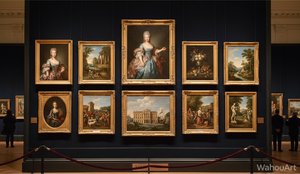
El Siglo XVIII en el Arte: 10 Obras Maestras para Decorar con Historia y Elegancia
Descubre 10 obras maestras del siglo XVIII: Goya, Fragonard y más. Explora la historia, el arte barroco, rococó y neoclasicismo que inspiran decoración elegante. Reproducciones de alta calidad en OriginalUniqueArt.com.

The Enduring Legacy of Formal Portraiture: Power, Identity & Artistic Exploration
Explore the rich history of formal portraiture & its enduring power to capture identity and shape perception. Discover investment-worthy artworks, expert appraisals, and custom reproduction services at OriginalUniqueArt.

Charles-André van Loo: A Study in Rococo Portraiture & the French Court's Artistic Dynamics
Explore the elegant world of Charles-André van Loo, a master of Rococo portraiture at the French court. Discover his life, techniques, and enduring influence on 18th-century art. Hand-painted reproductions available.

Jean-Marc Nattier: Rococo Portraiture & Aristocratic Patronage
Explore the exquisite Rococo portraits of Jean-Marc Nattier, favored by French aristocracy. Discover his artistic techniques, patronage network, and lasting legacy – a guide for discerning collectors.