Cambiar a impresiones
 Ver más







































 Para obras de arte o reproducciones que midan más de 105 cm (aproximadamente 41 pulgadas) en cualquiera de sus lados, el marco se enviará como un kit desmontado. Este método garantiza una entrega segura y evita daños durante el transporte.


Introduction to Joan Miró and Painting
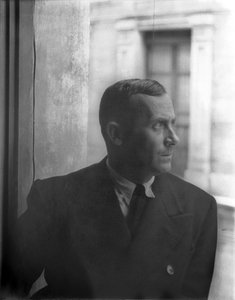
Joan Miró i Ferràgue, born in Barcelona in 1893, stands as one of the most significant figures in 20th-century art. His journey was not merely a progression through styles but an exploration of inner worlds, translating dreams, memories, and Catalan identity onto canvas with a uniquely poetic visual language. From humble beginnings marked by illness and initial parental reservations about his artistic pursuits, Miró persevered, driven by an innate need to express the intangible—the emotions, sensations, and subconscious currents that lie beneath the surface of reality. His early life was steeped in the traditions of Barcelona, a city brimming with architectural marvels thanks to Antoni Gaudí, whose organic forms would subtly influence Miró’s later abstractions. The goldsmithing profession of his father instilled an appreciation for meticulous craftsmanship, while the rugged CArtistic Style and Influences
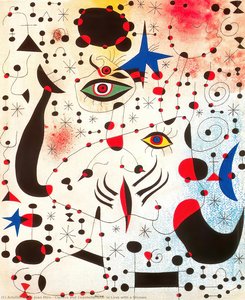
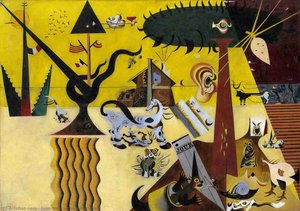
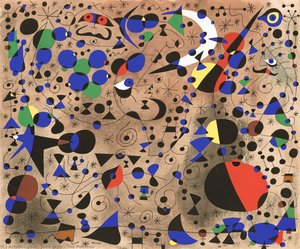
Miró's "Painting" exemplifies his unique blend of abstract expressionism and surrealist elements. The artwork features a vibrant composition with bold colors and whimsical shapes that evoke a dreamlike atmosphere. Thick, confident lines outline the forms, while splashes and drips of color add a sense of movement and spontaneity. Miró’s use of color is audacious, with fiery reds, bright yellows, and deep blues contributing to a lively and expressive palette. The abstracted figures and objects seem to float and interact across a textured background, creating a surreal quality that challenges the viewer’s interpretation. Miró's style was profoundly shaped by Catalan folklore and mythology—particularly the symbolism of animals like the bull and the eagle—reflecting his desire to honor his cultural heritage while simultaneously rejecting academic conventions. He drew inspiration from artists such as Picasso and Matisse, absorbing their expressive techniques and experimenting with innovative approaches to form and color. Furthermore, Miró’s fascination with music and the cosmos permeated his artistic vision, mirroring the rhythms of nature and conveying a sense of wonder and contemplation.Context within Surrealism
Miró was an early pioneer of surrealist art, influencing generations of artists with his radical forms and symbolic language. His work often incorporated elements of Catalan culture and avant-garde experimentation, reflecting his desire to challenge traditional painting and bourgeois society. In the context of surrealism, Miró’s "Painting" aligns with the movement's emphasis on dream imagery and psychic automatism. The artwork’s enigmatic forms and chromatic dynamism invite the viewer to engage with their subconscious mind, exploring the boundaries between reality and fantasy. Surrealist artists sought to liberate the imagination from rational constraints, tapping into unconscious desires and anxieties—a pursuit that Miró embraced wholeheartedly. His canvases became a visual manifestation of this quest for liberation, presenting fantastical landscapes populated by bizarre creatures and distorted perspectives.Relevance in Modern Art
Miró's innovative style has had a lasting impact on modern art, influencing abstract expressionists and color field painters. He championed the idea that painting should be free from representational concerns, prioritizing emotional intensity and visual harmony over accurate depiction. His work continues to inspire contemporary artists, ensuring his legacy as a pioneering figure in surrealist art. For those interested in exploring more of Miró’s artwork, Painting by 'Joan Miró' is available on OriginalUniqueArt.com. Additionally, the website offers a range of surrealist paintings, including works by other notable artists like Max Ernst and Salvador Dalí.Conclusion
“CITE>Joan Miró’s "Painting" is a masterpiece of surrealist art, showcasing the artist’s unique blend of abstract expressionism and symbolic language. As a pioneering figure in the movement, Miró's work continues to inspire contemporary artists and captivate audiences with its enigmatic forms and chromatic dynamism. For more information on surrealism and its key figures, visit Abstract Expressionism on Wikipedia.Preguntas y respuestas
¿Qué representa "Título traducido: Pintura" de Joan Miró?
"Título traducido: Pintura" de Joan Miró representa: abstract expressionism, catalan culture, avant-garde experimentation, dream imagery, symbolic language, chromatic dynamism, psychedelic art.
¿Dónde debería colgarse una reproducción de "Título traducido: Pintura" de Joan Miró?
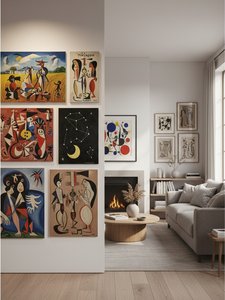
El formato Formato vertical de "Título traducido: Pintura" de Joan Miró es ideal para un Salón principal. El formato y el espacio orientan conjuntamente la ubicación de una reproducción.
¿Qué tamaño de impresión de "Título traducido: Pintura" de Joan Miró se adapta mejor a la habitación recomendada?
Para un/a Salón principal, el tamaño de impresión recomendado para "Título traducido: Pintura" de Joan Miró es Gran formato.
 Ver en contexto
 Enviar
 Compartir
 Detalles
 Guía
Guía

 Descargar
 Similares
 Radiografía
 Presentación de diapositivas
 Q&A
Q&A Estadísticas