- Inicio

- Imagen digital
- Jean Goujon
- Caryatides
 Enviar
 Compartir
 Detalles

 Descargar
 Similares
 Presentación de diapositivas
Caryatides


 Ver más
Adquiera una imagen digital de alta resolución y optimizada, muy superior a la vista previa en línea.
Cada archivo es preparado meticulosamente por nuestros especialistas internos mediante el uso de herramientas avanzadas y un experto retoque manual. Nos aseguramos de que cada imagen posea una claridad excepcional, una precisión cromática impecable y un detalle minucioso.
El archivo final se entrega por correo electrónico en un plazo de 72 horas, optimizado para su uso inmediato en entornos profesionales, editoriales y de impresión. Esta es la misma calidad en la que confían los estudios de diseño, las editoriales y las galerías de primer nivel.
Imagen Digital
Descarga un archivo de alta resolución para exhibición personal, impresión y proyectos creativos. ( Switch to Print Switch to hand made Painting)
Incluido en cada pedido de imagen digital
Entrega digital experta, garantizada.
Al elegir OriginalUniqueArt.com, no solo está adquiriendo una imagen; está recibiendo una obra de arte digital mejorada profesionalmente, elaborada con precisión y respaldada por una garantía de satisfacción. Esto es todo lo que incluye su pedido, automáticamente:

Entrega rápida por email
Recibirá su archivo de imagen digital en alta resolución por correo electrónico en un plazo de 72 horas tras realizar su pedido, listo para su uso inmediato.

Archivo digital optimizado con IA
Su obra de arte se optimiza profesionalmente mediante herramientas avanzadas de IA y edición manual, garantizando el máximo detalle, claridad y precisión cromática.

Reenvío gratuito de por vida
¿Has borrado o perdido tu archivo por error? No te preocupes: te lo volveremos a enviar en cualquier momento, sin coste adicional.

Sin cargos de importación - Siempre
Disfrute de su obra de arte al instante sin aduanas, aranceles ni gastos de envío; las descargas digitales siempre están libres de impuestos.

Garantía de fidelidad de color
Garantizamos que su imagen digital refleje los colores originales con la mayor fidelidad posible, mediante el uso de herramientas profesionales y gestión del color.

Garantía de satisfacción de 60 días
Si no está satisfecho con su imagen digital, la revisaremos o le reembolsaremos el 100% en un plazo de 60 días, sin preguntas.

100% Garantía de devolución de dinero
¿No está satisfecho? Obtenga un reembolso completo dentro de los 60 días posteriores a la recepción de su archivo digital, sin preguntas.

Descuentos por pedidos al por mayor
Compra 3 imágenes, ahorra 10% - Compra 5, ahorra 15% - Compra 10+, ahorra 20%. Ideal para proyectos creativos, galerías y agencias.
Descripción del coleccionable
Jean Goujon’s Caryatides: Echoes of Classical Grace in Parisian Ornamentation
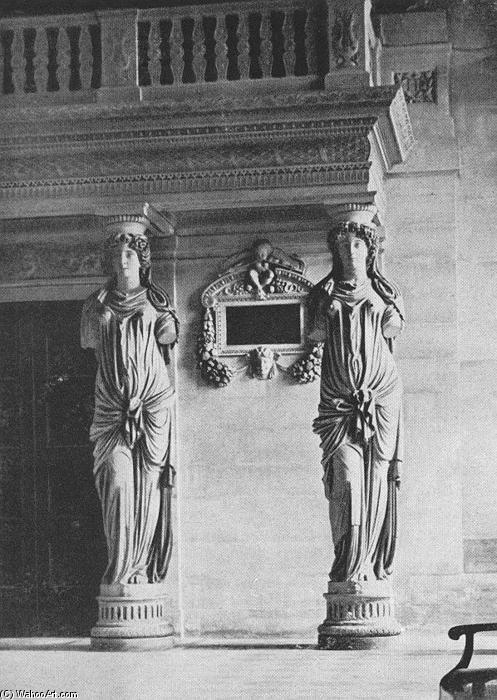
The Salle des Caryatides within the Louvre Palace stands as a testament to Jean Goujon's mastery and the enduring influence of classical ideals on Renaissance art. Constructed between 1549 and 1550 by Pierre Lescot, this opulent ballroom embodies the ambition of royal patronage and showcases Goujon’s unparalleled skill in sculpting monumental drapery—a technique that elevates the sculpture beyond mere representation to become an embodiment of elegance and sophistication. This photograph captures a meticulously crafted reproduction of two Caryatides sculptures, offering viewers a glimpse into the artistic vision that shaped Parisian grandeur.A Sculptor's Pilgrimage to Rome
Jean Goujon’s formative years were spent in Italy, where he immersed himself in the legacy of Roman sculpture and actively sought inspiration from artists like Michelangelo Buonarroti. This exposure profoundly impacted his stylistic sensibilities, fostering a deep appreciation for anatomical precision and a masterful command of drapery—elements that would become hallmarks of his oeuvre. Goujon’s approach wasn't merely imitative; he skillfully adapted classical principles to forge a distinctly Mannerist style characterized by elongated figures, stylized poses, and dramatic expressions. The resulting sculptures possess an arresting dynamism that transcends the static nature of traditional portraiture.Monumental Drapery: A Symphony of Texture and Form
The Caryatides themselves exemplify Goujon’s extraordinary ability to render drapery with breathtaking realism. Unlike earlier sculptors who often simplified folds and creases, Goujon painstakingly recreated the intricate textures of fabric—silk, linen, and wool—creating surfaces that shimmer with subtle variations in light and shadow. This meticulous attention to detail isn't merely decorative; it serves as a crucial element in conveying movement and volume. The drapery clings to the Caryatides’ bodies, emphasizing their form while simultaneously suggesting an ethereal quality – mirroring the idealized beauty of classical goddesses.Symbolism of Strength and Feminine Ideal
Beyond its aesthetic brilliance, the Caryatides carry significant symbolic weight. As supporting columns—a tradition rooted in ancient Greece—they represent stability and endurance, reflecting the aspirations of Renaissance architects to create spaces that inspire awe and reverence. Simultaneously, the female figures embody the humanist ideal of feminine beauty – a concept championed by thinkers like Pico della Mirandola who celebrated womanhood as possessing inherent dignity and potential for spiritual growth. The floral crowns adorning the Caryatides further reinforce this symbolism, referencing the fecundity and vitality associated with springtime—a motif prevalent in Renaissance art and literature.Documenting Artistic Excellence: A Photographic Reflection
This photograph serves as a compelling record of Goujon’s sculptural achievement, capturing the Salle des Caryatides' setting with remarkable clarity. The diffused natural light illuminates the sculptures’ surfaces, revealing subtle nuances of texture and color—a testament to the meticulous craftsmanship involved in creating this reproduction. Like Lescot’s original design, the image conveys a sense of timeless grandeur, inviting viewers to contemplate the enduring power of classical art to inspire beauty and contemplation.Biografía del artista
Jean Goujon: The Sculptor Who Shaped Parisian Elegance
Jean Goujon (c. 1510 – c. 1567) stands as a cornerstone of French Renaissance sculpture and architecture, embodying the stylistic fervor of Mannerism while simultaneously grounding itself in classical ideals. Born in Normandy, his early life remains shrouded in obscurity, yet his prolific output quickly established him as one of the era’s foremost artistic voices—a testament to his prodigious talent and unwavering dedication to craft. Goujon's journey began with formative experiences in Italy, where he absorbed the grandeur of Roman sculpture and integrated its principles into his own distinctive style. This influence is palpable throughout his oeuvre, particularly evident in his masterful handling of drapery and anatomical precision.Early Career & Rouen Cathedral
Goujon’s artistic ascent commenced in Rouen Cathedral (1541-42), where he undertook the monumental task of sculpting the tomb monument to Louis de Brézé, seigneur d'Anet—a commission that showcased his burgeoning skill and ambition. This ambitious project cemented his reputation as a rising star within the French sculptural landscape. Simultaneously, he honed his architectural prowess at Saint-Maclou Church, demonstrating an innate ability to blend artistic vision with structural engineering. The resulting edifice stands as a magnificent example of Renaissance ecclesiastical architecture, reflecting Goujon’s commitment to both aesthetic beauty and functional integrity. The intricate carvings adorning the cathedral walls testify to Goujon's meticulous craftsmanship and his profound understanding of sculptural techniques—a legacy that continues to inspire admiration for centuries later.Parisian Patronage & Collaboration with Lescot
Moving to Paris in 1544, Goujon entered into a pivotal partnership with Pierre Lescot, the architect overseeing the ambitious reconstruction of Saint-Germain-l'Auxerrois cathedral. Together, they conceived and executed breathtaking sculptural decorations—most notably the pulpit—a masterpiece that exemplifies Lescot’s neoclassical sensibilities and Goujon’s masterful drapery technique. The dismantled pulpit serves as a poignant reminder of artistic collaboration and the enduring legacy of Parisian architectural grandeur. Goujon’s involvement at Château d’Écouen for the connétable de Montmorency further solidified his position as a favored artist of the royal court, contributing to the opulent embellishment of this magnificent château. His contribution to Saint-Germain-l'Auxerrois cemented his place in architectural history and showcased his ability to elevate spaces through artistic innovation.The Louvre & Florentine Influence
Perhaps Goujon’s most celebrated achievement was his collaboration with Lescot on the western extension of the Louvre Palace (1555-62), where he sculpted monumental Caryatids—graceful female figures supporting arches—inspired by Greek sculptures but imbued with a distinctly Mannerist flair. These sculptures, alongside other decorative elements, transformed the Louvre into a symbol of French artistic excellence and demonstrated Goujon’s ability to synthesize classical forms with expressive dynamism. His meticulous attention to detail and his masterful drapery technique mirrored the stylistic ideals prevalent in Florence during his formative years—a testament to his intellectual curiosity and his unwavering pursuit of artistic perfection. The Caryatids remain among the Louvre's most iconic artworks, embodying Goujon’s vision for elevating architectural spaces through sculptural grandeur.Legacy & Artistic Style
Goujon's distinctive style—characterized by elongated figures, sensual poses, and fluid drapery—became synonymous with Mannerism in France. He skillfully employed techniques borrowed from Greek sculpture, yet subtly deviated from strict adherence to classical conventions, prioritizing emotional intensity and artistic virtuosity over anatomical accuracy. His engravings for Jean Martin’s translation of Vitruvius showcased his meticulous attention to detail and contributed to the dissemination of humanist ideals throughout Europe. Though overshadowed by later artists during the Baroque period, Goujon's influence endured—his elegant sculptures continued to inspire generations of French sculptors and artists, securing his place as a true visionary of the Renaissance. His enduring legacy resides in the timeless beauty of his creations and the indelible mark he left on the artistic landscape of France.
Jean Goujon
1510 - 1567 , Francia
Información clave
- Artistic Movement Or Style: Mannerismo
- Artists Or Movements Influenced By This Artist: ['Neoclasicismo']
- Artists Who Influenced This Artist: ['Miguel Ángel']
- Date Of Birth: c. 1510 Normandy France
- Date Of Death: c. 1567
- Full Name: Jean Goujon
- Nationality: Francés
- Notable Artworks:
- Ninfas
- Pulpit
- Fontaine des Innocents
- Place Of Birth: Normandy France

