Tamaño del texto

() ·

Una pintura hecha para ti, a mano

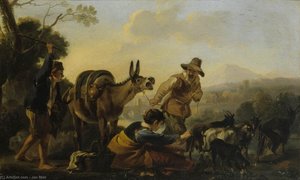
Carnival Time in Rome

Reproducción al óleo hecha a mano

Óleo sobre lienzo pintado a mano en el tamaño y marco de su elección, realizado por encargo por nuestros artistas. ( Cambiar a impresiones Cambiar a imagen digital)

Descripción del objeto

Experience the vibrant energy of "Carnival Time in Rome" by Jan Miel! This captivating Baroque painting depicts a lively Roman carnival scene filled with masked revelers, horses, and festive details – a masterpiece of 17th-century art.

Biografía del artista

Jan Miel fue pintor flamenco activo en Italia, reconocido por sus escenas de género bamboccianti y posteriormente por pinturas históricas clásicasizantes. Pintor cortesano de Carlos Emanuel II, Duque de Saboya.

desde ·

Capítulo 1

¿Qué tamaño debería tener?

Deslice para cambiar el tamaño; la imagen de la izquierda muestra el marco con su anchura real. Se mantienen las proporciones originales.

Tamaño estándar
a medida
CM
INCH

Elija entre nuestros tamaños predefinidos que respetan las proporciones originales de la obra.

ancho
altura

Indique el ancho y el alto que necesite para adaptarse a su marco o pared. Al tratarse de una obra pintada a mano, si requiere un tamaño con una proporción distinta, el artista puede pintar un poco más alrededor de la imagen o recortarla ligeramente; usted elige. Le enviaremos una maqueta digital para su aprobación antes de comenzar la pintura. La imagen que se muestra en esta página no refleja el resultado real; solo la maqueta lo hace.

Capítulo 2

¿Cómo debe llegar?

Elige el acabado de los bordes del lienzo

Elige tu marco

Corner sample of the WhiteWrap canvas edge finish, stretched on madera maciza bars
Blanco €1
Corner sample of the BlurSideWrap canvas edge finish, stretched on madera maciza bars
Bordes difuminados €1
Corner sample of the ExtendedWrap canvas edge finish, stretched on madera maciza bars
Continuación de imagen €1
Corner sample of the P118B picture frame: poliestireno moldeado, 5 cm wide and 3 cm thick
P118B €10
Corner sample of the P118H picture frame: poliestireno moldeado, 5 cm wide and 3 cm thick
P118H €10
Corner sample of the P118W picture frame: poliestireno moldeado, 5 cm wide and 3 cm thick
P118W €10
Corner sample of the P438Z picture frame: poliestireno moldeado, 5.5 cm wide and 3.5 cm thick
P438Z €10
Corner sample of the P508JH picture frame: poliestireno moldeado, 7 cm wide and 3.5 cm thick
P508JH €12
Corner sample of the P508YH picture frame: poliestireno moldeado, 7 cm wide and 3.5 cm thick
P508YH €12
Corner sample of the P805H picture frame: poliestireno moldeado, 5 cm wide and 3.5 cm thick
P805H €10
Corner sample of the P805Z picture frame: poliestireno moldeado, 5 cm wide and 3.5 cm thick
P805Z €10
Corner sample of the P919BZ picture frame: poliestireno moldeado, 7 cm wide and 3.5 cm thick
P919BZ €10
Corner sample of the P919G picture frame: poliestireno moldeado, 7 cm wide and 3.5 cm thick
P919G €10
Corner sample of the P919XJ picture frame: poliestireno moldeado, 7 cm wide and 3.5 cm thick
P919XJ €10
Corner sample of the P959ZH picture frame: poliestireno moldeado, 5 cm wide and 3 cm thick
P959ZH €10
Corner sample of the P968JZ picture frame: poliestireno moldeado, 6 cm wide and 4 cm thick
P968JZ €12
Corner sample of the W106C picture frame: madera maciza, 5 cm wide and 3 cm thick
W106C €8
Corner sample of the W218G picture frame: madera maciza, 5 cm wide and 3 cm thick
W218G €10
Corner sample of the W218JH picture frame: madera maciza, 5 cm wide and 3 cm thick
W218JH €8
Corner sample of the W218Y picture frame: madera maciza, 5 cm wide and 3 cm thick
W218Y €10
Corner sample of the W307PJ picture frame: madera maciza, 6 cm wide and 3 cm thick
W307PJ €10
Corner sample of the W316G picture frame: madera maciza, 6 cm wide and 3 cm thick
W316G €10
Corner sample of the W316PJ picture frame: madera maciza, 6 cm wide and 3 cm thick
W316PJ €8
Corner sample of the W316Y picture frame: madera maciza, 6 cm wide and 3 cm thick
W316Y €10
Corner sample of the W398PJ picture frame: madera maciza, 5 cm wide and 3 cm thick
W398PJ €8
Corner sample of the W4111J picture frame: madera maciza, 6.5 cm wide and 3.5 cm thick
W4111J €10
Corner sample of the W500HY picture frame: madera maciza, 7 cm wide and 5 cm thick
W500HY €15
Corner sample of the W500JH picture frame: madera maciza, 7 cm wide and 5 cm thick
W500JH €15
Corner sample of the W692G picture frame: madera maciza, 8 cm wide and 4 cm thick
W692G €12
Corner sample of the W849H picture frame: madera maciza, 5 cm wide and 3 cm thick
W849H €8
Corner sample of the W940BG picture frame: madera maciza, 7.5 cm wide and 4.5 cm thick
W940BG €15
Corner sample of the W953PJ picture frame: madera maciza, 6 cm wide and 3.5 cm thick
W953PJ €8
Corner sample of the H24-GOLD picture frame: madera tallada con estuco, 10 cm wide and 6 cm thick
H24-GOLD €30
Corner sample of the H24-SILVER picture frame: madera tallada con estuco, 10 cm wide and 6 cm thick
H24-SILVER €30
Corner sample of the H36-GOLD picture frame: madera tallada con estuco, 15 cm wide and 6.5 cm thick
H36-GOLD €45
Corner sample of the H36-SILVER picture frame: madera tallada con estuco, 15 cm wide and 6.5 cm thick
H36-SILVER €45

Moldura: . Dimensiones totales con marco: .

Capítulo 3

¿Quién lo pinta y debería cambiar algo?

Ejemplos de lo que se puede cambiar: Reemplazar el rostro con la foto del cliente; Añadir una mascota (por ejemplo, cambiar un gato por un perro); Incluir un mensaje oculto en el fondo; Cambiar el paisaje o los elementos del fondo.
Tras realizar el pedido, el equipo de OriginalUniqueArt.com enviará un correo electrónico al cliente para solicitar instrucciones y proporcionar una vista previa del boceto

Envío a todo el mundo () en 3-4 semanas en lugar de las 5 semanas estándar. (4 noviembre). Sin comprometer la calidad.

Capítulo 4

Los últimos retoques

¿Una placa de identificación, como en un museo?

Detalles de la placa de bronce grabada

This elegant plaque features the artist's name and the title of the artwork, finely engraved for a timeless presentation.

It is made from bronze with a refined, elegant finish. The text is precisely laser-engraved for a sharp and permanent result. Measuring 9x2 cm, the plaque is compact yet easy to read. It's built to be durable and scratch-resistant, offering a professional, museum-quality look. Mounting is simple thanks to the included adhesive backing.

Detalles de la placa de acrílico transparente

The plaque includes essential engraved details such as the artist's name, the title of the artwork, the date it was created, the type of media used-like oil on canvas or watercolor-a brief description of the piece, and a QR code that links to the complete artwork information.

It is crafted from clear acrylic, offering a sleek, modern appearance. The text is UV-engraved in black to ensure strong visual contrast. With a size of 10x15 cm, it ensures optimal readability. It comes equipped with two metal hooks for secure wall mounting. The plaque is designed to be weather-resistant, making it suitable for various environments, and it includes interactive features that work seamlessly with smartphone scanning.

Detalles de la placa de acrílico negro

This elegant plaque includes engraved information such as the artist's name, the title of the artwork, the date it was created, the type of media used (like oil on canvas or watercolor), a short description of the artwork, and a QR code for quick access to more information.

The plaque itself is made from refined black acrylic with a premium finish. The text is laser-engraved in white for high contrast and readability. Its size is 10x15 cm, designed to be easy to read. It comes with two metal hooks for professional mounting. The design is sleek and fits any interior style. It is also weather-resistant and durable, with built-in digital integration for mobile compatibility.

¿Un barniz protector?

¿Para cuándo lo necesita?

Capítulo 5

Su pintura, tal como la solicitó

Carnival Time in Rome

Técnica de reproducción

Dimensiones de la reproducción

-

Selección de artistas premium

Mayor nivel de detalle, delicadeza y tiempo de producción adicional

-

Enmarcado de reproducción

-

-

Para obras de arte o reproducciones que midan más de 105 cm (aproximadamente 41 pulgadas) en cualquiera de sus lados, el marco se enviará como un kit desmontado. Este método garantiza una entrega segura y evita daños durante el transporte.

Se requiere montaje profesional: este no es un producto para hacer usted mismo (DIY).
El kit debe ser ensamblado y el lienzo tensado por un enmarcador profesional con experiencia, utilizando cola para madera (no incluida), una tenaza para tensar lienzos y sargentos para mantener los bastidores alineados mientras la cola se seca. Un montaje incorrecto o una tensión desigual del lienzo pueden dañar la obra de arte de forma permanente y no están cubiertos por nuestra garantía.

  • Se incluyen todos los listones de madera maciza, cortados con precisión según las medidas.

  • Se ensambla con los tornillos incluidos, además de cola para madera para las uniones de las esquinas, la cual no se incluye y debe ser proporcionada por su enmarcador.

  • Se requieren herramientas profesionales que no están incluidas: un alicate para tensar lienzos (tensor) y abrazaderas para mantener los bastidores alineados mientras se seca el pegamento.

Importante:
Las uniones de las esquinas requieren cola para madera, los listones deben sujetarse con prensas hasta que la cola esté completamente seca, y para tensar el lienzo en el bastidor ensamblado se requiere una pinza para tensar lienzos. Ninguno de estos elementos está incluido en el kit. Por favor, contacte con un profesional del enmarcado con experiencia antes de realizar un pedido de este tamaño.

Cartela

-

-

Barniz protector

Barniz brillante (realza los colores y protege contra la luz y la humedad)

-

Personalizar mi obra

Ejemplos de lo que se puede personalizar: sustituir el rostro por una foto del cliente; añadir una mascota (por ejemplo, cambiar un gato por un perro); incluir un mensaje oculto en el fondo; cambiar el paisaje o los elementos del fondo.

-

Envío urgente

Envío a todo el mundo () en 3 o 4 semanas, en lugar de las 5 semanas habituales. (4 noviembre). Sin comprometer la calidad.

-

Envío urgente

Envío internacional () en 5 semanas. (11 noviembre).

Incluido

Precio total final

€ 268

Precio total € 268

La opción de vidrio solo está disponible en tamaños inferiores a 110 cm.

Incluido en cada pedido

  • Envío exprés gratuito a todo el mundo
  • Lienzo de lino de alta calidad
  • Seguro de envío total
  • Garantía de reembolso de aranceles aduaneros
  • Garantía de fidelidad cromática exacta
  • Política de devolución de 100 días (solo por defectos)
  • Garantía de devolución del 100% del dinero
  • Descuento por cantidad

A Window into Baroque Rome: The Vibrant Energy of Jan Miel’s “Carnival Time in Rome”

Jan Miel's "Carnival Time in Rome," painted around 1653, isn’t merely a depiction of a festive street scene; it’s a vibrant portal to the heart of Baroque Rome. More than just a historical record, this painting pulsates with the energy and social dynamics of a city caught in the intoxicating swirl of Carnival – a period renowned for its elaborate costumes, masked revelry, and temporary suspension of everyday order. Miel masterfully captures this atmosphere, transforming a bustling Roman street into a stage for human interaction, theatrical performance, and sheer joyous abandon.

The painting immediately draws the eye with its rich, earthy palette dominated by ochres, siennas, and deep reds – colors that evoke the warm glow of candlelight and the vibrant hues of the carnival attire. These tones are skillfully layered to create a sense of depth, pulling the viewer into the scene. The background, anchored by ancient Roman ruins—columns, arches, and fragments of walls—provides a dramatic counterpoint to the lively foreground, grounding the fantastical elements in a tangible historical context. Notice how Miel uses light and shadow to sculpt the architecture, lending it an almost palpable weight and solidity.

The Bamboccianti Tradition: A Window into Roman Life

Miel’s work belongs to the ‘Bamboccianti’ genre – a distinctive style of painting that emerged in Rome during the 17th century. These artists, largely Dutch and Flemish exiles, gained renown for their intimate portrayals of everyday life within the city, particularly among the lower classes. Unlike the grand portraits favored by the aristocracy, the Bamboccianti focused on scenes of street vendors, musicians, beggars, and laborers – offering a surprisingly nuanced glimpse into the social fabric of Rome. Miel’s “Carnival Time in Rome” exemplifies this approach, presenting a diverse cast of characters engaged in various activities, from dancing and conversing to playing games and hawking their wares.

The figures themselves are rendered with remarkable detail and dynamism. Miel doesn't shy away from portraying the imperfections of life – wrinkles, weathered faces, and humble clothing—yet he imbues each character with a sense of personality and vitality. The composition is carefully balanced, guiding the eye through the crowded scene towards key focal points: a group of musicians playing lively tunes, a couple engaged in an animated conversation, and a street performer captivating his audience. The inclusion of animals – horses and dogs—further contributes to the painting’s sense of bustling activity and adds a touch of rustic charm.

Symbolism and the Spirit of Carnival

Beyond its visual appeal, “Carnival Time in Rome” is rich in symbolic meaning. The masks worn by many of the figures represent the anonymity and freedom associated with Carnival – a temporary escape from social constraints and expectations. The vibrant costumes, particularly the reds and oranges, symbolize celebration, excess, and the embrace of pleasure. The presence of the ancient ruins serves as a reminder of Rome’s glorious past, juxtaposed against the lively present. It suggests that the spirit of the city—its dynamism, its resilience, and its enduring appeal—has remained constant throughout the centuries.

Miel's masterful use of perspective creates an illusion of depth and movement, drawing the viewer into this immersive scene. The painting’s emotional impact is undeniable – it evokes a sense of joy, excitement, and communal spirit. “Carnival Time in Rome” isn’t just a beautiful artwork; it’s a captivating snapshot of a vibrant culture at its most exuberant.

Restoring the Vision: Reproductions and Beyond

Reproductions of "Carnival Time in Rome" offer an accessible way to experience the artistry and historical significance of this remarkable painting. When selecting a reproduction, consider the quality of materials and printing techniques – ensuring that the colors and details are faithfully reproduced. This artwork would be a stunning addition to any interior space, bringing a touch of Baroque elegance and Roman charm to your home or office.

Preguntas y respuestas

¿Cómo puedo descargar la imagen de "Carnival Time in Rome" de Jan Miel?

Puede descargar la imagen de "Carnival Time in Rome" de Jan Miel en la página de Descargar imagen digital de la obra: descarga de una imagen digital en alta resolución.

¿Qué ubicación se adapta mejor al formato de "Carnival Time in Rome" de Jan Miel?

El formato Portrait de "Carnival Time in Rome" de Jan Miel es ideal para un Living Room. El formato y el espacio orientan conjuntamente la ubicación de una reproducción.

¿Cómo puedo ver una vista previa de una reproducción de "Carnival Time in Rome" de Jan Miel?

La página de Vista previa de la obra de "Carnival Time in Rome" le permite previsualizar la obra antes de realizar su pedido.

Más información sobre esta pintura

Ver en contexto Vista previa en RA Cambiar a impresiones Cambiar a imagen digital Enviar
Detalles Guía Añadir a favoritos Descargar Similares Radiografía Presentación de diapositivas Preguntas y respuestas Estadísticas

En cifras

  • 1653el año en que fue pintada
  • 29marcos disponibles para elegir
  • tamaños estándar, en sus propias proporciones
  • 5semanas para pintar y entregar la obra
Jan Miel

Jan Miel

1599 - 1663, Bélgica

Datos rápidos sobre Jan Miel

  • Artistic Movement Or Style: Bamboccianti, Clasicismo
  • Artists Or Movements Influenced By This Artist: ['Pieter van Laer']
  • Artists Who Influenced This Artist: ['Anthony van Dyck']
  • Date Of Birth: 1599 Beveren Belgium
  • Date Of Death: 1663
  • Full Name: Jan Miel
  • Nationality: Flamenco
  • Notable Artworks:
    • Paisaje con una batalla entre dos toros
    • Escenas populares romanas
  • Place Of Birth: Beveren Bélgica

Biografía del artista

Jan Miel: El puente entre el realismo flamenco y la grandeza barroca

Jan Miel (1599–1663) se erige como una figura fundamental en el panorama artístico del siglo XVII, encarnando la fascinante confluencia entre la tradición flamenca y la innovación italiana. Nacido en Beveren, Bélgica —aunque Amberes y 's-Hertogenbosch siguen siendo candidatos para su lugar de nacimiento—, los primeros años de Miel permanecen envueltos en una relativa oscuridad, dejando escasos detalles biográficos. Sin embargo, lo que emerge de la investigación académica es un viaje artístico extraordinario, marcado por una evolución estilística y esfuerzos colaborativos que consolidaron su lugar dentro del vibrante entorno cultural de Roma y Turín.

Sus años formativos transcurrieron perfeccionando su oficio principalmente en Amberes, donde absorbió las influencias de destacados maestros flamencos como Anthony van Dyck. Si bien el alcance preciso de su formación sigue siendo esquivo, sin duda le inculcó un aprecio por la observación meticulosa y una técnica refinada, cualidades que caracterizarían gran parte de su obra posterior. Esta base fundamental en el dibujo clásico y el retrato le proporcionó las herramientas esenciales para una carrera que, con el tiempo, trascendería las fronteras regionales.

La transformación romana y el espíritu de los Bamboccianti

La llegada de Miel a Roma hacia 1636 marcó un momento transformador en su trayectoria artística. Se unió rápidamente a los Bentvueghels, una influyente asociación de artistas holandeses y flamencos residentes en la Ciudad Eterna. Dentro de esta hermandad, adoptó el memorable apodo de ‘bieco’, un sobrenombre que reflejaba su distintiva mirada entrecerrada, una característica que se convertiría en sinónimo de su personalidad artística. Esta afiliación fomentó conexiones profundas dentro de una comunidad artística más amplia, profundamente impactada por el estilo Bamboccianti de Pieter van Laer.

Este movimiento se dedicaba a representar escenas de la vida cotidiana entre las clases bajas de Roma y sus alrededores, alejándose de la grandeza idealizada del arte del Alto Renacimiento en favor de algo mucho más visceral e inmediato. Miel abrazó esta tendencia con todo su corazón, produciendo cautivadoras pinturas de género que capturaban el espíritu de la existencia urbana con un realismo y una sensibilidad notables. Sus obras solían presentar:

  • Escenas callejeras llenas de vida, habitadas por viajeros, mercader de y trabajadores.
  • Un uso magistral de la luz para evocar la atmósfera polvorienta y bañada por el sol de los callejones romanos.
  • El sutil juego de las emociones humanas dentro de entornos multitudinarios y caóticos.
  • Una atención meticulosa a las texturas de la tela, la piedra y la tierra.

Evolución hacia el clasicismo y la grandeza cortesana

A medida que su carrera progresaba, la visión artística de Miel experimentó una metamorfosis significativa. Aunque siguió siendo un maestro de la escena de género, comenzó a alejarse del realismo crudo de los Bamboccianti hacia pinturas históricas más clasicistas. Este cambio reflejaba una tendencia más amplia en el arte europeo, donde la energía pura del Barroco era cada vez más templada por un deseo de orden, nobleza y alegoría clásica.

Esta evolución lo condujo finalmente a nombramientos prestigiosos, destacando especialmente su labor como pintor de la corte de Carlos Emanuel II, Duque de Saboya. Al servicio de la corte de Turín, la obra de Miel adquirió un carácter más formal y magnífico. La intimidad de sus primeras escenas romanas dio paso a composiciones de mayor escala y complejidad, diseñadas para reflejar el poder y el prestigio de su patrón real. Este periodo representa la cúspide de su logro profesional, donde sus raíces flamencas en el detalle se encontraron con las grandes y envolventes narrativas exigidas por la aristocracia europea.

La importancia histórica de Jan Miel reside en su capacidad para navegar entre estos mundos dispares. Fue un artista capaz de hallar belleza en las humildes luchas de un niño de la calle romana y dignidad en los relatos épicos de la antigüedad. Al tender un puente entre el realismo meticuloso del Norte y el clasicismo dramático del Sur, Miel dejó una huella indeleble en el canon del siglo XVII, asegurando su legado como un verdadero cosmopolita de la era barroca.

Datos clave

  • Movement: Baroque
  • Artistic style: Realism, Classicizing
  • Location: Prado Museum, Madrid
  • Influences: Van Dyck
  • Year: 1653