Ver en contexto
 Enviar
 Compartir
 Detalles
 Guía
Guía

 Descargar
 Similares
 Radiografía
 Presentación de diapositivas
 Preguntas y respuestas
 Estadísticas
Wheat Fields

- 100.0 x 130.0 cm


 Ver más
Giclée / Impresión de arte
Impresiones giclée o en lienzo de calidad de museo con producción rápida y opciones de acabado flexibles. ( Comprar pintura hecha a mano Cambiar a imagen digital)




P118B €10

P118H €10

P118W €10

P438Z €10

P508JH €12

P508YH €12

P805H €10

P805Z €10

P919BZ €10

P919G €10

P919XJ €10

P959ZH €10

P968JZ €12

W106C €8

W218G €10

W218JH €8

W218Y €10

W307PJ €10

W316G €10

W316PJ €8

W316Y €10

W398PJ €8

W4111J €10

W500HY €15

W500JH €15

W692G €12

W849H €8

W940BG €15

W953PJ €8




Elija entre nuestros tamaños predefinidos que respetan las proporciones originales de la obra.

Introduzca el ancho y el alto que necesite para adaptarse a su marco o pared. Una impresión solo puede recortarse, nunca hacerse más grande que la imagen original, por lo que un tamaño con una forma distinta perderá parte de la obra. Le enviaremos una maqueta digital para su aprobación antes de realizar cualquier impresión. La imagen que se muestra en esta página no refleja el recorte real; solo la maqueta lo hace.
Envío a todo el mundo () en 2 semanas en lugar de las 4/5 semanas estándar. (11 noviembre)

Envío exprés gratuito a todo el mundo

Lienzo de lino de alta calidad

Seguro de envío total

Garantía de reembolso de aranceles aduaneros

Garantía de fidelidad cromática exacta

Política de devolución de 100 días (solo por defectos)

Garantía de devolución del 100% del dinero

Descuento por cantidad
 La opción de vidrio solo está disponible en tamaños inferiores a 110 cm.

Wheat Fields
Giclée / Impresión de arte
Dimensiones de la reproducción
-


Precio total final
€ 72
Jacob van Ruisdael’s “Wheat Fields”: A Symphony of Light and Landscape
“Wheat Fields,” painted circa 1670 by Jacob Jansz van Ruisdael, stands as arguably the most arresting depiction of Dutch pastoralism from the Golden Age. More than just a scenic vista, it's a masterful orchestration of atmospheric perspective and compositional dynamism—a painting that continues to resonate with viewers centuries later. Examining its intricacies reveals not only Van Ruisdael’s technical prowess but also his profound understanding of conveying emotion through visual language.A Masterclass in Atmospheric Perspective
Van Ruisdael's signature style is characterized by a deliberate flattening of depth, achieved through subtle gradations of color and tonal variation. The distant wheat field recedes into hazy blues and greens—a technique known as atmospheric perspective—creating an illusion of vastness and conveying the serenity of rural life. Unlike many contemporaries who prioritized detailed realism, Ruisdael prioritized capturing the essence of a landscape rather than meticulously recreating every blade of grass. This approach aligns perfectly with the prevailing philosophical currents of the time, where contemplation and reflection on nature held considerable sway. The artist skillfully uses light—particularly diffused sunlight filtering through clouds—to sculpt the forms of the field and its inhabitants, imbuing the scene with an ethereal quality.Compositional Drama: Figures Amidst Vastness
The inclusion of two figures—a man carrying a bag and a woman accompanied by a child—adds a crucial element of narrative complexity to the landscape. Their placement at the forefront draws the eye inward, anchoring the viewer’s gaze amidst the expansive expanse of wheat and sky. The figures aren't merely decorative additions; they serve as symbols of human presence within the natural world, prompting contemplation about our relationship with the environment. Furthermore, Van Ruisdael employs a dynamic diagonal line that bisects the canvas, guiding the eye across the scene and enhancing its visual impact. This compositional device contributes to the painting’s dramatic tension—the subtle interplay between light and shadow emphasizing the contours of the landscape and the figures alike.Symbolism Rooted in Dutch Identity
“Wheat Fields” embodies the spirit of the Dutch Golden Age, reflecting a fascination with idealized representations of national identity. The wheat field itself symbolizes fertility and prosperity—themes central to Dutch agricultural traditions and economic success during this period. The inclusion of livestock reinforces these associations, grounding the scene in tangible realities while simultaneously elevating it to a realm of symbolic significance. Van Ruisdael’s depiction of the sky—dominated by swirling clouds illuminated by sunlight—suggests both beauty and vulnerability—a motif that resonates with broader anxieties about the unpredictable forces of nature.Emotional Resonance: Tranquility and Reflection
Ultimately, “Wheat Fields” succeeds in evoking a profound sense of tranquility and contemplation. The muted palette—primarily blues, greens, and browns—creates an atmosphere of calm repose, inviting viewers to immerse themselves in the stillness of the countryside. Yet, beneath this surface serenity lies a subtle undercurrent of drama—the interplay of light and shadow hinting at hidden complexities. As Gavin Finney eloquently describes it, Ruisdael “picks the moment you’d want to press the shutter on a camera,” capturing not just what is seen but also what is felt—a testament to Van Ruisdael's ability to transform visual observation into emotionally resonant art.- Artist: Jacob Jansz van Ruisdael
- Date: Circa 1670
- Medium: Oil on Canvas
- Dimensions: 39 3/8 x 51 1/4 in. (100 x 130.2 cm)
Preguntas y respuestas
¿Dónde y para qué uso se recomienda "Wheat Fields"?
Se sugiere "Wheat Fields" para Acento cromático, y el espacio recomendado es un Salón principal.
¿Existe una ficha informativa sobre "Wheat Fields" de Jacob Ruysdael para estudiantes?
Una página de Ficha informativa está disponible para "Wheat Fields" de Jacob Ruysdael: una ficha imprimible sobre la obra, diseñada para estudiantes y su uso en el aula.
¿En qué museo se encuentra la obra original "Wheat Fields"?
"Wheat Fields" de Jacob Ruysdael se encuentra en exhibición en Metropolitan Museum of Art, Nueva York, Estados Unidos de América. La información del museo se refiere a la obra original, no a reproducciones.
Biografía del artista
Primeros años, familia y formación
Nacido en Haarlem, Países Bajos, en 1628, Jacob Van Ruisdael se adentró en un mundo donde el arte era un oficio familiar. Hijo de Isaack van Ruisdael y Maycken Cornelisdochter, creció rodeado de un linaje de artesanos expertos. Su abuelo, Jacob de Goyer, se desempeñaba como ebanista, lo que estableció un entorno doméstico definido por la destreza manual y la precisión técnica. Este legado de la creación artesanal sentó las bases de una vida dedicada enteramente a las artes visuales.
La trayectoria de su desarrollo estuvo, muy probablemente, moldeada por su círculo más íntimo. Era sobrino de Salomon van Ruysdael, un destacado paisajista de la época. Existe la firme creencia de que Jacob Van Ruisdael recibió su formación formal bajo la tutela de su tío, absorbiendo los matices del paisaje holandés a través de un aprendizaje directo. Este vínculo familiar ofreció mucho más que simple instrucción; proporcionó un nexo directo con las tradiciones consolidadas de la escuela de Haarlem.
Hacia 1648, su estatus profesional quedó formalizado al convertirse en miembro del gremio de pintores de Haarlem. Esta membresía marcó su transición de ser un aprendiz del oficio de su familia a convertirse en un maestro reconocido por mérito propio. Sus primeros años transcurrieron consolidando su presencia en este competitivo núcleo artístico, preparándose para la vasta carrera que eventualmente lo alejaría de su ciudad natal.
Vida y carrera en Ámsterdam
La transición desde la quietud de Haarlem hacia el bullicioso comercio de Ámsterdam marcó un cambio definitivo en la vida de Jacob Van Ruisdael. Se trasladó a la ciudad alrededor de 1656 o 1657, buscando los amplios mercados que ofrecía el corazón comercial de la República Holandesa. Este periodo de reubicación estuvo acompañado por hitos personales, incluyendo su bautismo el 17 de junio de 1657 en Ankeveen, cerca de Naarden. Una vez establecido, permaneció en Ámsterdam el resto de sus días, consolidándose dentro del paisaje urbano que tan frecuentemente documentaría a través de su pincel.
Su vida profesional en la metrópoli se caracterizó por una producción constante de temas diversos, que iban desde expansos paisajes urbanos hasta los intrincados detalles del Damrak. A medida que maduraba, sus intereses parecieron expandirse más allá del lienzo; se dice que en sus últimos años ejerció como médico, una vocación que sugiere una vida de gran variedad intelectual junto a sus observaciones visuales. Esta existencia dual en la ciudad refleja la naturaleza polifacética de un hombre profundamente arraigado en el tejido social y profesional de la Edad Dorada holandesa.
Técnica y Estilo Artístico
El enfoque de Jacob Van Ruisdael hacia el lienzo estaba definido por una versatilidad inquieta. Lejos de conformarse con un único estilo, produjo un cuerpo de obra prolífico que transitaba desde las serenas escenas de la campiña hasta paisajes más heroicos y expansivos. Su precisión técnica dependía en gran medida de la superposición de finas veladuras de óleo, un método que le permitía alcanzar sutiles gradaciones de color y tono, construyendo una sensación de profundidad que se sentía habitada en lugar de simplemente pintada. A través de esta aplicación paciente, dominó la perspectiva atmosférica, utilizando la cualidad brumosa del aire para proyectar colinas y bosques distantes hacia una suave y plateada recesión.
El sentimiento de su obra a menudo cargaba con un peso que trascendía la simple topografía. Poseía una capacidad particular para infundir una cualidad poética, a veces melancólica o trágica, en sus composiciones. Esto lo lograba mediante un dominio magistral de la luz y la sombra; en lugar de apoyarse en contrastes bruscos y discordantes, utilizaba la luz para moldear la temperatura emocional de la escena. Sus composiciones eran frecuentemente dramáticas, aprovechando la inmensidad del cielo para empequeñecer los elementos terrestres situados debajo. En muchas de sus obras tardías, el cielo ocupa una parte significativa del encuadre, actuando como el motor principal de la tensión interna y la atmósfera de la obra.
Obras Notables y Fundamentales
La producción temprana de su carrera revela a un pintor ya profundamente entregado a las texturas del campo holandés. En 1646, Jacob Van Ruisdael produjo Glade in a Wood e Landscape with a Village in the Distance, obras que consolidaron su capacidad para organizar los elementos naturales en escenas coherentes y atmosféricas. Hacia 1649, su enfoque se desplazó hacia la topografía específica de su región natal, como se aprecia en The Thicket (Path in the Haarlem Dunes). Estos primeros años estuvieron marcados por un dominio creciente del juego entre la luz y la sombra, tanto en el follaje denso como en las vastas vistas abiertas.
A medida que su destreza técnica maduraba, su temática se expandió para incluir entornos más dramáticos y variados. El año 1650 resultó particularmente prolífico, dando lugar a obras como The Cloister y la más turbulenta Rough Sea at a Jetty. Durante este periodo, también exploró la intersección entre la actividad humana y la naturaleza en Two Watermills and an Open Sluice near Singraven, y capturó la silenciosa soledad del paisaje en Landscape with a Traveller. Estas composiciones demuestran una comprensión sofisticada de la escala y de la manera en que la luz define un momento específico en el tiempo.
Sus composiciones tardías enfatizaron con frecuencia la belleza estructural del mundo natural. En 1656, Edge of a Forest with a Grainfield hizo gala de su habilidad para equilibrar la presencia imponente del bosque con la apertura de las tierras agrícolas. Su capacidad para representar estas perspectivas cambiantes ayudó a definir el lenguaje visual de la Edad Dorada holandesa.
- Glade in a Wood (1646)
- Landscape with a Village in the Distance (1646)
- The Thicket (Path in the Haarlem Dunes) (1649)
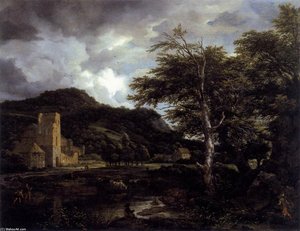
- The Cloister (1650)
- Rough Sea at a Jetty (1650)
- Two Watermills and an Open Sluice near Singraven (1650)
Legado e Influencia
El alcance de la visión de Jacob Van Ruisdael se extendió mucho más allá de las fronteras de los Países Bajos, calando en los cimientos mismos de las tradiciones paisajistas posteriores. Fue un romántico antes del Romanticismo, dotando al mundo natural de un sentido de peso moral y un estado de ánimo melancólico y poético que anticipó la intensidad emocional de los siglos venideros. Esta capacidad para infundir en una escena una atmósfera psicológica específica permitió que su obra resonara con diversos movimientos mucho después de su muerte. Su influencia ayudó a moldear a los románticos ingleses y a la escuela de Barbizon en Francia, y su impacto cruzó el Atlántico para informar a la escuela del río Hudson en los Estados Unidos.
En su propia patria, inspiró a generaciones de artistas paisajistas holandeses, estableciendo un estándar sobre cómo el campo podía ser interpretado a través de la luz y la sombra. Su enfoque del entorno nunca fue meramente topográfico; buscaba capturar la esencia de la tierra, utilizando a menudo cielos dramáticos y texturas densas para transmitir una sensación de lo sublime. Este enfoque en las cualidades atmosféricas de la naturaleza aseguró que sus elecciones estilísticas se convirtieran en una piedra angular para aquellos que siguieron sus pasos.
Dónde ver sus obras hoy en día
La presencia física de sus lienzos permanece dispersa por los principales repositorios de arte de Europa y América. En los Países Bajos, el Rijksmuseum en Ámsterdam custodia una colección significativa de su producción, ofreciendo una mirada concentrada a su evolución artística. Cerca de allí, el Mauritshuis en La Haya también alberga varias de sus pinturas, proporcionando una ventana a los paisajes que definieron su carrera. Su alcance se extiende hasta la National Gallery en Londres, donde sus obras se exhiben junto a otros maestros holandeses de gran relevancia.
Más allá de las fronteras neerlandesas, su influencia es visible en las colecciones permanentes de diversas instituciones internacionales. Tanto El Louvre en París como el Museo Hermitage en San Petersburgo contienen sus obras, asegurando que su lenguaje visual siga formando parte del canon global. En los Estados Unidos, el Metropolitan Museum of Art en Nueva York preserva sus pinturas, permitiendo un estudio continuo de su magistral enfoque de la luz y la atmósfera.
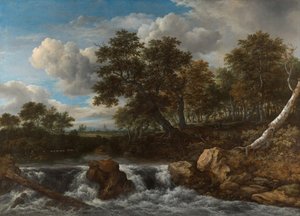
- Landscape with Waterfall, hacia 1668
- The Windmill at Wijk bij Duurstede, 1670
- View of Haarlem with Bleaching Grounds, 1675
- The Dam Square in Amsterdam (detail), 1670

Jacob Ruysdael
1628 - 1682 , Países Bajos
Datos clave
- Artistas O Movimientos Influenciados Por Este Artista:
- Románticos ingleses
- Escuela de Barbizon
- Escuela del río Hudson
- Artistas Que Influyeron En Este Artista:
- Cornelis Vroom
- Allart van Everdingen
- Fecha De Muerte: 1682
- Fecha De Nacimiento: 1628
- Lugar De Nacimiento: Haarlem, Países Bajos
- Movimiento O Estilo Artístico: Edad de Oro holandesa
- Nacionalidad: Holandesa
- Nombre Completo: Jacob Isaackszoon Van Ruisdael
- Obras Notables:
- Claro en un bosque
- Paisaje con un pueblo a lo lejos
- La espesura
- El claustro
- Mar agitado en un muelle
- Dos molinos de agua y una esclusa abierta
- Paisaje con un viajero
- Campo
- Límite de un bosque con un campo de cereales
- Escena boscosa con lago
- El arroyo del bosque
- Cascada en un paisaje rocoso
- Paisaje con pastores y campesinos
- Campos de cereales
- Un paisaje extenso con un castillo en ruinas
- Paisaje con iglesia y pueblo
- La cascada
- Paisaje con cascada
- El molino de viento en Wijk bij Duurstede
- Paisaje con castillo en ruinas e iglesia
- Paisaje invernal
- Campos de trigo
- El rompeolas
- Torrente de montaña
- Capilla junto a una cascada
- Vista de la playa
- Vista de Haarlem con campos de blanqueo
- Vista de la Plaza de Dam y el Damrak
Artículos relacionados

The Golden Harvest: Examining Vincent van Gogh’s Wheat Field Landscapes from Saint-Rémy
Explore the vibrant textures and colors of Van Gogh's Saint-Rémy wheat fields. Dive into this expert analysis of Post-Impressionist mastery.
Jacob van Ruisdael: Master of Dutch Landscape & the Evocation of National Identity
Explore the life & work of Jacob van Ruisdael, the preeminent Dutch landscape painter. Discover his technical brilliance, symbolic depth, and lasting influence on art history. Learn about collecting Ruisdael's masterpieces.

Dutch Golden Age Landscapes: The Art of Atmospheric Realism and the Pastoral Ideal
Explore the mastery of Dutch Golden Age landscapes and atmospheric realism. Discover the secrets of these 17th-century masters now.

Jan van Goyen: Master of Dutch Landscape & Atmospheric Perspective
Discover Jan van Goyen, the master of Dutch landscape painting. Explore his subtle technique, atmospheric realism & lasting influence on art history. Learn about this 17th-century pioneer at OriginalUniqueArt.

Los 10 Maestros del Barroco Holandés: Obras que Definen una Época | OriginalUniqueArt
Descubre los 10 imprescindibles del Barroco holandés: Rembrandt, Vermeer y más. Explora la historia, técnica y belleza de estas obras maestras. Reproducciones de arte en OriginalUniqueArt.com para decorar tu hogar con elegancia.