Ver en contexto
 Enviar
 Compartir
 Detalles
 Guía
Guía

 Descargar
 Similares
 Radiografía
 Presentación de diapositivas
 Estadísticas
RUINES ROMAINES AVEC LE COLISEE


 Ver más
Giclée / Impresión de arte
Impresiones giclée o en lienzo de calidad de museo con producción rápida y opciones de acabado flexibles. ( Comprar pintura hecha a mano Cambiar a imagen digital)




P118B €10

P118H €10

P118W €10

P438Z €10

P508JH €12

P508YH €12

P805H €10

P805Z €10

P919BZ €10

P919G €10

P919XJ €10

P959ZH €10

P968JZ €12

W106C €8

W218G €10

W218JH €8

W218Y €10

W307PJ €10

W316G €10

W316PJ €8

W316Y €10

W398PJ €8

W4111J €10

W500HY €15

W500JH €15

W692G €12

W849H €8

W940BG €15

W953PJ €8




Elija entre nuestros tamaños predefinidos que respetan las proporciones originales de la obra.

Introduzca el ancho y el alto que necesite para adaptarse a su marco o pared. Una impresión solo puede recortarse, nunca hacerse más grande que la imagen original, por lo que un tamaño con una forma distinta perderá parte de la obra. Le enviaremos una maqueta digital para su aprobación antes de realizar cualquier impresión. La imagen que se muestra en esta página no refleja el recorte real; solo la maqueta lo hace.
Envío a todo el mundo () en 2 semanas en lugar de las 4/5 semanas estándar. (27 octubre)

Envío exprés gratuito a todo el mundo

Lienzo de lino de alta calidad

Seguro de envío total

Garantía de reembolso de aranceles aduaneros

Garantía de fidelidad cromática exacta

Política de devolución de 100 días (solo por defectos)

Garantía de devolución del 100% del dinero

Descuento por cantidad
 La opción de vidrio solo está disponible en tamaños inferiores a 110 cm.

RUINES ROMAINES AVEC LE COLISEE
Giclée / Impresión de arte
Dimensiones de la reproducción
-


Precio total final
€ 70
A Glimpse of Lost Grandeur: Hubert Robert’s “RUINES ROMAINES AVEC LE COLISEE”
Hubert Robert's "Ruines Romaines avec le Colisée" isn’t merely a depiction of crumbling stone; it’s an invitation to step back in time, a poignant meditation on the relentless march of history and the enduring allure of vanished civilizations. Painted around 1788, this captivating artwork transports us to a world where the echoes of Roman power resonate through the fragmented remains of its once-magnificent structures. Robert, a master of the "capriccio," skillfully blends meticulous observation with imaginative flourishes, creating an atmosphere thick with nostalgia and a subtle sense of melancholy. The painting’s strength lies not just in its technical brilliance – the masterful use of light, perspective, and texture – but also in its ability to evoke profound emotional responses, prompting us to contemplate our own place within the vast sweep of time.
Composition and Visual Narrative
The composition immediately draws the eye towards a central vista, a carefully orchestrated pathway leading into the distance where the imposing silhouette of the Colosseum dominates the horizon. Robert employs a strong sense of linear perspective, subtly diminishing the scale of the ruins as they recede, reinforcing their age and isolation. The foreground is dominated by colossal, fragmented columns – remnants of temples and public buildings – arranged in a deliberate framework that guides the viewer’s gaze. A circular basin, populated by figures sketching and observing, acts as an intriguing focal point within this ruinous landscape, suggesting a contemporary appreciation for the past amidst its decay. Scattered rubble and architectural fragments are not simply decorative elements; they actively contribute to the painting's narrative of loss and transformation.
Color, Light, and Atmospheric Effects
The color palette is deliberately muted, reflecting the weathered stone and the passage of centuries. Predominantly shades of grey, beige, brown, and pale blue create a tranquil yet somber atmosphere – a testament to time’s relentless work. Subtle touches of green from the foliage in the left foreground offer a delicate contrast, hinting at nature's persistent reclamation of these ancient spaces. Robert masterfully utilizes diffused light, suggesting an overcast day, which softens shadows and enhances the painting’s overall sense of tranquility. The lighting is particularly effective in highlighting the textures of the stone, emphasizing its roughness and age while simultaneously illuminating the figures within the scene, drawing our attention to their contemplative presence.
Romanticism, Antiquarianism, and Robert's Vision
“Ruines Romaines avec le Colisée” firmly resides within the realm of French Romanticism, yet it transcends simple picturesque landscapes. Robert’s work is deeply rooted in antiquarianism – a fascination with the past and a desire to preserve its memory through art. He wasn't simply documenting ruins; he was actively constructing imagined scenes, blending historical accuracy with poetic license. Influenced by artists like Piranesi, Robert created "capricci" that were not merely realistic depictions but rather evocative narratives of lost grandeur. The painting speaks to the Romantic sensibility’s preoccupation with emotion, imagination, and the sublime—the awe-inspiring beauty found in decay and ruin. Robert's own experiences – his time in Rome, his arrest during the Revolution, and his subsequent role as a guardian of Parisian gardens – undoubtedly shaped his artistic vision, imbuing his work with a profound sense of longing for a bygone era.
OriginalUniqueArt offers exquisite hand-painted reproductions of Hubert Robert’s “Ruines Romaines avec le Colisée,” allowing you to bring this evocative masterpiece into your home or office. Each reproduction is created by skilled artists using traditional oil painting techniques, faithfully capturing the original's atmospheric depth and emotional resonance. Explore our collection today and experience the timeless beauty of Robert’s vision.
Preguntas y respuestas
¿Qué tono predominante recorre "RUINES ROMAINES AVEC LE COLISEE" de Hubert Robert?
"RUINES ROMAINES AVEC LE COLISEE" se inclina hacia un tono Ochre to Sepia.
¿Está disponible una descarga en alta resolución de "RUINES ROMAINES AVEC LE COLISEE"?
Puede adquirir una imagen digital de "RUINES ROMAINES AVEC LE COLISEE" de Hubert Robert en su página de Imagen digital de alta resolución: descarga de una imagen digital en alta resolución.
¿Es "RUINES ROMAINES AVEC LE COLISEE" de Hubert Robert una pintura, un dibujo o un grabado?
En el catálogo, "RUINES ROMAINES AVEC LE COLISEE" de Hubert Robert está clasificado como WallArt. Esta categoría permite localizar obras similares.
Biografía del artista
Hubert Robert: Pintor de Ruinas y Visiones
- Nacimiento: 22 de mayo de 1733, París, Francia
- Fallecimiento: 15 de abril de 1808, París, Francia
Hubert Robert fue un pintor francés celebrado por sus evocadores paisajes y pinturas de *capricho*—representaciones pintorescas semi-ficticias de ruinas en Italia y Francia. Se le considera una figura clave que une los períodos Rococó y Neoclásico, anticipando aspectos del Romanticismo con su fascinación por la decadencia, la historia y las reconstrucciones imaginativas.
Primeros Años y Formación Artística
Nicolas Robert, el padre de Hubert, sirvió a François-Joseph de Choiseul, Marqués de Stainville. Robert recibió una educación jesuita en el Collège de Navarre en 1751. Luego estudió escultura con Michel-Ange Slodtz, quien lo animó a dedicarse a la pintura. Esta formación temprana le inculcó una sólida base en diseño y perspectiva, elementos cruciales que definirían más tarde su estilo artístico.
Los Años Romanos y Desarrollo Artístico (1754-1765)
- Traslado a Roma: En 1754, Robert viajó a Roma con Étienne-François de Choiseul, hijo de su empleador.
- Once Años en Italia: Pasó once años en Roma, un período formativo para su desarrollo artístico.
- Apoyo y Patronazgo: Se sustentó creando obras para conocedores visitantes como el Abbé de Saint-Non.
- Influencia de Giovanni Paolo Panini: Robert trabajó junto a Giovanni Paolo Panini, cuya influencia es evidente en sus primeras composiciones de *capricho*.
- Dibujo y Observación: Dibujó meticulosamente ruinas y paisajes romanos, documentando sitios como la Villa d'Este y Caprarola, demostrando un agudo sentido del detalle y la perspectiva atmosférica.
Su tiempo en Roma moldeó profundamente su visión artística. La yuxtaposición de las antiguas ruinas romanas con la vida contemporánea despertó su interés por representar la decadencia junto a la vitalidad, un tema recurrente a lo largo de su carrera.
Regreso a París y Reconocimiento (1765-1790)
- Éxito Rápido: Al regresar a París en 1765, Robert rápidamente obtuvo reconocimiento.
- Admisión en la Académie Royale de Peinture et de Sculpture: Fue admitido en la Académie Royale de Peinture et de Sculpture con un *capricho* romano, "El Puerto de Roma, Ornamentado con Diferentes Monumentos de Arquitectura, Antiguos y Modernos".
- Exposiciones en el Salón: Sus exposiciones en el Salón (a partir de 1767) atrajeron una atención significativa. Denis Diderot comentó famosamente sobre la grandeza evocada por sus representaciones de ruinas.
- Obras Notables: Obras clave de este período incluyen "Paisaje con las Ruinas del Templo Circular, con una Estatua de Venus y un Monumento a Marco Aurelio", que muestra su dominio de la pintura de *capricho*.
El éxito parisino de Robert se debió a su capacidad para capturar tanto la grandeza de la antigüedad clásica como la vitalidad de la vida contemporánea. Sus obras resonaron en el público fascinado por la historia, la arqueología y lo pintoresco.
Últimos Años, Revolución y Legado (1790-1808)
- Revolución Francesa: Robert fue testigo y documentó la Revolución Francesa, incluyendo la demolición de monumentos históricos.
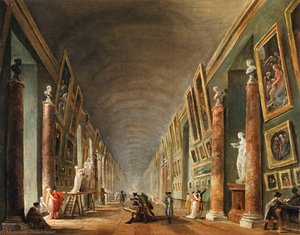
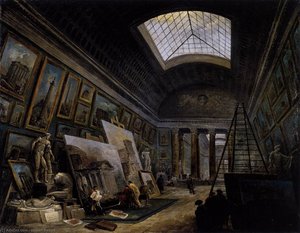
- Curador del Muséum Central des Arts: Sirvió como curador del recién establecido Muséum Central des Arts (luego el Louvre), demostrando su compromiso con la preservación del patrimonio cultural.
- Producción Artística Continua: A pesar del turbulento clima político, Robert continuó pintando y dibujando prolíficamente.
- Reproducción e Influencia: Sus obras fueron frecuentemente reproducidas por artistas como el Abbé de Saint-Non, Châtelain, Linard y Le Veau, lo que atestigua su amplia influencia.
El legado de Hubert Robert radica en su capacidad única para combinar la precisión histórica con la visión imaginativa. Pionero de un género de pintura que celebra tanto la belleza de la decadencia como el poder perdurable de la creatividad humana. Su obra continúa inspirando a artistas y cautivando al público, consolidando su lugar como una figura significativa en el arte del siglo XVIII.
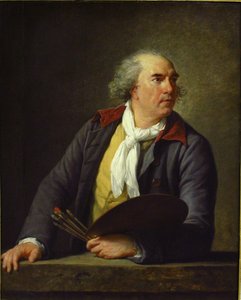
Hubert Robert
1733 - 1808 , Francia
Datos clave
- Artistas Que Influyeron: ['Giovanni Paolo Panini']
- Fecha De Fallecimiento: 15 de abril de 1808
- Fecha De Nacimiento: 22 de mayo de 1733
- Lugar De Nacimiento: París, Francia
- Movimiento Artístico: Rococó y Neoclasicismo
- Nacionalidad: Francés
- Nombre Completo: Hubert Robert
- Obras Notables:
- Interior del Templo de Diana
- Le château de la Roche Guyon
- El artista dibujando en los jardines
- Paisaje con terraza y cascada
- Villa Sachetti
- Establos en ruinas de Villa Giulia
Artículos relacionados
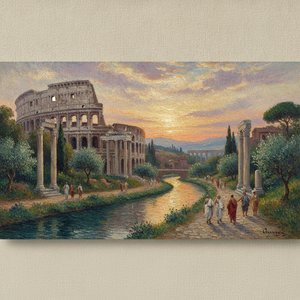
Capturing Eternal Glory: Impressionist Visions of the Roman Empire's Timeless Grandeur
Explore the breathtaking intersection of Roman grandeur and Impressionist light. Discover how masters like Monet reimagined classical ruins through vibrant, emotive brushstrokes. A cultural journey for true art lovers seeking to bring eternal glory into their homes.
Paul Huet: Capturing the Essence of French Romanticism Through Light and Landscape
Explore the captivating world of Paul Huet (1803-1869), a master of French Romantic landscape painting. Discover his influence on Barbizon & Impressionism, and browse high-quality reproductions at OriginalUniqueArt.
Timeless Grandeur: Capturing the Majesty of Roman Architecture through the Lens of Art History
Explore the profound beauty of Roman architecture through art history. From Piranesi's evocative engravings to classical masterpieces, discover how the grandeur of ancient Rome continues to inspire collectors and art enthusiasts worldwide.

David Roberts: A Scottish Pioneer of Topographical Art & Orientalist Vision
Explore the captivating world of David Roberts, a pioneering Scottish painter renowned for his detailed Orientalist scenes & stunning Egyptian landscapes. Discover his legacy and find museum-quality reproductions at OriginalUniqueArt.

Hubert Robert: Picturing Ruins, Preserving Memory – A Study of Romantic Antiquarianism & Artistic Innovation
Explore the captivating world of Hubert Robert, master of Romantic landscape painting & 'capriccio' ruins. Discover his historical context, artistic innovations, and collecting insights with OriginalUniqueArt.