Cambiar a impresiones
 Ver más







































 Para obras de arte o reproducciones que midan más de 105 cm (aproximadamente 41 pulgadas) en cualquiera de sus lados, el marco se enviará como un kit desmontado. Este método garantiza una entrega segura y evita daños durante el transporte.


A Moment Frozen in Pastel Light – The Significance of Degas' Kneeling Nude
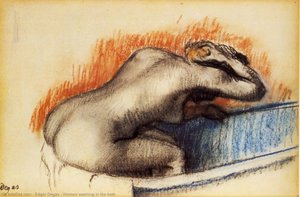
Edgar Degas, a name synonymous with ballet and fleeting impressions, remains one of the most influential figures in Impressionist art. His oeuvre transcends mere depiction; it captures an essence of movement and emotion that continues to resonate with audiences today. Among his numerous masterpieces, “Kneeling Nude,” created around 1888, stands as a particularly poignant example of his artistic prowess and unwavering commitment to portraying the human form with remarkable sensitivity.
- Subject Matter: The painting portrays a solitary woman kneeling on the ground, her head bowed in what appears to be contemplation or perhaps sorrow. This posture immediately conveys vulnerability and invites viewers to consider themes of introspection and quiet suffering – subjects rarely explored with such nuanced detail during Degas’s time.
- Style & Technique: Degas famously eschewed the label “Impressionist,” preferring a more descriptive term, yet his technique undeniably embodies the spirit of Impressionism. He skillfully utilized pastel crayons—a medium favored for its ability to achieve luminous color blends and subtle tonal variations—creating an ethereal atmosphere that contrasts sharply with the rigid conventions of academic painting.
Pastel’s Delicate Dance: Degas' Innovative Approach
Unlike oil paints, pastels offer unparalleled control over texture and luminosity. Degas meticulously layered pastel hues onto paper, achieving a velvety surface that captures the nuances of light and shadow with breathtaking accuracy. This technique allowed him to convey not only visual beauty but also an emotional depth rarely found in other mediums. The soft pastel colors—primarily muted pinks, creams, and blues—harmoniously blend together, creating a sense of tranquility while simultaneously hinting at underlying tension.
- Color Palette: Degas’s masterful color palette contributes significantly to the painting's emotive impact. The dominant hues evoke feelings of serenity and vulnerability, mirroring the woman’s posture and conveying a profound awareness of inner turmoil.
- Texture & Light: The pastel medium’s ability to render delicate textures—particularly in capturing the folds of fabric and the contours of skin—elevates “Kneeling Nude” beyond mere representation. Degas expertly manipulates light, casting soft shadows that accentuate the woman's form and deepen the painting’s psychological dimension.
Historical Context & Artistic Legacy
“Kneeling Nude” emerged during a period of artistic experimentation and intellectual ferment—the Belle Époque—characterized by a fascination with psychology and an interest in exploring human emotion. Degas's work aligns perfectly with the Impressionist movement’s desire to capture fleeting moments of experience, prioritizing subjective perception over objective observation.
- Influence: Degas’s innovative use of pastel has profoundly influenced subsequent generations of artists, inspiring them to embrace expressive mediums and prioritize emotional resonance.
- Symbolism: The kneeling posture itself carries symbolic weight—representing humility, submission, and perhaps a yearning for solace. It invites contemplation on themes of resilience and inner strength amidst adversity.
A Timeless Reflection of Human Vulnerability
"Kneeling Nude" continues to captivate viewers with its understated beauty and profound psychological depth. Its delicate pastel hues, masterful technique, and evocative composition encapsulate the essence of Impressionist art—a celebration of fleeting moments and an exploration of human emotion. At OriginalUniqueArt.com, you can acquire a stunning reproduction that faithfully preserves the original’s artistic integrity, allowing you to experience Degas's vision firsthand.
Preguntas y respuestas
¿Es "Kneeling Nude" más bien clara o más bien oscura en su conjunto?
"Kneeling Nude" presenta un brillo general de brillante y una luminancia de Luminosidad suave.
¿Cómo se combinan el contraste y la armonía en "Kneeling Nude"?
La composición cromática de "Kneeling Nude" de Hilaire-Germain-Edgar Degas combina un contraste Declaración con una armonía Gran unidad cromática.
¿A qué movimiento artístico pertenece "Kneeling Nude" de Hilaire-Germain-Edgar Degas?
El movimiento asociado con "Kneeling Nude" de Hilaire-Germain-Edgar Degas es Impressionist Painting. Esta clasificación sitúa la obra entre artistas y obras relacionadas.
 Ver en contexto
 Enviar
 Compartir
 Detalles
 Guía
Guía

 Descargar
 Similares
 Radiografía
 Presentación de diapositivas
 Preguntas y respuestas
 Estadísticas