Ver en contexto
 Enviar
 Compartir
 Detalles

 Descargar
 Similares
 Radiografía
 Presentación de diapositivas
cleopatre


 Ver más
Reproducción al óleo hecha a mano
Óleo sobre lienzo pintado a mano en el tamaño y marco de su elección, realizado por encargo por nuestros artistas. ( Comprar impresión Comprar imagen)




P118B $10

P118H $10

P118W $10

P438Z $10

P508JH $12

P508YH $12

P805H $10

P805Z $10

P919BZ $10

P919G $10

P919XJ $10

P959ZH $10

P968JZ $12

W106C $8

W218G $10

W218JH $8

W218Y $10

W307PJ $10

W316G $10

W316PJ $8

W316Y $10

W398PJ $8

W4111J $10

W500HY $15

W500JH $15

W692G $12

W849H $8

W940BG $15

W953PJ $8




Elija entre nuestros tamaños predefinidos que respetan las proporciones originales de la obra.

Puede ingresar sus propias dimensiones para adaptarse a un marco o espacio específico. Si el tamaño seleccionado no coincide con las proporciones de la imagen original, recortaremos la obra o extenderemos la pintura con elementos adicionales pintados a mano. Se le enviará una maqueta digital para su aprobación antes de comenzar la producción.
Tenga en cuenta que la vista previa en pantalla no refleja el recorte o la extensión reales. Solo la maqueta mostrará con precisión la composición final.
Si bien existen tamaños personalizados, recomendamos seleccionar una dimensión de la lista predefinida para preservar las proporciones originales.
Tras realizar el pedido, el equipo de OriginalUniqueArt.com enviará un correo electrónico al cliente para solicitar instrucciones y proporcionarle una vista previa del boceto.
Envío a todo el mundo () en 3-4 semanas en lugar de las 5 semanas estándar. (30 agosto). Sin comprometer la calidad.

Envío exprés gratuito a todo el mundo

Lienzo de lino de alta calidad

Seguro de envío total

Garantía de reembolso de impuestos aduaneros

Garantía de fidelidad cromática exacta

Política de devolución de 60 días (solo por defectos)

Garantía de devolución del 100% del dinero

Descuento por cantidad
 La opción de vidrio solo está disponible en tamaños inferiores a 110 cm.

cleopatre
Técnica de reproducción
Dimensiones de la reproducción
-


Precio total final
$ 300
A Nocturne of Mystery: Exploring Gustave Moreau’s “Cleopatra”
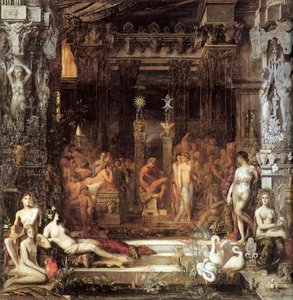
Gustave Moreau's "Cleopatra," a captivating image of a woman seated upon a stone bench beneath the watchful gaze of the moon, is more than just a portrait; it’s an immersion into the dreamlike world of Symbolism. Painted during his prolific career (1826-1898), this work exemplifies Moreau's profound engagement with mythology, psychology, and the evocative power of suggestion. Born in Paris, Moreau rejected the naturalistic trends dominating 19th-century art, instead forging a unique path rooted in personal symbolism and an intense desire to tap into the subconscious.
- Subject & Composition: The central figure, identified as Cleopatra, is presented with her back turned to the viewer, immediately establishing a sense of detachment and mystery. Her posture – seated on a stone bench – evokes a classical Roman setting, subtly referencing the queen’s historical context while simultaneously elevating her to an almost mythical status.
- Atmosphere & Lighting: The nocturnal scene is dominated by a luminous moon, casting an ethereal glow that softens the forms and amplifies the painting's dreamlike quality. Moreau masterfully employs chiaroscuro – the dramatic contrast between light and dark – to create depth and focus attention on Cleopatra while enveloping the surrounding figures in shadow.
- Technique & Style: Moreau’s technique is characterized by meticulous detail, rich color palettes, and a deliberate avoidance of sharp outlines. He favored layering glazes of paint, building up complex textures and shimmering surfaces that contribute to the painting's opulent and slightly unsettling atmosphere. This approach aligns perfectly with the Symbolist movement’s emphasis on emotional expression over realistic representation.
Symbolism and Mythological Allusion
Moreau’s “Cleopatra” is saturated with symbolic meaning, drawing heavily from classical mythology and esoteric traditions. The presence of other figures – some seated, others standing – suggests a courtly scene, perhaps hinting at the queen's political power and influence. The bird in the upper right corner could represent prophecy or divine intervention, further reinforcing the painting’s mystical undertones. Cleopatra herself embodies a complex blend of beauty, intelligence, and tragedy—a potent symbol of female power and vulnerability.
The setting itself – a stone bench beneath a moonlit sky – is laden with significance. Stone represents permanence and timelessness, while the moon symbolizes mystery, intuition, and the subconscious mind. Moreau’s deliberate use of these elements elevates Cleopatra beyond a mere historical figure; she becomes an archetype, a representation of universal human experiences.
Historical Context & The Symbolist Movement
Painted during the late 19th century, “Cleopatra” reflects the broader artistic and intellectual currents of its time. Moreau was a key figure in the Symbolist movement, which emerged as a reaction against Realism and Impressionism. Symbolists sought to express subjective emotions and ideas through symbolic imagery rather than direct representation. They were influenced by Romanticism, mysticism, and occultism, exploring themes of dreams, mythology, and the darker aspects of human psychology.
Moreau’s work aligns with this movement's core tenets, prioritizing emotional impact and psychological depth over objective observation. His meticulous attention to detail and his use of rich color palettes were hallmarks of Symbolist painting, contributing to its enduring appeal and influence on subsequent generations of artists.
Emotional Impact & Artistic Value
"Cleopatra" possesses a haunting beauty that continues to captivate viewers today. Moreau’s masterful manipulation of light and shadow, combined with his evocative use of symbolism, creates an atmosphere of profound mystery and intrigue. This painting is not merely a depiction of a historical figure; it's a window into the artist's soul, a testament to his ability to translate subjective emotions and spiritual yearnings into a visually stunning work of art. A hand-painted reproduction offers a unique opportunity to experience the full impact of Moreau’s vision, bringing this enigmatic masterpiece into your home or studio.
Biografía del artista
**vida temprana y educación**
gustave moreau, un artista francés, nació el 6 de abril de 1826 en París. Recibió una formación académica tradicional en pintura en la école des beaux-arts, mostrando una aptitud para el dibujo desde temprana edad.**el movimiento simbolista**
La obra de Moreau, caracterizada por temas alegóricos y mitológicos, lo posicionó como un destacado pintor simbolista, especialmente durante los años 1890. Su arte (y el simbolismo en general) cayó en desfavor pero ha sido reevaluado desde la década de 1960, con Moreau ahora considerado entre los pintores simbolistas más importantes.**obras notables y exposiciones**
* salomé en la prisión (pintura de 'gustave moreau') es un ejemplo notable de su obra, mostrando su dominio del simbolismo. * autorretrato (pintura de 'gustave moreau') es otra poderosa representación del artista en sí mismo.**museo gustavo moreau**
El museo nacional gustavo-moreau (museo gustavo moreau paris, francia) en París está dedicado a la obra de Moreau, que alberga más de 1200 pinturas, acuarelas y dibujos. El museo es un testimonio de su legado artístico.**legado e influencia**
La influencia de Moreau en el movimiento simbolista es innegable. Enseñó en la école des beaux-arts, influyendo en artistas notables como hénri matisse y giorges rouault. Su naturaleza reclusiva no disminuyó su impacto en el mundo del arte.- descubra más sobre la vida y obra de gustavo moreau en OriginalUniqueArt.com
- explore el museo nacional gustavo-moreau y su impresionante colección de obras de arte en museo gustavo moreau paris, francia
- aprenda más sobre el movimiento simbolista y su importancia en la historia del arte en el movimiento simbolista de arte

Gustave Moreau
1826 - 1898 , Francia
Datos clave
- Artistas Influenciados:
- Henri Matisse
- Georges Rouault
- Artistas Que Influyeron:
- Eugène Delacroix
- Miguel Ángel
- Leonardo da Vinci
- Fecha De Muerte: 1898
- Fecha De Nacimiento: 6 de abril de 1826
- Lugar De Nacimiento: París, Francia
- Movimiento Artístico: Simbolismo
- Nacionalidad: Francés
- Nombre Completo: Gustave Moreau
- Obras Notables:
- Salomé en la prisión
- Autorretrato
- Júpiter y Semele
- Orfeo
- La Aparición
Artículos relacionados
Gustave Moreau: Symbolism's Enigmatic Visionary & Precursors of Modern Fantasy Art
Explore the captivating world of Gustave Moreau, the leading Symbolist painter. Discover his iconic masterpieces, influences, and lasting legacy. Expert analysis for collectors & art enthusiasts.

Gustav Klimt: Las 25 Obras Maestras que Definen un Ícono del Arte Moderno | OriginalUniqueArt
Descubre las 25 obras maestras de Gustav Klimt, ícono del simbolismo y Art Nouveau. Explora 'El Beso', 'Judith' y más. Reproducciones de arte en OriginalUniqueArt.com para decorar tu hogar con elegancia. ¡Inspírate!

El Siglo XIX en el Arte: 10 Obras Maestras para Decorar con Historia y Estilo
Descubre 10 obras maestras del siglo XIX: Monet, Goya y más. Explora el impresionismo, realismo y romanticismo que definieron una época. Encuentra reproducciones de arte exclusivas para decorar tu hogar con estilo en OriginalUniqueArt.com.
Symbolism & the Subconscious: How 19th-Century Artists Painted Dreams and Emotion
Explore the evocative world of 19th-century Symbolism. Discover how masters like Gustave Moreau used dreams, myth, and metaphor to paint the subconscious, moving beyond realism to capture profound human emotion and spiritual truth.

Beyond Reality: A Definitive Guide to the Dreamlike World of Symbolist Painting
Explore the evocative world of Symbolist painting. Discover how masters like Gustave Moreau rejected realism to capture dreams, myths, and the subconscious through fine art history and expert analysis.