Ver en contexto
 Enviar
 Compartir
 Detalles
 Guía
Guía

 Descargar
 Similares
 Radiografía
 Presentación de diapositivas
 Q&A
Q&A Estadísticas
St Ansanus Baptizing

- 31.0 x 32.0 cm


 Ver más
Giclée / Impresión de arte
Impresiones giclée o en lienzo de calidad de museo con producción rápida y opciones de acabado flexibles. ( Comprar pintura hecha a mano Cambiar a imagen digital)




P118B €10

P118H €10

P118W €10

P438Z €10

P508JH €12

P508YH €12

P805H €10

P805Z €10

P919BZ €10

P919G €10

P919XJ €10

P959ZH €10

P968JZ €12

W106C €8

W218G €10

W218JH €8

W218Y €10

W307PJ €10

W316G €10

W316PJ €8

W316Y €10

W398PJ €8

W4111J €10

W500HY €15

W500JH €15

W692G €12

W849H €8

W940BG €15

W953PJ €8




Elija entre nuestros tamaños predefinidos que respetan las proporciones originales de la obra.

Introduzca el ancho y el alto que necesite para adaptarse a su marco o pared. Una impresión solo puede recortarse, nunca hacerse más grande que la imagen original, por lo que un tamaño con una forma distinta perderá parte de la obra. Le enviaremos una maqueta digital para su aprobación antes de realizar cualquier impresión. La imagen que se muestra en esta página no refleja el recorte real; solo la maqueta lo hace.
Envío a todo el mundo () en 2 semanas en lugar de las 4/5 semanas estándar. (1 noviembre)

Envío exprés gratuito a todo el mundo

Lienzo de lino de alta calidad

Seguro de envío total

Garantía de reembolso de aranceles aduaneros

Garantía de fidelidad cromática exacta

Política de devolución de 100 días (solo por defectos)

Garantía de devolución del 100% del dinero

Descuento por cantidad
 La opción de vidrio solo está disponible en tamaños inferiores a 110 cm.

St Ansanus Baptizing
Giclée / Impresión de arte
Dimensiones de la reproducción
-


Precio total final
€ 71
A Moment of Grace: Giovanni di Paolo's "St Ansanus Baptizing"
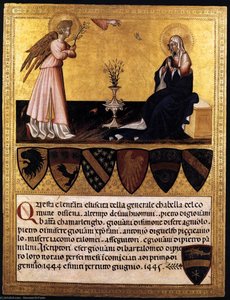
Giovanni di Paolo’s “St Ansanus Baptizing,” painted in Siena around 1440, is more than just a depiction of a religious ritual; it’s a window into the soul of early fifteenth-century Italy. This intimate scene, measuring 31 x 32 cm, captures a pivotal moment – the baptism – with a quiet solemnity that speaks volumes about faith and community. The painting immediately draws the eye to St. Ansanus himself, positioned on the left, his posture radiating authority as he prepares to pour water over those being cleansed in the river. His presence is both deliberate and compassionate, embodying the spiritual significance of this sacrament.
- Subject Matter: The central theme revolves around the baptism of individuals, a cornerstone of Christian belief representing purification and entry into the faith.
- Composition: Di Paolo masterfully employs a pyramidal composition, directing the viewer’s gaze towards St. Ansanus while subtly incorporating other figures within the scene.
- Setting: The outdoor setting, complete with a simple wooden chair, adds to the realism and reinforces the sense of a genuine, unadorned ceremony.
A Glimpse into Giovanni di Paolo’s Unique Style
Giovanni di Paolo was a singular voice within the burgeoning artistic landscape of Siena during this period. While other artists were embracing the revolutionary naturalism championed by Masaccio and Donatello, Di Paolo remained firmly rooted in the traditions of Gothic art, particularly its emphasis on lyrical beauty and symbolic richness. His work is characterized by an almost dreamlike quality, achieved through a meticulous attention to detail and a vibrant palette—a hallmark of his training as a manuscript illuminator. The use of rich blues, reds, and golds, typical of Sienese painting at the time, contributes significantly to the painting’s luminous effect.
The artist's technique is notable for its delicate rendering of fabrics and textures, evident in the flowing robes of the figures and the shimmering surface of the water. This meticulous approach, combined with a slightly stylized representation of human forms, creates an atmosphere that is both realistic and imbued with spiritual significance.
Symbolism and Context
Baptism held profound symbolic weight within the medieval Christian world. The immersion in water represented cleansing from sin and rebirth into Christ. In “St Ansanus Baptizing,” each figure participating in the ceremony carries a specific meaning – representing the faithful receiving God’s grace. St. Ansanus, as a prominent bishop, symbolizes spiritual guidance and authority. The scene reflects the importance of community rituals within the religious life of the time, emphasizing shared faith and devotion.
Painted around 1440, this work sits squarely within the late Gothic period, a transitional moment in Italian art history. It demonstrates the continued influence of medieval artistic conventions while hinting at the emerging Renaissance interest in naturalism and human emotion – a subtle foreshadowing of the dramatic shifts to come.
Emotional Impact & Reproduction
“St Ansanus Baptizing” evokes a powerful sense of serenity and reverence. The painting’s quiet intensity invites contemplation on themes of faith, purity, and renewal. OriginalUniqueArt offers a meticulously crafted hand-painted reproduction of this captivating artwork, allowing you to bring its beauty and historical significance into your home or office. Our skilled artisans faithfully recreate Di Paolo's unique style, ensuring that every detail – from the shimmering fabrics to the nuanced expressions of the figures – is reproduced with exceptional accuracy. This reproduction provides a tangible connection to a pivotal moment in art history, offering an unparalleled opportunity for artistic appreciation and contemplation.
Preguntas y respuestas
¿Qué técnica y estilo caracterizan a "St Ansanus Baptizing" de Giovanni di Paolo?
"St Ansanus Baptizing" está realizada en Oil On Canvas, con el estilo Early Gothic.
¿Se encuentra "St Ansanus Baptizing" de Giovanni di Paolo entre las obras más codiciadas del Early Gothic?
"St Ansanus Baptizing" de Giovanni di Paolo se clasifica como Recognized y pertenece al movimiento Early Gothic.
¿En qué estancia encaja mejor "St Ansanus Baptizing" de Giovanni di Paolo, considerando su paleta de colores?
Con su paleta de Dark, "St Ansanus Baptizing" de Giovanni di Paolo es ideal para una Dining Room. Sus colores son parte de la razón de esta sugerencia.
Biografía del artista
Giovanni di Paolo: Un Pintor Sienés de Sueños
- Nacido: c. 1403, Siena, Italia
- Fallecido: 1482, Siena
Vida Temprana y Desarrollo Artístico
Giovanni di Paolo di Grazia emergió como una figura significativa en la escena artística sienesa durante el siglo XV. Si bien los detalles precisos de su vida temprana permanecen algo oscuros, se cree que pudo haber sido aprendiz de Taddeo di Bartolo o Martino di Bartolomeo, ambos maestros sieneses prominentes. Su entrenamiento inicial probablemente involucró la iluminación de manuscritos, como lo demuestran sus trabajos documentados para la Orden Dominicos en Siena a partir de 1417. Este período perfeccionó sus habilidades en detalle y aplicación del color, elementos cruciales que definirían más tarde su estilo artístico.
Estilo Artístico e Influencias
El arte de Giovanni di Paolo se caracteriza por una mezcla única de tradiciones góticas y sensibilidades renacentistas emergentes. Sus primeras obras reflejan la influencia de los maestros sieneses anteriores, pero a medida que avanzaba su carrera, desarrolló un lenguaje visual distintivo marcado por figuras alargadas, colores fríos y ásperos, y una atmósfera a menudo surrealista. Una influencia clave fue Gentile da Fabriano, cuya visita a Siena alrededor de 1420 impactó profundamente la visión artística de Giovanni. Adoptó elementos del estilo de Gentile, particularmente la incorporación de detalles naturalistas como plantas en flor dentro de escenas religiosas, una desviación de las representaciones más convencionales de santos de pie.
- Influencia Gótica: Evidente en sus figuras alargadas y patrones decorativos.
- Impacto de Gentile da Fabriano: Adopción de elementos naturalistas y un enfoque en el detalle.
- Calidad Onírica Única: Muchas obras poseen una atmósfera inusual y surrealista.
Obras Principales y Temas
La obra de Giovanni di Paolo incluye numerosos retablos, paneles e iluminaciones de manuscritos. Sus obras más celebradas demuestran su capacidad para transformar narrativas religiosas tradicionales en experiencias visuales cautivadoras. El *Milagro de San Nicolás de Tolentino* (c. 1455) ejemplifica su estilo surrealista con su paisaje fantástico y composición onírica. La serie que representa escenas de la vida de Santa Catalina de Siena, ahora dispersa entre varios museos, muestra su dominio de la pintura narrativa y la caracterización expresiva.
- Milagro de San Nicolás de Tolentino (c. 1455): Un ejemplo primordial de su estilo surrealista.
- Serie de Santa Catalina de Siena: Demuestra habilidad narrativa y retrato de personajes.
- Manuscritos Iluminados: Particularmente la *Divina Comedia* de Dante, que muestra detalles intrincados y color vibrante.
Significado Histórico y Legado
La reputación de Giovanni di Paolo experimentó un declive después de su muerte en 1482, pero su importancia artística fue redescubierta durante el siglo XX. Ahora se reconoce como una figura clave en la Escuela Sienesa, que une la brecha entre el arte gótico tardío y el Renacimiento temprano. Su disposición a experimentar con la forma y el color, junto con su visión onírica única, lo distinguieron de sus contemporáneos y lo estableció como una voz distintiva dentro de la historia del arte italiano.
- Figura de Transición: Unió estilos góticos y renacentistas.
- Significado Redescubierto: Reconocido en el siglo XX por su enfoque innovador.
- Visión Artística Única: Su cualidad onírica lo distingue de otros pintores sieneses.

Giovanni di Paolo
1403 - 1482 , Italia
Datos clave
- Artistas Que Influyeron:
- Gentile da Fabriano
- Taddeo di Bartolo
- Fecha De Fallecimiento: 1482
- Fecha De Nacimiento: c. 1403
- Lugar De Nacimiento: Siena, Italia
- Movimiento Artístico: Escuela Sienesa, Gótico
- Nacionalidad: Italiana
- Nombre Completo: Giovanni di Paolo
- Obras Notables:
- Milagro de San Nicolás
- Vida de Santa Catalina
- Divina Comedia (iluminaciones)
Artículos relacionados

Giclée Prints Explained: The Ultimate Guide to Museum-Quality Art Reproductions
Master the nuances of Giclée printing with our expert guide. Discover how pigment-based inks and museum-grade substrates create fade-resistant, high-fidelity art reproductions designed for discerning collectors seeking unparalleled quality and longevity.

Impresiones Giclée: Guía Técnica sobre Pigmentos de Archivo y Calidad de Soporte para Coleccionistas
Domina la técnica Giclée y el uso de pigmentos de archivo para coleccionismo. Descubre cómo evaluar la calidad de tus reproducciones hoy.
Reproducción Artística: Explorando Medios para la Preservación y Diseminación del Patrimonio Visual
Descubre reproducciones de arte excepcionales hechas por artistas expertos. Lienzos personalizados y réplicas fieles con garantía de calidad museo. ¡Preserva el patrimonio visual!

25 Obras Maestras de la Bienal de Venecia que Debes Conocer
Explora 25 obras icónicas de la Bienal de Venecia y su historia. ¡Descubre estas piezas maestras en OriginalUniqueArt.com!

Las 25 obras maestras de Giotto di Bondone: El padre del Renacimiento
Explora las 25 obras maestras de Giotto y el origen del Renacimiento. Descubre este legado en OriginalUniqueArt.com.