

 Ver en contexto
 Enviar
 Compartir
 Detalles

 Descargar
 Similares
 Radiografía
 Presentación de diapositivas
 Estadísticas
The Violin
 Oil On Canvas
- WallArt
- Cubist Fragmentation
 1914
1914- Modern
 92.0 x 60.0 cm
 Ver más
Adquiera una imagen digital de alta resolución y optimizada, muy superior a la vista previa en línea.
Cada archivo es preparado meticulosamente por nuestros especialistas internos mediante el uso de herramientas avanzadas y un experto retoque manual. Nos aseguramos de que cada imagen posea una claridad excepcional, una precisión cromática impecable y un detalle minucioso.
El archivo final se entrega por correo electrónico en un plazo de 72 horas, optimizado para su uso inmediato en entornos profesionales, editoriales y de impresión. Esta es la misma calidad en la que confían los estudios de diseño, las editoriales y las galerías de primer nivel.
Imagen Digital
Descarga un archivo de alta resolución para exhibición personal, impresión y proyectos creativos. ( Cambiar a Impresión Comprar pintura hecha a mano)
Incluido en cada pedido de imágenes digitales
Entrega digital experta, garantizada.
Al elegir OriginalUniqueArt.com, no solo está adquiriendo una imagen; está recibiendo una obra de arte digital mejorada profesionalmente, elaborada con precisión y respaldada por una garantía de satisfacción. Esto es todo lo que incluye su pedido, automáticamente:

Entrega rápida por email
Recibirá su archivo de imagen digital en alta resolución por correo electrónico en un plazo de 72 horas tras realizar su pedido, listo para su uso inmediato.

Archivo digital optimizado por IA
Su obra de arte se optimiza profesionalmente mediante herramientas avanzadas de IA y edición manual, garantizando el máximo detalle, claridad y precisión cromática.

Reenvío gratuito de por vida
¿Has borrado o perdido tu archivo por error? No te preocupes: te lo volveremos a enviar en cualquier momento, sin coste adicional.

Sin gastos de importación, siempre
Disfrute de su obra de arte al instante sin aduanas, aranceles ni gastos de envío; las descargas digitales siempre están libres de impuestos.

Garantía de fidelidad de color
Garantizamos que su imagen digital refleje los colores originales con la mayor fidelidad posible, mediante el uso de herramientas profesionales y gestión del color.

Garantía de satisfacción de 100 días
Si no está satisfecho con su imagen digital, la revisaremos o le reembolsaremos el 100% en un plazo de 100 días, sin preguntas.

100% Garantía de devolución de dinero
¿No está satisfecho? Obtenga un reembolso completo dentro de los 100 días posteriores a la recepción de su archivo digital, sin preguntas.

Descuentos por pedidos grandes
Compra 3 imágenes, ahorra 10% - Compra 5, ahorra 15% - Compra 10+, ahorra 20%. Ideal para proyectos creativos, galerías y agencias.
A Symphony of Fragments: Reimagining the Violin
In the quiet tension of Georges Braque’s 1914 masterpiece, The Violin, we encounter more than a mere musical instrument; we witness the very moment the mirror of traditional reality was shattered and reassembled. This work stands as a cornerstone of Synthetic Cubism, a period where the artist moved beyond simply breaking objects apart to building them back up through a complex language of signs and textures. The violin, a universal symbol of lyrical beauty and human emotion, is stripped of its literal form and instead presented as a rhythmic arrangement of geometric planes. As one gazes upon the composition, the eye does not rest on a single, stable object but rather dances across overlapping surfaces—cubes, cylinders, and cones—that challenge our fundamental understanding of space and depth.
The painting’s stark, luminous background acts as a deliberate void, a white expanse that forces the viewer to confront the intricate, fractured anatomy of the instrument itself. Braque utilizes a sophisticated palette of muted earthy tones—rich ochres, deep browns, and subtle shadows—to lend a sense of tactile weight to the fragmented pieces. There is a profound materiality in his brushwork; one can almost feel the grain of the wood and the tension of the strings through the layered application of paint. This technique creates a sensory experience that transcends sight, inviting the collector to appreciate the structural rhythm and the "geometric truth" hidden beneath the surface of everyday objects.
The Intersection of Science and Soul
To understand The Violin, one must look toward the intellectual tremors felt across Europe in 1914. This was an era defined by radical shifts in thought, most notably Einstein’s theory of relativity, which dismantled the Newtonian concept of a fixed, predictable universe. Braque, much like his contemporary Pablo Picasso, sought to translate this new, fluid reality onto the canvas. By rejecting the single-point perspective that had dominated Western art since the Renaissance, Braque offers us multiple viewpoints simultaneously. He captures not just how an object looks from one angle, but how it exists in our memory and consciousness—a fragmented, multi-dimensional experience of time and space.
For the discerning interior designer or art enthusiast, this piece offers a profound emotional resonance. It is a work of intellectual depth that provides a sophisticated focal point for any modern space. The composition possesses a quiet, contemplative energy, making it an ideal selection for environments that value both avant-garde history and understated elegance. Whether placed in a sunlit gallery or a contemporary living room, The Violin serves as a conversation starter—a window into a period of immense cultural upheaval and a testament to the enduring power of human creativity to find order amidst complexity.
Biografía del artista
**vida temprana y formación**
georges braque, un destacado pintor francés, collageador, dibujante, grabador y escultor, nació el 13 de mayo de 1882 en Argelo, Val-d'Oise. Creció en Le Havre y inicialmente se formó para ser pintor de casas y decorador, como su padre y abuelo. Sin embargo, las inclinaciones artísticas de Braque lo llevaron a estudiar pintura en la École des Beaux-Arts en Le Havre de 1897 a 1899.**evolución artística y fauvismo**
En 1902, después de completar su aprendizaje con un decorador en París, Braque asistió a la Academia Humbert hasta 1904. Este período marcó su introducción al fauvismo, un estilo caracterizado por colores vibrantes y respuestas emocionales. Influenciado por las obras de henri matisse y andré derain, Braque adoptó un enfoque fauvista, como se ve en su pintura the patience (fauvismo, óleo sobre lienzo).**contribución al cubismo**
La colaboración de Braque con pablo picasso desde 1908 hasta 1912 llevó al desarrollo del cubismo. Sus obras cubistas analíticas, como georges braque: the patience y pablo picasso: clarinet(cubismo analítico, óleo sobre lienzo), se consideran hitos en la historia del arte.**legado y obras notables**
* Houses at l'Estaque: un testimonio del uso innovador de la geometría y la perspectiva simultánea de Braque. * The Patience(fauvismo, óleo sobre lienzo): demuestra el estilo fauvista de Braque. * Clarinet(cubismo analítico, óleo sobre lienzo): una obra cubista colaborativa con Picasso.**museos y colecciones**
* Musée d'Orsay: presenta una extensa colección de arte impresionista y postimpresionista, incluyendo obras de Braque. * Musée de l'Orangerie: exhibe una amplia gama de obras de arte, incluyendo las de Braque y otros artistas notables.- Descubra más sobre la vida y obra de Georges Braque en OriginalUniqueArt.com
- Explore la colección del Musée d'Orsay, que presenta obras de Braque y otros artistas, en Musée d'Orsay - Wikipedia
- Aprenda más sobre el fauvismo y su influencia en el desarrollo del cubismo con el movimiento artístico fauvista en OriginalUniqueArt.com
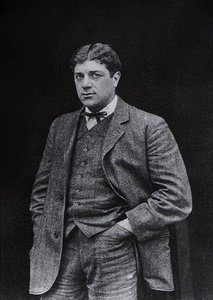
Georges Braque
1882 - 1963 , Francia
Breves datos
- Artistas Influenciados Por Este Artista: ['Pablo Picasso']
- Artistas Que Influyeron:
- Henri Matisse
- André Derain
- Paul Cézanne
- Fecha De Muerte: 31 de agosto de 1963
- Fecha De Nacimiento: 13 de mayo de 1882
- Lugar De Nacimiento: Argenteuil, Francia
- Movimiento Artístico: Cubismo, Fauvismo
- Nacionalidad: Francés
- Nombre Completo: Georges Braque
- Obras Notables:
- Casas en L'Estaque
- La paciencia (Fauvismo)
- Violin y Paleta
- Mandola