

 Vista previa
 Compartir
 Compartir
 Ver detalles
 Guía
Guía

 Descargar
 Ver artículos similares
 Radiografía
 Presentación de diapositivas
 Estadísticas
Ángel
 Óleo sobre lienzo
- Arte de pared
- Romantic Symbolism
 1908
1908 67.0 x 51.0 cm
 Neue Pinakothek
 Leer más
Giclée / Impresión de arte
Impresiones giclée o en lienzo de calidad de museo con producción rápida y opciones de acabado flexibles. ( Encargar reproducción pintada a mano Ver versión en imagen digital)




P118B €10

P118H €10

P118W €10

P438Z €10

P508JH €12

P508YH €12

P805H €10

P805Z €10

P919BZ €10

P919G €10

P919XJ €10

P959ZH €10

P968JZ €12

W106C €8

W218G €10

W218JH €8

W218Y €10

W307PJ €10

W316G €10

W316PJ €8

W316Y €10

W398PJ €8

W4111J €10

W500HY €15

W500JH €15

W692G €12

W849H €8

W940BG €15

W953PJ €8




Elija entre nuestros tamaños predefinidos que respetan las proporciones originales de la obra.

Introduzca el ancho y el alto que necesite para adaptarse a su marco o pared. Una impresión solo puede recortarse, nunca hacerse más grande que la imagen original, por lo que un tamaño con una forma distinta perderá parte de la obra. Le enviaremos una maqueta digital para su aprobación antes de realizar cualquier impresión. La imagen que se muestra en esta página no refleja el recorte real; solo la maqueta lo hace.
Envío a todo el mundo () en 2 semanas en lugar de las 4/5 semanas estándar. (25 octubre)

Envío exprés gratuito a todo el mundo

Lienzo de lino de alta calidad

Seguro de envío completo

Garantía de reembolso de impuestos aduaneros

Garantía de fidelidad cromática exacta

Política de devolución de 100 días (solo por defectos)

Garantía de devolución del 100% del dinero

Oferta por volumen
 La opción de vidrio solo está disponible en tamaños inferiores a 110 cm.

Ángel
Giclée / Impresión de arte
Tamaño de la reproducción
-


Precio total
€ 70
Una Mirada Profunda al Ángel de Fritz von Uhde
Este impresionante óleo pintado en 1908 por Fritz von Uhde representa una figura angelical, destacando la maestría artística entre el Realismo y el Simbolismo. Más allá de su belleza estética, esta obra invita a un viaje exploratorio hacia las raíces culturales y espirituales del artista alemán y el movimiento artístico que lo vio nacer.Descripción Detallada: La Luz y la Oscuridad como Lenguaje
La imagen captura una atmósfera íntima pero cargada de emoción. Una figura masculina, ligeramente desplazada hacia arriba en el lienzo, domina el espacio vertical, iluminada por una luz dramática proveniente de una ventana cubierta con cortinas translúcidas. Esta iluminación intensa crea fuertes contrastes entre luces y sombras que resaltan la expresión facial del ángel y las alas desplegadas, proyectando una sensación de melancolía y contemplación sobre el fondo oscuro. Los artistas impresionistas como Uhde buscaban plasmar la realidad percibida directamente desde la naturaleza, utilizando técnicas innovadoras para transmitir sentimientos complejos.Estilo y Técnica: Impasto y Color
El estilo artístico de Uhde se caracteriza por una mezcla armoniosa entre elementos realistas y expresivos. Aunque la composición sigue principios geométricos básicos, el artista emplea un estilo impresionista con pinceladas libres y gestuales que aportan textura y movimiento al cuadro. La técnica utilizada es particularmente notable: el uso extensivo del impasto –aplicación gruesa de pintura directamente sobre el lienzo– crea una superficie palpable llena de volumen y profundidad. Esta elección artística refleja la influencia del Romanticismo, donde se buscaba capturar emociones intensas y transmitir belleza idealizada. Los colores empleados son ricos y saturados, creando una atmósfera evocadora que refuerza el mensaje espiritual de la obra.Contexto Histórico: Pioneros del Plein Air en Alemania
Fritz von Uhde fue uno testigo directo de los cambios culturales y artísticos que marcaron finales del siglo XIX en Alemania. Como uno de los primeros artistas en abrazar el plein air –pintura al aire libre– Uhde desafió las tradiciones académicas dominantes, estableciendo un nuevo estándar para la representación artística. Este movimiento artístico buscaba capturar la belleza efímera de la naturaleza y transmitir sentimientos auténticos, impulsado por una creciente sensibilidad hacia temas religiosos y filosóficos. La obra "Angel" refleja esta visión del mundo, ofreciendo una reflexión sobre la espiritualidad humana y la búsqueda de trascendencia.Simbolismo: Más Allá de lo Visible
El ángel representado en el cuadro no es simplemente una figura religiosa convencional; sino que posee un profundo significado simbólico. Las alas simbolizan la conexión con lo divino, mientras que la flor delicadamente sostenida puede representar inocencia y fragilidad. Estos elementos evocan temas universales como la esperanza, la fe y la belleza espiritual, invitando al espectador a contemplar la esencia misma de la existencia humana. Esta obra maestra artística sigue siendo una fuente de inspiración para artistas y amantes del arte en todo el mundo.Preguntas y respuestas
¿Qué paleta y qué sentimiento combinan "Ángel"?
En "Ángel", los colores de Tonos tierra acompañan a un sentimiento Melancólico.
¿Quién es el autor y en qué año se creó "Ángel"?
Fritz Von Uhde realizó "Ángel" en 1908.
¿Dónde puedo comprar una reproducción pintada a mano de "Ángel" de Fritz Von Uhde?
Las copias pintadas a mano de "Ángel" de Fritz Von Uhde se venden en este sitio web: una reproducción al óleo pintada a mano sobre lienzo de lino, las cuales pueden solicitarse desde su página de Reproducción pintada a mano.
Biografía del artista
Early Life and Artistic Influences
Fritz von Uhde (born Friedrich Hermann Carl Uhde; 22 May 1848 – 25 February 1911) was a German painter of genre and religious subjects. His style lay between Realism and Impressionism, marking him as one of the first artists to champion plein-air painting in Germany—a bold departure from the studio tradition dominant at the time. Born in Wolkenburg, Saxony, Uhde’s familial background instilled within him a deep appreciation for artistic pursuits. His father, a part-time painter himself, and his maternal grandfather, director of the Royal Museums in Dresden, nurtured an environment rich in visual culture. From a young age, Uhde demonstrated a fervent fascination with art at Gymnasium, where he excelled academically and found solace in creative expression. Notably, his family’s Lutheran faith profoundly shaped his worldview and artistic sensibilities.Academic Training and Military Service
Driven by this passion, Uhde enrolled at the Dresden Academy of Fine Arts in 1866, encountering a prevailing artistic spirit markedly different from his own inclinations. Dissatisfied with the academy’s conservative approach, he swiftly abandoned formal studies to join the army, serving as horsemanship instructor to the regiment of the assembled guard and achieving the rank of Lieutenant in 1868. This military experience broadened his perspective and honed his observational skills—skills that would prove invaluable later in his artistic endeavors. The encounter with painter Makart in Vienna in 1876 proved pivotal, sparking a desire for independent artistic exploration and ultimately leading to his departure from the army in 1877.The Pursuit of Artistic Independence and Parisian Influences
Determined to forge his own path, Uhde relocated to Munich in 1877, immersing himself in the vibrant artistic milieu of the Bavarian capital and enrolling at the Academy there. Seeking inspiration from Dutch Old Masters—particularly Rembrandt—he diligently studied their techniques and compositional strategies. He also found mentorship under Lilla Cabot Perry, whose influence extended beyond mere stylistic imitation; Perry encouraged Uhde to embrace a more expressive use of color, reflecting the burgeoning Impressionist movement. Despite facing rejection from prestigious studios like Piloty’s or Lindenschmit’s, Uhde persevered in his quest for artistic recognition, traveling to Paris in 1879 where he continued his studies under Mihály Munkácsy's guidance.The Impressionist Breakthrough and Munich Secession
A transformative journey to the Netherlands in 1882 decisively altered Uhde’s artistic trajectory, prompting him to abandon the dark chiaroscuro favored by Munich artists in favor of a colorism deeply rooted in Impressionist principles. Encouraged by fellow artist Adolf Hölzel, Uhde experimented with plein-air painting—capturing landscapes and scenes directly from nature—a technique championed by luminaries like Claude Monet and Pierre Auguste Renoir. His iconic painting “The Singer” (1880), exhibited at the Paris Salon, garnered honorable mention and signaled a breakthrough moment in his artistic career. Recognizing the need for artistic renewal beyond academic confines, Uhde co-founded the Munich Secession in 1890 alongside Ludwig Dill and Lovis Corinth—a collective dedicated to challenging established conventions and advocating for a more liberated aesthetic vision.Later Years and Legacy
Throughout his later years, Uhde continued to produce masterful paintings characterized by profound psychological depth and symbolic resonance. His work achieved considerable acclaim during his lifetime, earning him honorary membership in the academies of Munich, Dresden, and Berlin. He became the first President of the Secession, solidifying his role as a leader within the German avant-garde. Considered one of the most important artists of the 20th century, Fritz von Uhde’s enduring influence can be seen in the works of subsequent generations of painters—artists who embraced his pioneering spirit and championed the expressive power of color and observation.
Fritz Von Uhde
1848 - 1911 , Alemania
Datos clave
- Artistic Movement Or Style: Impresionismo
- Artists Or Movements Influenced By This Artist: ['Vincent van Gogh']
- Artists Who Influenced This Artist:
- Rembrandt
- Makart
- Date Of Birth: 22 mayo 1848
- Date Of Death: 25 febrero 1911
- Full Name: Fritz Hermann Carl Uhde
- Nationality: Alemania
- Notable Artworks:
- El cantante
- Niños pescadores
- Place Of Birth: Wolkenburg, Saxony
Artículos relacionados

The Enduring Legacy of Oil on Canvas: Technique, History & Aesthetic Impact
Explore the rich history & techniques of oil painting – from Renaissance masters to Impressionism. Discover pigments, layering methods, and why this timeless medium endures. Expert insights for artists & art enthusiasts.
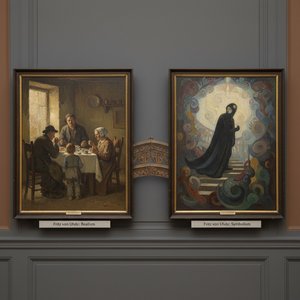
Fritz von Uhde: Bridging Realism & Symbolism in Late 19th-Century German Painting
Explore the captivating world of Fritz von Uhde, a pivotal German painter bridging Realism & Symbolism. Discover his plein-air techniques, religious themes, and influence on modern art. Learn about this fascinating artist at OriginalUniqueArt.

Celestial Messengers: A Comprehensive Exploration of Angelic Representation in Art History
Explore the captivating history of angels in art! Discover symbolism, iconic Renaissance masterpieces & renowned artists. Expert insights for art lovers & collectors at OriginalUniqueArt.

The Soul of Impressionism: Why Oil on Canvas Captures Eternal Light and Timeless Emotion
Discover the enchanting alchemy of Impressionism. Explore how the mastery of oil on canvas, through glazing and impasto, captures eternal light and emotion. Perfect for lovers of Monet and Van Gogh seeking the profound depth of hand-painted fine art.

Celestial Messengers: Angels in Painting – A Historical & Artistic Exploration
Explore the captivating history of angels in painting! Discover symbolism, iconic Renaissance & Byzantine masterpieces, and renowned artists. Expert insights for art lovers & collectors at OriginalUniqueArt.


