Cambiar a impresiones
 Ver más







































 Para obras de arte o reproducciones que midan más de 105 cm (aproximadamente 41 pulgadas) en cualquiera de sus lados, el marco se enviará como un kit desmontado. Este método garantiza una entrega segura y evita daños durante el transporte.


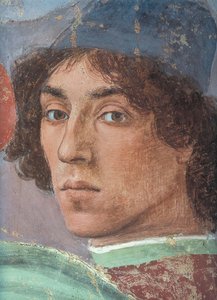
A Window into the Renaissance Soul
In the delicate detail of Filippino Lippi’s Assumption, we are transported far beyond the confines of the modern world and into the vibrant, breathing heart of the late fifteenth century. This breathtaking fresco fragment serves as a portal to an era where the divine and the earthly were inextricably linked through the mastery of line and light. As one gazes upon the scene, there is an immediate sense of movement; a lively, rhythmic procession of figures and horses winds through a valley that feels both mythic and profoundly real. The composition captures a fleeting moment of medieval life, where the grandeur of a distant castle meets the humble, kinetic energy of travelers navigating a lush landscape. It is not merely a depiction of a journey, but an invitation to witness the very pulse of the High Renaissance.
The artistry of Lippi shines through in his sophisticated use of perspective and color, elements that define the transition from the early experimental years of his career to his mature, masterful style. The technique employed here showcases a remarkable ability to layer figures within a deep, atmospheric space, creating a sense of infinite depth that draws the eye toward the horizon. His brushwork—or rather, his masterful application of fresco pigment—utilizes a rich palette that breathes life into the horses' coats and the flowing garments of the travelers. The lighting is particularly evocative, casting soft shadows that define form while maintaining a luminous quality that suggests a sun-drenched afternoon in the Italian countryside. For the discerning collector or interior designer, this piece offers a profound sense of classical elegance and structural balance.
Symbolism and the Majesty of Detail
Beyond its surface beauty, the Assumption (detail) carries a weight of historical and symbolic significance that resonates with anyone captivated by the narrative power of art. As the son of Fra Filippo Lippi, Filippino was raised in the shadow of greatness, yet he carved out a unique identity characterized by a more dramatic and emotionally charged approach than his contemporaries. In this work, the interplay between the bustling human activity below and the monumental landscape above symbolizes the intersection of mortal struggle and divine order. The castle, standing sentinel in the background, represents stability and the enduring legacy of civilization, while the wandering figures embody the transient, beautiful nature of human existence.
For those looking to integrate such a masterpiece into a curated space, the emotional impact of this work is unparalleled. It brings an atmosphere of intellectual depth and historical prestige to any room, acting as a conversation piece that speaks of heritage, exploration, and the timeless pursuit of beauty. Whether displayed in a grand library or a contemporary living area, the Assumption detail provides a sophisticated focal point that inspires contemplation. Owning a high-quality reproduction of this fresco allows one to possess a fragment of history—a piece of the Renaissance spirit that continues to illuminate the modern world with its grace, complexity, and enduring vitality.
Preguntas y respuestas
¿Quién es el autor de "Assumption (detail)" y a qué movimiento pertenece?
Filippino Lippi creó "Assumption (detail)" dentro del movimiento High Renaissance.
¿Es "Assumption (detail)" representativo de la temática habitual de Filippino Lippi?
"Assumption (detail)" representa people, horses, castle, valley, landscape, medieval scene, mientras que los temas recurrentes de Filippino Lippi son high renaissance style, biblical figures, roman landscape, masterful perspective, renaissance fresco mastery. Al comparar ambos, se observa cómo la obra se relaciona con los temas habituales del artista.
¿Se puede ver "Assumption (detail)" de Filippino Lippi en una presentación de diapositivas?
Puede ver "Assumption (detail)" de Filippino Lippi en formato de diapositivas en la página de Galería de imágenes de la obra.
Más información sobre esta pintura
 Enviar
 Compartir
 Detalles
 Guía
Guía

 Descargar
 Similares
 Presentación de diapositivas
 Preguntas y respuestas
 Estadísticas