

 Vista previa
 Compartir
 Compartir
 Ver detalles
 Guía
Guía

 Descargar
 Ver artículos similares
 Radiografía
 Presentación de diapositivas
 Estadísticas
Mujer en éxtasis
 Óleo sobre lienzo
- Arte de pared
- Art Nouveau
 1911
1911- Edad Moderna
 86.0 x 172.0 cm
 Leer más
Adquiera una imagen digital de alta resolución y optimizada, muy superior a la vista previa en línea.
Cada archivo es preparado meticulosamente por nuestros especialistas internos mediante el uso de herramientas avanzadas y un experto retoque manual. Nos aseguramos de que cada imagen posea una claridad excepcional, una precisión cromática impecable y un detalle minucioso.
El archivo final se entrega por correo electrónico en un plazo de 72 horas, optimizado para su uso inmediato en entornos profesionales, editoriales y de impresión. Esta es la misma calidad en la que confían los estudios de diseño, las editoriales y las galerías de primer nivel.
Imagen Digital
Descarga un archivo de alta resolución para exhibición personal, impresión y proyectos creativos. ( Cambiar a formato impreso Encargar reproducción pintada a mano)
Incluido en cada pedido de imágenes digitales
Entrega digital experta, garantizada.
Al elegir OriginalUniqueArt.com, no solo está adquiriendo una imagen; está recibiendo una obra de arte digital mejorada profesionalmente, elaborada con precisión y respaldada por una garantía de satisfacción. Esto es todo lo que incluye su pedido, automáticamente:

Entrega inmediata por email
Recibirá su archivo de imagen digital en alta resolución por correo electrónico en un plazo de 72 horas tras realizar su pedido, listo para su uso inmediato.

Archivo digital optimizado por IA
Su obra de arte se optimiza profesionalmente mediante herramientas avanzadas de IA y edición manual, garantizando el máximo detalle, claridad y precisión cromática.

Reenvío gratuito de por vida
¿Has borrado o perdido tu archivo por error? No te preocupes: te lo volveremos a enviar en cualquier momento, sin coste adicional.

Sin gastos de importación, siempre
Disfrute de su obra de arte al instante sin aduanas, aranceles ni gastos de envío; las descargas digitales siempre están libres de impuestos.

Garantía de precisión de color
Garantizamos que su imagen digital refleje los colores originales con la mayor fidelidad posible, mediante el uso de herramientas profesionales y gestión del color.

Garantía de satisfacción de 100 días
Si no está satisfecho con su imagen digital, la revisaremos o le reembolsaremos el 100% en un plazo de 100 días, sin preguntas.

100% Garantía de devolución de dinero
¿No está satisfecho? Obtenga un reembolso completo dentro de los 100 días posteriores a la recepción de su archivo digital, sin preguntas.

Descuentos por volumen
Compra 3 imágenes, ahorra 10% - Compra 5, ahorra 15% - Compra 10+, ahorra 20%. Ideal para proyectos creativos, galerías y agencias.
A Dance of Liberation: The Soul of Ferdinand Hodler’s Woman in Ecstasy
To encounter Ferdinand Hodler’s Woman in Ecstasy is to step into a realm where the boundaries between the physical form and the ethereal spirit dissolve. Painted in 1911, this monumental canvas serves as a cornerstone of the Art Nouveau movement, capturing far more than a mere moment of movement; it embodies an entire era's yearning for beauty, transcendence, and liberation. The painting depicts a woman caught in the throes of a rhythmic dance, her body a vessel for pure emotion. As she moves, her arms outstretched and her blue dress swirling, she appears to defy gravity itself, offering the viewer a glimpse into a state of being that is both profoundly sensual and spiritually elevated.
The technical mastery behind this work lies in Hodler’s ability to translate the ephemeral sensation of music into visual rhythm. Drawing inspiration from Émile Jaques-Dalcroze’s theory of Eurhythmics, Hodler utilizes a vibrant palette of reds, blues, and yellows to mimic the pulse of a melody. His brushstrokes are loose and fluid, prioritizing the capture of energy over the rigid precision of anatomical detail. This approach creates a mesmerizing fluidity that allows the eye to dance across the canvas alongside the subject. The brilliant yellow background provides a striking contrast, pushing the figure forward and imbuing the entire composition with an inner radiance that feels as though it might burst from the frame.
Symbolism and the Rhythm of Life
Beyond its visual splendor, Woman in Ecstasy is deeply rooted in the concept of "parallelism," a personal artistic philosophy developed by Hodler. Through this lens, the painting becomes an exploration of the interconnectedness between human emotion and the natural world. The dancer’s posture—dynamic, expansive, and uninhibited—serves as a deliberate rebellion against the restrictive societal conventions of the early 20th century. In an era marked by significant social upheaval and the burgeoning voices of feminist discourse, Hodler presents a figure that claims her right to joy and autonomy.
There is a poignant duality within the work; while the subject celebrates life and movement, one cannot ignore the contemplative, almost melancholic undertones that often haunted Hodler’s oeuvre. Having experienced profound personal loss in his youth, the artist possessed a unique sensitivity to the fleeting nature of existence. Thus, this dance is not merely an act of celebration, but a defiant embrace of the present moment against the inevitable passage of time. For the collector or the admirer, the painting offers a complex emotional landscape—a harmonious blend of vitality and introspection that continues to resonate across generations.
An Inspiration for the Modern Interior
For interior designers and connoisseurs of fine art, a high-quality reproduction of this masterpiece offers an unparalleled opportunity to introduce movement and narrative depth into a space. The bold color palette and sweeping gestures of Woman in Ecstasy make it a commanding focal point, capable of transforming a contemporary room into a gallery of profound emotion. Whether placed in a sunlit salon or a sophisticated study, the painting brings with it an atmosphere of elegance and intellectual curiosity.
Owning a piece that captures such a pivotal moment in Art Nouveau history allows one to surround themselves with the spirit of liberation. It is more than a decorative element; it is an invitation to contemplate the beauty of motion and the enduring power of the human spirit. As a work that bridges the gap between the visceral and the divine, Hodler’s masterpiece remains an essential acquisition for those seeking to infuse their surroundings with timeless grace and transformative energy.
Biografía del artista
Primeros años y formación artística
Ferdinand Hodler, pintor suizo, nació el 14 de marzo de 1853 en Berna, Suiza. Sus primeras obras se caracterizaron por retratos, paisajes y pinturas de género en un estilo realista. Sin embargo, posteriormente adoptó una forma personal de simbolismo, que él denominó "paralelismo".Evolución del estilo de Hodler
A medida que avanzaba la carrera de Hodler, su obra evolucionó para combinar influencias de varios géneros, incluyendo el simbolismo y el art nouveau. En 1890, completó Noche, una pintura que marcó su transición hacia la imaginería simbolista. Esta pieza, que presenta varias figuras reclinadas, fue inicialmente recibida con controversia pero finalmente obtuvo atención favorable en París.Obras destacadas y colecciones
- El Día (1893), una pintura histórica a gran escala, es un ejemplo notable del trabajo de Hodler. Esta pieza, expuesta en el Kunsthaus Zúrich, demuestra su mezcla única de simbolismo y realismo.
- El Museo Kunsthaus Zúrich, Suiza, cuenta con una impresionante colección de obras de Hodler, incluyendo Verdad II (1897), que puede ser vista en /es/art/show/art-d3b4gt-es/
Legado e influencia
La adopción del simbolismo por parte de Hodler y el desarrollo del "paralelismo" han tenido un impacto duradero en el mundo del arte. Su trabajo puede verse como un precursor del expresionismo, con su énfasis en figuras fuertemente coloreadas y geométricas.- La biografía de Ferdinand Hodler está disponible en OriginalUniqueArt, proporcionando una visión profunda de su vida y evolución artística.
- La historia del desnudo en el arte, que ha sido un tema de interés a lo largo de la carrera de Hodler, puede explorarse más a fondo en [https://en.wikipedia.org/wiki/history_of_the_nude_in_art](https://en.wikipedia.org/wiki/history_of_the_nude_in_art).
Fechas clave
- 1853: Nació en Berna, Suiza
- 1890: Completó Noche, marcando su transición hacia la imaginería simbolista
- 1918: Falleció el 19 de mayo
- https://OriginalUniqueArt.com/@@/d3xnx9-ferdinand-hodler-the-day para ver El Día (1893)
- https://en.wikipedia.org/wiki/ferdinand_hodler para una biografía completa de Ferdinand Hodler
- https://OriginalUniqueArt.com/@/ferdinand-hodler para una extensa colección de sus obras y una biografía detallada.
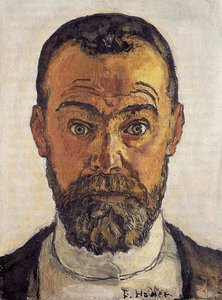
Ferdinand Hodler
1853 - 1918 , Suiza
Datos clave
- Artistas Que Influyeron:
- Alexandre Calame
- Gustave Courbet
- Hans Holbein
- Fecha De Muerte: 19 de mayo de 1918
- Fecha De Nacimiento: 14 de marzo de 1853
- Influencia En Artistas: ['Expresionismo']
- Lugar De Nacimiento: Bern, Suiza
- Movimiento Artístico: Simbolismo, Art Nouveau
- Nacionalidad: Suizo
- Nombre Completo: Ferdinand Hodler
- Obras Notables:
- La noche
- El día
- Verdad II