Vista previa
 Compartir
 Compartir
 Ver detalles
 Guía
Guía

 Descargar
 Ver artículos similares
 Radiografía
 Presentación de diapositivas
 Estadísticas
Thomas and Henry Sergeant


 Leer más
Reproducción al óleo hecha a mano
Óleo sobre lienzo pintado a mano en el tamaño y marco de su elección, realizado por encargo por nuestros artistas. ( Cambiar a formato impreso Ver versión en imagen digital)




P118B €10

P118H €10

P118W €10

P438Z €10

P508JH €12

P508YH €12

P805H €10

P805Z €10

P919BZ €10

P919G €10

P919XJ €10

P959ZH €10

P968JZ €12

W106C €8

W218G €10

W218JH €8

W218Y €10

W307PJ €10

W316G €10

W316PJ €8

W316Y €10

W398PJ €8

W4111J €10

W500HY €15

W500JH €15

W692G €12

W849H €8

W940BG €15

W953PJ €8




Elija entre nuestros tamaños predefinidos que respetan las proporciones originales de la obra.

Escriba el ancho y el alto que necesite para adaptarse a su marco o a su pared. Al ser una obra pintada a mano, para un tamaño con una forma distinta, el artista puede pintar un poco más alrededor de la imagen o recortar un poco; usted elige. Le enviaremos una maqueta digital para su aprobación antes de comenzar la pintura. La imagen que se muestra en esta página no refleja el resultado real; solo la maqueta lo hace.
Tras realizar el pedido, el equipo de OriginalUniqueArt.com enviará un correo electrónico al cliente para solicitar instrucciones y proporcionarle una vista previa del boceto.
Envío a todo el mundo () en 3-4 semanas en lugar de las 5 semanas estándar. (23 octubre). Sin comprometer la calidad.

Envío exprés gratuito a todo el mundo

Lienzo de lino de alta calidad

Seguro de envío completo

Garantía de reembolso de impuestos aduaneros

Garantía de fidelidad cromática exacta

Política de devolución de 100 días (solo por defectos)

Garantía de devolución del 100% del dinero

Oferta por volumen
 La opción de vidrio solo está disponible en tamaños inferiores a 110 cm.

Thomas and Henry Sergeant
Técnica de reproducción
Tamaño de la reproducción
-


Precio total
€ 264
Thomas and Henry Sergeant: A Portrait of American Idealism
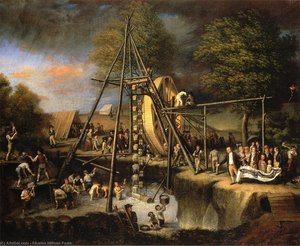
Charles Willson Peale’s “Thomas and Henry Sergeant,” completed in 1787, stands as a cornerstone of neoclassical portraiture and embodies the spirit of Enlightenment America. Currently residing within the Museum of Fine Arts in Boston, this oil on canvas masterpiece transcends mere likeness; it's a meticulously crafted tableau that speaks volumes about social status, familial affection, and the burgeoning aspirations for republican virtue.
Composition and Symbolism: Capturing Essence Through Detail
The painting’s central focus is undeniably its subjects – two young boys, Thomas and Henry Sergeant – positioned side by side with arms outstretched in a gesture of camaraderie. Their attire—suits adorned with satin linings and hats—reflects the formality prevalent during the era, signaling their privileged upbringing within Boston society. Beyond the visual representation, Peale skillfully employs symbolism to elevate the artwork’s significance.
- The Dog: Representing loyalty and guardianship, the dog symbolizes protection and companionship – values deeply ingrained in American ideals of citizenship.
- The Chair: Suggestive of comfort and stability, it anchors the scene and reinforces the notion of settled respectability.
- The Clock: A symbol of time’s passage and measured progress, mirroring the ambitions of a nation striving for advancement under republican governance.
- The Birds: Scattered throughout the composition, birds are emblems of liberty and aspiration—a deliberate allusion to the philosophical currents shaping the American Revolution.
Peale's Style and Influences: Echoes of European Tradition
Charles Willson Peale’s artistic approach was firmly rooted in European traditions, particularly those championed by Louis-Vincent-Léon Pallière, whose “View in the Gardens of the Villa d’Este” exemplifies similar neoclassical sensibilities. Like Pallière, Peale prioritized meticulous detail—evident in the rendering of fabrics and facial expressions—to achieve an unparalleled level of realism. However, he skillfully blended these techniques with stylistic elements derived from Rembrandt Peale and James Peale, creating a distinctive visual language that resonated powerfully with his contemporaries.
Comparative Artworks: Shared Visions of Republican Virtue
“Thomas and Henry Sergeant” finds kinship with several other notable portraits produced during the same period. Consider Ap Caledfryn’s “Michael Jones,” housed at The National Library of Wales, which similarly portrays a young gentleman embodying moral virtue and civic responsibility. Similarly, James Curnock's "Thomas Garrard" at Bristol Museum – Art Gallery captures the grandeur of aristocratic patronage while upholding standards of refinement. And John Partridge’s “Sir John Forbes” displayed at Royal College of Physicians exemplifies the meticulous craftsmanship characteristic of the era.
These artworks collectively illuminate the artistic landscape of Enlightenment America—a period defined by intellectual curiosity, republican ideals, and a fervent desire to emulate the cultural achievements of Europe. Peale's "Thomas and Henry Sergeant" stands as a testament to this ambition, securing its place as an enduring symbol of American identity.
Preguntas y respuestas
¿A qué edad creó Charles Willson Peale "Thomas and Henry Sergeant"?
Charles Willson Peale realizó "Thomas and Henry Sergeant" a la edad de 46. El artista nació en 1741 y la obra data de 1787.
¿Existe una ficha informativa sobre "Thomas and Henry Sergeant" de Charles Willson Peale para estudiantes?
Una página de Guía está disponible para "Thomas and Henry Sergeant" de Charles Willson Peale: una ficha imprimible sobre la obra, diseñada para estudiantes y uso en el aula.
¿A quién se le recomienda "Thomas and Henry Sergeant" de Charles Willson Peale como regalo?
"Thomas and Henry Sergeant" es una sugerencia de regalo para Cumpleaños.
Biografía del artista
Charles Willson Peale: Una Vida de Arte, Ciencia y Patriotismo
- Nacido: 15 de abril de 1741, Chester, Condado de Queen Anne, Maryland
- Fallecido: 22 de febrero de 1827, Filadelfia, Pensilvania
Primeros Años y Formación Artística
- La primera etapa de la vida de Peale estuvo marcada por dificultades económicas tras la muerte de su padre. Se formó como artesano en el oficio de sillero antes de descubrir su pasión por el arte.
- Recibió formación inicial de John Hesselius y estudió brevemente con John Singleton Copley, demostrando una aptitud temprana para el retrato.
- Un período crucial en su desarrollo fue su tiempo estudiando bajo la tutela de Benjamin West en Londres (1767-1770). Esta exposición a las tendencias artísticas europeas influyó significativamente en su estilo.
Carrera Artística y Obras Principales
- Retratista: Peale es conocido principalmente por sus retratos de figuras destacadas de la Revolución Americana, incluyendo numerosas representaciones de George Washington (casi sesenta en total). Estos retratos son valiosos documentos históricos además de logros artísticos.
- Estilo: Su estilo evolucionó con el tiempo, inicialmente influenciado por el enfoque neoclásico de West pero posteriormente incorporando elementos de realismo y un deseo de capturar la semejanza con precisión.
- Obras Notables:
- George Washington (1772): Marcó el comienzo de su larga asociación con Washington.
- El Grupo de la Escalera (c. 1795): Un ejemplo llamativo del "trompe l'oeil", que representa a sus hijos Raphael y Titian como si fueran parte del entorno arquitectónico.
Intereses Científicos y el Museo Americano de Peale
- Peale era un apasionado naturalista y científico, organizando expediciones para estudiar la historia natural.
- Fundó el Museo Americano de Peale en Filadelfia (1784), uno de los primeros museos en los Estados Unidos. Albergaba especímenes botánicos, biológicos y arqueológicos.
- El museo jugó un papel importante en la popularización de la ciencia y la educación en América. Era particularmente conocido por sus exhibiciones de huesos de mamut lanudo, adquiridos a través de una expedición en 1801.
- Se enseñó a sí mismo taxidermia para preservar especímenes para el museo, demostrando sus diversas habilidades.
Legado y Significado Histórico
- El trabajo de Peale une la brecha entre el arte y la ciencia, reflejando los ideales de la Ilustración de su época.
- Sus retratos proporcionan valiosos registros visuales de figuras clave en la historia estadounidense.
- La fundación del Museo Americano de Peale fue un esfuerzo pionero que ayudó a establecer el museo como una institución importante para la educación y la exploración científica.
- Influyó en generaciones posteriores de artistas y científicos, contribuyendo significativamente al desarrollo de la cultura americana.
- Su legado familiar continuó a través de sus hijos, incluyendo James Peale y Rubens Peale, quienes también se convirtieron en artistas consumados y contribuyeron a la colección del museo.

Charles Willson Peale
1741 - 1827 , Reino Unido
Datos clave
- Artistas Que Influyeron:
- John Hesselius
- John Singleton Copley
- Benjamin West
- Fecha De Fallecimiento: 22 de febrero de 1827
- Fecha De Nacimiento: 15 de abril de 1741
- Lugar De Nacimiento: Chester, Reino Unido
- Movimiento Artístico: Neoclasicismo
- Nacionalidad: Estadounidense
- Nombre Completo: Charles Willson Peale
- Obras Notables:
- Grupo de la escalera
- Retratos de Washington
Artículos relacionados
Titian Ramsay Peale II: A Legacy of Botanical Precision & Artistic Innovation
Explore the life & art of Titian Ramsay Peale II, a master of botanical precision and wildlife painting. Discover his legacy bridging art & natural history at OriginalUniqueArt.

Charles Willson Peale: Portraiture, Enlightenment Ideals & Shaping American Identity
Explore the life & art of Charles Willson Peale – Revolutionary portraitist, scientist, and founder of America’s first museum. Discover his iconic paintings of Washington & the Enlightenment ideals that shaped a nation.
El Siglo XVIII en el Arte: 10 Obras Maestras para Decorar con Historia y Elegancia
Descubre 10 obras maestras del siglo XVIII: Goya, Fragonard y más. Explora la historia, el arte barroco, rococó y neoclasicismo que inspiran decoración elegante. Reproducciones de alta calidad en OriginalUniqueArt.com.

Grant Wood & American Regionalism: Identity, Myth & the Rural Landscape
Explore the world of Grant Wood & American Regionalism with OriginalUniqueArt. Discover the symbolism behind 'American Gothic', recurring themes, and the movement's lasting impact on art history. High-quality reproductions available.

Realismo Estadounidense: 10 Obras Maestras que Cambiaron el Arte y la Decoración
Descubre 10 obras maestras del Realismo Estadounidense: Winslow Homer, Edward Hopper y más. Explora la historia, técnica y emoción de estos icónicos cuadros. Encuentra reproducciones de arte de museo en OriginalUniqueArt.com.